Last updated November 17, 2026




Free written scope consultation - allowances, timeline, and change-order rules on paper before a single trade is scheduled
DIY vs Professional Kitchen Remodeling: What’s Safe to Do Yourself
Pulling your own cabinet boxes costs $0 in labor and takes a Saturday. That part is real, and the savings are real. But if you nick the dishwasher drain line during demo, you’ve just created a slow leak condition behind new cabinetry that won’t show up for six months – until the box bottoms swell and the subfloor starts to soften. In Denton, where slab foundations and older plumbing coexist in the same housing stock, that scenario plays out more than people expect. This guide maps exactly where the DIY line sits: what a Texas homeowner can legally and safely handle, what belongs to a licensed master plumber or electrician, and where the hybrid model actually pencils out. You’ll leave knowing which tasks to keep and which to hand off.
Quick Answer
In a kitchen remodel, the DIY work that is genuinely safe and cost-effective is demolition, cabinet painting, hardware swaps, open shelving, backsplash tile in non-wet areas, and light fixture swaps on existing circuits. Anything that touches rough-in – plumbing supply and drain lines, electrical circuits, gas lines – requires a licensed professional under Texas law, and DIYing that work costs more than hiring a licensed sub once inspection failures and correction costs are counted. Let’s walk through where that line falls in Denton and how to write a split scope into your contract. Call (844) 651-3175 for a free estimate if you want that boundary mapped to your specific kitchen.
Styles & brands we work with
- Kitchen remodeling
- Bathroom remodeling
- Home additions & ADU
- Roofing
- Windows & doors
- Driveway & pavers
- Fence
Table of Contents
- What Texas Law Actually Allows You to Do Yourself
- How DIY Rough-In Affects Your Inspection Record
- Where DIY Actually Pencils Out in a Kitchen
- The Hybrid Model: Who Does What, Written Into the Contract
- Why DIY Project Management Costs More Than the GC Markup
- Denton-Specific Conditions That Change the Math
- Running the Numbers: DIY vs Professional Line by Line
- Common Mistakes to Avoid
What Texas Law Actually Allows You to Do Yourself
Texas doesn’t have a statewide contractor license, which leads a lot of homeowners to assume anything goes. That’s not accurate for kitchen work. The state does license plumbers, and it does license electricians. Certain tasks are legally restricted to licensed trades, and a homeowner pulling a permit as an owner-builder can do more than most people think – but not everything. Plenty of homeowners underestimate how much they can legally handle, and others overestimate it by the same margin.
Here’s how the split breaks down for a typical Denton kitchen:
- Homeowner can legally do: demolition, cabinet removal and installation, cabinet painting and refinishing, hardware swaps, installing open shelving, backsplash tile in dry areas, flooring on an existing subfloor, light fixture swaps onto an existing circuit, and countertop installation when it’s a direct replacement with no plumbing changes.
- Requires a licensed electrician (with permit): new circuits, moving outlets or switches, adding dedicated appliance circuits for ranges, dishwashers, disposals, or microwaves, panel work, and anything involving the service entry.
- Requires a licensed plumber (with permit): moving a sink supply or drain, relocating a dishwasher or ice-maker line, running a new gas line to a range, converting from electric to gas cooking, and any drain relocation tied to a sink move.
- Requires an engineer or designated inspector: removing a load-bearing wall, enlarging an exterior opening, or altering structural framing under a permit.
City of Denton inspections require visible work to be signed off by the licensed trade that performed it. When the permit shows plumbing work and no licensed plumber on the record, that’s a red flag your final inspection will hit. If you want the whole sequence handled end to end – permits, inspections, rough-in, and final – a General Contractor in Denton is the party who carries that scope.
How DIY Rough-In Affects Your Inspection Record
The part of DIY that homeowners underestimate is what stays behind after the wall closes. A permit is a public record. If you pulled an owner-builder permit and did electrical without a licensed electrician, that paper trail lasts as long as the house does. When you sell, your buyer’s inspector will pull the permit history from the city, and the mismatch between scope and licensing becomes a negotiating item. In a Denton market where a kitchen renovation is one of the things buyers ask about directly, that record matters.
Here’s what happens on a typical timeline:
- You pull an owner-builder permit for a kitchen remodel that includes moving a sink and adding a dishwasher circuit.
- You do the plumbing and electrical yourself, assuming you’ll be careful enough to pass.
- The rough-in inspection flags an issue – wrong drain slope, an outlet not on a dedicated circuit, a junction box hidden behind drywall.
- Correction requires opening the wall, then hiring the licensed trades at a higher cost than if they’d been brought in on the front end.
- The final record shows an owner-builder permit with corrections, which any subsequent inspection or buyer’s agent can read.
The alternative isn’t complicated: hire the licensed sub on the rough-in, keep the permit clean, and keep DIY where it’s actually allowed. A Kitchen Remodeling in Denton project managed by a GC builds that licensing into the permit from the start, which is why the final inspection is a formality rather than a scramble.
Where DIY Actually Pencils Out in a Kitchen
DIY pencils out where labor is a high percentage of the line item and the work doesn’t touch a mechanical system. Cabinet painting is the biggest winner. Painting existing boxes and doors saves the cost of new cabinet doors and the labor of pulling and hanging them, and a weekend with degreaser, primer, and a sprayer produces something close to a refinished look at a fraction of the price. Hardware swaps are a close second – hinges, pulls, and handles run a couple hundred dollars in parts and take an afternoon.
Here’s where the savings bank straightforwardly:
- Cabinet painting and refinishing – $800 – $2,200 in parts and materials vs. $4,000 – $8,000 for professional painting or new doors. Non-wet, non-load-bearing work with clear steps.
- Hardware swaps – $150 – $500 in parts, one afternoon. No structural or mechanical risk.
- Open shelving installation – $150 – $600 depending on bracket and lumber grade. Make sure you’re hitting studs; this is where most DIY shelving fails.
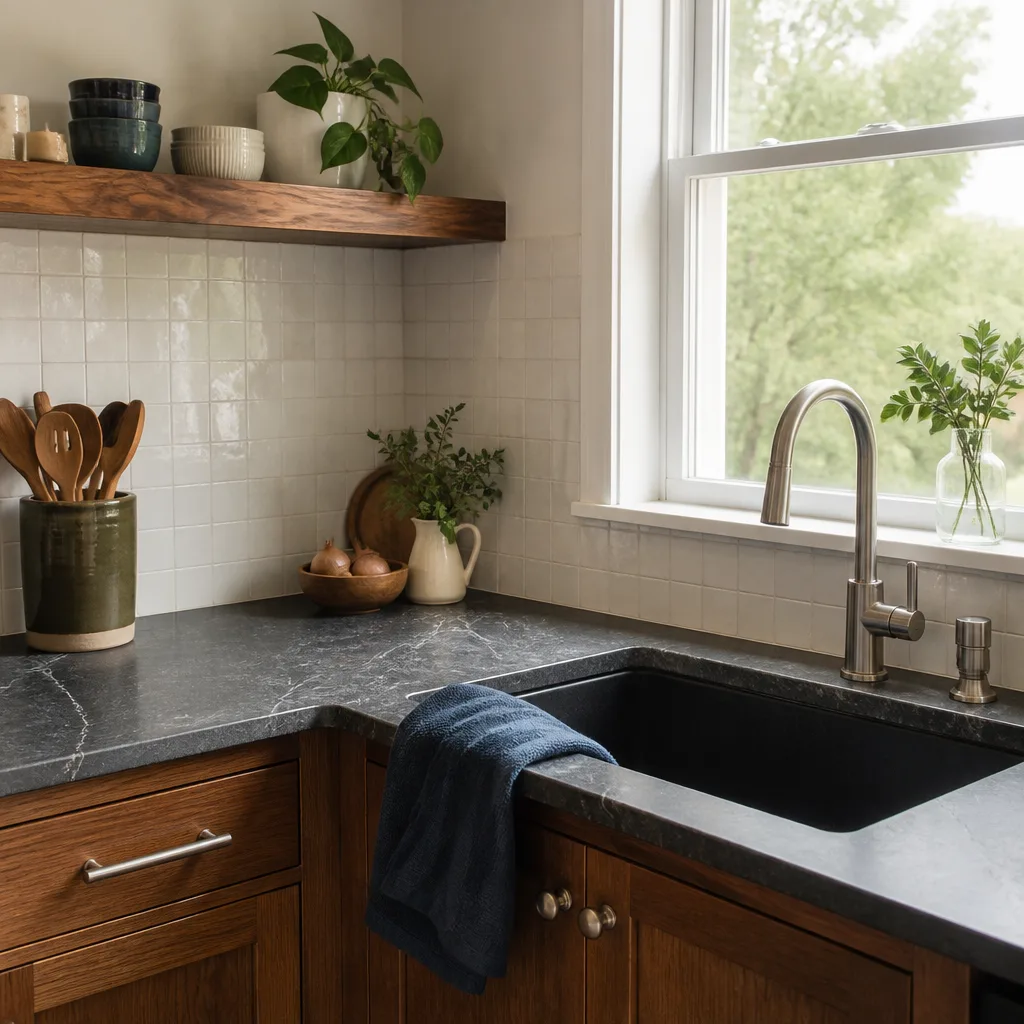
- Backsplash tile in dry areas – $300 – $900 DIY vs. $1,200 – $2,500 installed. Behind a range, this is a wet-adjacent area and needs careful waterproofing – that area is worth hiring out.
- Light fixture swaps on existing circuits – $80 – $250 in parts. Only on existing wiring, only with the breaker off, and only if the wiring is grounded and the fixture rating matches the circuit.
A Bathroom Remodeling in Denton project is different – bathrooms are wet rooms, and the tolerance for DIY drops sharply. That’s a real contrast with kitchen finish work, where the dry-zone rules are more forgiving.
The Hybrid Model: Who Does What, Written Into the Contract
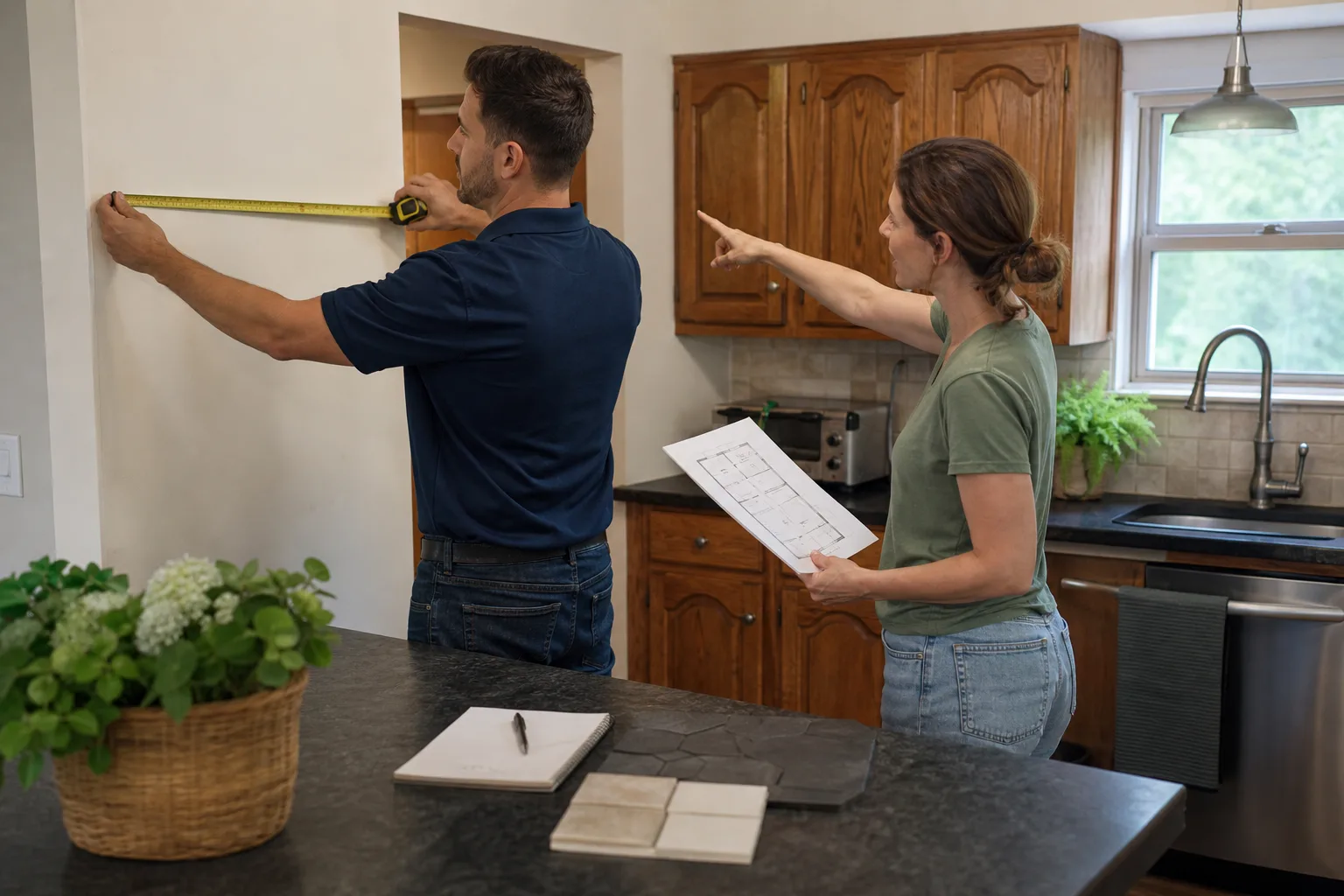
The hybrid model is the highest-value approach in a mid-size kitchen redo. The GC manages structure, rough-in, permits, and inspections. The homeowner handles the finish work. Both sides know what they’re doing before demolition starts. The mistake is doing a hybrid without writing the split into the contract – which is where disputes start.
Here’s how to structure it. Consider it a numbered framework:
- Scope the trades the GC keeps. Structural, rough-in plumbing, rough-in electrical, permit filing, inspection coordination, and any appliance or sink relocation.
- Scope the finish work you’ll self-perform. Cabinet painting, hardware, shelving, backsplash in dry zones, and any flooring on an existing subfloor.
- Write the split into the contract with sequencing dates – “homeowner painting to begin after cabinet installation is signed off by Bradford, no later than three days after.”
- Agree who pulls what permit. The GC pulls the rough-in permits. The homeowner does not pull them separately.
- Set the handoff points. Where the GC leaves off and you pick up, and what happens if you’re running late.
Bradford Remodeling Co Denton writes that split into the scope of work – a written price before any work starts, and the finish-work responsibilities marked clearly enough that there’s no argument at the handoff. Background-checked, uniformed technicians on every job mean the crew on the rough-in is documented, which matters when a homeowner is passing through the site between finish stages.
Why DIY Project Management Costs More Than the GC Markup
Running the job yourself – ordering materials, scheduling subs, coordinating inspections – looks like it saves the general contractor’s mark-up. In practice it almost always costs more in delay and rework. A cabinet order arrives short one box; the drywall crew is scheduled two days later and gets sent home; the inspection gets pushed and the electrician’s next available window is nine days out. Each of those slips costs a day of the homeowner’s time and often a change order on the next trade.
Here’s what the DIY PM timeline actually looks like compared to a GC-managed one:
- Material ordering: GC schedule has materials on site before demo in a coordinated sequence. DIY schedule typically has a cabinet delivery that arrives the week after demo, which pushes everything by 5-10 days.
- Sub scheduling: GC books rough-in shops two to three weeks out because the trades are repeat partners. A homeowner booking the same trades books three to four weeks out because they’re not on the trades’ repeat calendar.
- Inspection coordination: GC runs inspections on a known cycle and buffers re-inspect windows. DYI PM usually eats two extra weeks on the first re-inspect.
- Change orders: GC absorbs standard sequencing misses in the markup. DIY PM absorbs them at retail pricing plus the day cost of the delay.
In our experience in Denton, the typical DIY-managed kitchen remodel runs four to six weeks longer than the same scope under a GC. That’s the cost that never appears on the invoice without a change order. If you’ve been burned by contractors who no-show and reprice, the correct answer isn’t to remove the GC from the equation – it’s to hire a contractor whose written price is fixed before work starts. Bradford Remodeling Co Denton operates under The Garrison Standard, which puts every price and every guarantee in writing before a single tool comes out, and that includes the schedule.
Denton-Specific Conditions That Change the Math
Denton conditions affect which DIY tasks are safer than others. The clay-heavy soil and slab foundations that dominate the housing stock in neighborhoods like Southridge and the older blocks near the Square mean that kitchen subfloors don’t tolerate water intrusion – a slow leak from a DIY dishwasher line stays inside the slab assembly and shows up as cupped flooring before it shows up as a puddle. That’s why the rough-in should stay with the licensed trades. It’s not about whether you can do it. It’s about what happens if the work fails in a way you can’t see.
Denton summers push attic heat to 150°F and higher, which affects the electrical and insulation work more than the finish work. If you’re doing a light fixture swap in July, work early and shut the breaker downstream first. The drywall and paint dry faster at that temperature, which is the one place DIY painting actually runs smoother in Denton than in a humid market. And the city’s permit window runs business hours only, so the number one DIY project management failure in Denton is scheduling an inspection on Friday after a Thursday plumbing change, then discovering the re-inspect can’t happen until Monday.
Denton’s neighborhoods each have their own patterns. Historic districts near the courthouse square may have review requirements for exterior changes, so if your kitchen remodel opens a wall to an exterior, that’s worth checking before demo. Newer builds off Loop 288 have more modern kitchen layouts that make finish work easier – cabinet boxes and drawer slides are standard sizes, so hardware swaps and cabinet painting are simpler than on remodeled older homes with non-standard dimensions.
Running the Numbers: DIY vs Professional Line by Line
The table below shows reliable pricing bands for a mid-size Denton kitchen remodel – roughly 150 square feet, existing plumbing and electrical not relocated. The “DIY safe?” column calls the split, and the numbers assume materials sourced at retail.
- Demolition and haul-away: $400 – $1,100 professional / $0 – $200 DIY (dumpster rental). DIY safe.
- Cabinet boxes installed: $2,800 – $6,500 professional / $2,800 – $6,500 DIY (materials only). DIY safe if the job is direct replacement.
- Cabinet painting and refinishing: $4,000 – $8,000 professional / $800 – $2,200 DIY. DIY safe.
- Hardware and pulls: $300 – $700 professional / $150 – $500 DIY. DIY safe.
- Countertop templated and installed: $2,200 – $5,800 professional / $1,800 – $4,800 DIY for drop-in only, not built-in sinks. Hire out for built-in sinks or any sink relocation.
- Sink and faucet swap, no relocation: $350 – $900 professional / $150 – $450 DIY. DIY safe on a direct swap with a shutoff within reach.
- Backsplash tile in dry areas: $1,200 – $2,500 professional / $300 – $900 DIY. DIY safe.
- Backsplash tile behind range: $400 – $900 professional / not recommended DIY. Hire out – wet-adjacent area.
- Light fixture swap, existing circuit: $200 – $450 professional / $80 – $250 DIY. DIY safe only if the circuit is grounded and the fixture rating matches.
- Adding a dedicated appliance circuit: $450 – $1,200 professional / not legal DIY in most Denton permits. Hire a licensed electrician.
- Relocating sink supply and drain: $900 – $2,400 professional / not legal DIY in most Denton permits. Hire a licensed plumber.
- New gas line to range or ice-maker: $500 – $1,400 professional / not legal DIY. Hire a licensed plumber with gas endorsement.
Whether you hire a general contractor for the rough-in and inspections or take the whole project through Bradford, written price before work begins is the constant. Our technicians have up to 22 years of experience, and every completed kitchen carries the 365-Day Done Right Promise – if it isn’t done right, we make it right within a full year at no charge.
Common Mistakes to Avoid
- Pulling an owner-builder permit and doing rough-in electrical yourself. The permit history follows the house. It shows up in your buyer’s inspection and becomes a negotiating item in Denton’s resale market.
- Ordering cabinets before demo is complete. Kitchen layouts change once you’re into the wall. Measuring off the plan instead of the actual opening pushes every downstream trade by a week.
- Doing backsplash tile behind the range without proper waterproofing. That’s a wet-adjacent zone. The failure shows up as efflorescence and mold behind the tile within a year.
- Skipping the cabinet degrease step on painted boxes. Cooking grease from a decade of daily use means paint peels within eighteen months. Degrease and sand before primer.
- Scheduling inspections in the same week as rough-in completion. Denton inspection windows fill. Book the inspection the same day the rough-in is signed off, or you lose a week.
- Ignoring the dishwasher drain line location during demo. The line runs behind the cabinet box in many of Denton’s 1990s and 2000s builds. Puncture it and you’ve opened a mold condition behind new cabinetry that won’t show up for months.
- Missing a shutoff valve before a DIY sink swap. Older homes around Denton sometimes have no shutoff at the fixture. Doing the swap without one means a full-house water shutoff mid-job.
See the difference
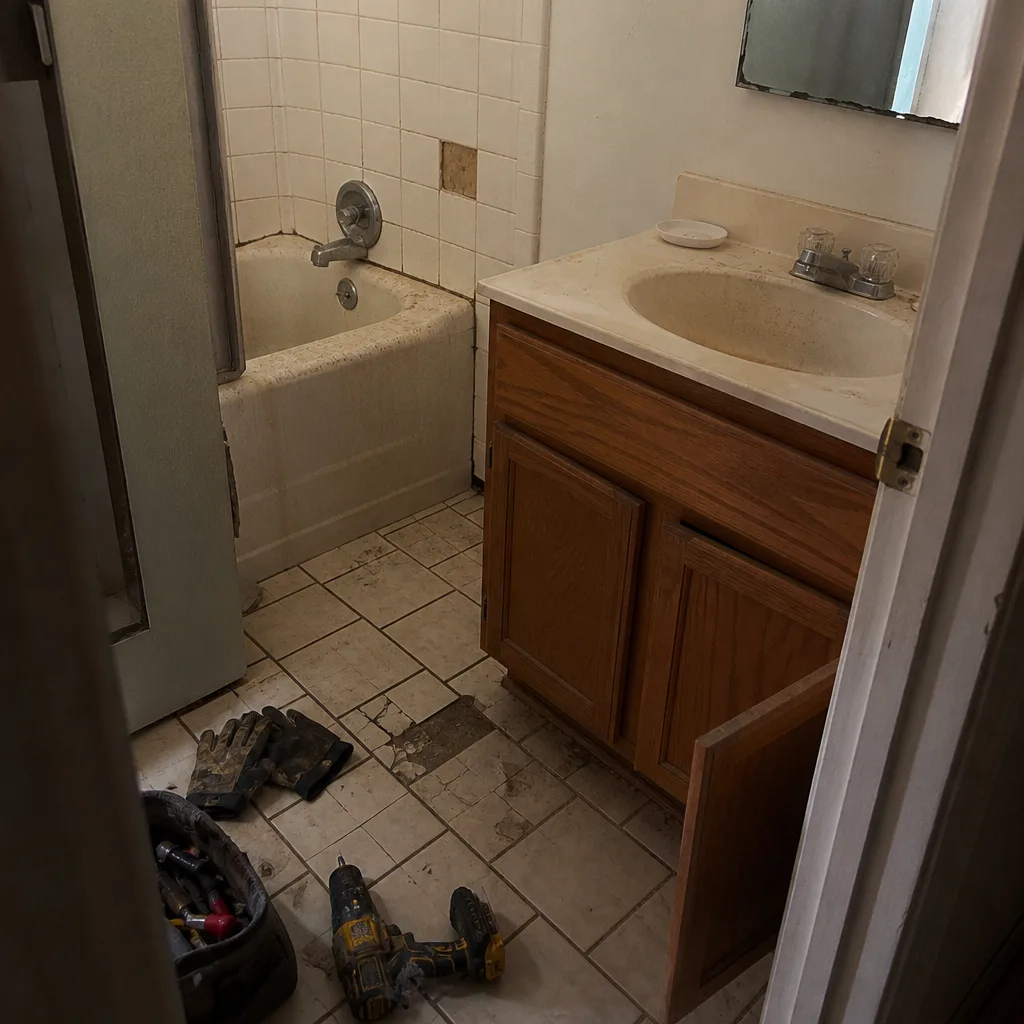 Before
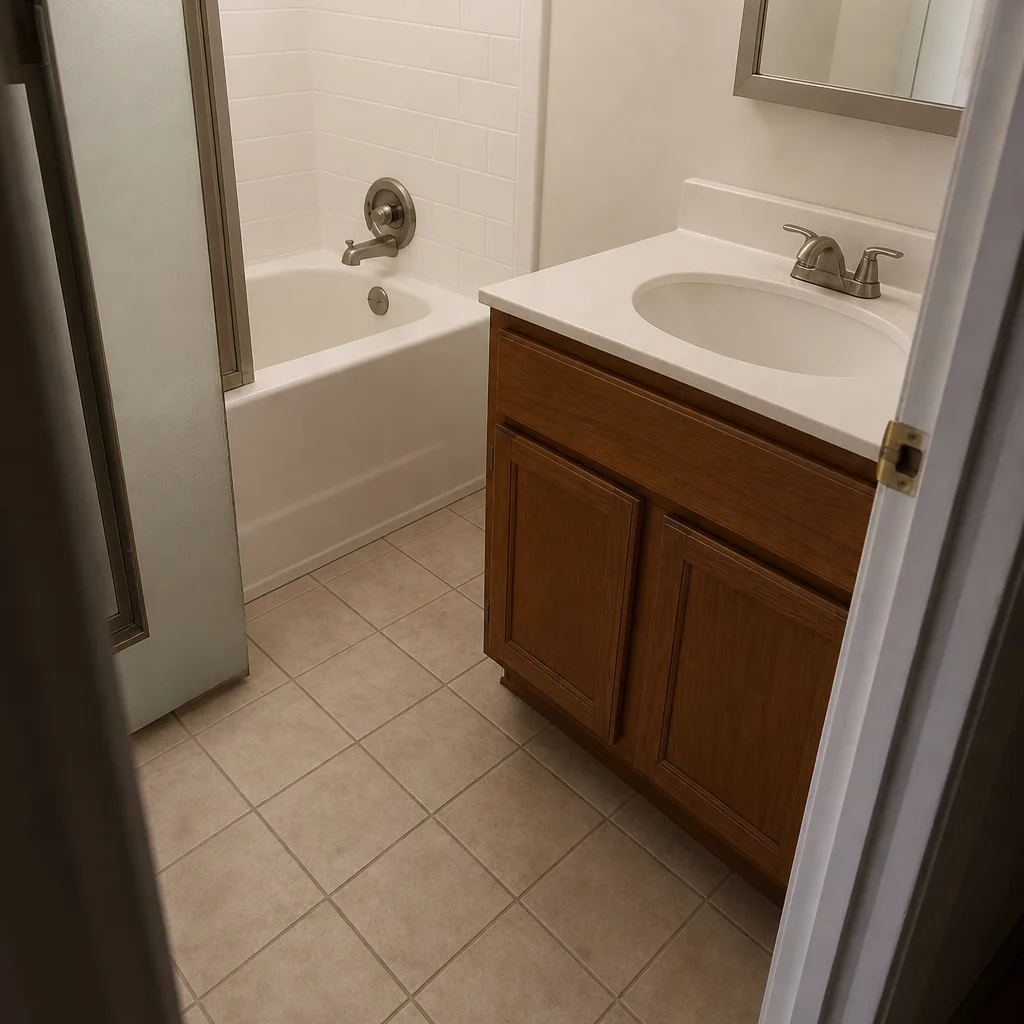 After
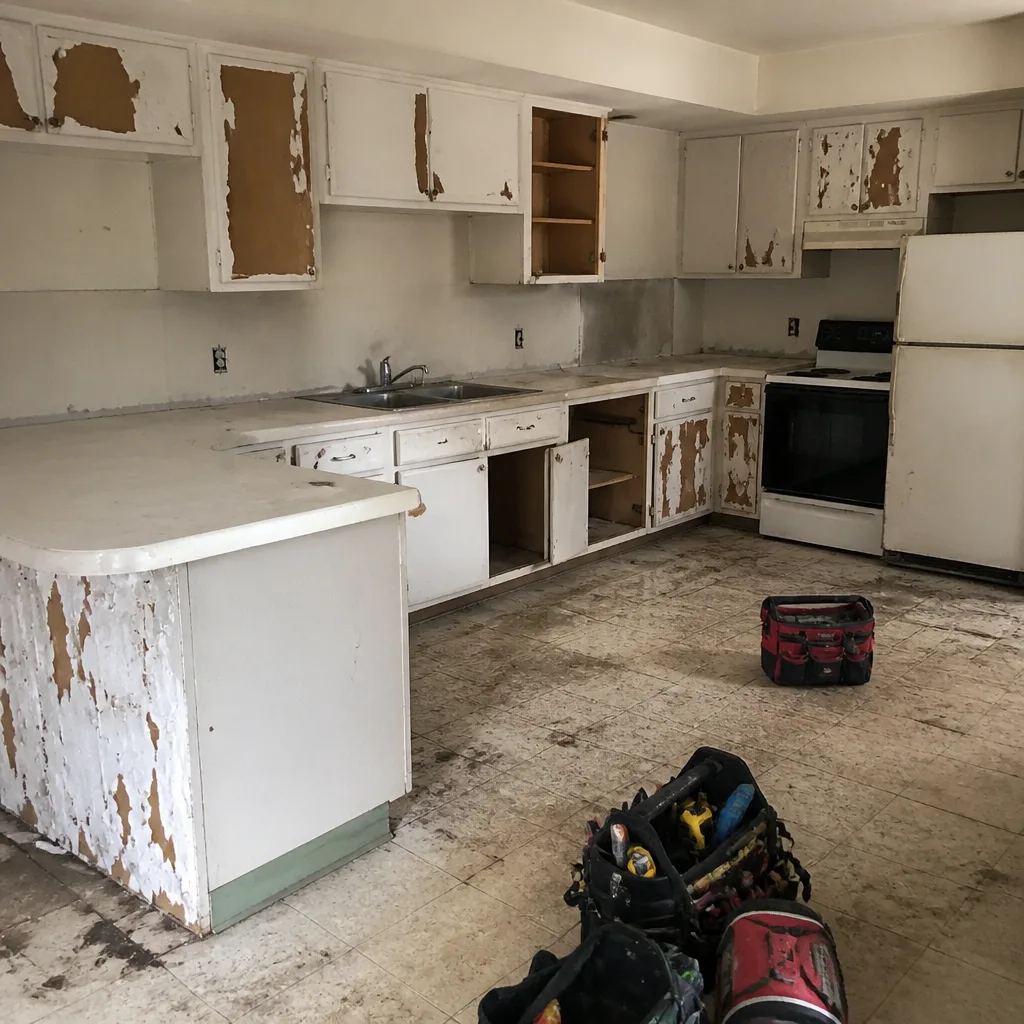 Before
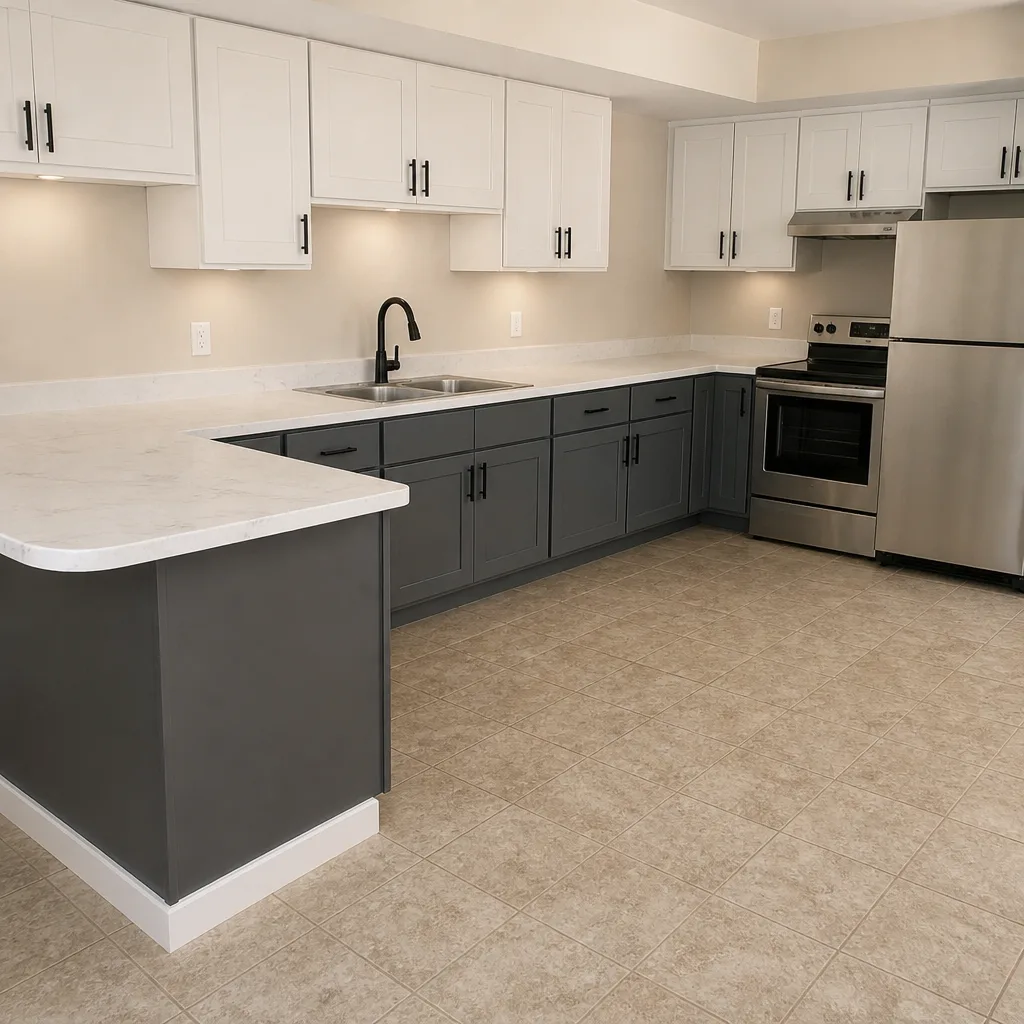 After
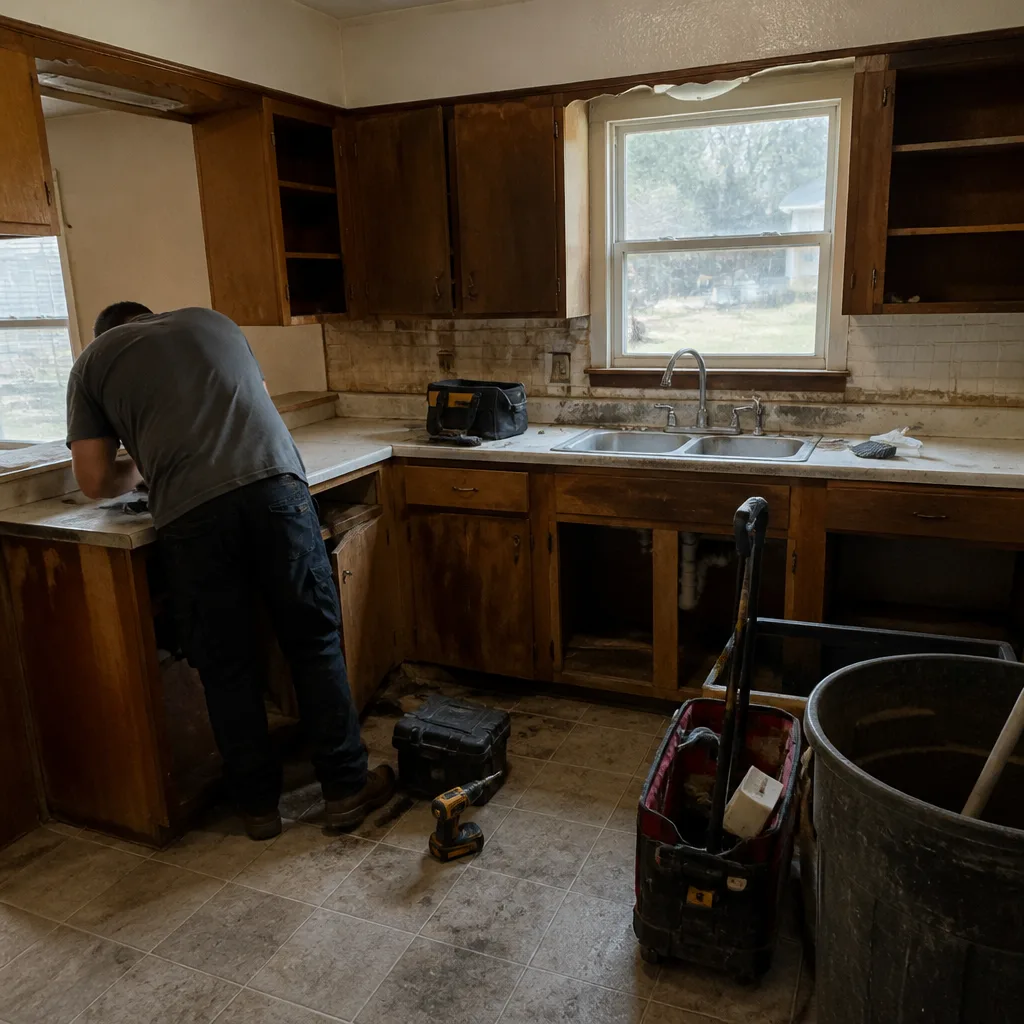 Before
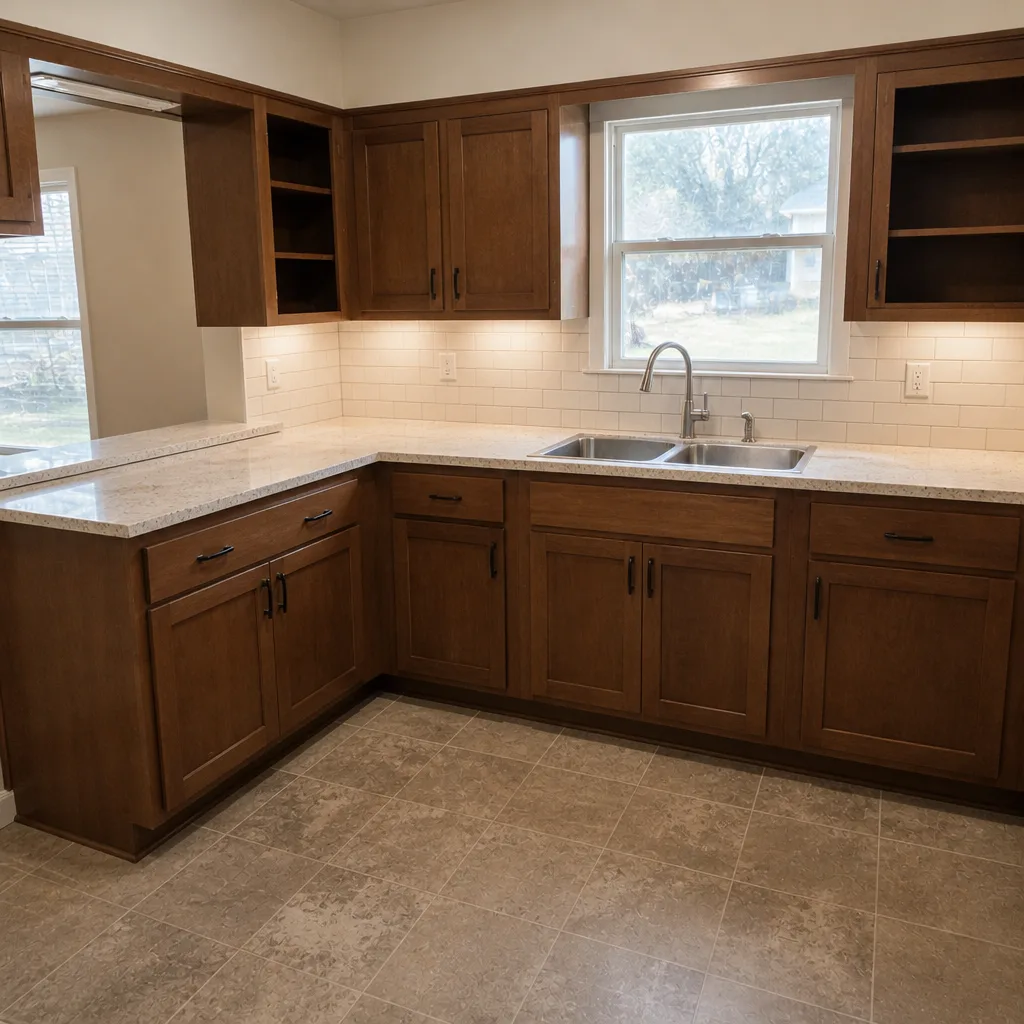 After
When to Call a Professional
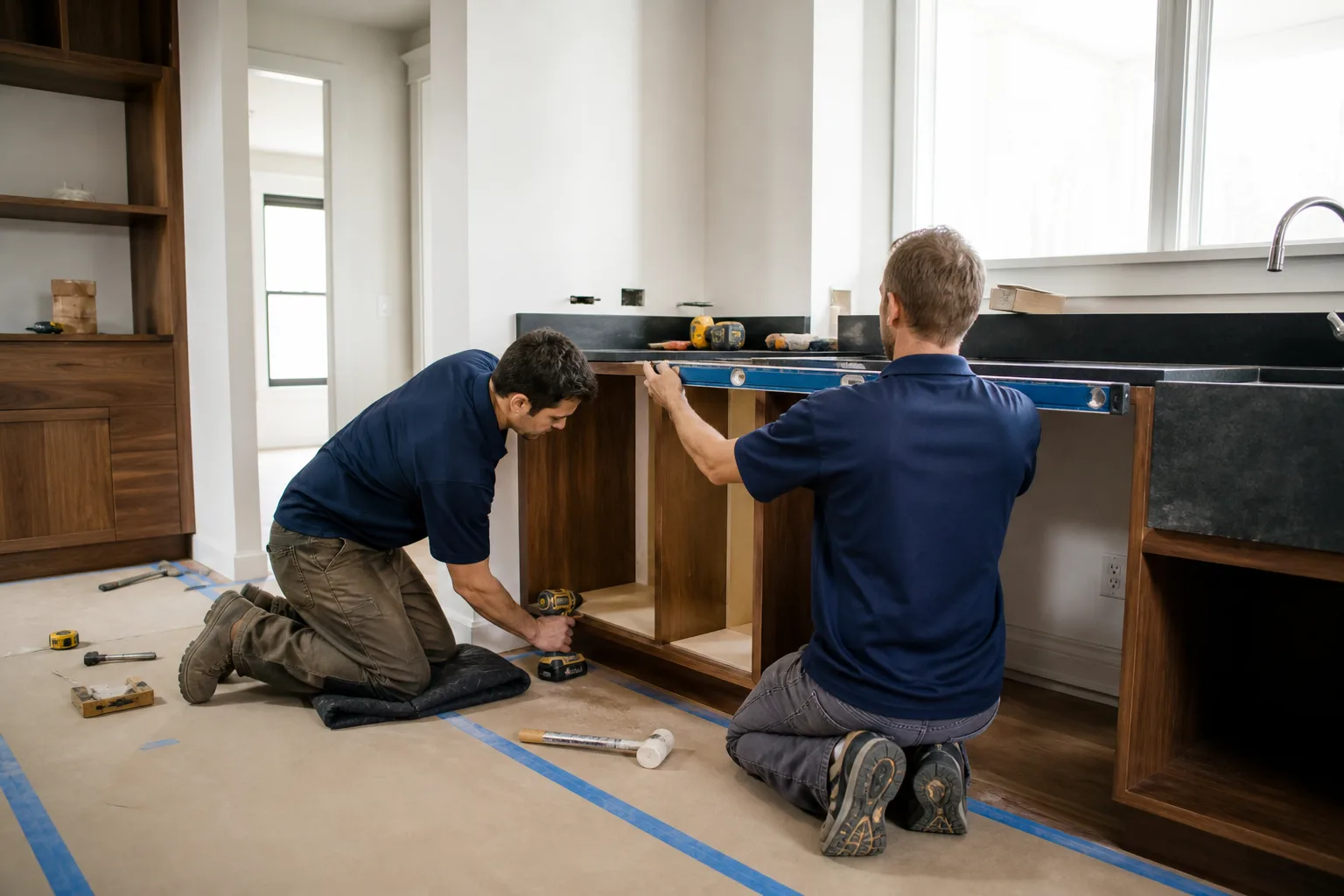
Call a professional when the scope touches anything that requires a permit or a licensed trade: moving a sink, adding a circuit, running a gas line, opening a wall, or removing structure. Call when the project involves a built-in appliance that has to be replumbed – sub-zero refrigerators, built-in dishwashers, ice-makers – because those lines are not forgiving of DIY drift. Call when the kitchen slab or subfloor shows signs of water damage, since the repair is a structural and mold question before it’s a finish question. And call when the DIY finish work is at the point of structural sequencing – cabinet boxes, countertop templating, flooring that runs under appliances. Full-home kitchen work fits under a Bradford Remodeling Co Denton home approach when the remodel is part of a larger scope.
Bradford Remodeling Co Denton offers free estimates in Denton – call (844) 651-3175. We answer with a live person, 24/7. Written price before any work starts, background-checked uniformed technicians, and the 365-Day Done Right Promise covering every completed kitchen for a full year.
Frequently Asked Questions
A Texas homeowner can legally handle demolition, cabinet installation, cabinet painting, hardware swaps, open shelving, backsplash tile in dry areas, flooring on an existing subfloor, light fixture swaps on existing circuits, and direct-replacement sink and faucet swaps with existing plumbing in place. Anything that moves plumbing lines, adds electrical circuits, or runs gas requires a licensed plumber or electrician under Texas law, and most Denton permits require the licensed trade on the record for those tasks. Call (844) 651-3175 for a free estimate on any scope where you’re unsure of the line.
A mid-size Denton kitchen remodel – roughly 150 square feet, no plumbing or electrical relocation – runs $18,000 – $42,000 total depending on cabinetry grade and surface choice. If the scope includes moving a sink or adding an appliance circuit, add $1,200 – $3,500 for the licensed trade work and inspection overhead. DIY finish work alone saves roughly $4,000 – $9,000 on that same project. Call (844) 651-3175 for a written line-item price before any work begins – estimates are free.
Yes, in most cases. The City of Denton code path requires visible electrical rough-in work to be on the record from a licensed electrician, and an owner-builder permit that shows electrical scope without a licensed electrician on the record will fail the rough-in inspection. Failure means opening the wall, re-running the work under a licensed electrician, and paying for the re-inspect. It’s cheaper to hire the licensed sub on the front end. Bradford Remodeling Co Denton handles permits and inspections end to end on any kitchen we take on – call (844) 651-3175.
Cabinet painting is the single best DIY line item in a kitchen remodel. Materials run $800 – $2,200, professional painting runs $4,000 – $8,000, and the work doesn’t touch a mechanical system. The catch is prep: degrease, sand, and prime properly or the paint peels within eighteen months. If you’re willing to spend a full weekend on prep, DIY cabinet painting saves real money. If not, have it done right the first time. Call (844) 651-3175 for a free estimate that includes the finish work.
Buyer’s inspection in Denton pulls the permit history from the city, and an owner-builder permit with mismatched licensing becomes a negotiating item – typically a credit request equal to the cost of the licensed correction plus a margin. That correction work also opens walls, so it damages the finish work you installed around it. The net effect is usually a resale reduction larger than the savings from doing the rough-in yourself. Our technicians have up to 22 years of experience keeping permit records clean on Denton kitchen work – call (844) 651-3175 to review your permit plan before you start.
Yes, and this hybrid model is the highest-value structure for a mid-size kitchen remodel. The GC manages structure, rough-in plumbing and electrical, permits, and inspections. The homeowner does cabinet painting, hardware, shelving, backsplash tile in dry areas, and flooring. The critical step is writing the split into the contract with sequencing dates and handoff points, so neither party is guessing about timing. Bradford Remodeling Co Denton writes that split into the scope under The Garrison Standard – call (844) 651-3175 for a free estimate.
The Bottom Line
DIY in a kitchen remodel pays off exactly where labor is a high percentage of the line item and the work doesn’t touch a mechanical system. Cabinet painting, hardware swaps, open shelving, dry-area backsplash tile, and existing-circuit light fixture swaps are the real savings – $4,000 to $9,000 on a mid-size Denton kitchen. Anything that moves a supply line, a drain, a gas run, or an electrical circuit belongs to a licensed trade under Texas law, and the DIY savings there disappear into correction costs and resale complications. The hybrid model is the highest-value structure. Andrés on a written price before work starts, permits and inspections handled by the licensed trade, and a 365-Day Done Right Promise covering the finished kitchen for a full year. Bradford Remodeling Co Denton is part of the Garrison Partners family – call (844) 651-3175 to schedule your free estimate.
Written by the team at Bradford Remodeling Co Denton.