Last updated November 17, 2026
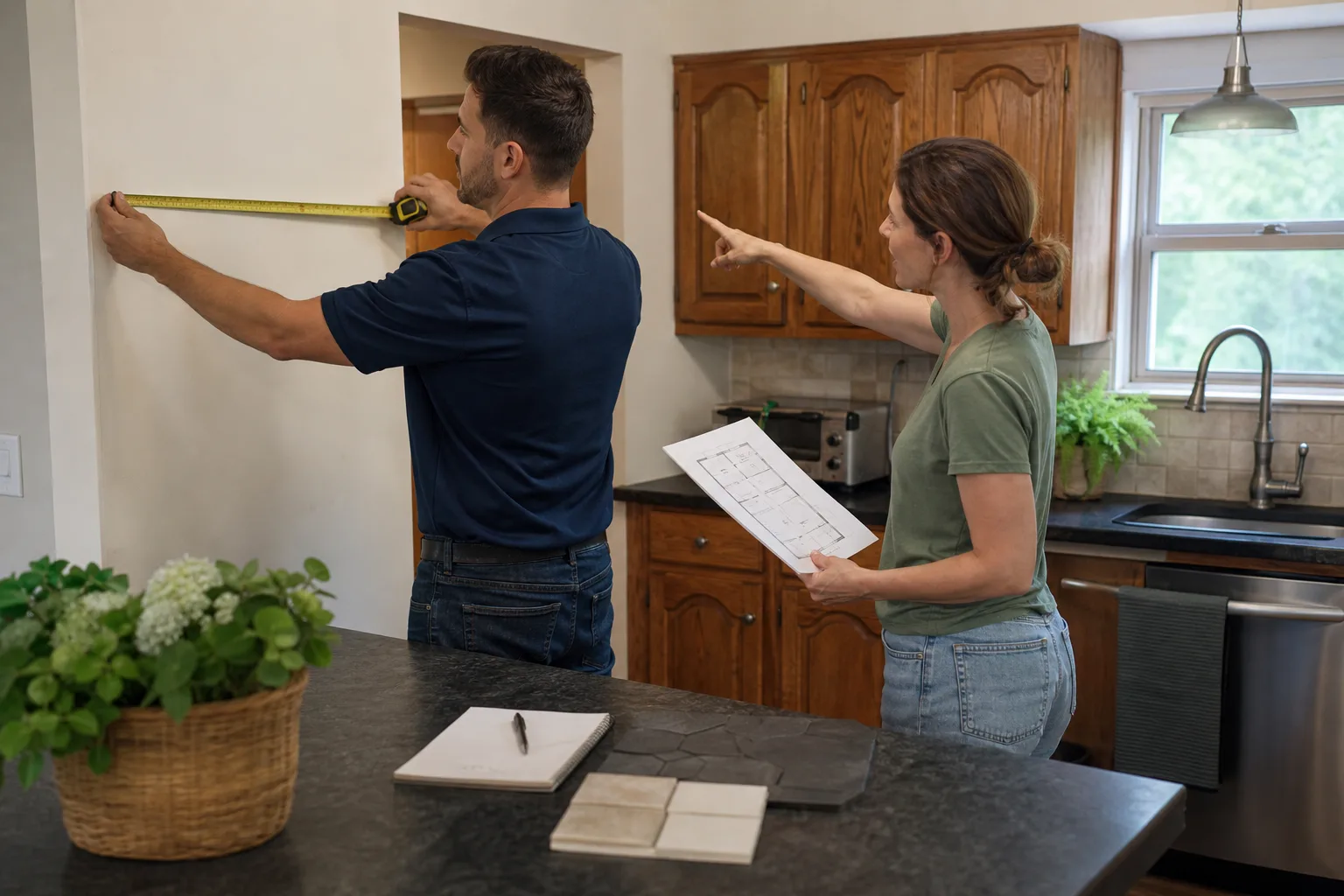
Free written scope consultation - allowances, timeline, and change-order rules on paper before a single trade is scheduled
Construction Cost Breakdown: The Denton Homeowner’s Reference for 2026
A kitchen remodel quoted at $45,000 in Denton can swing by $8,000 to $12,000 depending on nothing but which zip code the contractor calls home. That gap is real, and it almost never shows up as a line on the bid. It hides inside drive time, overhead, and the subcontractor margin a builder folds into a single lump sum. Most cost guides hand you a national average and call it a day. That number tells you almost nothing about what a job costs in Denton in 2026. This guide breaks down the actual line items: labor separated from material, permit fees from the city’s 2024 schedule, and the overhead you should ask to see. You’ll finish with the vocabulary to compare two bids honestly and the questions that separate a written price from a handshake.
Quick Answer
Remodeling costs in Denton in 2026 run roughly $21,000 to $78,000 for a kitchen, $12,000 to $32,000 for a bathroom, $160 to $280 per square foot for an addition, and $11,000 to $19,000 for a full roof replacement. Those ranges assume mid-grade materials, permit fees included, and a contractor working to a written scope. Three local forces push the numbers: DFW labor competition pulling tradespeople south, material surcharges from regional distribution, and permit fee increases from Denton’s 2024 fee schedule update on jobs over $50,000.
Styles & brands we work with
- Kitchen remodeling
- Bathroom remodeling
- Home additions & ADU
- Roofing
- Windows & doors
- Driveway & pavers
- Fence
Table of Contents
- What’s Driving Denton Remodeling Costs in 2026
- Kitchen Remodel Costs: Line Items, Labor, and Material
- Bathroom Remodel Costs and the Rough-In Reality
- Home Addition Costs by Square Foot
- Roof Replacement Costs and the Texas Heat Premium
- How Denton’s 2024 Permit Fee Schedule Moves Your Total
- The Overhead Contractors Absorb Into Markup
- How to Compare Bids Apples to Apples
- What’s Fixed, What’s Negotiable, and What Cuts Quality
What’s Driving Denton Remodeling Costs in 2026
Three forces shape what you pay in Denton this year, and national cost calculators miss all three.
Labor competition from DFW. Denton sits at the northern edge of the Dallas-Fort Worth metro, and every crew within driving distance has more work than hands. When a framer can earn metro rates on a job in Frisco or Prosper, the price to keep that framer in Denton climbs. We’ve seen drywall and tile subs quote Denton jobs 10 to 15 percent higher than they did just a few years back, simply because they can.
Regional material surcharges. Lumber, cabinetry, and fixtures delivered into Denton County carry distribution costs that coastal cost guides don’t reflect. Cabinetry is the biggest swing item. A KraftMaid or Wellborn line ordered through a regional distributor can land 8 to 12 percent above the catalog figure once freight and lead-time premiums are baked in.
The 2024 permit fee schedule. Denton updated its fee schedule in 2024, and the change matters most on projects over $50,000, where valuation-based fees stack up. More on that below.
None of this means Denton is an expensive place to build. It means the price you’re quoted should be traceable to these realities. A bid that can’t explain its labor rate against the local market, its material freight, or its permit line isn’t a bid. It’s a guess. For an overview of how we approach scope and pricing across all trades, see our Bradford Remodeling Co Denton home page.
Kitchen Remodel Costs: Line Items, Labor, and Material
A kitchen is the most line-itemed job in the house, which makes it the easiest to price honestly and the easiest to bury numbers inside. Here’s what the pieces actually cost in Denton in 2026, labor and material separated.
- Cabinetry: $6,000 to $22,000 material. Semi-custom KraftMaid or Wellborn runs the mid range; install labor adds $1,500 to $3,500.
- Countertops: $2,800 to $7,500 material for Cambria or Caesarstone quartz, templated and fabricated. Install is usually bundled into the fabrication price.
- Plumbing fixtures: $900 to $3,200 for a Kohler or Moen sink and faucet package. Rough-in changes add $800 to $2,400 if you’re moving the sink or range.
- Electrical: $1,800 to $4,200 for new circuits, under-cabinet lighting, and outlet relocation. Panel upgrades are separate.
- Flooring: $2,200 to $6,500 for tile or LVP, material and labor.
- Drywall, paint, and trim: $1,600 to $4,000.
Add 10 to 15 percent for general conditions, dump fees, and cleanup, and you land in the $21,000 to $78,000 band for a full gut. A cosmetic refresh (paint, hardware, countertop swap) stays under $18,000.
In our experience, the number that surprises homeowners most is the change order for a moved sink or an added island outlet. Those are rough-in changes, meaning the plumbing and wiring inside the wall have to move, not just the fixture. They’re legitimate costs, but they should appear in the original written scope if you told the contractor you were considering them. When you’re ready to plan one, our Kitchen Remodeling in Denton page walks through the sequence from demolition to final walkthrough.
Bathroom Remodel Costs and the Rough-In Reality
Bathrooms are small rooms with a high concentration of trades. A hall bath in Denton runs $12,000 to $22,000; a primary bath with a walk-in shower, double vanity, and tile work runs $22,000 to $32,000.
- Tile and waterproofing: $2,400 to $6,800 material and labor. The waterproofing membrane behind the tile is non-negotiable and often the first thing a low bid skips.
- Shower and tub: $1,200 to $4,500 for fixtures and installation.
- Vanity and top: $900 to $3,400.
- Plumbing rough-in: $1,500 to $4,000 if you’re relocating the toilet or shower drain.
- Electrical and venting: $700 to $2,000. A properly vented fan matters in Denton’s humidity.
- Glass, mirror, and accessories: $600 to $2,200.
Here’s where local context earns its keep. Denton sits in clay soil that moves with the seasons, and slab movement shows up first in small wet rooms. On older homes off the Square and in the neighborhoods around Texas Woman’s University, we regularly find cracked pans and stress fractures in tile from foundation movement rather than bad installation. If your bathroom floor is noticeably out of level, budget for a substrate repair before tile goes down. Our Bathroom Remodeling in Denton page covers how we handle those repairs inside a fixed written scope.
Home Addition Costs by Square Foot
An addition is priced per square foot, and in Denton in 2026 that lands between $160 and $280 per square foot for finished, conditioned space. A 300-square-foot primary suite addition runs $48,000 to $84,000; a 500-square-foot family room runs $80,000 to $140,000.
The spread comes from three variables:
- Foundation and sitework. Clay soil and graded lots mean engineered foundations and drainage. A slab addition on a flat interior lot is the low end. Anything requiring pier work, retaining, or rerouted drainage moves toward the high end.
- Connection to the existing structure. Tying a new roofline into the old one, matching siding, and blending HVAC into an existing system are where budgets grow. Matching James Hardie siding to an older facade takes more labor than a fresh full exterior.
- Mechanical extension. Extending HVAC, electrical service, and plumbing to the new footprint adds $6,000 to $18,000 depending on distance from the existing mechanical core.
A reputable contractor will put an allowance for each of these in writing before work starts. The general contractor in Denton who quotes a per-square-foot number without a line for sitework or mechanical extension is quoting a number that will move. Our General Contractor in Denton page explains how we structure an addition bid so nothing gets added after the contract is signed.
Roof Replacement Costs and the Texas Heat Premium
A full roof replacement on a standard Denton home in 2026 runs $11,000 to $19,000, with architectural shingle systems from GAF, CertainTeed, or Owens Corning as the default. That range includes tear-off, underlayment, decking repair allowances, ridge venting, and haul-away.
- Tear-off: $1,200 to $2,800. Two-layer tear-offs and steep pitches run higher.
- Decking repair: $400 to $2,000 allowance for soft spots.
- Underlayment and ice-and-water shield: $900 to $2,200. Denton doesn’t see much ice, but the shield belongs in valleys and around penetrations.
- Shingles: $4,500 to $8,500 material.
- Labor: $3,200 to $6,000.
- Ventilation and flashing: $600 to $1,800.
The local factor is heat. North Texas summer sun is brutal on roofing materials, and we see shingle granules shedding early on south- and west-facing slopes throughout Denton. That’s why ventilation matters more here than in cooler climates: a hot attic cooks a roof from underneath. When a roof bid doesn’t include a ridge vent and intake ventilation line, ask why. A one-day install that skips ventilation is a shorter roof lifespan you’ll pay for again in a decade.
How Denton’s 2024 Permit Fee Schedule Moves Your Total
Permit fees are the quiet line item. Denton’s 2024 fee schedule update tied building permit costs more directly to declared project valuation. On jobs over $50,000, that matters.
Here’s how to see the effect. Building permits, electrical, plumbing, and mechanical permits are separate, and each carries its own fee. A kitchen gut and an addition both require a building permit, but the addition also pulls electrical, plumbing, and mechanical permits and requires plan review, which itself is a fee. On a $70,000 addition, plan review plus permits can land between $900 and $2,200 depending on scope.
Two practical rules follow:
- Declare valuation honestly. Under-declaring to save on permit fees creates problems at inspection and can force a rebuild of scope. The permit line is a small fraction of the project; the risk of a failed inspection is not.
- Ask whether the permit line in your bid is the fee itself or the fee plus the contractor’s handling time. Pulling and tracking permits takes office hours, and a reputable contractor charges for it. You should just see the charge.
If you’re building near the courthouse Square or any historic overlay district in Denton, add time and possibly design review costs. Historic districts can require additional approval before a permit issues, and that review has its own fee and timeline. A written scope should name the district review if it applies to you.
The Overhead Contractors Absorb Into Markup
Every profitable contractor marks up material and labor to cover overhead. That isn’t the problem. The problem is when overhead is folded into a lump sum so you can’t see what you’re paying for. Four items belong on a transparent bid:
- Insurance. General liability and workers’ comp are real costs per project. Ask for the line, or at least confirmation the contractor carries both. A sub who isn’t covered is a liability you inherit.
- Dump fees. Demolition debris goes to a landfill and costs money. Kitchen and bath remodels generate a dump line of $400 to $1,200. It should be named.
- Subcontractor margin. If a general contractor brings in a plumber, that plumber marks up their own work. The GC adds oversight on top. A bid that separates the two shows you where the margin lives.
- Drive time and mobilization. This is the overhead tied to where the contractor is based. A crew coming from south Fort Worth loses two hours a day to the drive, and that cost lands in your bid. A Denton-based contractor doesn’t absorb that drive time.
Bradford Remodeling operates on The Garrison Standard, which means a written price before any tool comes out and no numbers that move at the door. When we build a bid, these overhead items appear as their own lines. That’s what makes a fixed price trustworthy: you can see everything that’s in it. You can read how the standard works on our main page alongside our kitchen and bath services.
How to Compare Bids Apples to Apples
Two bids for the same kitchen can look wildly different and mean exactly the same thing, or look identical and mean nothing at all. The difference is the scope of work. Here’s how to normalize the comparison.
- Put both bids side by side by room and phase. List demolition, framing, rough-in plumbing, rough-in electrical, insulation, drywall, cabinetry, countertops, tile, paint, and cleanup. If a bid skips a phase, assume it’s excluded, not included.
- Check material specs by brand and model number. “Quartz countertop” is not a spec. “Cambria, 3cm, templated and installed” is. A cheaper bid that downgrades to a lesser stone isn’t cheaper; it’s a different product.
- Look for allowances. An allowance is a dollar placeholder, like “$2,000 tile allowance.” If the low bid carries a tight tile allowance to look cheaper, you’ll pay the overage the moment you pick real tile.
- Confirm permits and inspection responsibility. Who pulls the permits, and whose name is on them? If a bid doesn’t mention permits, assume they’re excluded.
- Compare guarantees line by line. A one-year written guarantee on labor and materials is different from a manufacturer’s warranty on the shingles alone. Ask for both, in writing, before you sign.
A written scope-of-work is the tool that makes all five possible. When we put together a bid, every line above is spelled out and signed before work begins, covered for a full year under the 365-Day Done Right Promise. That’s the standard we hold every job to.
What’s Fixed, What’s Negotiable, and What Cuts Quality
Some costs have room to move and some don’t. Knowing which is which saves you money without risking the house.
Genuinely negotiable: fixture grade (a mid-tier Kohler faucet is still a good faucet), paint scope (two coats vs. three), lighting (recessed vs. pendants), cabinet hardware, and the choice of countertop edge profile. These trade dollars for taste with no structural consequence.
Fixed by code or physics: permit fees, foundation work, plumbing and electrical rough-in, waterproofing, and ventilation. These costs are set by the city and by what makes the building function. Cutting them means failing an inspection or failing in five years.
Negotiation tactics that cut quality, not price:
- Pushing a contractor to lower the labor rate by a large margin. A crew that can’t make money on your job rushes it or disappears to a job that pays better.
- Skipping the waterproofing or the substrate repair to save a line. A failed shower costs four times what the membrane did.
- Asking for a “cash price” that bypasses the permit. Unpermitted work surfaces at resale and can void insurance.
- Demanding the cheapest material brand without naming a spec. “Builder grade” is a valid product; “whatever’s cheapest” isn’t a quality standard.
The honest way to save is to reduce scope, not to compress margin. Ask your contractor which line items carry the most value for the money, and let them help you cut the ones that don’t. That’s a conversation we have on every job, and it costs nothing.
Common Mistakes to Avoid
- Comparing lump sums instead of scopes. Two bids are only comparable if both name the same materials, phases, and permits. A lower number often just means a shorter list.
- Ignoring the allowance trap. A bid with a $600 tile allowance and a bid with a $3,000 one aren’t the same job. Pick your real tile before you sign, not after.
- Assuming the reno doesn’t need a permit. Denton requires permits for structural, electrical, plumbing, mechanical, and addition work. Skipping them is a resale and insurance problem later.
- Forgetting the clay-soil factor. On older Denton lots, foundation movement shows up in tile pans and door frames. Budget a diagnostic before a bathroom or addition, not after.
- Falling for the “start right away” pitch. A contractor with an empty calendar in a busy metro is usually empty for a reason. Real crews are scheduled weeks out.
- Holding back change-order questions. Ask upfront: “What would change the final price?” A straight answer is a good sign. A shrug is not.
- Choosing the cheapest bid to “save money.” The cheapest bid is where surprise invoices live. A written price that holds from start to finish is the real saving.
See the difference
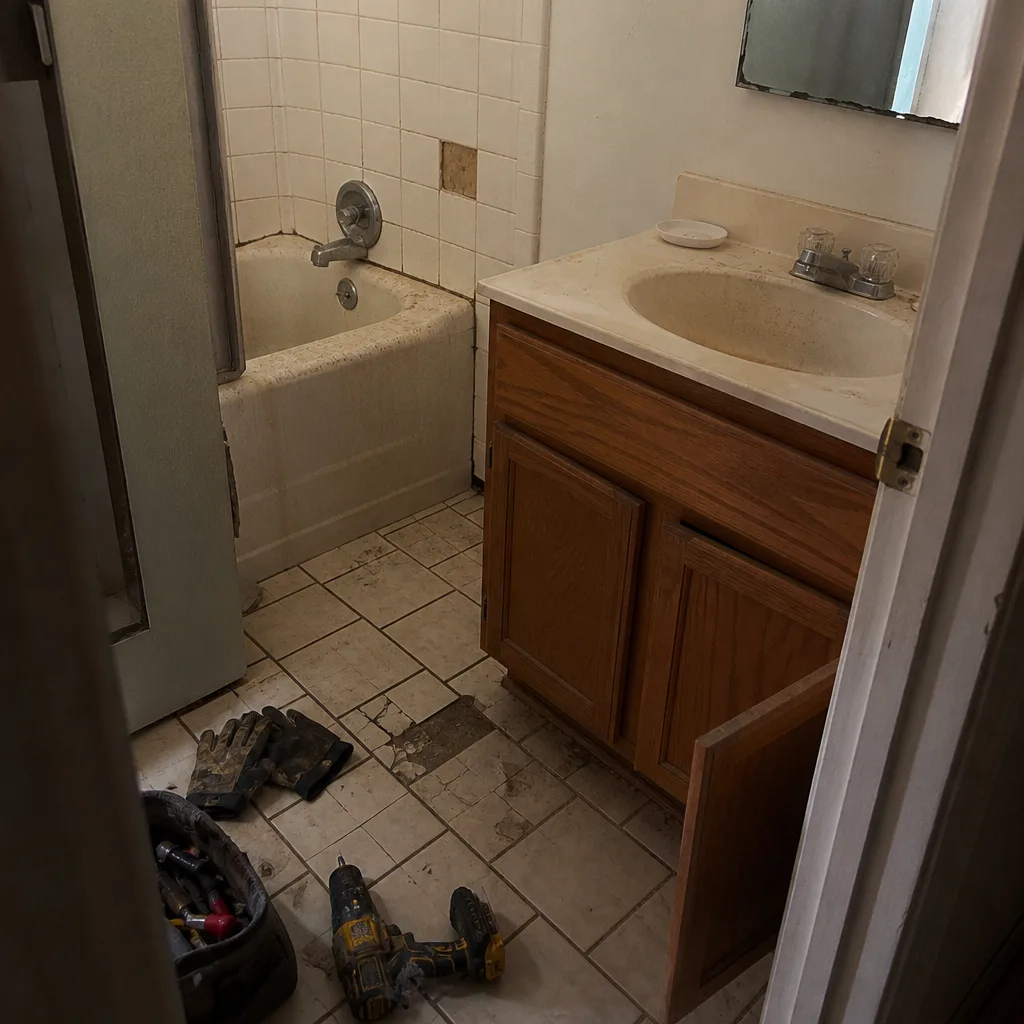 Before
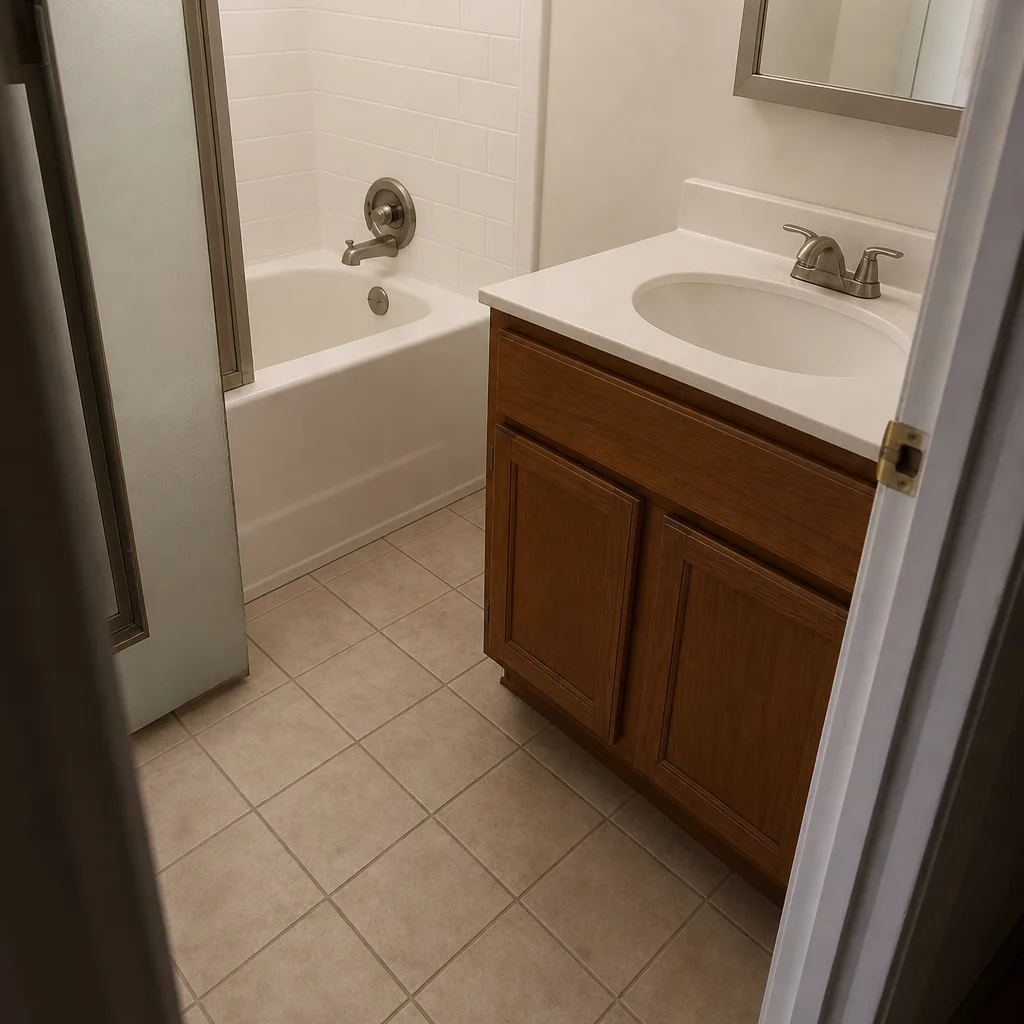 After
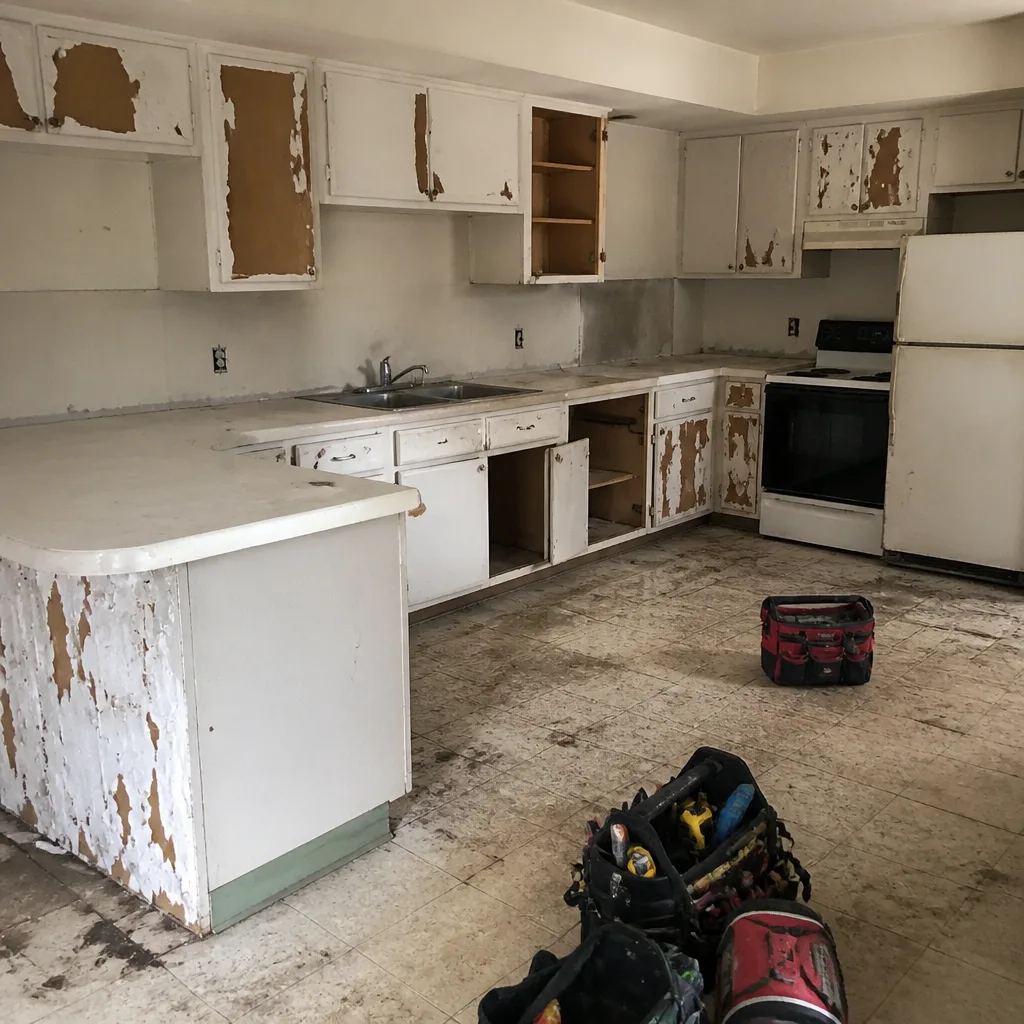 Before
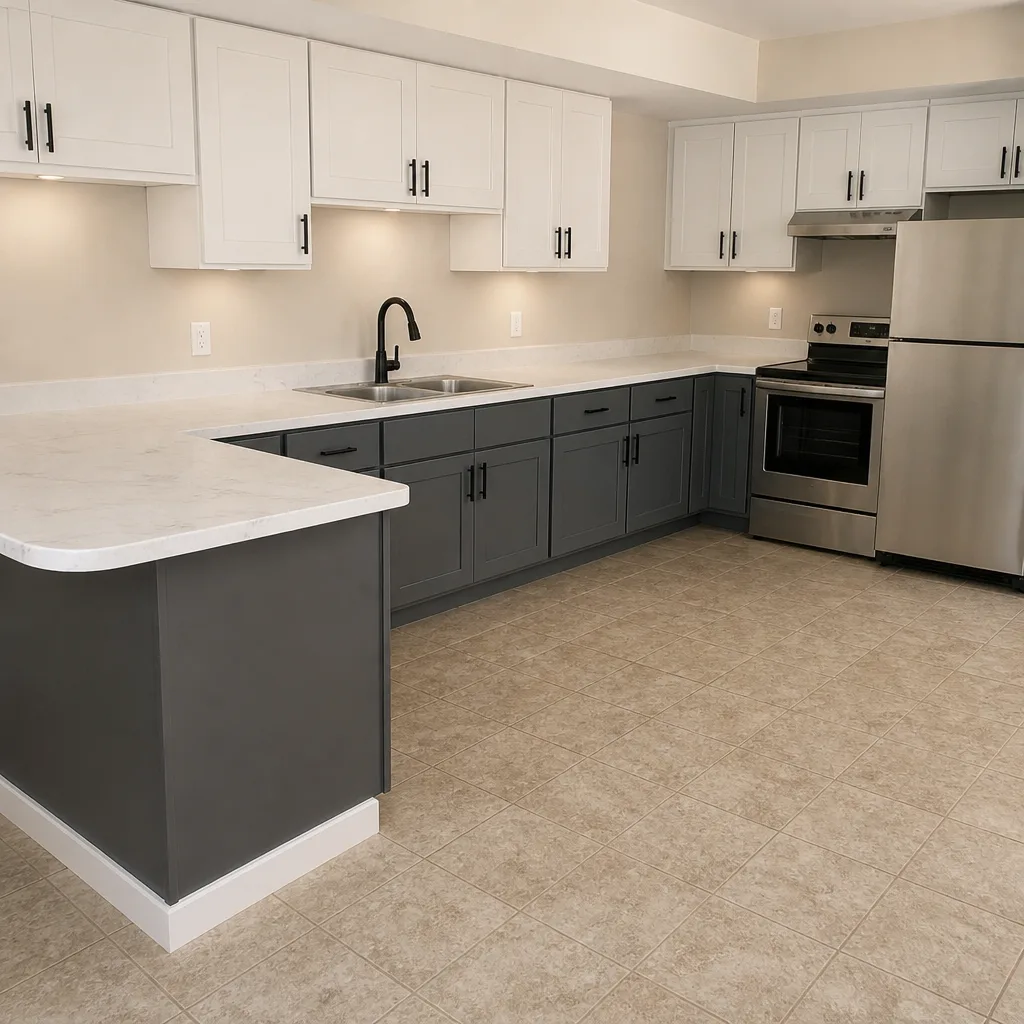 After
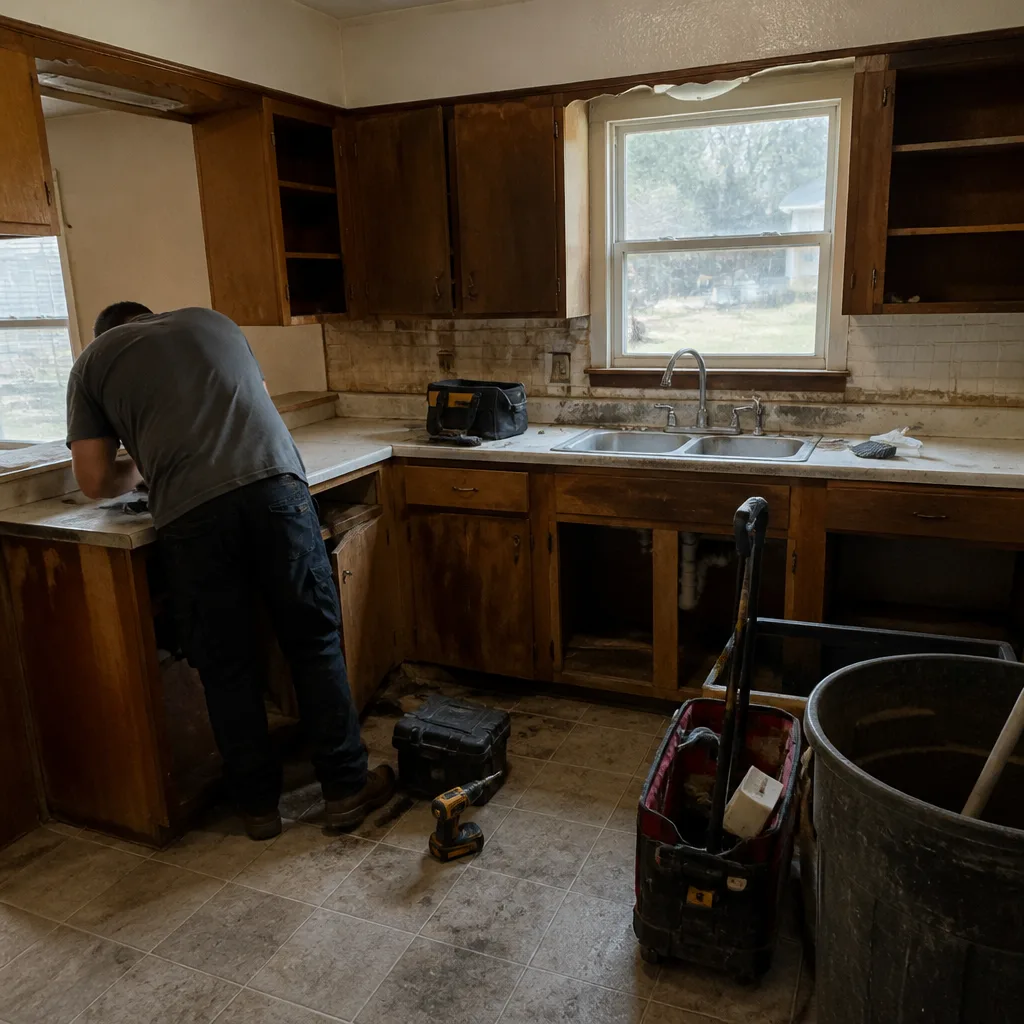 Before
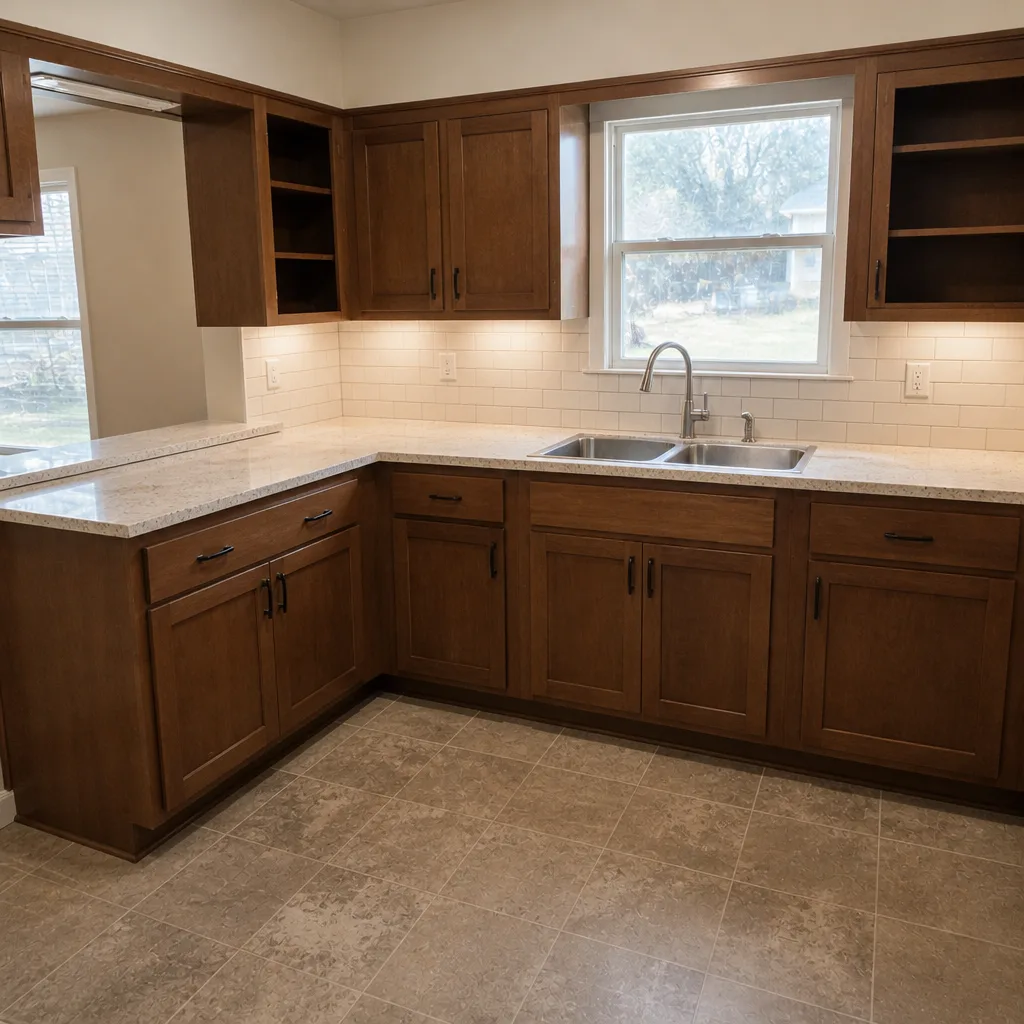 After
When to Call a Professional
Some work belongs to a licensed contractor on day one. Structural changes, additions, anything touching the electrical panel or gas lines, roof replacement or steep-roof work, and any plumbing rough-in all fall on the professional side. These aren’t projects where the do-it-yourself saving is real; they’re projects where a mistake endangers the building or the people in it. Call a trained, licensed contractor.
Beyond the danger list, consider a pro for anything you’ll be pulling a permit for, anything you need a one-year written guarantee on, or any project with more than three trades involved. Bradford Remodeling Co Denton offers free estimates in Denton, so you can get a written price before deciding anything. Call (844) 651-3175 and we’ll schedule a walkthrough. The estimate is free, the price is in writing, and the guarantee holds for a full year.
Frequently Asked Questions
A full kitchen remodel in Denton runs $21,000 to $78,000, with cabinetry, countertops, and labor as the three biggest lines. Modest refaces stay under $18,000. The range depends on cabinet line, countertop material, and whether you’re moving plumbing or electrical. Call (844) 651-3175 for a written estimate – it’s free.
The gap usually comes from scope, not greed. One bid may exclude a permit, carry a tight allowance for tile, or specify a lower-grade stone, while the other includes everything. Compare by line item and material spec, and the $10,000 difference almost always resolves to something concrete. Call (844) 651-3175 and we’ll walk you through a side-by-side comparison.
Yes, if you’re moving plumbing, electrical, or walls, and generally for any work that changes the rough-in. Cosmetic work like paint and re-caulking doesn’t require one. When a permit is required, pulling it is not optional; it’s what protects your resale and insurance. Call (844) 651-3175 with the scope and we’ll tell you what a permit involves.
A full asphalt shingle roof on a standard Denton home runs $11,000 to $19,000, including tear-off, underlayment, ventilation, and haul-away. A typical home takes one to two days of install work, weather permitting, with tear-off and decking repair on the front end. Call (844) 651-3175 to schedule an inspection and a written price.
Not on a Bradford Remodeling job. The Garrison Standard means a written price before any tool comes out, with no numbers that move at the door. Change orders only arise if you add scope mid-project, and those get approved in writing before we proceed. Call (844) 651-3175 for a fixed written estimate.
It’s a full one-year written guarantee on completed work. If something we installed fails within that first year, whether a plumbing joint, a tile set, or a countertop seam, we return and correct it at no charge. It’s our written commitment on every project. Call (844) 651-3175 and we’ll show you how it appears in your contract.
The Bottom Line
Denton remodeling costs in 2026 are shaped by three local forces: metro labor competition, regional material freight, and the 2024 permit fee schedule on jobs over $50,000. The exact job matters less than the paper it’s written on. A kitchen that lands anywhere in the $21,000 to $78,000 range is only trustworthy if it’s itemized by labor and material, with allowances named and permits pulled. The difference between an honest bid and a surprise invoice is a written scope, a fixed price, and a guarantee that holds for a full year. Get all three in writing, and the project runs squared away from start to finish.
Written by the team at Bradford Remodeling Co Denton.