Last updated November 17, 2026





Free written scope consultation - allowances, timeline, and change-order rules on paper before a single trade is scheduled
DIY vs Professional Home Remodeling: What’s Safe to Do Yourself
Texas law doesn’t care how good you are with a tile saw. Unpermitted electrical work buried behind drywall can void your homeowner’s insurance and legally become a defect you must disclose when you sell. We’ve watched Denton homeowners save $600 on a bathroom tile job and then eat a five-figure repair because the waterproofing was wrong and the whole shower had to come out. Here’s the shift that makes this decision simple: stop asking whether you’re skilled enough, and start asking which failures on this task are reversible – and which ones get sealed inside a wall where nobody sees them until the damage is done. This guide draws that line.
Quick Answer
Safe DIY projects are the ones where a mistake stays visible and costs a few hundred dollars to fix: painting, demo of non-load-bearing walls, cabinet hardware, swapping fixtures, landscaping. Projects that cross a Texas permit threshold or get closed up behind finishes – electrical, plumbing, HVAC, structural changes, shower waterproofing – belong to a licensed professional. Reversibility, not difficulty, is the dividing line.
Styles & brands we work with
- Kitchen remodeling
- Bathroom remodeling
- Home additions & ADU
- Roofing
- Windows & doors
- Driveway & pavers
- Fence
Table of Contents
- Which Texas permit thresholds turn DIY into a code violation?
- What “concealed conditions” means and why it changes the stakes
- Where DIY actually saves real money in Denton
- What a licensed contractor’s written warranty really requires
- How DIY work mixed into a professional scope voids line items
- The insurance gap: when your DIY repair triggers a claim
- Common mistakes to avoid
- When to call a professional
Which Texas permit thresholds turn DIY into a code violation?
Denton follows the International Residential Code as adopted locally, and the City of Denton’s permit office cares about the same threshold most Texas cities do: whether the work touches structure, life-safety systems, or the building envelope. Cross that line without a permit and you’re not saving money – you’re building a liability that surfaces at inspection, at resale, or at the first insurance claim.
The permit triggers we see most often in Denton:
- Structural: Removing or modifying any load-bearing wall, cutting headers, adding a beam, changing a footing, or converting a garage to living space.
- Electrical: New circuits, panel changes, moving outlets or switches, adding a subpanel, or running wire to a new appliance. Replacing a light fixture on an existing circuit is generally fine; adding a circuit is not.
- Plumbing: Relocating a drain, adding a fixture, replacing a water heater, or any rough-in change. Swapping a faucet or a toilet in the same location usually doesn’t trigger a permit, but moving the supply or drain line does.
- HVAC: Replacing a system, adding a return, or running new ductwork. Filter changes and thermostat swaps are homeowner territory.
Here’s the part people miss: Denton’s older housing stock – the 1950s and 60s ranches off University Drive and the mid-century homes near Texas Woman’s University – often has aluminum branch wiring, undersized panels, or cast-iron drain lines. A small kitchen update in one of these homes can uncover conditions that force a permit even when your original plan didn’t require one. That’s a good thing to know before demo starts, not after.
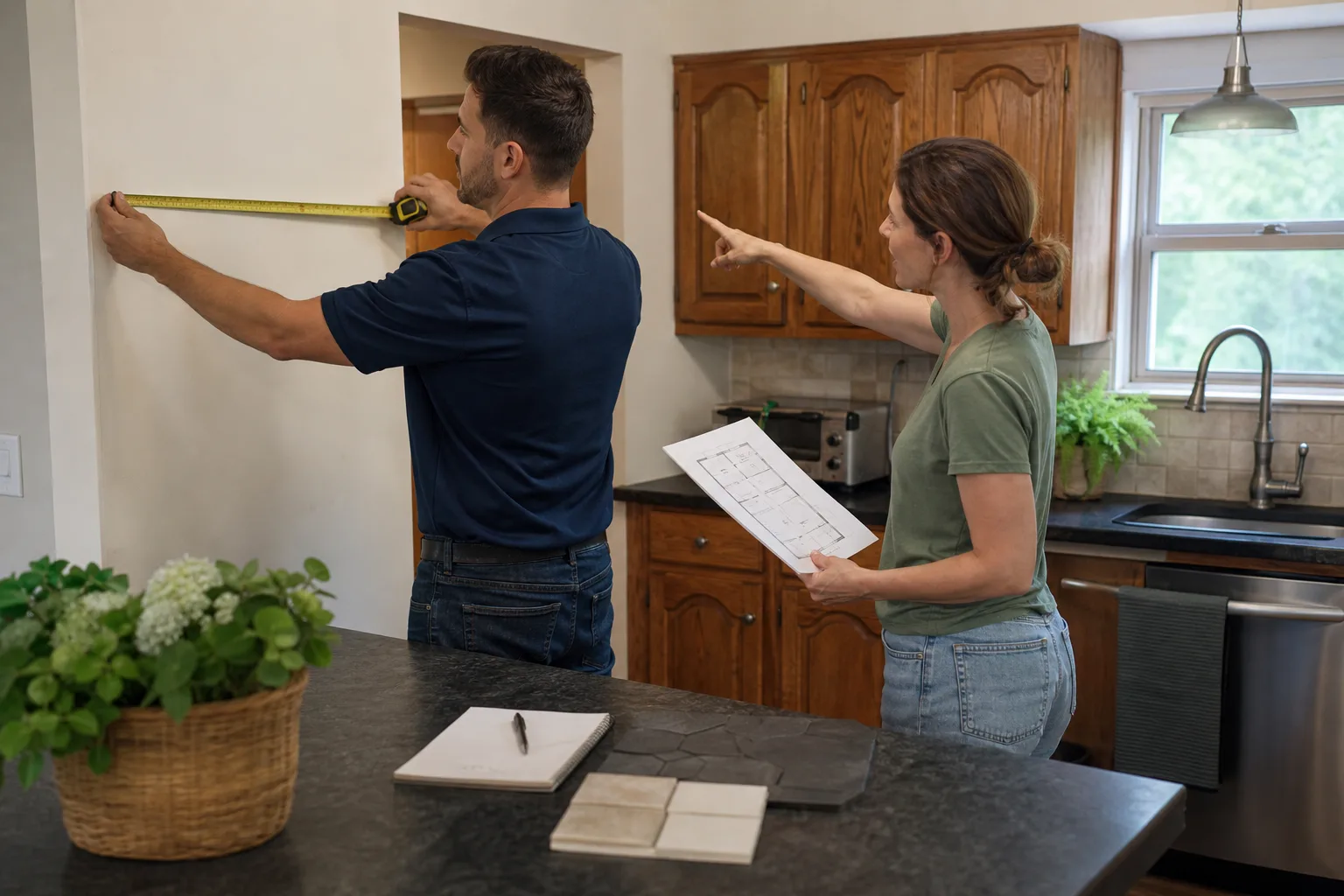
If you’re remodeling a kitchen or bath and want the scope examined before you swing a hammer, a General Contractor in Denton can walk the space and tell you which line items need permits.
What “concealed conditions” means and why it changes the stakes
“Concealed” is trade shorthand for anything that gets covered up by a finish: wire inside a wall, plumbing inside a slab, waterproofing behind tile, framing behind drywall, the flashing behind siding. Contrast that with surface work – paint, trim, hardware, flooring over a sound subfloor – where a mistake announces itself immediately and costs a weekend to correct.
Concealed work fails quietly. A shower pan with the wrong slope doesn’t leak on day one; it leaks for two years while the subfloor rots, then shows up as a soft spot in the hallway. A junction box without a proper cover doesn’t spark the day you finish the drywall; it waits. A gas line with a slow weep doesn’t smell until it does.
The reason this matters for a DIY decision is simple: the cost of a failure is inversely proportional to how quickly you find it. Surface mistakes cost you a weekend. Concealed mistakes cost you the wall, the floor under it, and sometimes the room. That’s the real dividing line, and it’s why a homeowner who’s perfectly capable of installing trim has no business wiring a new circuit.
We’ve seen this play out in Denton’s slab-on-grade neighborhoods where plumbing runs under the concrete. A DIY drain relocation that passes a visual check still fails a pressure test, and by then the slab is poured and the fix is a jackhammer.
Where DIY actually saves real money in Denton
Plenty of remodeling work is genuinely homeowner territory, and a good contractor will tell you so. These are the tasks where a mistake is visible, correctable, and cheap – which means the labor savings are real.
- Painting: Interior walls, ceilings, trim. Prep is 70% of the job; buy real painter’s tape and drop cloths, and don’t skip the sanding.
- Demo of non-load-bearing partitions: A stud wall that isn’t structural can come down with a reciprocating saw and a lot of patience. Verify with a structural engineer or your contractor first – “it looks non-load-bearing” has bankrupted people.
- Cabinet hardware: Pulls and knobs on existing boxes. A $6 template prevents a $600 mistake in door alignment.
- Fixture swaps: Faucets, showerheads, and toilets in the same location. Stick with the brands your plumber can source parts for – Bathroom Remodeling in Denton specs often call for Kohler or Moen, both of which have a service network if a cartridge fails.
- Landscaping and hardscape refresh: Beds, mulch, edging, and planting. Not retaining walls over 4 feet – those are engineered work.
- Tile backsplash: A kitchen backsplash is one of the best DIY tile jobs because it’s surface work: if it fails, you chip it off and start again, and nothing behind it depends on it being right.
Notice what these have in common: none of them are concealed, none are life-safety, none require a permit. That’s the pattern.
What a licensed contractor’s written warranty really requires
A written warranty is only as good as the scope it names. Bradford Remodeling’s work is covered by the 365-Day Done Right Promise: if the work doesn’t hold within a full year, we come back and correct it at no charge. That’s a real commitment, and it’s also a contract with conditions – and those conditions matter if you’re mixing DIY into a professional job.
What a written warranty generally requires:
- Documented scope. The warranty covers the work specified in the written agreement. Anything outside that scope isn’t covered – including work you did yourself or hired separately.
- Proper access and inspection. To warranty concealed work, the contractor has to see it before it’s closed up. Photos, inspection sign-offs, and, where required, a permit inspection record are the evidence.
- Undisturbed work. If you open a wall the contractor finished, or drill into a waterproofed shower to hang a shelf, the warranty on that assembly may be voided.
- Code-compliant installation. A warranty can’t be honored over work that doesn’t meet code, because the contractor can’t legally reinstall it that way.
We put every price in writing before a tool comes out – that’s The Garrison Standard – and the warranty language follows the same discipline. The point isn’t to trap a homeowner; it’s to make the guarantee testable. If a homeowner knows exactly what’s covered and for how long, they can hold us to it, and that’s the whole point.
How DIY work mixed into a professional scope voids line items
This is the scenario we see most often and warn homeowners about early: a family hires us for a full kitchen remodel but wants to save money by doing the demo themselves, or by handling the tile backsplash between the cabinet install and the countertop template. Sometimes it works cleanly. Often it doesn’t, and the failure modes are specific.
When DIY work touches a line item a contractor is also warranting, it can void that line item. Three common cases:
- Demo gone deep. A homeowner removing “just the cabinets” cuts through a gas line or nicks a supply line behind the wall. Now the plumbing rough-in has to be redone, and the redo is out of scope and out of warranty.
- Tile behind the range. The backsplash has to be installed after the countertop template but before the counter goes in. If the tile is set with the wrong substrate – regular drywall instead of cement board – the grout cracks within months and the tile is on the homeowner.
- Hardware on pre-hung doors. Drilling a mortise in the wrong place on a Therma-Tru door voids the manufacturer’s warranty on that slab, which in turn carries through to the installation warranty.
The cleanest way to mix is to agree on the split before the written price is issued. Any confirmed franchise or crew chief will tell you up front which tasks they’ll hand over and which they won’t touch if you’ve started them. If you’re weighing a full renovation against partial DIY, a walkthrough with a Kitchen Remodeling in Denton team is the cheapest way to find out where that line falls for your house.
The insurance gap: when your DIY repair triggers a claim
Here’s the scenario nobody thinks about until it happens. A homeowner replaces a supply line under a bathroom sink with a $4 braided hose, installed wrong. Six months later the hose fails and floods the first floor. They call their insurance company expecting the interior to be covered. It might be – and it might not.
Homeowner’s policies typically cover “sudden and accidental” water damage from a plumbing failure. But they often exclude damage caused by unpermitted work, work that doesn’t meet code, or work the policyholder did without proper installation. The exact language varies by policy, and this isn’t legal advice – read your policy or ask your agent. The pattern, though, is consistent: insurers increasingly look for permit records on any system work when a claim is large.
The secondary damage gap is the real risk. A DIY electrical splice that causes a small fire inside a wall gets you a house fire, but the claim on the wall repair might be complicated by the fact that the splice wasn’t permitted and wasn’t inspected. Whereas if you had a licensed electrician pull the permit and pass the inspection, that paperwork is exactly the evidence your insurer wants to see.
The same principle applies at resale. Texas seller’s disclosure requires you to disclose known defects and any unpermitted work you’re aware of. A buyer’s inspector finds unpermitted electrical in a bathroom, and the deal re-prices or falls apart.
Common Mistakes to Avoid
- Assuming “non-load-bearing” by looking. A stud wall in a Denton 1960s ranch can be carrying roof load through a header you can’t see. Get a contractor or structural engineer to sign off before demo – the consultation costs less than the beam repair.
- Pulling a permit “later.” Denton’s permit office will require the work to be exposed before it can be inspected, which means re-opening finished walls. The cost of a retroactive permit is far more than the cost of doing it right the first time.
- Skipping the waterproofing membrane in a shower. A cement board shower with no membrane will leak within two to five years in the Denton climate, where summer humidity runs high enough that moisture hangs in wall cavities longer than most people expect. The membrane is the whole system; skip it and you’re remodeling that shower twice.
- Mixing brands on a fixture. Buying a Moen rough-in valve and a Delta trim only “works” if the trim is designed for that valve – often it isn’t. Match the rough-in to the trim you’re actually installing.
- Demolishing before the written scope is signed. Once you’ve pulled the drywall, every contractor’s price goes up because they can’t see the condition you bought. Get the number in writing before demo – which is exactly what The Garrison Code means by “squared away.”
- Installing your own cabinet boxes and asking a pro to hang doors. A KraftMaid or Wellborn cabinet hangs plumb only if the boxes are plumb. We’ve had to reset whole runs because the homeowner had already drilled the studs.
- Not keeping photos of the framing, plumbing, and electrical before it’s closed up. An inspector or future buyer will ask. A phone album of progress photos is free insurance.
When to Call a Professional
Call a licensed professional when the work touches structure, life-safety systems (electrical, gas, HVAC), the building envelope, or any concealed assembly that will be covered up before you can see whether it failed. Call when the failure cost is more than you can afford to pay twice. Call when a permit is required – not just for the inspection, but because the permit record is the evidence you’ll need for insurance and resale. And call when the scope involves moving a wall, adding a bathroom, replacing a roof, or reworking a kitchen down to the studs. Bradford Remodeling Co Denton offers free estimates in Denton – call (844) 651-3175 to schedule one, with the price in writing before any work starts.
See the difference
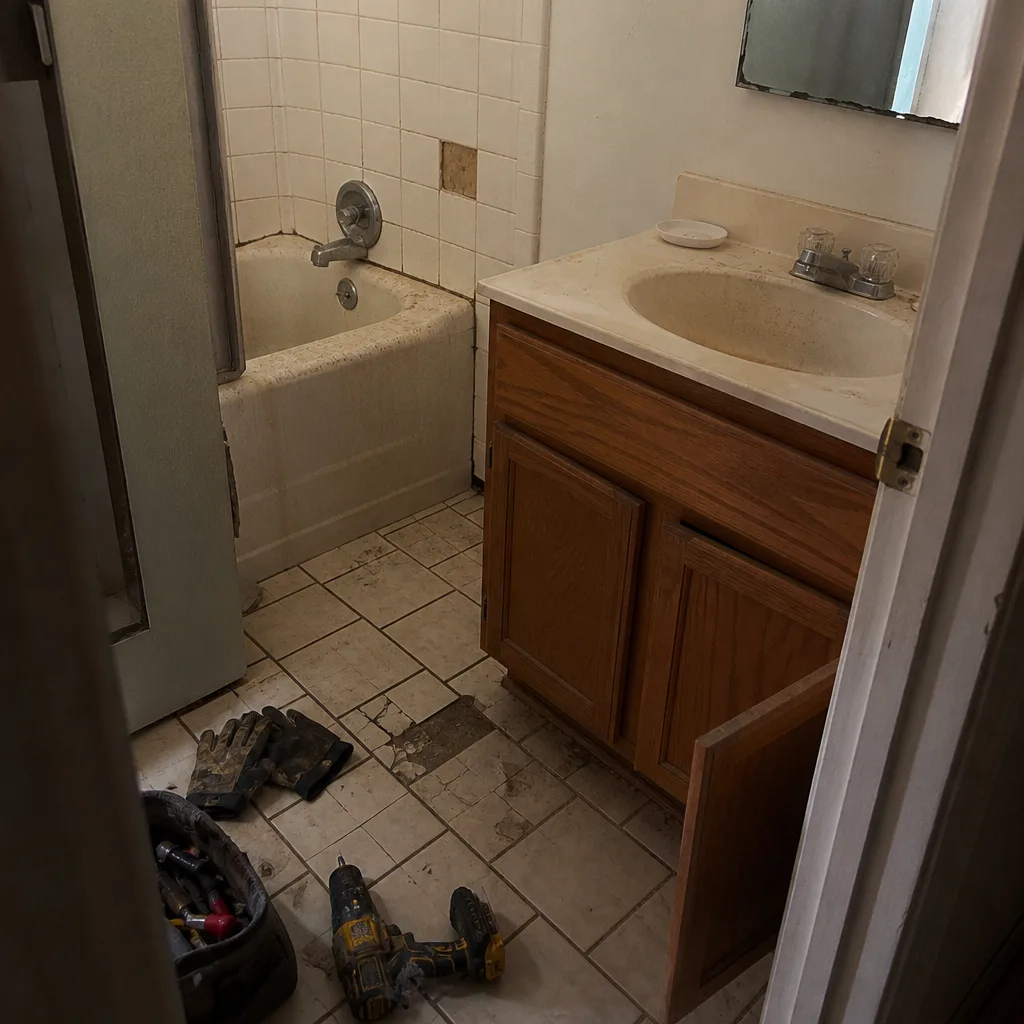 Before
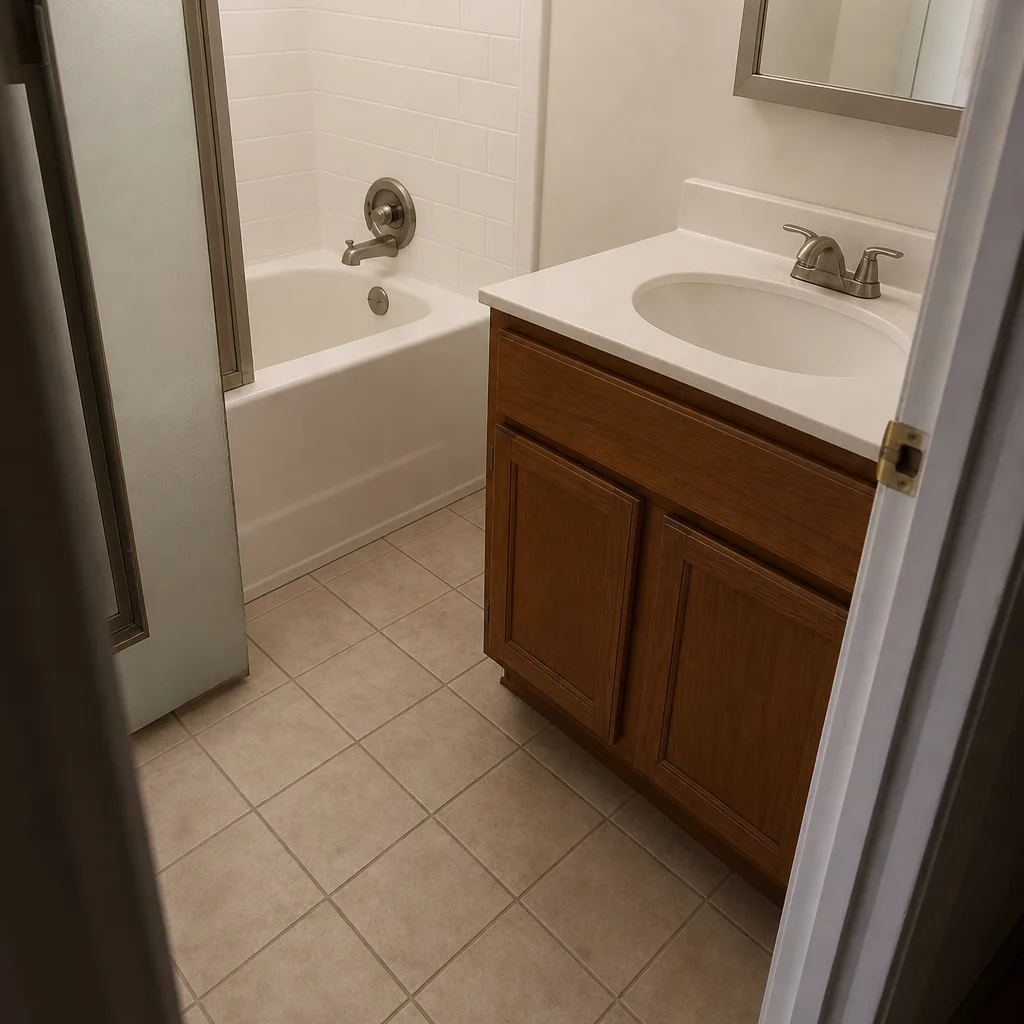 After
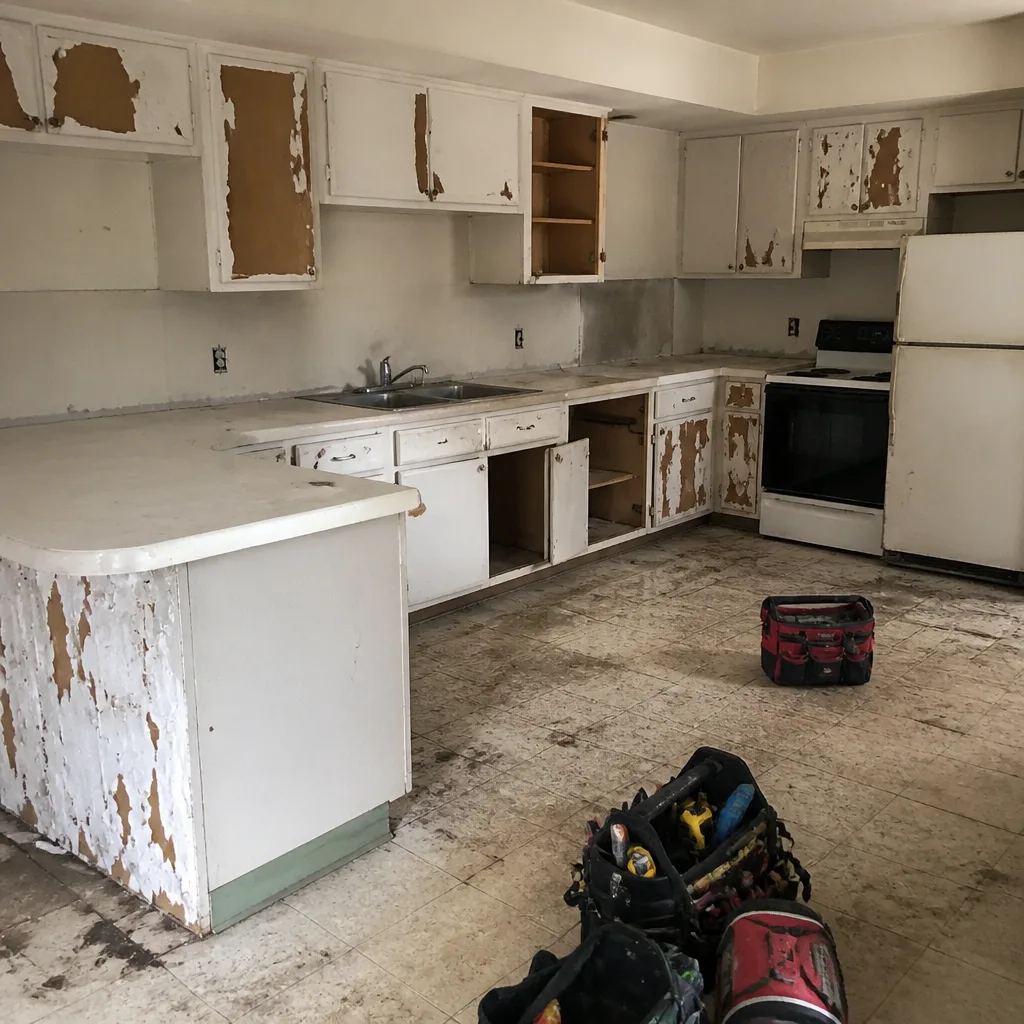 Before
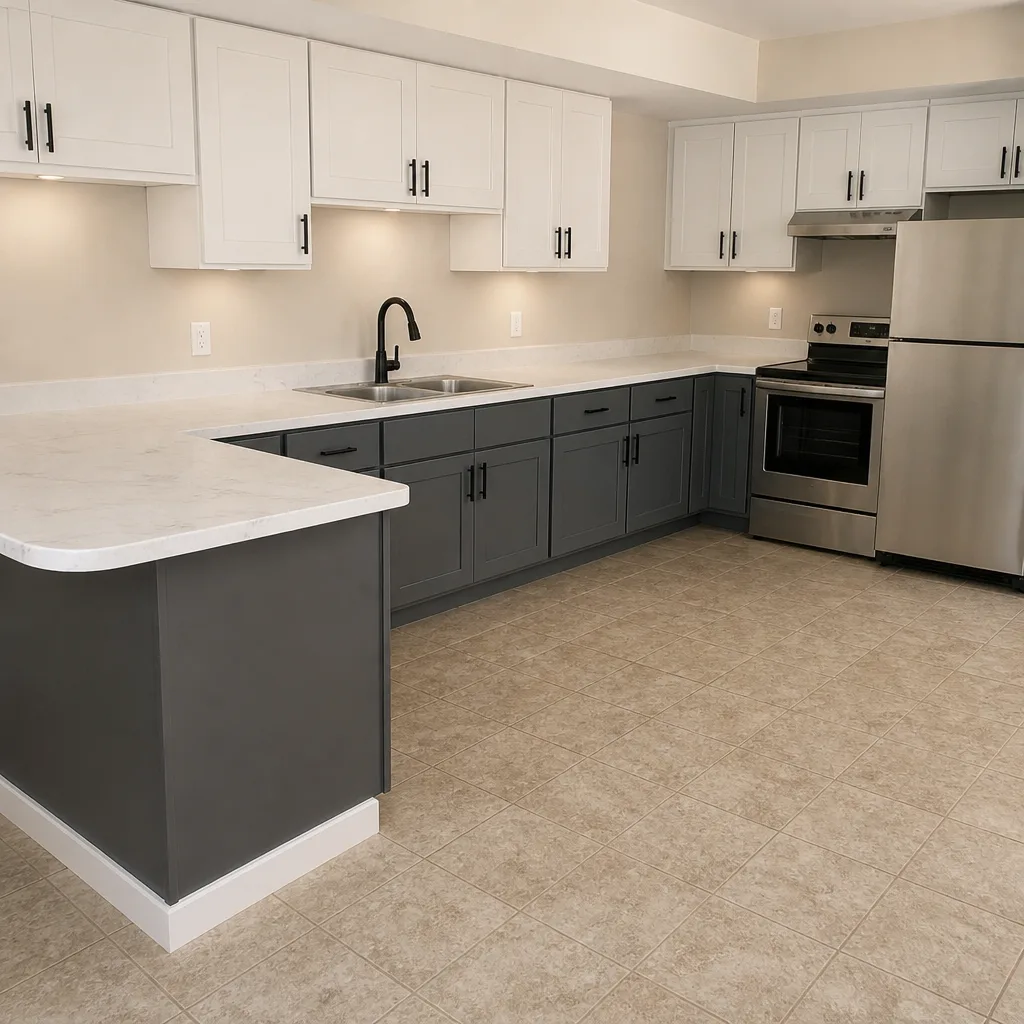 After
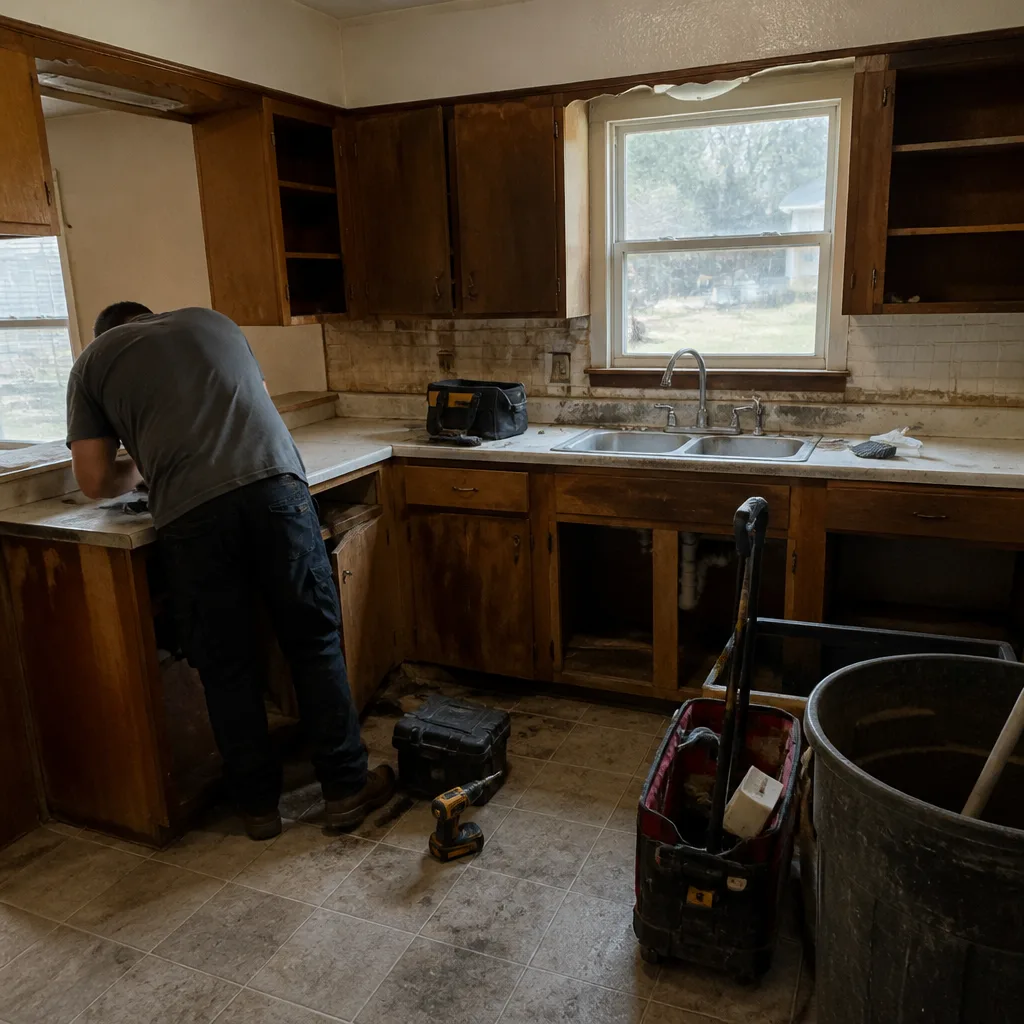 Before
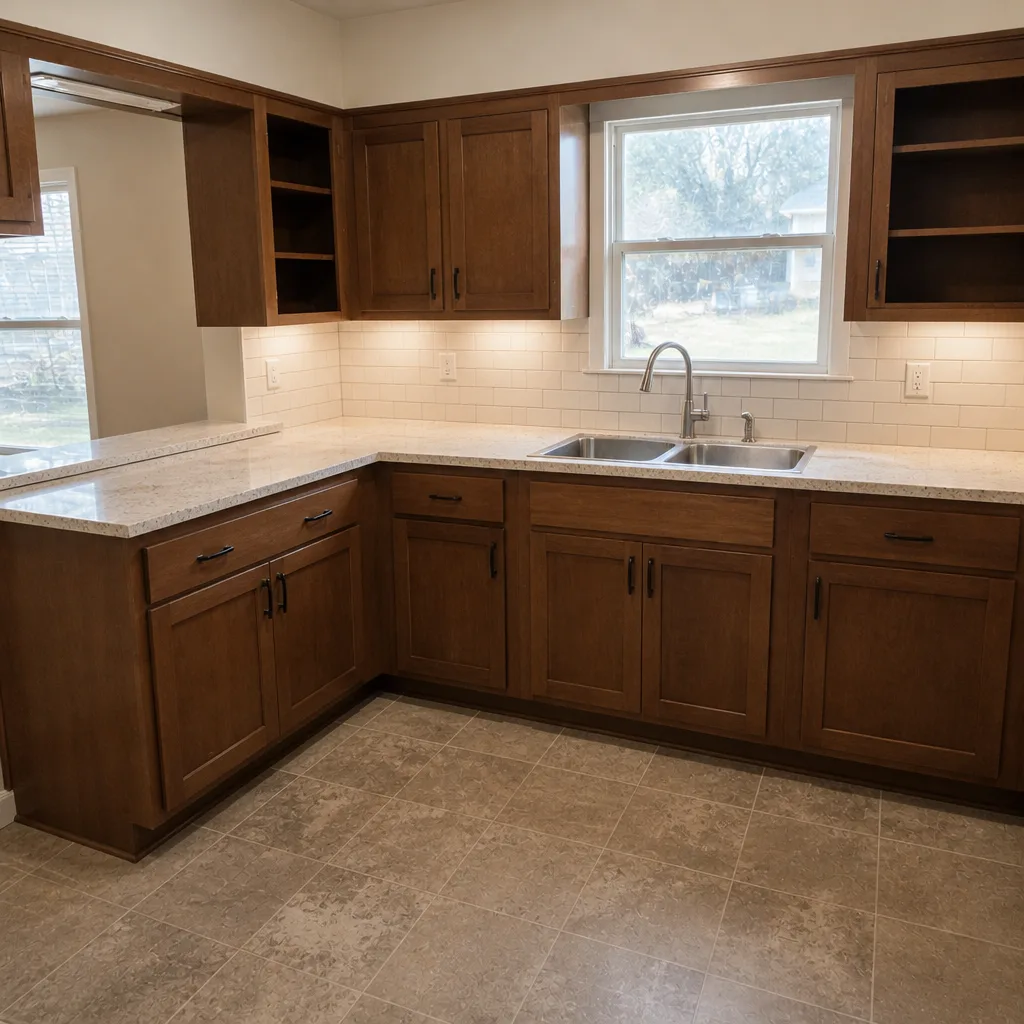 After
Frequently Asked Questions

Only on surface work. Painting, backsplash tile, cabinet hardware, and non-structural demo save real money because a mistake is visible and cheap to fix. Anywhere a permit or concealed system is involved, DIY usually costs more in the long run once you price in the risk of a failed inspection, a voided insurance claim, or a second remodel to fix the first.
Structural changes (moving load-bearing walls, adding beams, converting a garage), electrical work that adds or moves a circuit or panel, plumbing rough-in changes, water heater replacement, and HVAC system replacement or new ductwork all require permits. Cosmetic swaps like a faucet or a light fixture on an existing circuit typically don’t. When in doubt, call the City of Denton permit office before you start – they’ll tell you clearly.
Only on the line items they specified and performed. If you did the demo and the contractor warranties the plumbing rough-in, that rough-in is covered – but if your demo damaged a supply line, the repair is not. The written scope has to name who did what, and that’s what we put in writing before work starts.
Floor tile over a sound, flat substrate: yes, and it’s a reasonable DIY. Shower walls and pans: not recommended. The waterproofing membrane and the slope to the drain are the entire system, and getting them wrong means the tile has to come off and the walls rebuilt within a couple of years. Floor tile fails visibly; shower waterproofing fails silently.
It can. Most policies cover sudden and accidental damage, but many exclude or complicate claims where the work wasn’t permitted, wasn’t inspected, or wasn’t done to code. The safest pattern is to keep permit and inspection records for any system work – that paperwork is the evidence an insurer wants to see.
The contractor’s 365-Day Done Right Promise covers their own work, not yours. If their scope fails, they return and correct it at no charge within the year. If your scope fails, the repair is on you – and if your failure damaged their work, correcting it is out of warranty. That’s why the split has to be in writing before anybody starts.
The Bottom Line
The DIY vs professional decision isn’t about skill – it’s about reversibility. Painting, cabinet hardware, non-structural demo, backsplash tile, fixture swaps, and landscaping are safe to do yourself because a mistake is visible and cheap. Permit-triggering work, structural changes, and anything that gets closed up behind a finish – electrical, plumbing, waterproofing, HVAC – belongs to a licensed professional, not because you can’t swing a hammer but because the failure cost is a wall, a claim, and a resale disclosure. Draw the line at permits and concealed systems, keep records for the work you do, and get the professional scope in writing. If you’re in Denton and want the line drawn for your specific house, a free estimate is the cheapest way to find out. Call (844) 651-3175 – a live person answers 24/7.
Written by the team at Bradford Remodeling Co Denton.