Last updated November 17, 2026







Free written scope consultation - allowances, timeline, and change-order rules on paper before a single trade is scheduled
Kitchen Remodeling Maintenance Schedule: What to Do and When
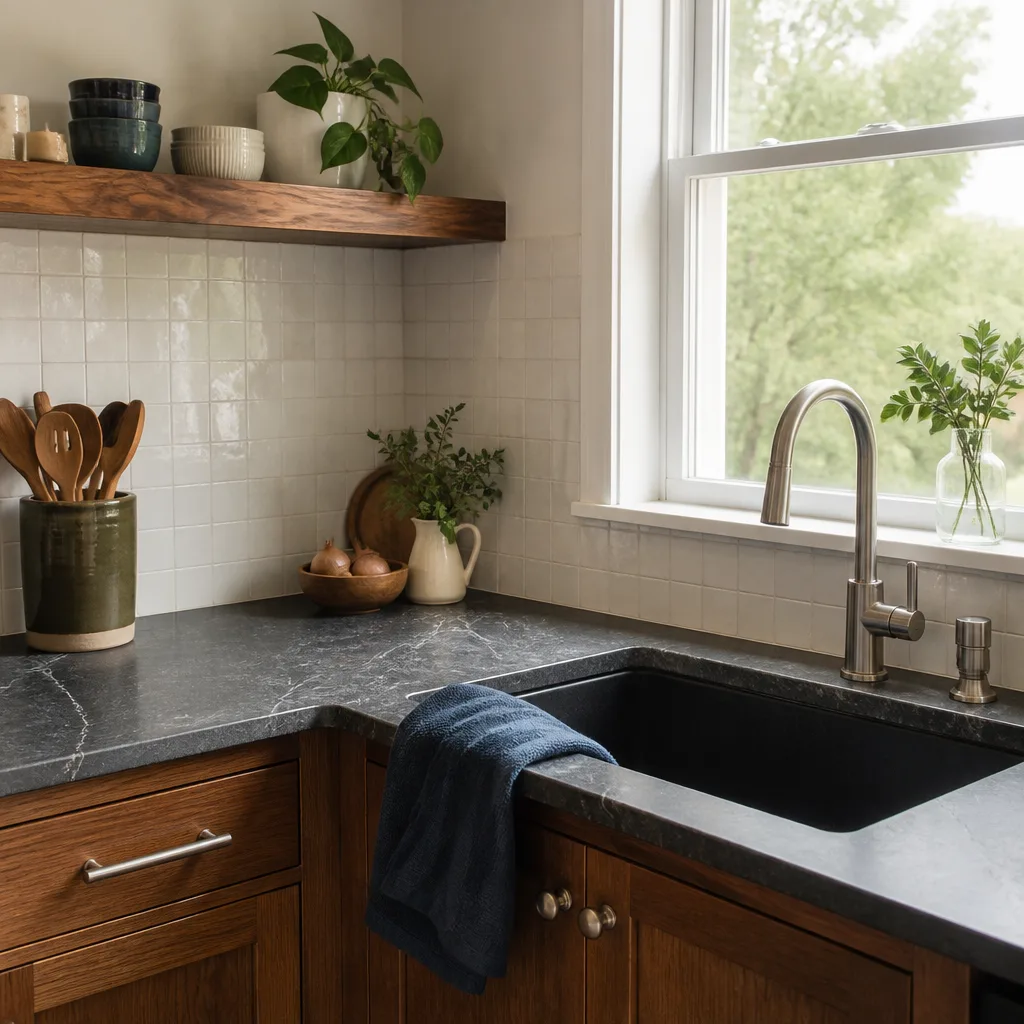
The grout between your new backsplash tile and the countertop edge isn’t grout. It should be caulk. If your installer used grout in that joint, it will crack within 18 months, because the counter and the wall move at different rates and grout has no give. That single detail explains why a remodeled kitchen needs a different maintenance schedule than the builder-grade kitchen you replaced. New finishes, new appliance connections, and new trade-handoff joints all carry their own inspection windows. This guide lays out what to check, when to check it, and how to protect the investment before the warranties close. We’ve seen plenty of Denton kitchens where the work was solid but the follow-up wasn’t.
Quick Answer
A remodeled kitchen needs a first-year inspection at roughly 30 days, 6 months, and 11 months to catch settling cabinets, countertop seams, and plumbing connections before warranties expire. After year one, move to a simple seasonal routine: caulk joints annually, check appliance supply lines twice a year, and inspect hinges and slides every six months. The rest is finish-specific care, like using the right cleaner on quartz versus granite.
Styles & brands we work with
- Kitchen remodeling
- Bathroom remodeling
- Home additions & ADU
- Roofing
- Windows & doors
- Driveway & pavers
- Fence
Table of Contents
- The First-Year Inspection Checklist
- Maintaining the Finishes You Actually Paid For
- Annual Checks on New Appliance Connections
- Caulk vs. Grout: Where Each Belongs and When to Re-Caulk
- Using Your Project Documentation to Protect Warranties
- The Seasonal Routine for Denton Kitchens
- Common Mistakes to Avoid
- When to Call a Professional
The First-Year Inspection Checklist
The first year after a remodel is when small problems show up and when your leverage is highest. Manufacturer coverage and workmanship guarantees are live, and a caught issue is usually a quick fix rather than a repair bill. Set three checkpoints: 30 days, 6 months, and 11 months. The 11-month visit matters most, because it puts you ahead of the one-year warranty window on cabinetry and finishes.
At each checkpoint, walk the kitchen with a flashlight and a notepad. Here’s what to look at:
- Cabinet hinges and drawer slides. Open and close every door and drawer. Listen for squeaks, look for sagging doors, and check that soft-close dampers still slow the last inch. Hardware loosens as cabinets settle.
- Countertop seams. Run a fingernail across every seam. A seam that catches or shows a hairline gap needs attention from the fabricator, and later is harder to get covered.
- Under-sink plumbing connections. Wrap a dry paper towel around each supply line and drain fitting, run the water, then check for moisture. A slow weep shows up on the towel before it shows up on the cabinet floor.
- Caulk joints at the backsplash. Look for separation at the counter-to-wall line and around the sink rim. A cracked bead lets water behind the counter.
- Appliance fit and finish. Check that the dishwasher sits level, that the range hood vent flap opens freely, and that the refrigerator door clears the surrounding cabinetry.
Photograph anything that looks off and date the photos. In Denton, we’ve found the 6-month checkpoint catches most of what’s going to move, especially in kitchens with wood-framed cabinetry and heavy stone tops.
Maintaining the Finishes You Actually Paid For
Builder-grade finishes are forgiving. The finishes you chose for a remodel usually aren’t. A painted cabinet door, a quartz counter, and unlacquered brass pulls each want something different, and the wrong product can do real damage.
Painted cabinets. Use a soft damp cloth and a mild dish soap solution. Skip abrasive pads, bleach, and citrus-based cleaners, which dull the topcoat over time. Wipe grease splatter near the range weekly rather than letting it cure on. If a door gets chipped, touch-up paint from your original order is worth keeping on hand.
Quartz vs. granite. Quartz is non-porous and needs no sealing, but it doesn’t like heat. Set hot pans on a trivet, not directly on the surface, because resin binders can scorch. Granite is porous and typically wants sealing once a year; a water droplet that beads means the sealer is holding, one that soaks in dark means it’s time. Both clean best with a pH-neutral stone cleaner rather than vinegar or ammonia.
Unlacquered brass hardware. This finish is meant to patina, so don’t polish it unless you want it bright. Wipe with a dry cloth and let the surface age. Lacquered brass is the opposite: keep it away from abrasive cleaners that can flake the coating.
If your kitchen uses KraftMaid or Wellborn cabinetry, the manufacturer publishes care guidance for each door style, and it’s worth reading against what you own rather than trusting a general cleaning label.
Annual Checks on New Appliance Connections
New appliance connections are a common weak spot after a remodel, because they’re hidden and nobody looks at them. Three deserve a check every year, and the gas one deserves extra care.
- Gas flex line to the range. Look for kinks, cracks, or a loose fitting where the flex connects. If you smell gas at any point, leave the area and call your gas utility first. A trained professional should handle any gas line work; this isn’t a homeowner task.
- Dishwasher drain loop. The drain hose should rise to a high loop under the sink before dropping to the disposal or drain. If the loop has sagged, dirty water can back into the dishwasher.
- Refrigerator ice-maker supply line. Check the line and the saddle valve or shutoff for drips. A small leak behind the fridge can run under the flooring before you notice.
Every six months, pull the fridge out a few inches and look behind it. In Denton’s heat, a supply line that’s fine in winter can show stress in summer when the fridge works harder.
Caulk vs. Grout: Where Each Belongs and When to Re-Caulk
This is the joint most often done wrong, and it’s worth a plain explanation. Grout is rigid; caulk flexes. Anywhere two different materials meet, the joint moves, so it needs caulk. Grout belongs between tiles on the same plane. Caulk belongs at the change of plane.
In a kitchen, that means caulk at these locations:
- The counter-to-backsplash interface
- Where the backsplash meets the wall or window trim
- The sink rim to countertop joint
- Around the base of the range hood where it meets the ceiling or wall
Re-caulk those joints roughly once a year, and any time you see a crack, a gap, or discoloration. Use a siliconized caulk rated for kitchens and baths. Cut out the old bead fully with a utility knife, clean and dry the joint, then apply the new bead and smooth it. Skipping the removal step is why re-caulking fails early; new caulk won’t bond over old. Denton’s humidity swings make the counter-to-backsplash line the first place water gets in, so it’s the joint to watch.
Using Your Project Documentation to Protect Warranties
Your project paperwork isn’t clutter. It’s a maintenance manual specific to your kitchen, and it’s what a manufacturer will ask for if a finish fails and you file a claim.
Keep these together in one folder, physical or digital:
- As-built drawings. These show where the plumbing and electrical actually ended up, not where they were drawn. Before you drill into a wall for a shelf, this tells you what’s behind it.
- Product specifications and model numbers. Note the exact cabinet line, countertop material, faucet model, and appliance serial numbers. Claims move faster with a model number than a description.
- Warranty cards and registration confirmations. Many appliance and cabinet warranties require registration within a set window.
- Your written price and guarantee documents. If the work was done under a written guarantee, this is the record you reference for any call-back.
Store the same set of documents where you can find them in a hurry. When a hardwood finish fades or a faucet cartridge fails, the documentation plus the manufacturer’s stated care requirements is what keeps coverage intact.
The Seasonal Routine for Denton Kitchens
Once the first year is behind you, the schedule gets simple. Two passes a year cover most kitchens. Because Denton summers run hot and the air conditioning runs hard, spring and fall are the natural checkpoints.
Spring (before the heat): check the caulk around the sink and backsplash for winter cracking, test the dishwasher drain loop, look at the ice-maker line behind the fridge, and wipe down cabinet exteriors near the range.
Fall (before the holidays): re-check hinges and slides, inspect countertop seams, reseal granite if it’s due, and confirm the range hood vent is clear. This is also the time to replace the filter on a recirculating hood.
Deep-clean grout once a year rather than scrubbing it monthly; harsh scrubbing wears the grout down faster than it helps. And log what you did and when, so the next pass is a check against a record instead of a guess.
Common Mistakes to Avoid
- Grouting a movable joint. Grout at the counter-to-backsplash line cracks because the two surfaces move. It should be caulk, and fixing it early avoids water behind the counter.
- Skipping the 11-month inspection. Waiting past the warranty window means a fix becomes your cost. Do the 11-month walk before coverage closes.
- Using the wrong cleaner on stone. Vinegar and ammonia can etch or dull quartz, granite, and some countertop finishes. Use a pH-neutral stone cleaner.
- Ignoring the gas connection. A gas flex line isn’t a homeowner check-and-tighten item. If something looks wrong, call a qualified professional rather than testing a fitting yourself.
- Over-polishing brass hardware. Unlacquered brass is meant to patina. Aggressive polishing strips the look you paid for.
- Losing the paperwork. Without model numbers and warranty cards, a legitimate manufacturer claim becomes a hard conversation.
- Re-caulking over old caulk. New caulk won’t bond over a failed bead. Remove the old material, dry the joint, then apply.
When to Call a Professional
Some maintenance is a homeowner’s job: wiping finishes, replacing caulk, checking the drain loop. Some is not. Call a trained professional for anything involving gas line fittings, for a countertop seam that has opened (the fabricator is the right call), and for cabinet doors that have warped or are pulling from the frame. If water has gotten behind the counter and the cabinet substrate (the panel behind the finished surface) feels soft, that’s a repair, not a cleaning task, and it should be assessed before it spreads. Any work done under a written guarantee is best routed back to the contractor who holds it, so the coverage stays clear. Bradford Remodeling Co Denton offers free estimates in Denton.
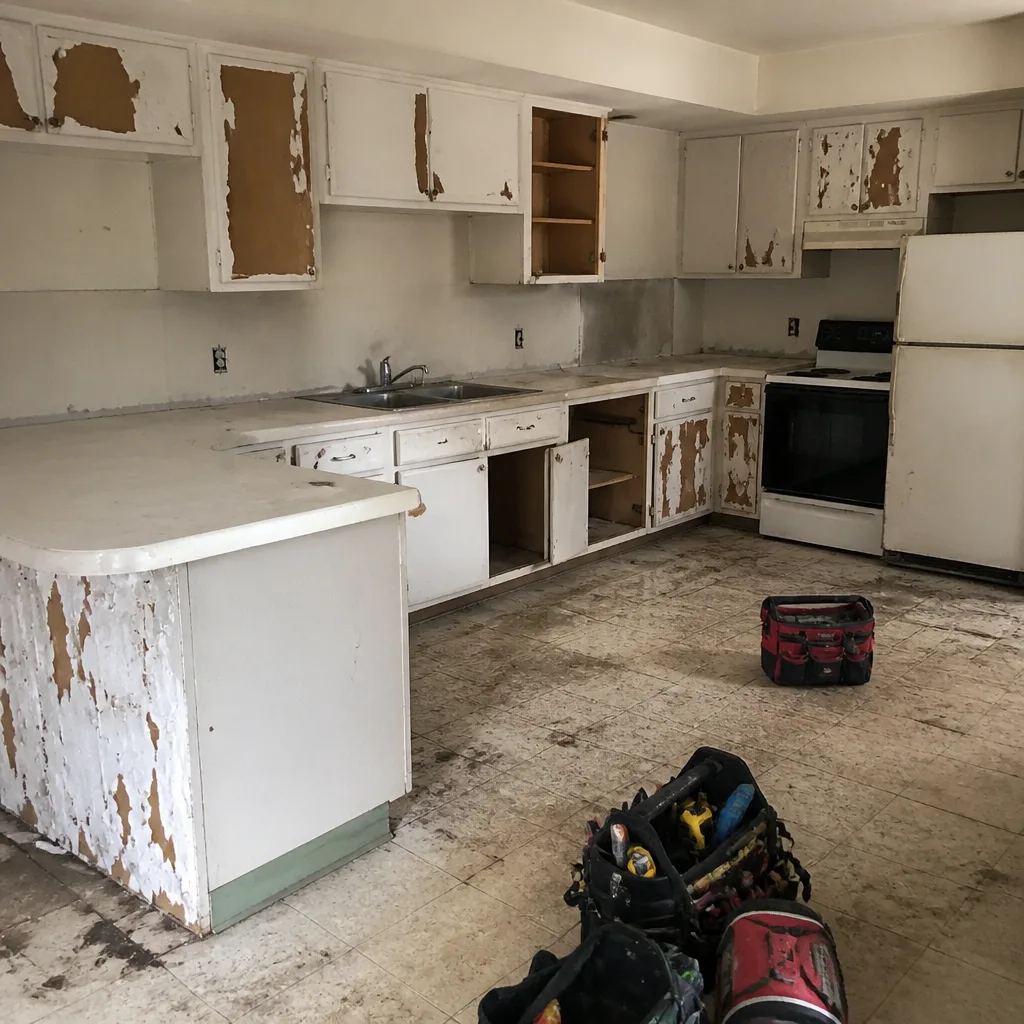
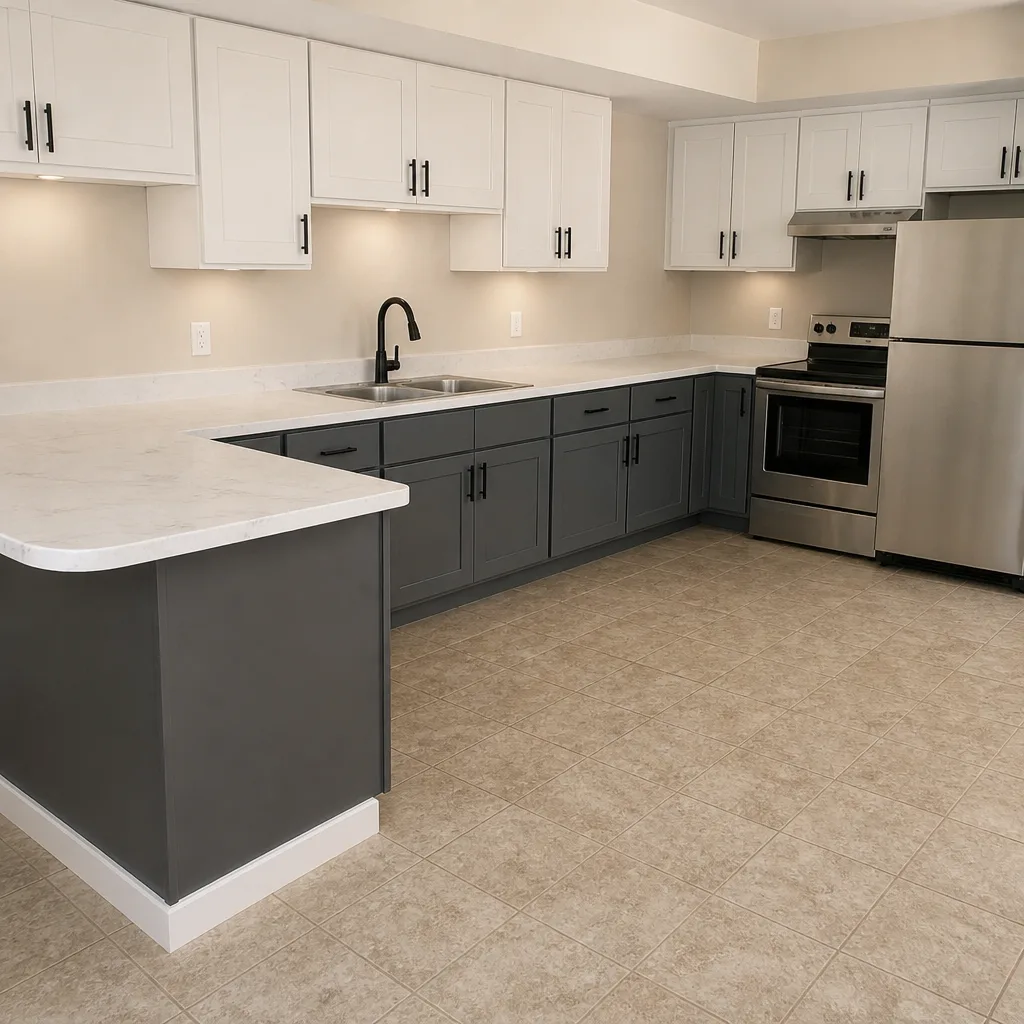
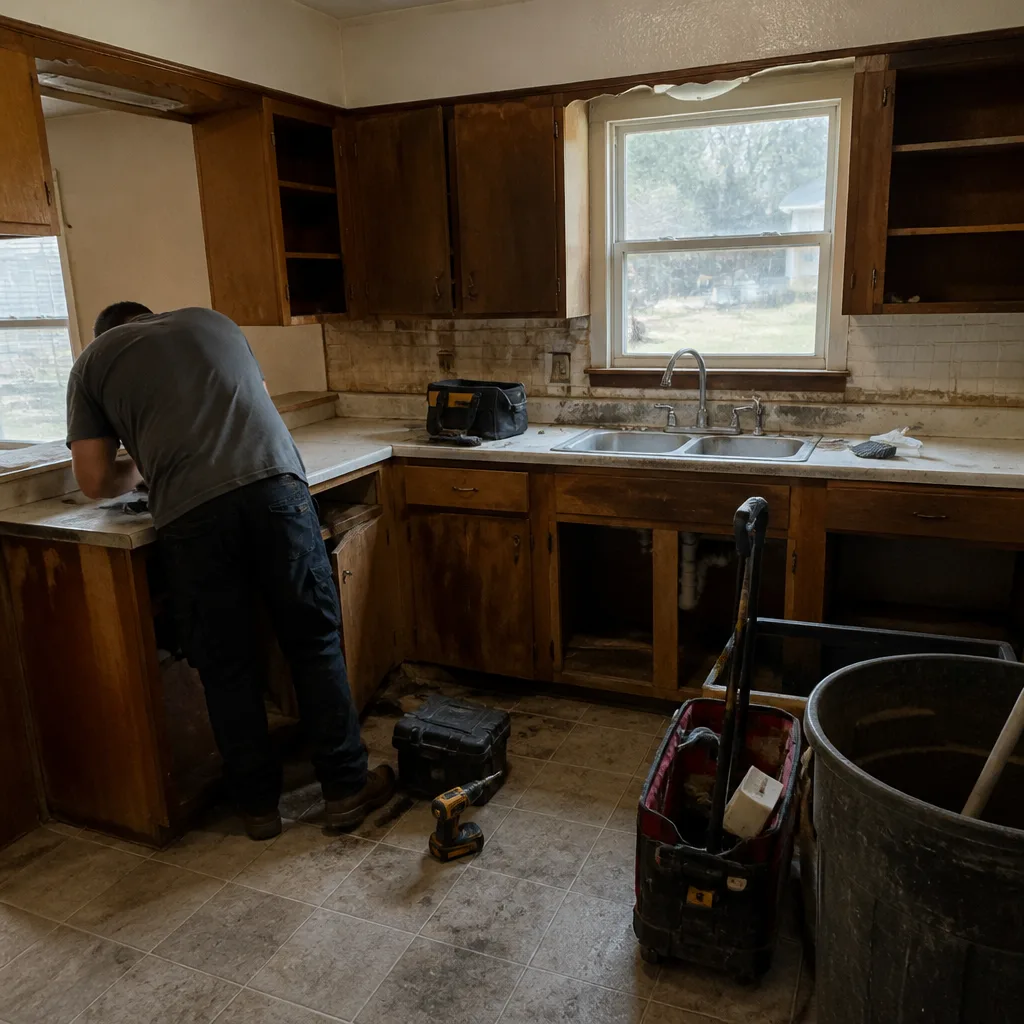
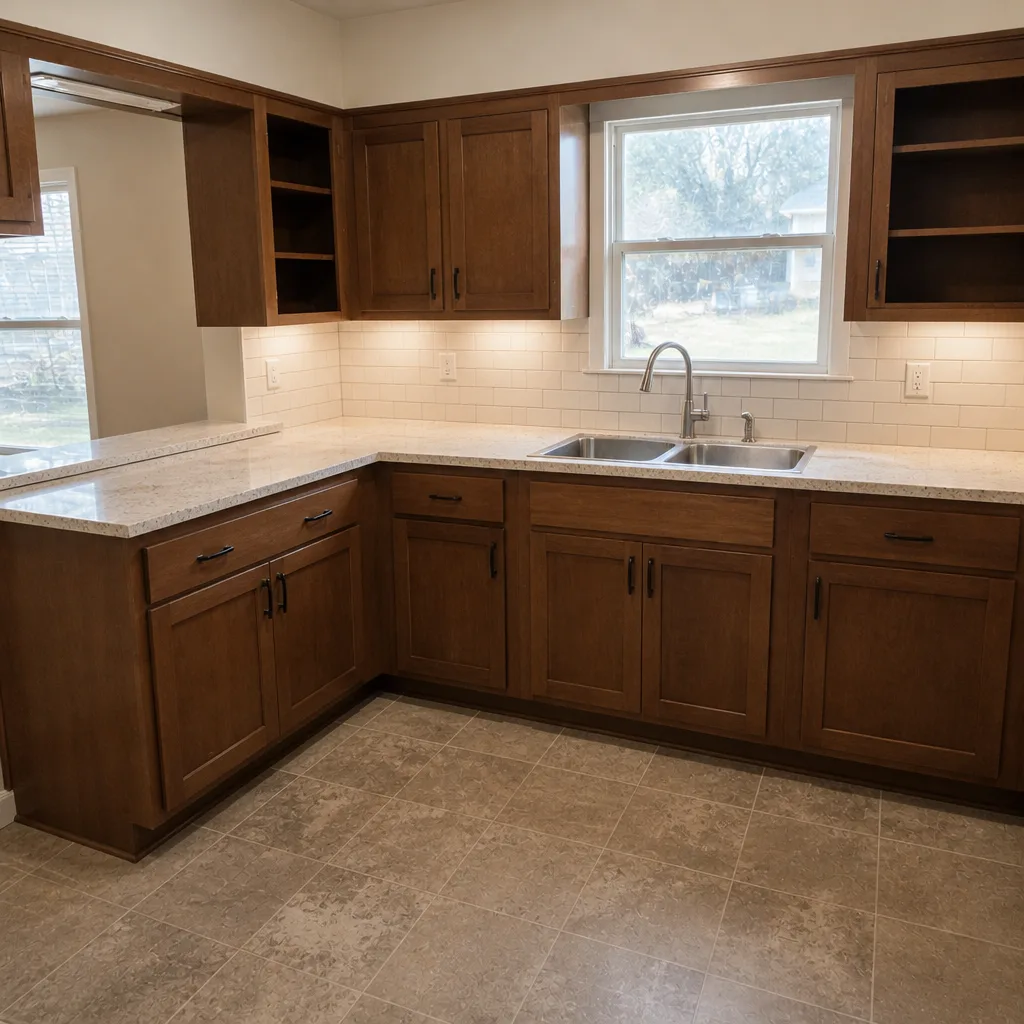
See the difference
 Before
 After
 Before
 After
 Before
 After
Frequently Asked Questions

Plan on re-caulking the counter-to-backsplash joint and the sink rim about once a year, and any time you spot a crack or gap. Denton’s humidity swings make that joint the first place water intrudes, so check it each spring. If you notice separation, call us for an assessment.
No. Quartz is non-porous and doesn’t require sealing, but it does need protection from heat and from harsh cleaners. Granite does need sealing, usually once a year. A water droplet on granite will tell you: bead means holding, soak-in means reseal.
Some settling in the first year is normal, and hinges and slides often just need adjustment. If a door is sagging or the cabinet face is separating from the wall, that’s worth a closer look before the warranty closes. Call (844) 651-3175 and we’ll take a look.
Do an 11-month walk: open every door and drawer, check every countertop seam, inspect under-sink plumbing for moisture, and look at appliance connections. Photograph anything off. That sequence catches most issues while coverage is still active, and it’s the same list we run at job close.
You can look for obvious kinks or cracks, but tightening a gas fitting is not a homeowner task. If you smell gas, leave and call your gas utility first. Any repair on the gas connection should go to a qualified professional.
No. Vinegar and other acidic cleaners can dull or etch quartz, granite, and some finishes. Use a pH-neutral stone cleaner instead. The safe habit is to check the manufacturer’s care sheet for your exact material.
The Bottom Line
A remodeled kitchen asks for follow-through, not guesswork. Do the first-year inspections at 30 days, 6 months, and 11 months to protect your investment while the warranties are open. Clean each finish by its own rules, seal granite and leave quartz to breathe, and keep the gas line in the hands of a professional. After year one, a two-pass seasonal routine and an annual re-caulk cover most of what goes wrong. Keep your documentation together and you’ll have the record a manufacturer or a guarantee holder will ask for. If something doesn’t look right, call us.
Contact Bradford Remodeling Co Denton

If you’re planning a kitchen or bathroom remodel in Denton, or you want a professional eye on a kitchen that’s already been redone, we can help. Visit our Bradford Remodeling Co Denton home page to see how we work, or read more about our kitchen remodeling in Denton and our general contractor services in Denton. Every project gets a written price before work starts, covered by the 365-Day Done Right Promise. Call (844) 651-3175 for a free estimate – a live person answers, day or night.
Written by the team at Bradford Remodeling Co Denton.