
Free written scope consultation - allowances, timeline, and change-order rules on paper before a single trade is scheduled
Cambria Bathroom Remodeling: The Denton Owner’s Guide
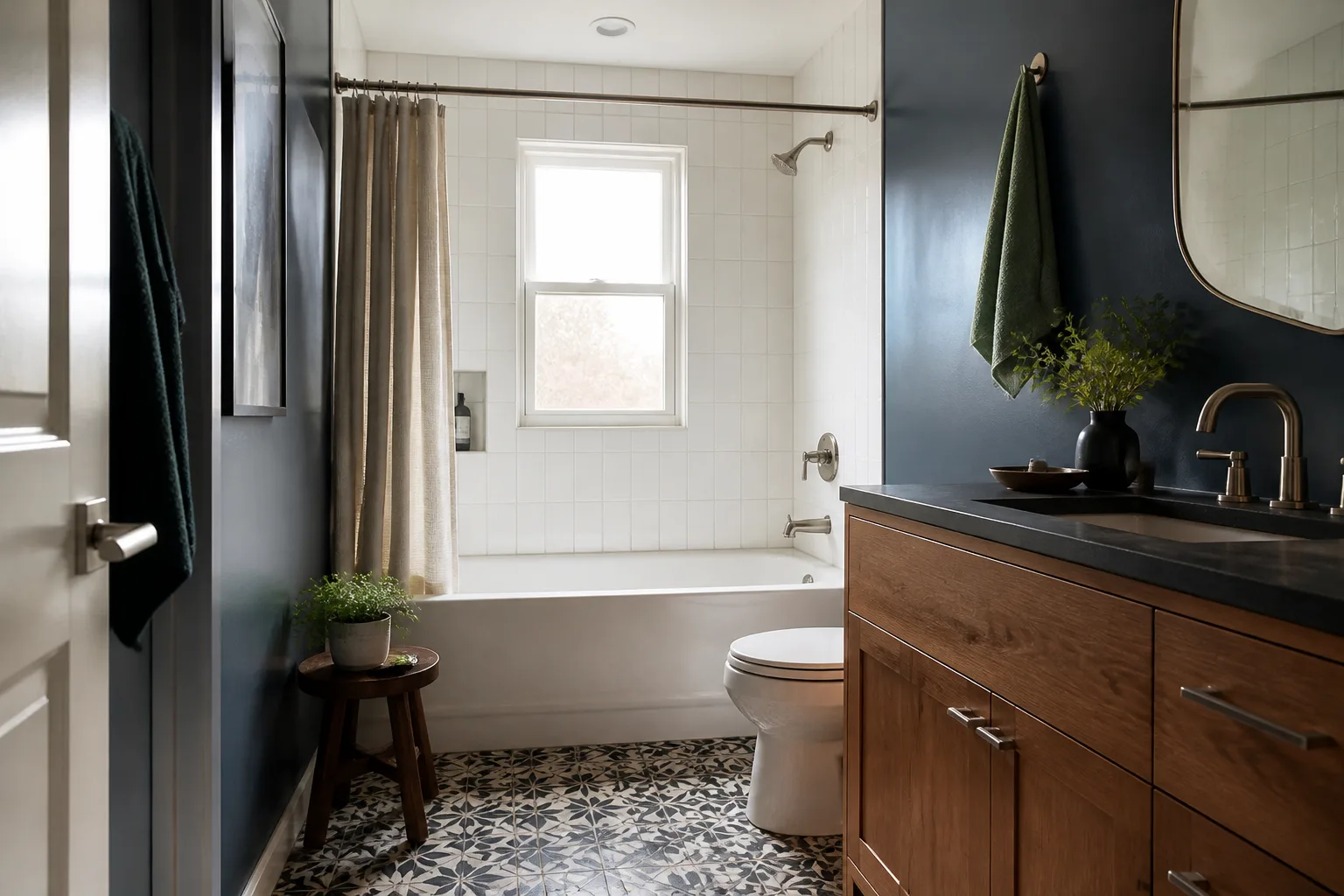
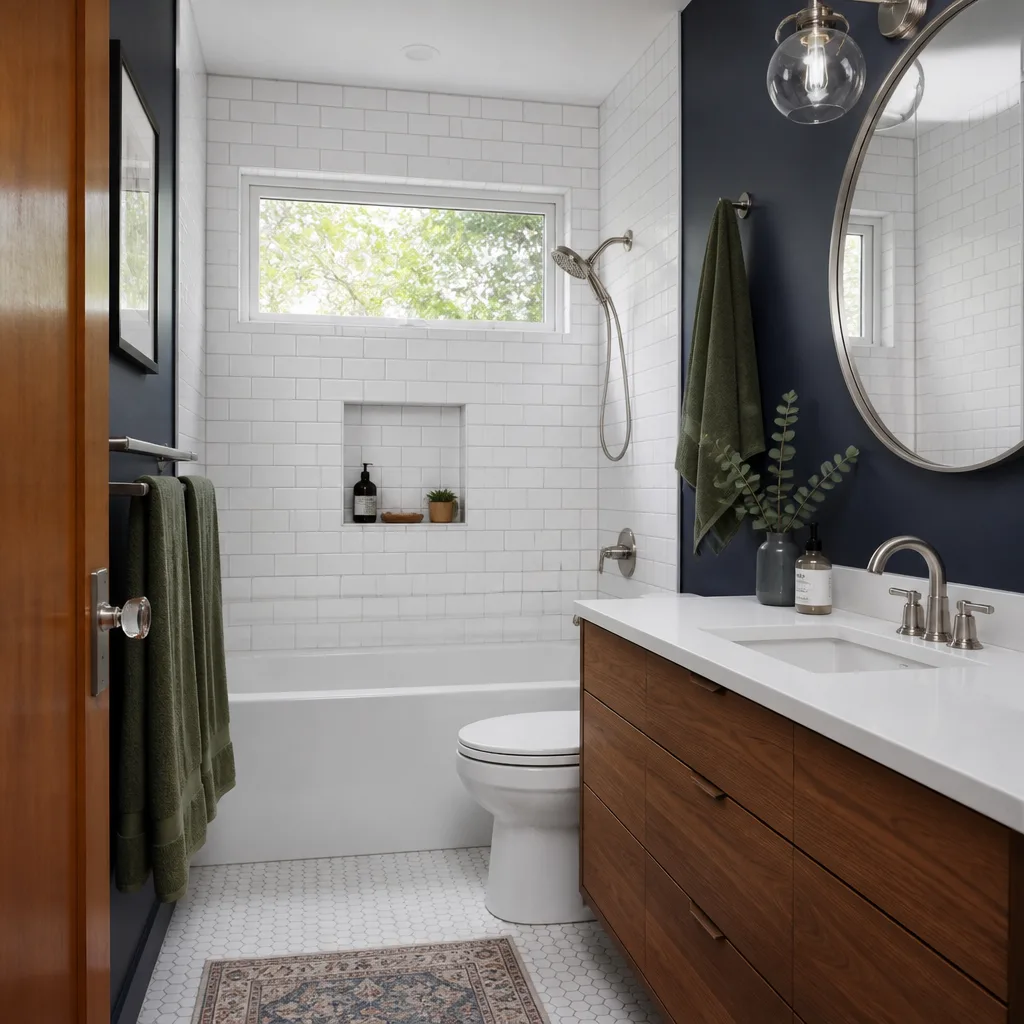
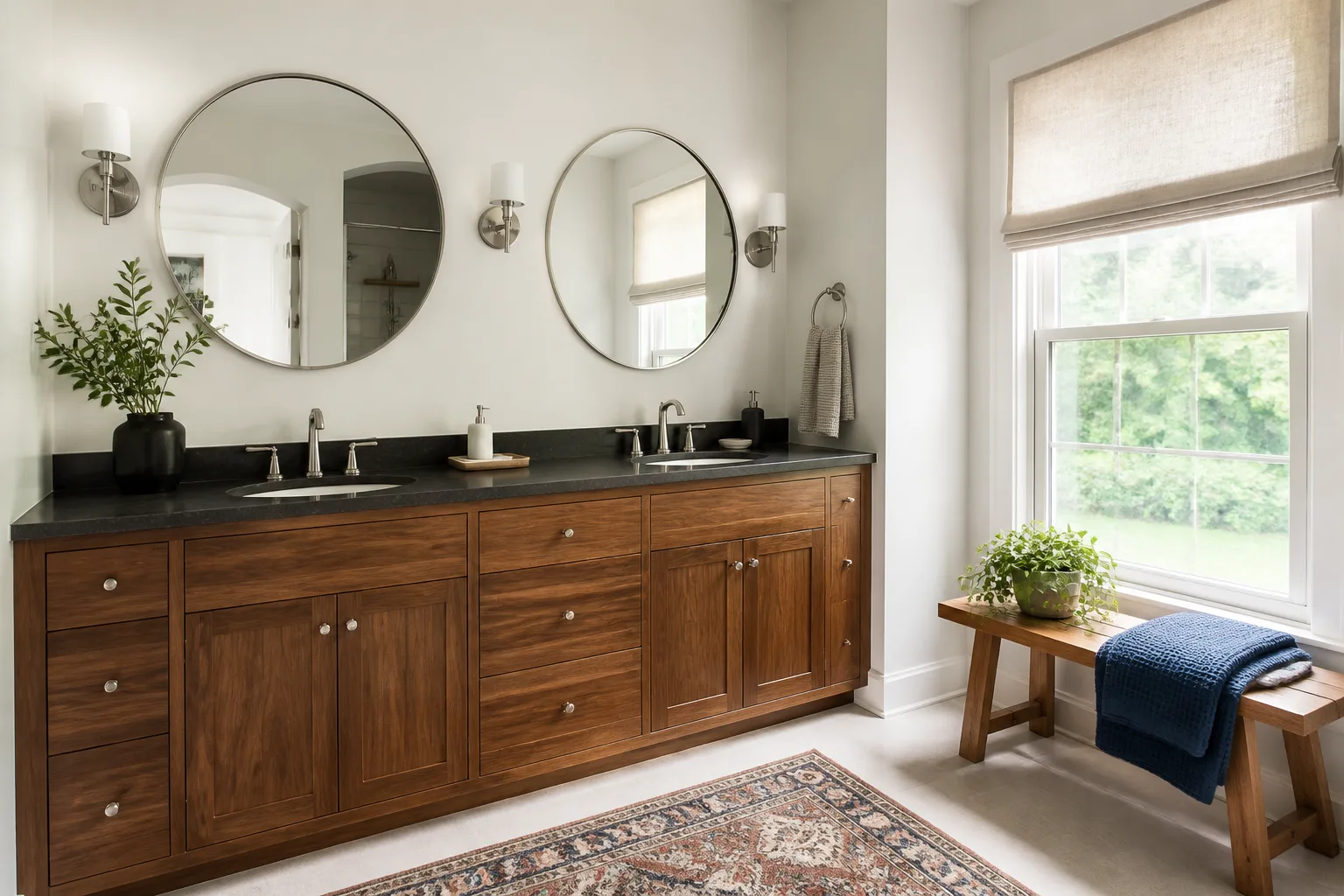
Cambria bathroom remodeling in Denton runs $9,000 – $28,000 for a full gut-and-rebuild, and most of that range is decided by two things: how much of the existing rough-in we can keep, and how much Cambria surface you’re specifying. If something in your Cambria bath has already failed, you don’t need a full remodel to fix it. A single vanity top, a shower surround panel, or a failed seam is often a same-week job. We help Denton homeowners price exactly that, in writing, before any tool comes out.
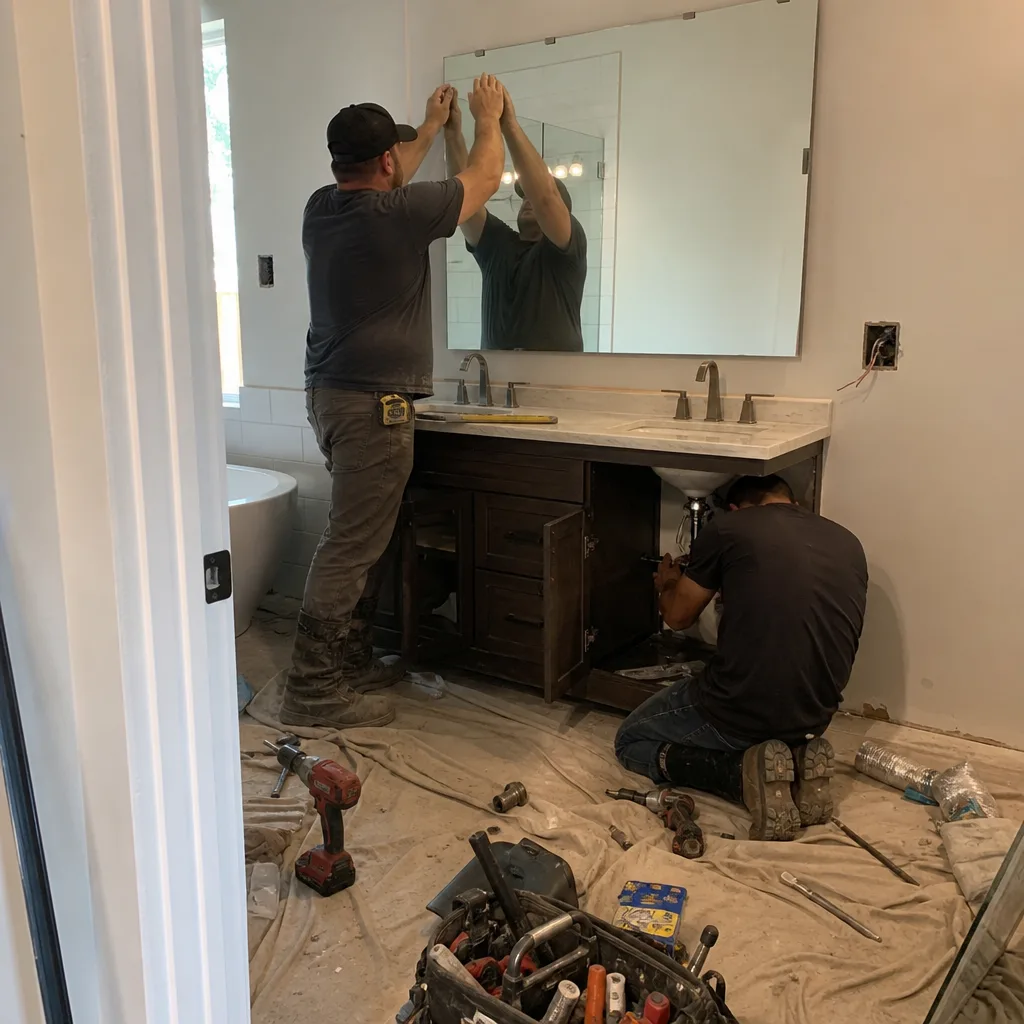
Denton has a specific failure pattern. The clay soil under most of the city moves with every wet-dry cycle, and a bathroom floor that was flat when it was set in 2015 can be out of level by 2024. Cambria is a quartz surface: dense, non-porous, and unforgiving of movement underneath it. It doesn’t crack because it’s weak. It cracks because the substrate moved and the stone had nowhere to go. Homeowners usually find out when a vanity top rocks under a hand, when a grout line opens along the backsplash, or when a hairline appears across a sink cutout.
Bradford Remodeling Co Denton is an independent remodeling contractor, not affiliated with Cambria. We install and repair Cambria surfaces as part of bathroom work, backed by a written price and the 365-Day Done Right Promise.
Key Takeaways
- Full Denton bathroom remodel with Cambria surfaces: $9,000 – $28,000.
- Small bathroom remodel: $5,000 – $12,000.
- Most Cambria failures are substrate failures, not stone failures.
- Every project gets a written line-item price before work begins.
- Every completed project carries the 365-Day Done Right Promise.
Which Cambria Models This Applies To
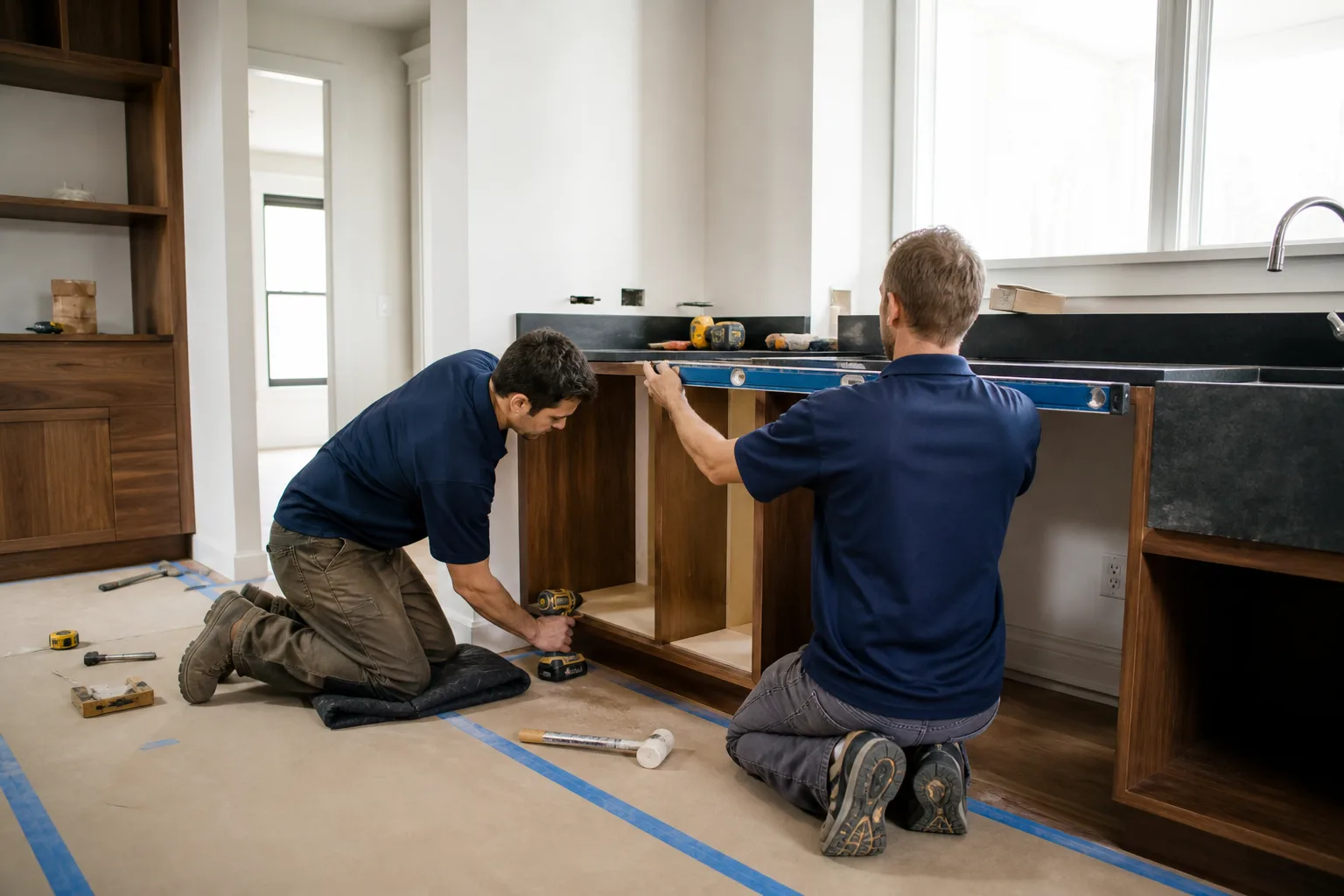
Cambria is a brand of quartz surface, not a line of bathroom fixtures, so the “model” that matters is the surface itself. The series names you’ll see on a homeowner’s paperwork or a fabricator’s sticker are the quartz collections: the standard white-and-veined lines, the darker natural-look grounds, and the character collections with heavier movement. All of them are the same material family and behave the same way in a bathroom: non-porous, heat-tolerant to a point, and rigid.
Identifying what you have takes about five minutes. Look for the fabricator’s sticker on the underside of the vanity top or the back edge of a shower bench. Failing that, measure the slab thickness. Standard Cambria bathroom surfaces run 2 centimeters, with a built-up edge to 3 or 4 centimeters for a heavier look; thicker material over a wide vanity needs more substrate support, not less. Thickness tells you how the piece was built even when the label is gone.
The OEM-versus-aftermarket decision is real with Cambria. Cambria controls its own material; there’s no legitimate “aftermarket Cambria.” What you’ll actually be quoted is Cambria itself or a comparable quartz from another documented brand. Bradford works from a documented roster of premium surfaces that includes Cambria, Caesarstone, and Silestone, plus KraftMaid and Wellborn cabinetry and Kohler fixtures. When a homeowner asks us to match an existing Cambria vanity, we pull the spec from the manufacturer, not from a photo. If an exact match isn’t available in the current line, we’ll tell you that plainly and price the closest documented alternative. What we won’t do is tell you a generic slab is Cambria. The specification has to be traceable, which is the whole point of The Garrison Standard.
Styles & brands we work with
- Kitchen remodeling
- Bathroom remodeling
- Home additions & ADU
- Roofing
- Windows & doors
- Driveway & pavers
- Fence
Signs Your Cambria Bathroom Remodeling Is Failing
- The vanity top rocks or returns a hollow sound when tapped. The substrate has compressed or the cabinet has shifted. In Denton, this is most often a cabinet shim problem that appeared after a dry summer, not a stone defect.
- A hairline crack runs from a sink cutout or a corner. Corners and cutouts are the stress risers on any quartz surface. A crack starting there means the panel was overloaded or under-supported, and the fix is usually re-substrating, not replacing the sink.
- The seam between the top and the backsplash has opened. The wall moved, the top didn’t. A bead of caulk will hide it for one season and fail again. The correct repair resets the seam with a flexible joint and checks the wall for movement.
- Water is staining along the shower bench or curb. On a proper Cambria installation this shouldn’t happen, because the material is non-porous. Staining points to a failed seal at the joint, which means water is getting behind the panel and into the wall cavity.
- The floor feels soft or the tile grout has cracked in a straight line. That’s a floor system problem under the finished surface. Re-tiling over a moving floor is the most common reason a Denton bathroom comes back apart within two years.
Our technicians have up to 22 years of experience, and the pattern they see most often in Denton isn’t the surface failing. It’s the substrate, the cabinet, or the wall behind it failing first, and the Cambria showing the symptom. Getting the diagnosis right is most of the job.
See the difference
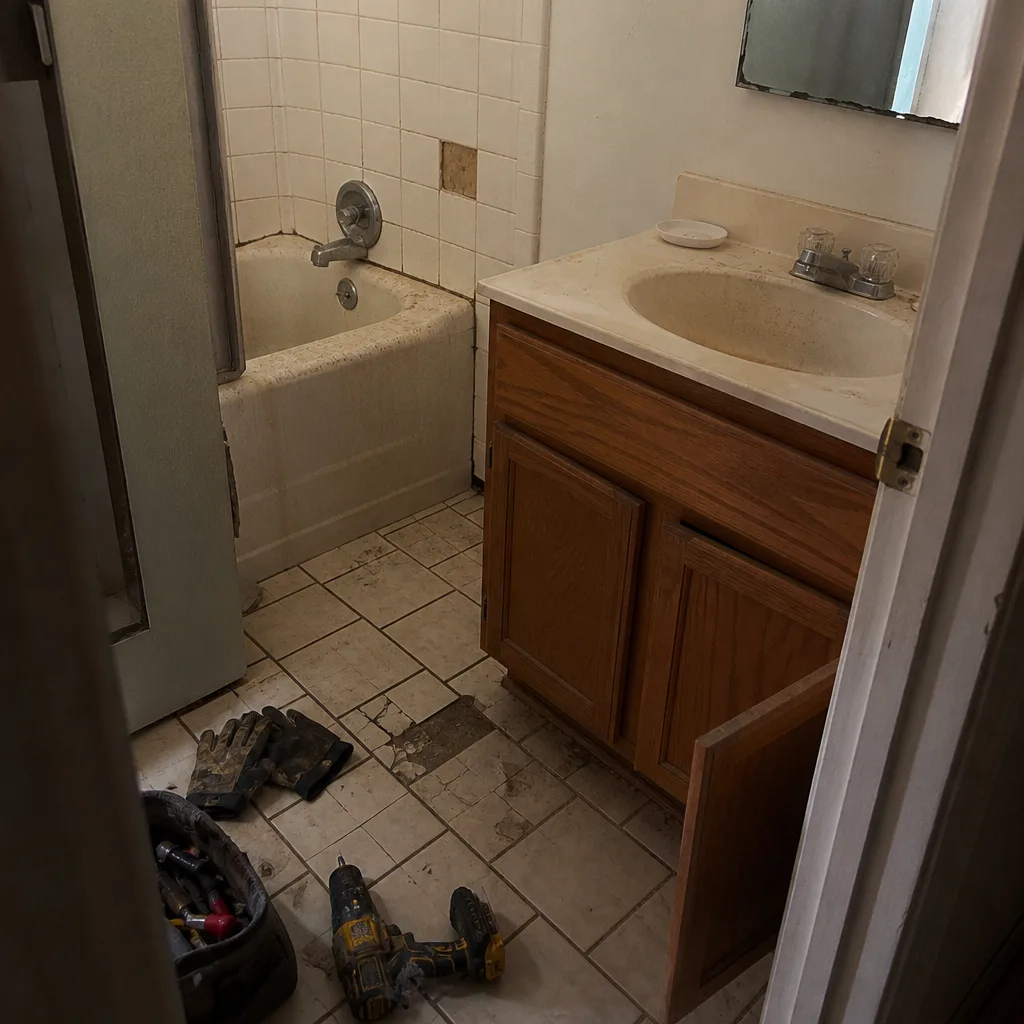 Before
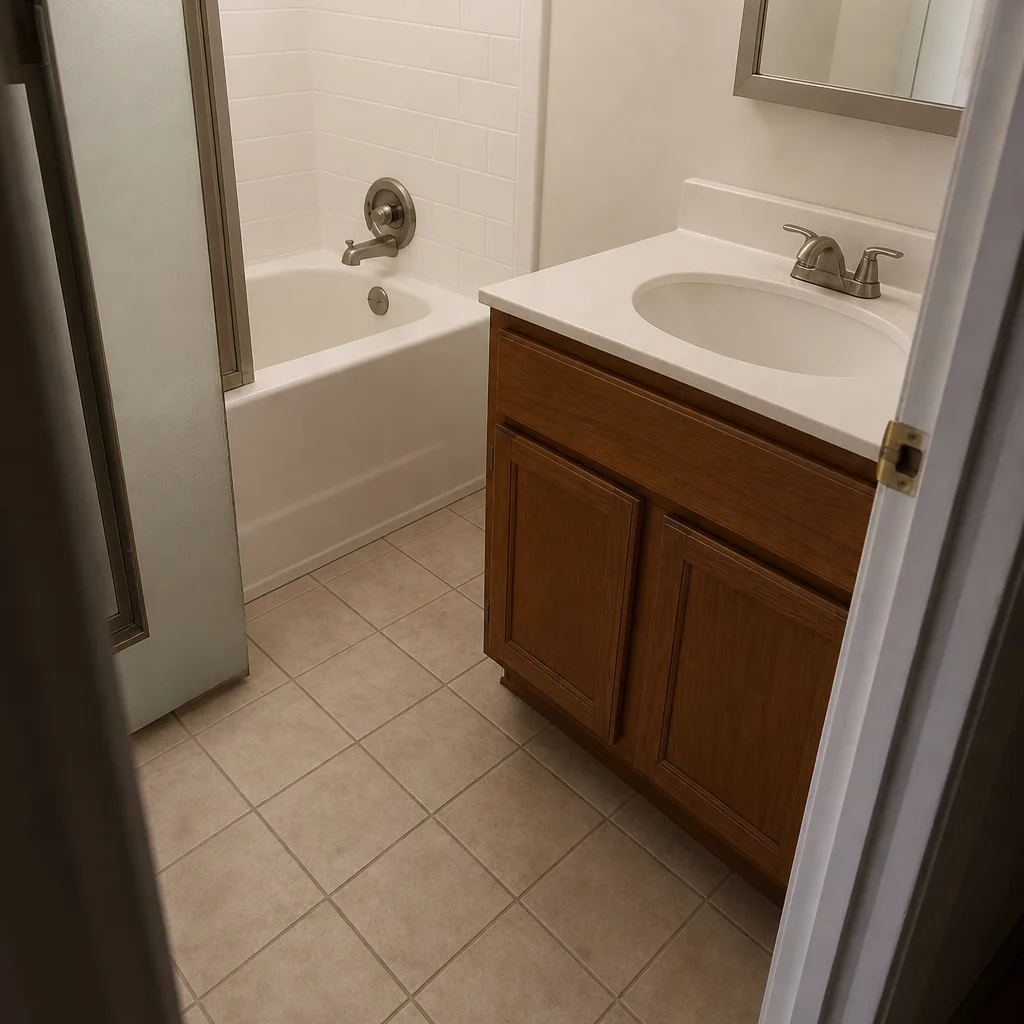 After
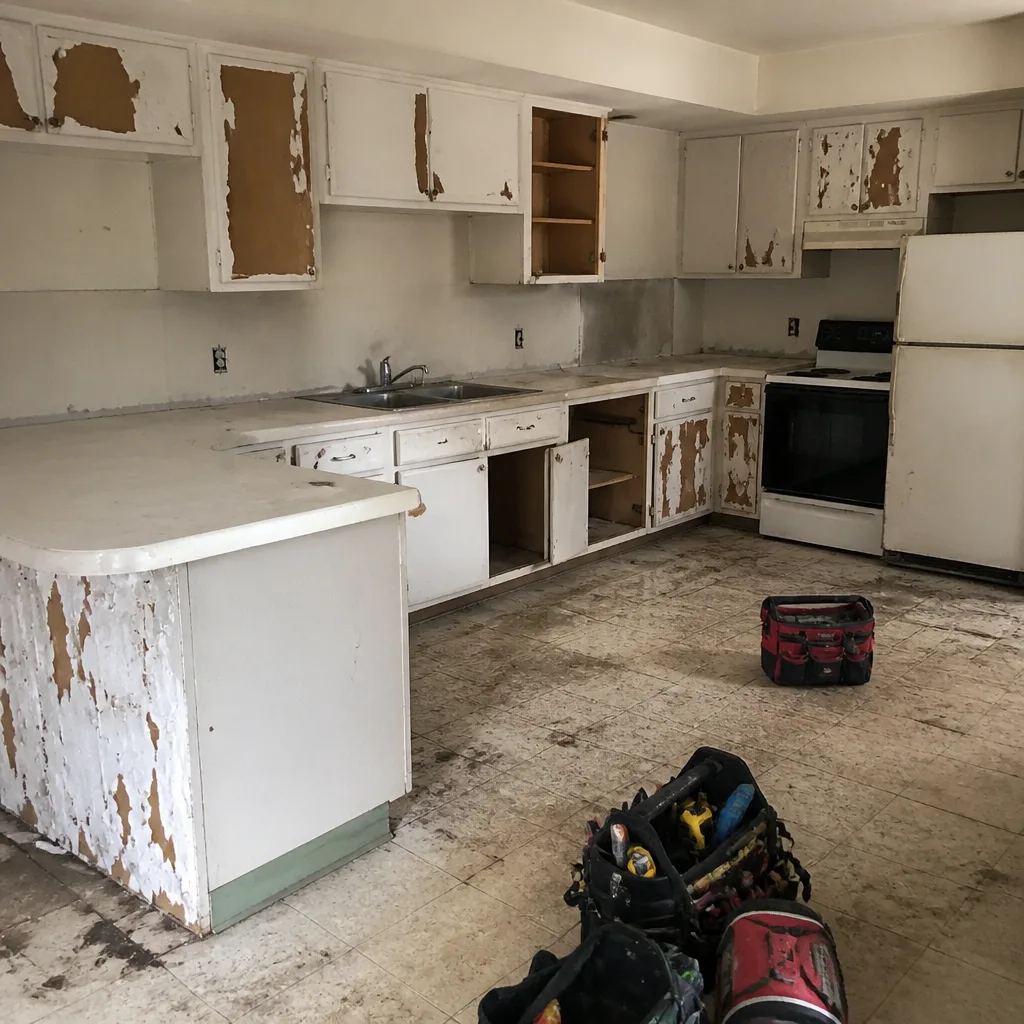 Before
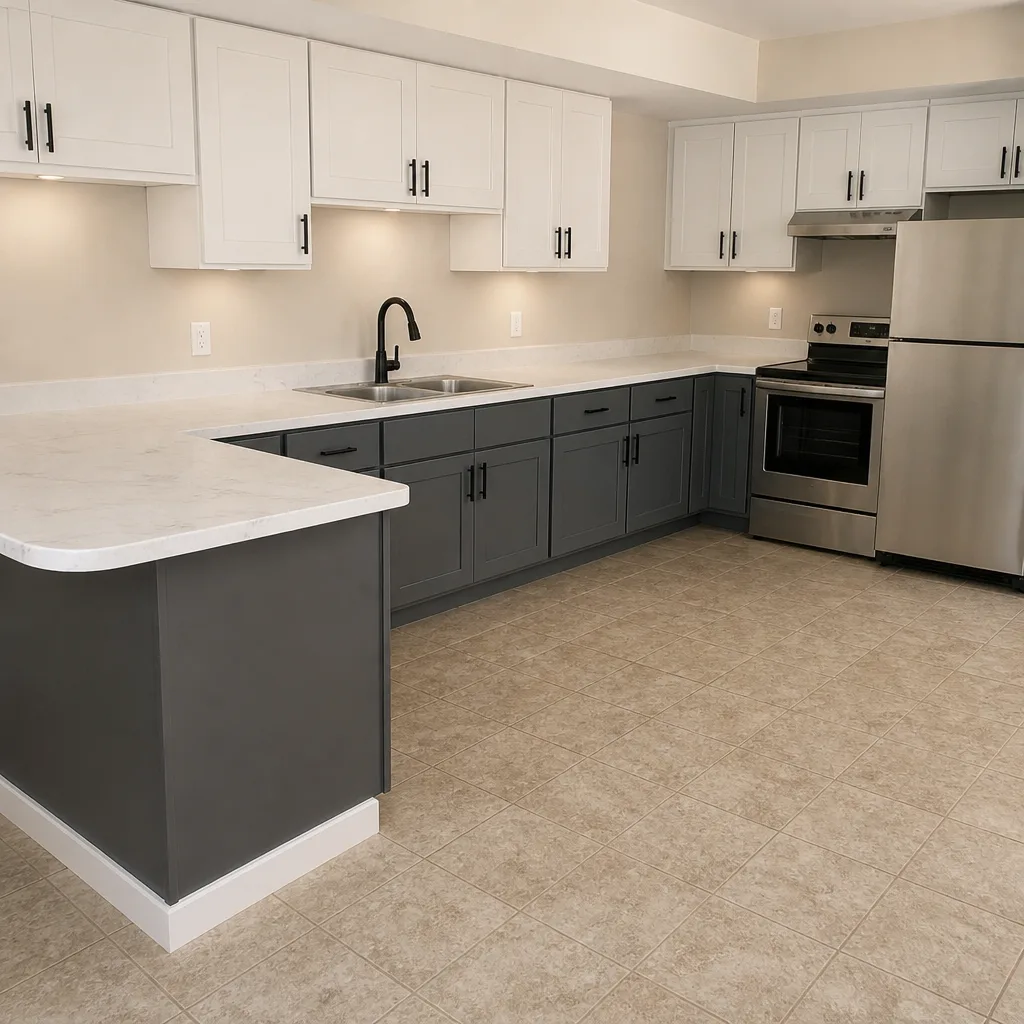 After
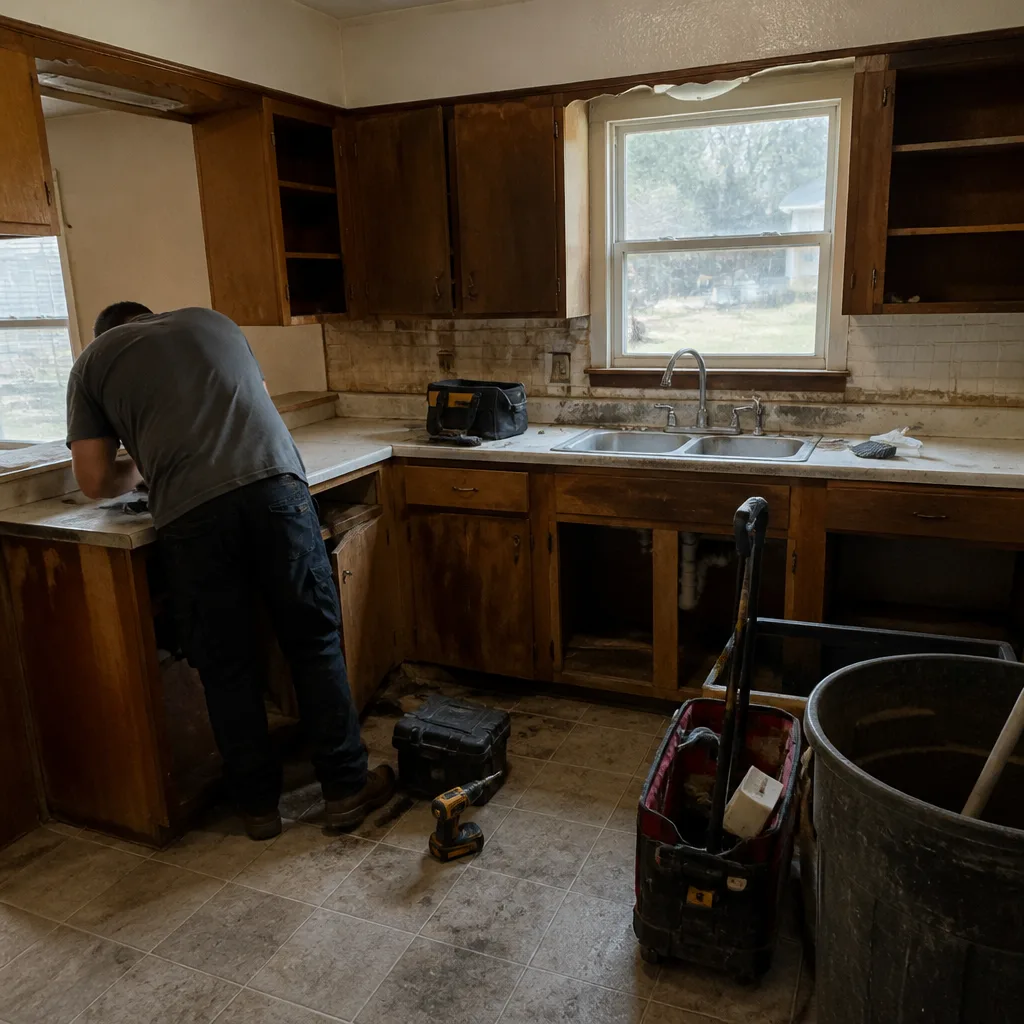 Before
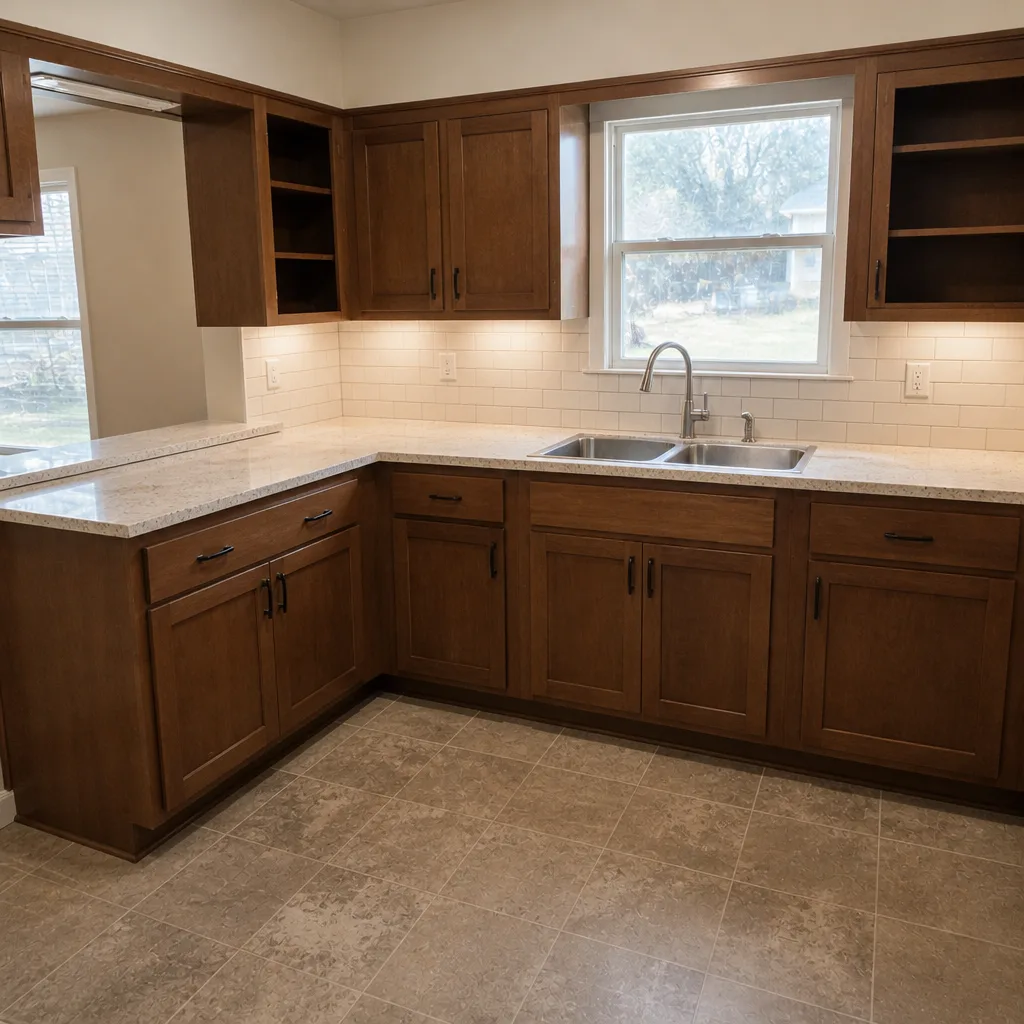 After
Replacement Cost & What’s Included

A full Cambria bathroom remodel in Denton runs $9,000 – $28,000. A small bathroom remodel runs $5,000 – $12,000. If you’re pricing individual pieces rather than a whole room, these are the installed ranges we quote most often in Denton:
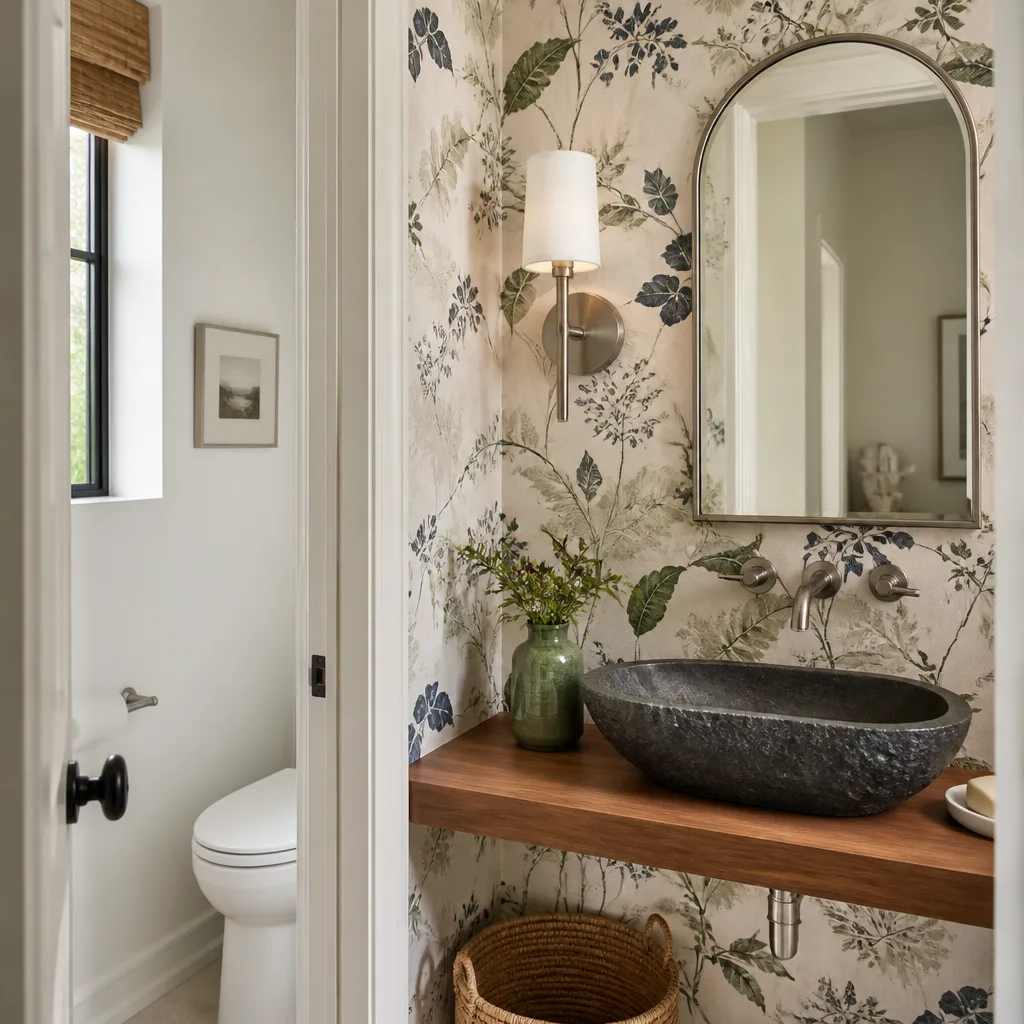
- Bathroom vanity installation: $800 – $3,000, including the top.
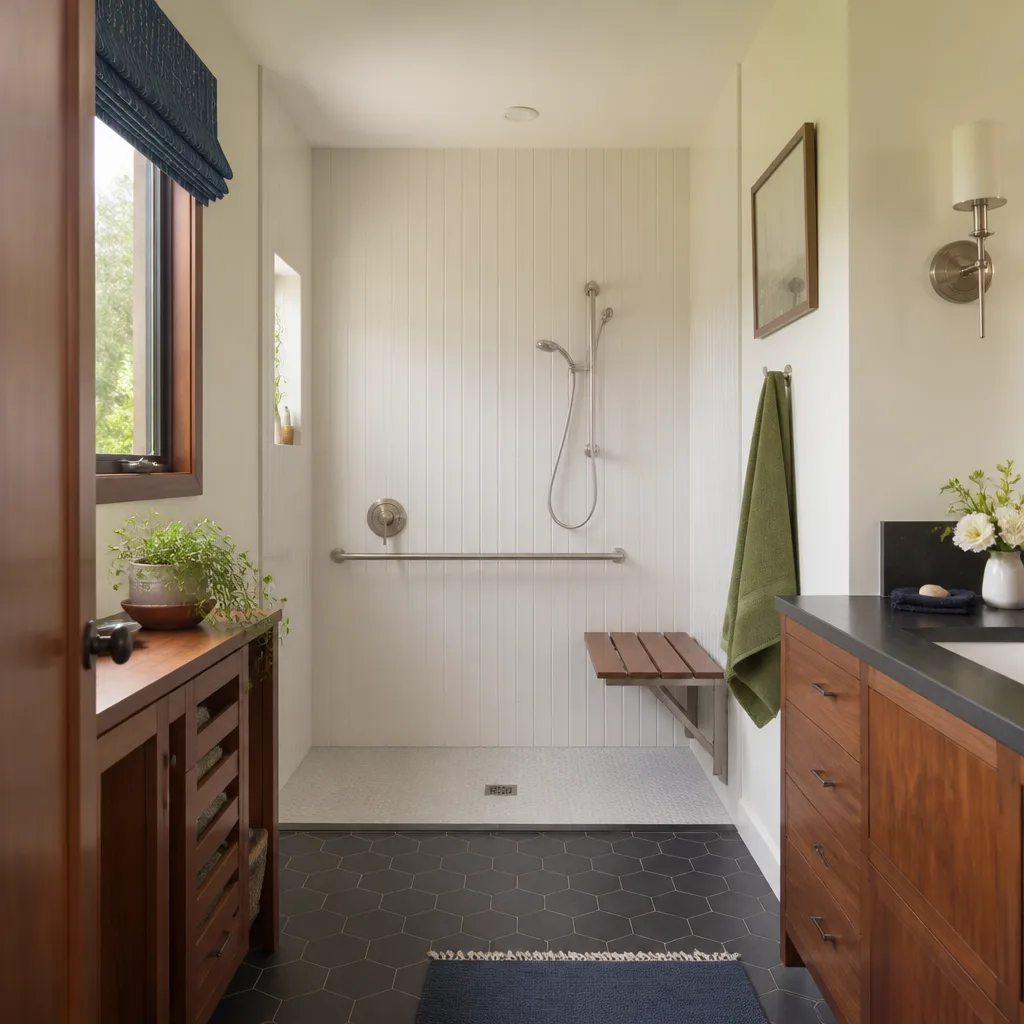
- Walk-in shower installation: $4,500 – $12,000.
- Tub-to-shower conversion: $3,500 – $10,000.
- Shower replacement: $3,000 – $8,500.
- Countertop (vanity surface) installation: $2,000 – $6,500.
What moves you up the range: moving the drain or rough-in, correcting a floor that’s out of level, going from a tub to a full walk-in with a bench, and specifying Cambria across more square footage. What moves you down: keeping the cabinet and the plumbing where they are and replacing only the surface and the failed substrate. Every quote is a written line-item price before work starts. It doesn’t change at the door, and there’s no change order unless you ask for a scope change yourself. Parts and labor are broken out separately so you can see what the material costs and what the install costs.
The 365-Day Done Right Promise covers every completed project for a full year. If the work fails inside that window, we come back and correct it at no charge. That covers a seam that opens, a top that lifts, or a shower that leaks at the first joint. It’s in writing, in your hand, at job close.
DIY or Call Us?
There’s no dangerous high-tension or gas component in a bathroom surface job, so the honest answer is about consequence, not injury. What you can safely do yourself: tap and listen for hollow spots, check a level across the vanity top, photograph the fabricator sticker, and pull the cabinet doors to see whether the cabinet is shimmed or sitting on a soft floor. That’s the inspection, and it’s worth doing before you call anyone.
Where DIY goes wrong is the reset itself. Re-caulking an open seam over a wall that’s still moving fails within a season. Re-tiling over a soft floor fails the same way. Cutting or setting quartz needs wet-cutting, a dust plan, and a substructure that’s actually flat, and a bad bond on a heavy panel can fail suddenly. For a surface replacement, the failure costs more than the install. If you want a hard number before you decide anything, that’s the free estimate: a written price, in range and in detail. Calls are answered by a live person 24 hours a day at (844) 651-3175.
FAQs
Cambria itself typically holds 20 years or more in a bathroom, because quartz is non-porous and doesn’t care about humidity the way wood or natural stone does. What fails sooner is everything under it: in Denton’s clay soil, a floor system can move enough in five to seven years to crack the tile and the surface above it. The surface isn’t the lifespan you’re managing. The substrate is. Call (844) 651-3175 for a free estimate on resubstrating and resetting rather than replacing.
Often yes. A lifted top is usually a shim and substrate correction, and a seam that’s opened can be reset with a proper flexible joint once the movement is addressed. A crack that runs through the slab at a sink cutout usually means replacement of that piece, because a structural crack in quartz won’t hold a cosmetic repair. We’ll tell you which one you have after we look, and the estimate to find out is free. Call (844) 651-3175.
A single vanity top replacement is typically a one-day job once the material is on site. A full bathroom remodel with Cambria surfaces runs two to four weeks depending on scope and inspection scheduling. The variable is almost always the floor and the wall behind the old material, not the surface itself. We give you the schedule in writing with the price. Call (844) 651-3175 for a free estimate.
Through documented manufacturer channels, with the specification pulled from Cambria’s current line and the order confirmed by collection and finish, not by a photo match. We don’t carry stock or parts on a truck; every piece is ordered to your job. If your existing surface is discontinued, we’ll present the closest documented current match and price it before you commit. Call (844) 651-3175 and we’ll walk you through what’s available.
Denton homeowners get one written price before work starts, background-checked and uniformed technicians on every job, and a signed 365-Day Done Right Promise when we close out. No numbers that move, no voicemail. Call (844) 651-3175 to schedule your free estimate.
Written by the team at Bradford Remodeling Co Denton, serving Denton and nearby areas.