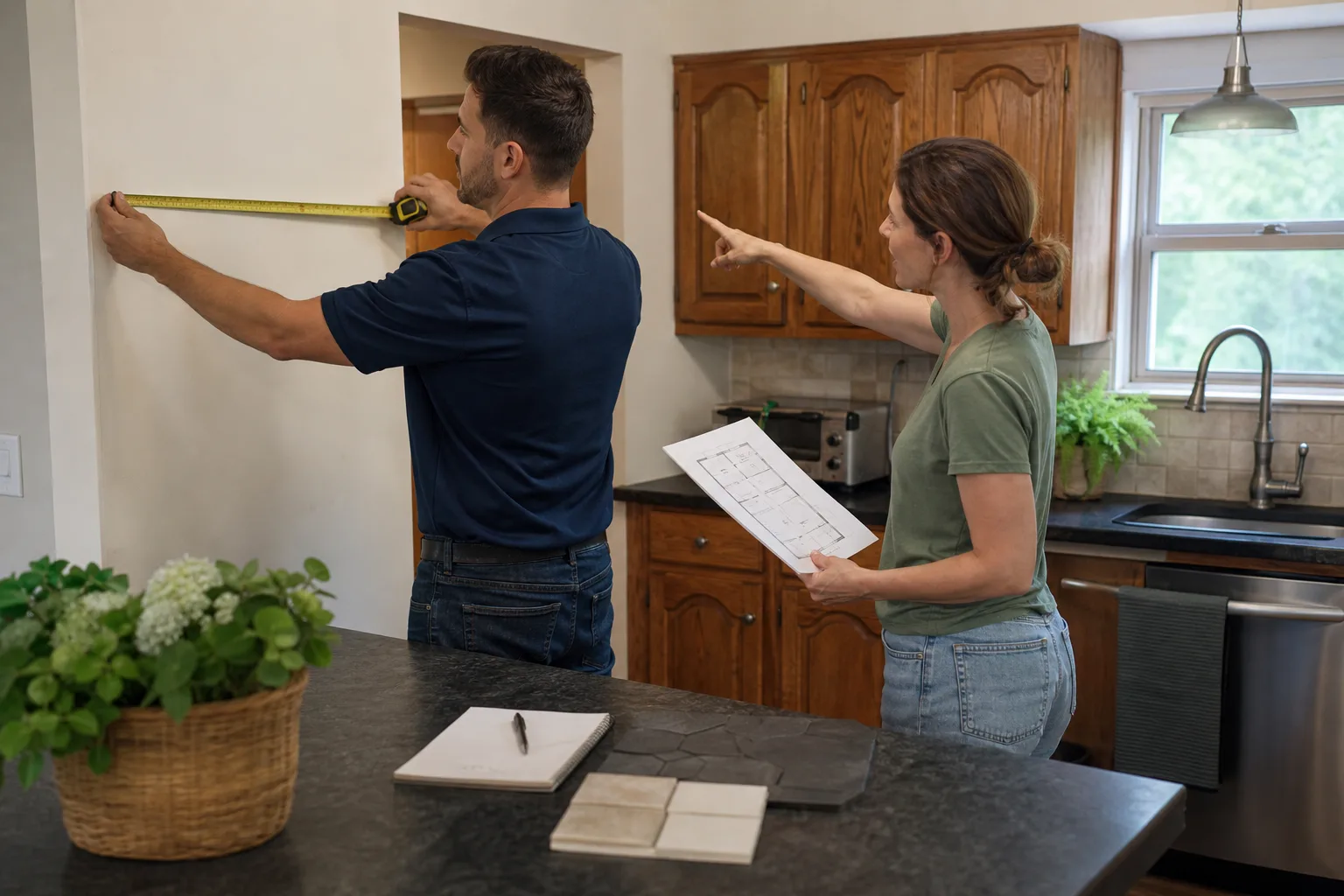

Free written scope consultation - allowances, timeline, and change-order rules on paper before a single trade is scheduled
Cambria Home Additions & ADU: The Denton Owner’s Guide
If you’re pricing a Cambria-surfaced addition or accessory dwelling unit in Denton, the realistic installed range runs from about $45,000 for a straightforward addition to as much as $130,000 for a fully finished ADU with a Cambria package, and standalone ADU construction lands between $90,000 and $220,000. A garage conversion with Cambria surfaces typically falls in the $30,000 to $80,000 band. We give you that written number before a single tool comes out, and it doesn’t move at the door.
Owners usually end up on this page one of two ways. Either a Cambria countertop in an existing ADU kitchen has chipped or stained past the point of tolerance, or a quoted addition carried a Cambria line item that got vague about what “premium quartz” actually meant. Both are fixable. We’ll show you how to read the spec, what a real number looks like in Denton, and where the money goes.
Key Takeaways
- Cambria additions and ADU work in Denton: $45,000 – $130,000 installed; dedicated ADU builds $90,000 – $220,000.
- Cambria is engineered quartz, not natural stone. The specification on paper is what protects you.
- Get the material spec in writing before the quote becomes a contract.
Which Cambria Models This Applies To
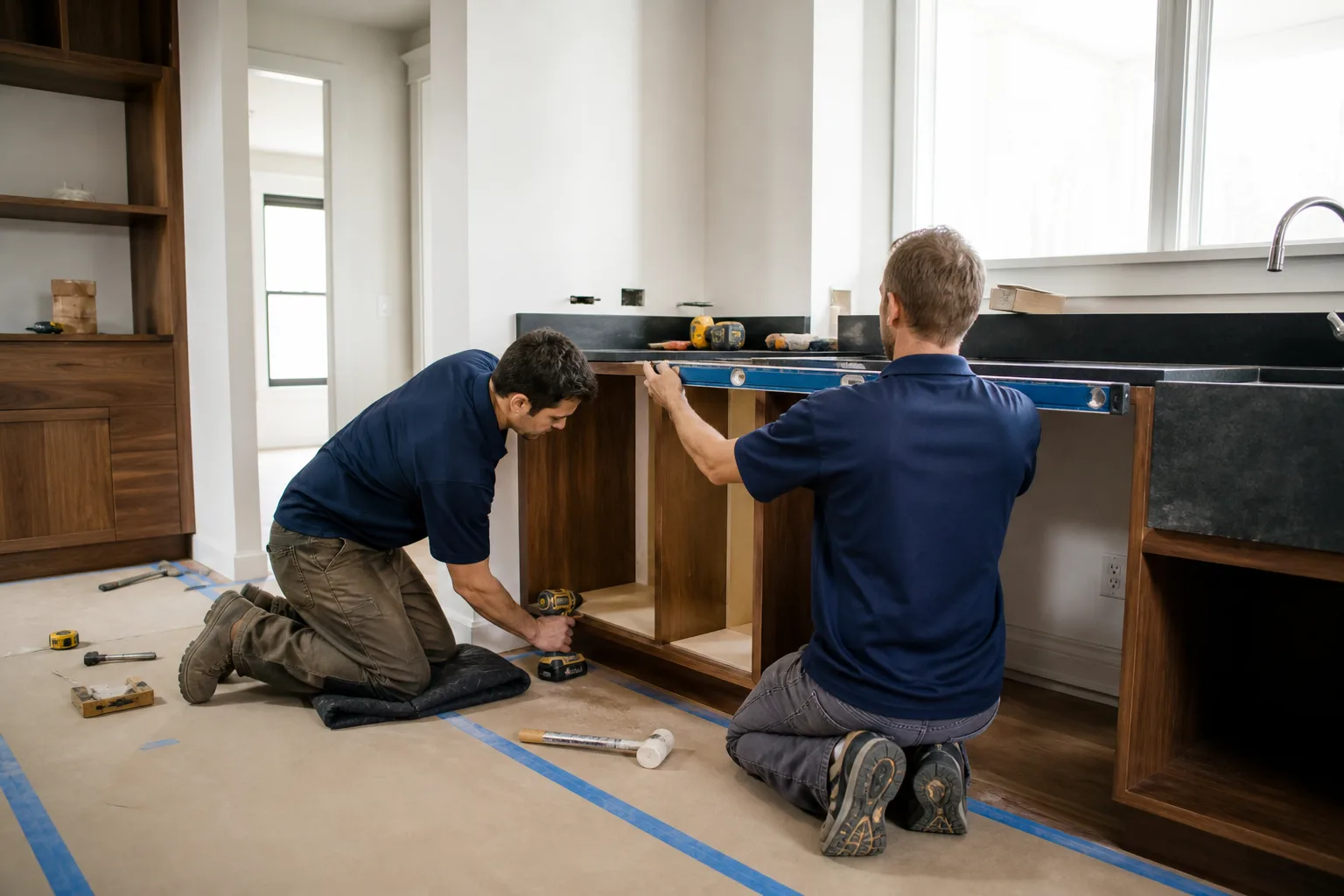
Cambria doesn’t sell “models” of additions or ADUs the way it sells slab series. Cambria is a quartz surface brand, and its product lines (the various slab series you’ll see on a showroom wall) each carry specific thickness and finish specs. The “part” in your addition or ADU is the Cambria surface package: the kitchen counter, the bath vanity, the possible waterfall edge on an island. When we spec a Cambria surface into a Denton addition, we match the slab series to the room’s role and we write the slab name, thickness, and edge profile into the scope document. That’s the compatibility gotcha most homeowners miss – two installers can both say “we use Cambria” and mean completely different slab series at completely different price points.
To identify what you have, look at the back of the counter overhang or the cabinet-side face for the fabricator’s label, and check the thickness. Standard is three centimeters; some series ship at two. If a quote doesn’t name the series, ask for it in writing. That single question separates a squared-away bid from a hand-wave.
On the OEM-vs-aftermarket question: Cambria is sold through authorized fabricators, and we spec from that documented chain. When a homeowner has an existing Cambria surface that needs matching in an addition, the series match is what matters, not the shop that cuts it. We work from the documented roster – Cambria, Caesarstone, Silestone among the surface brands, KraftMaid and Wellborn for cabinetry – so every specification is traceable and your guarantee has something to stand on.
Styles & brands we work with
- Kitchen remodeling
- Bathroom remodeling
- Home additions & ADU
- Roofing
- Windows & doors
- Driveway & pavers
- Fence
Signs Your Cambria Home Additions & ADU Is Failing
These are the symptoms Denton owners bring us, with the cause behind each.
- Chips at the sink or edge. Quartz chips at a hard impact point – a dropped pot, a chair back. Chips near the sink lip usually mean the cutout was under-supported.
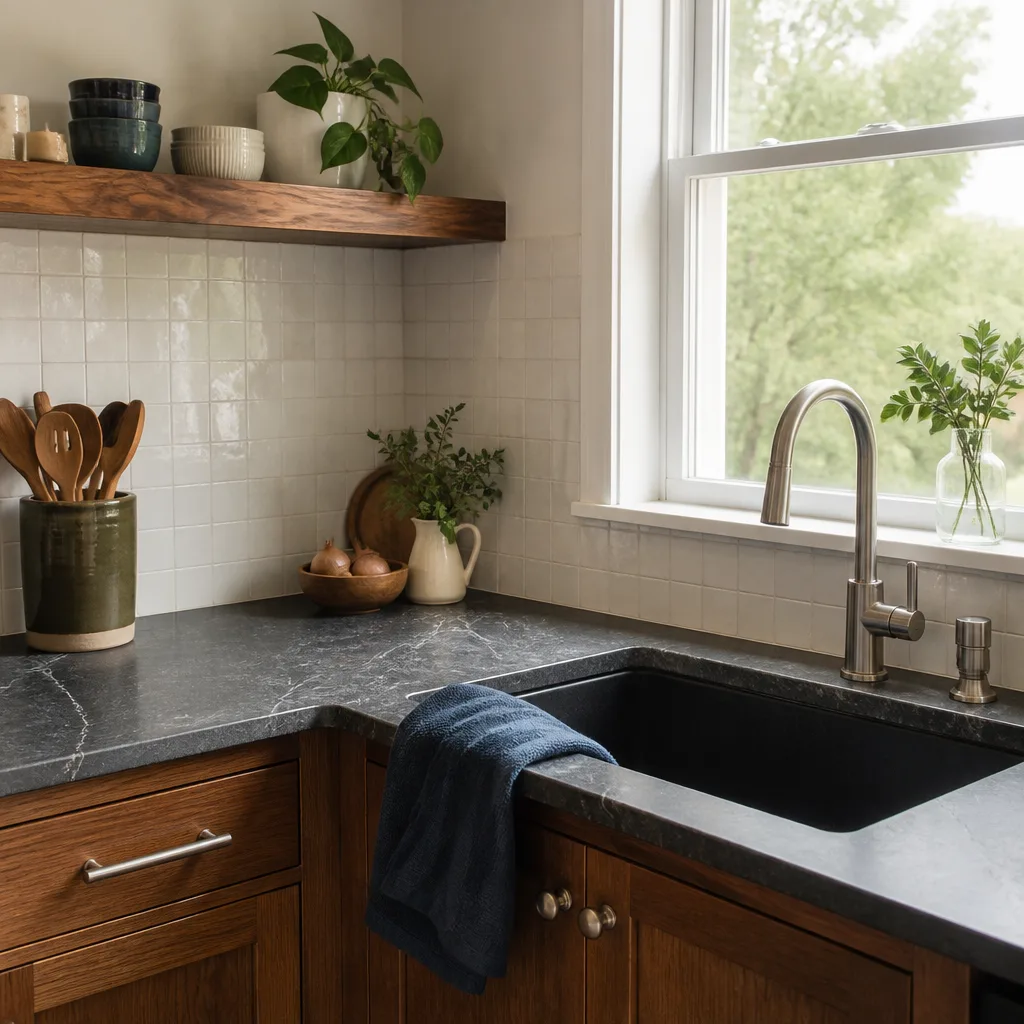
- Staining that won’t lift. Cambria is non-porous, so a stain that won’t wipe out points to a surface scratch trapping pigment, or a seam that’s opened and letting liquid in.
- A visible seam line. Seams open and darken when the substrate below wasn’t flat, or when the addition’s framing shifted after the counter was set.
- Counter rock or a hollow sound. The substrate beneath the slab has lifted or the adhesive failed. You’ll hear it when you tap, and you’ll feel it when you lean.
- Sun fading or dulling on a west-facing run. North Texas sun is unforgiving. A surface that’s gone flat on a west wall is out of warranty tolerance and looking at replacement.
If you’re seeing two or more of these, the surface is the visible failure but the framing or substrate is often the real story. That’s what we diagnose before we quote.
See the difference
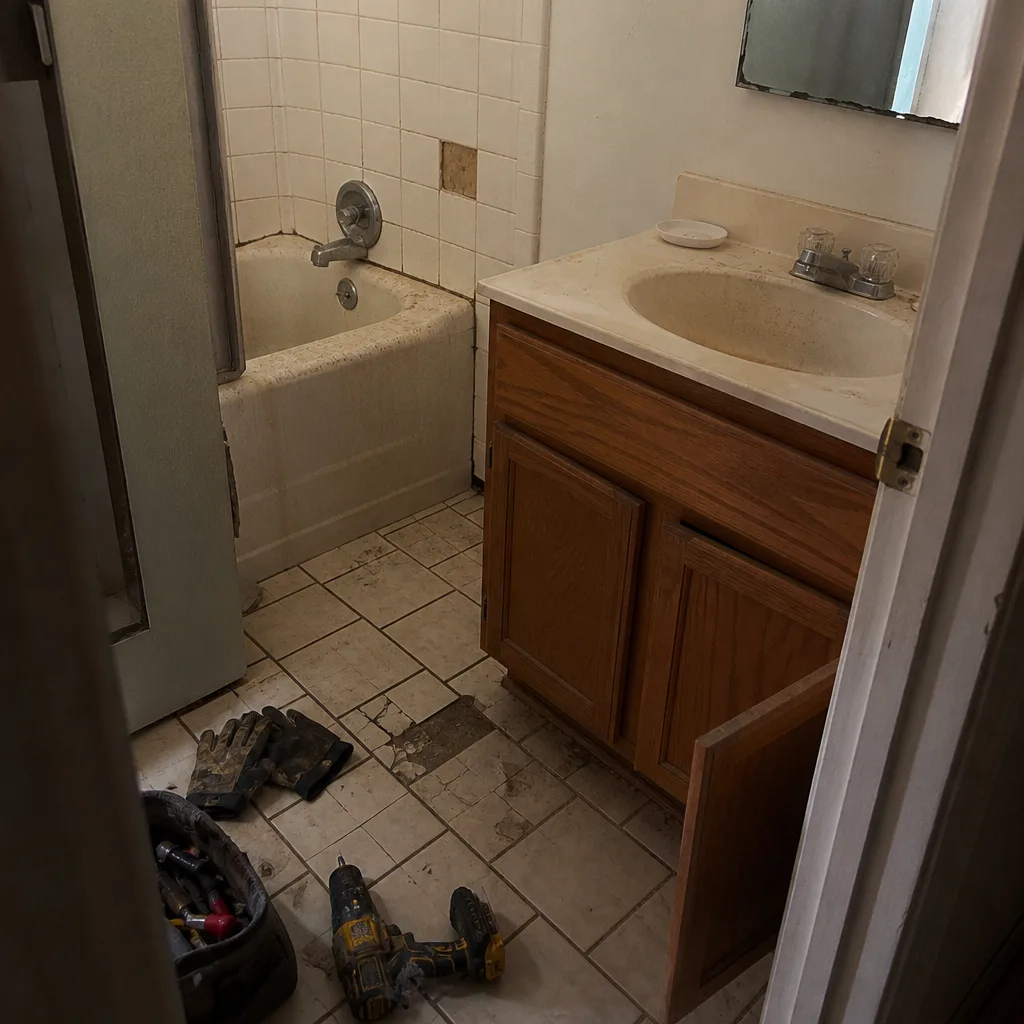 Before
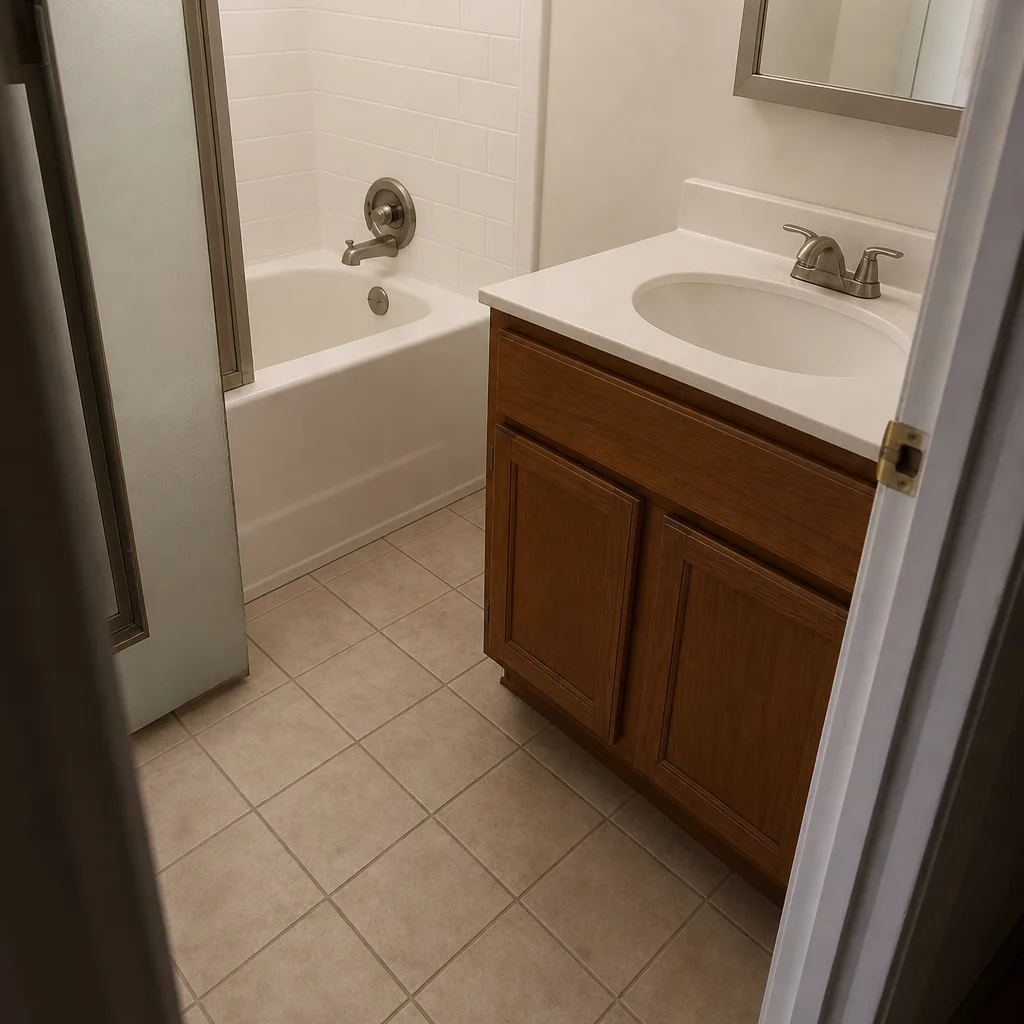 After
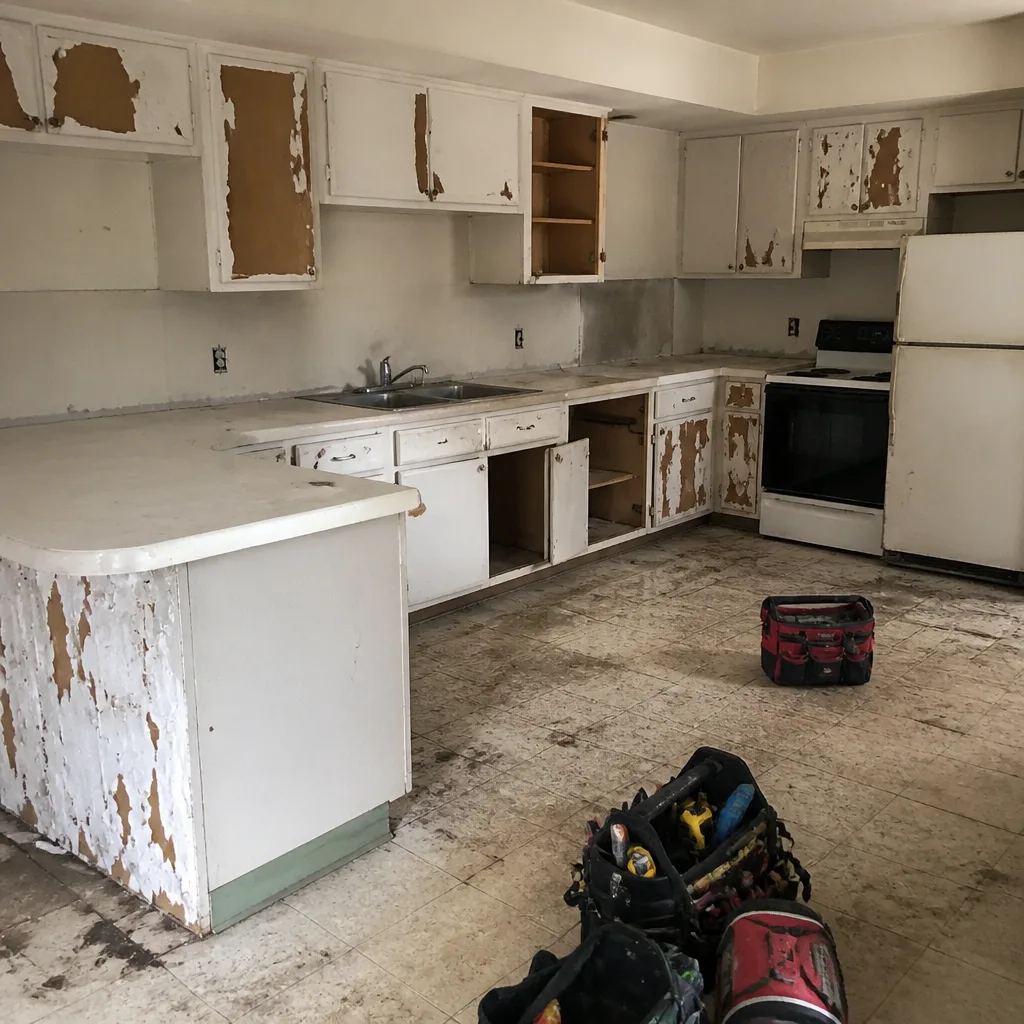 Before
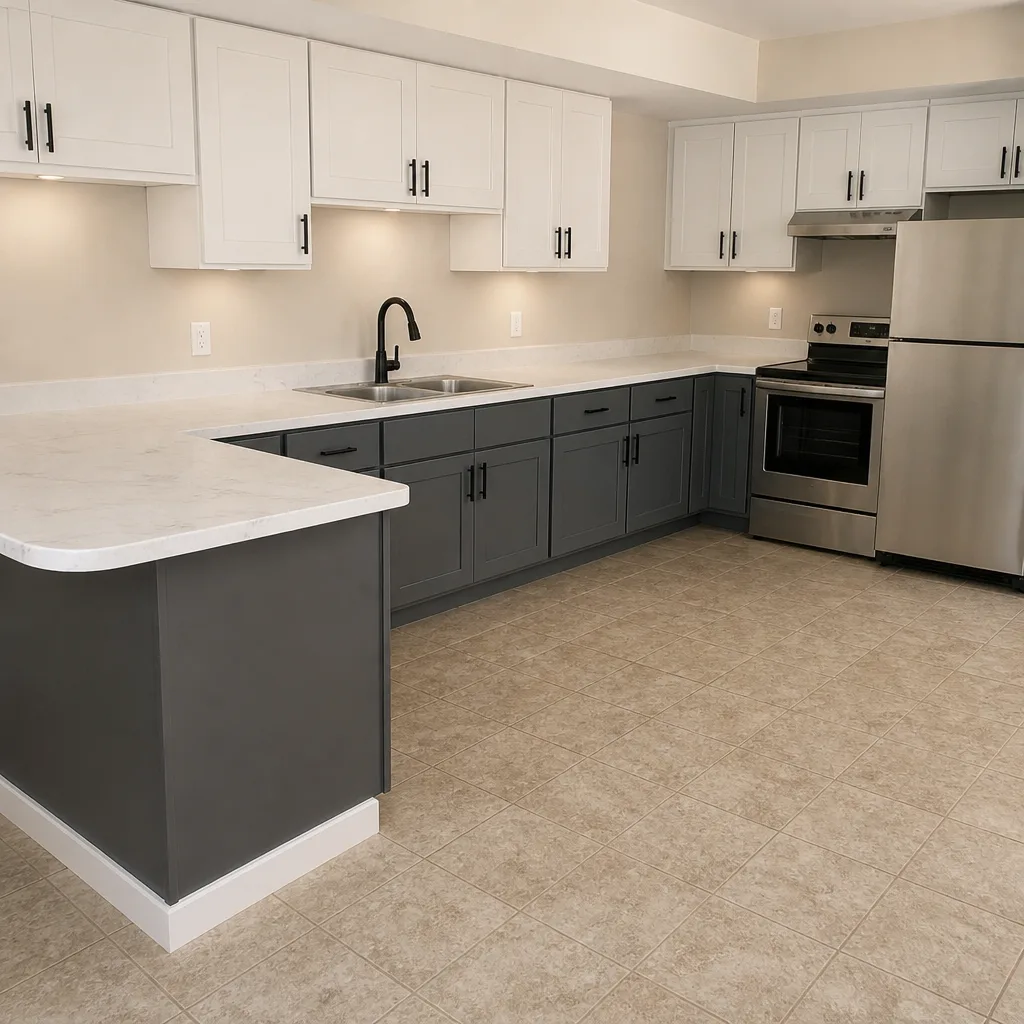 After
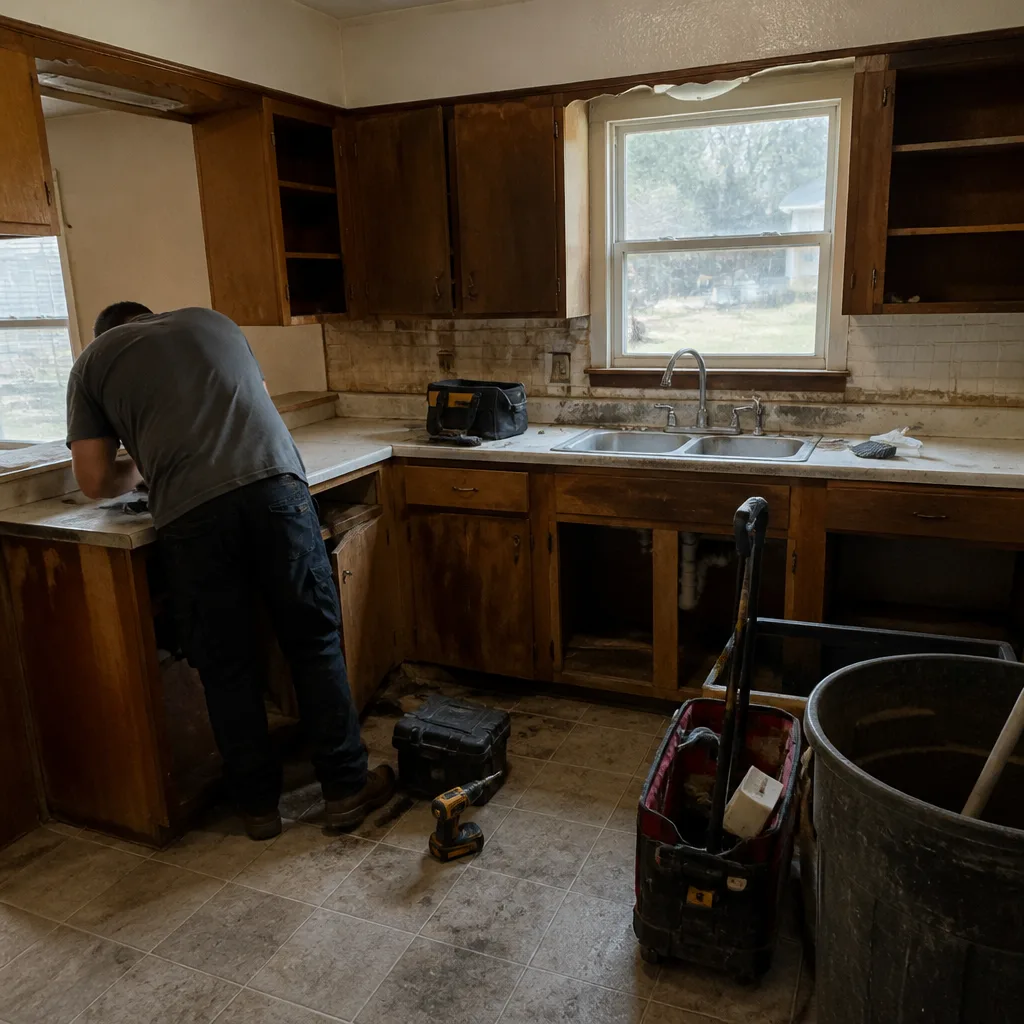 Before
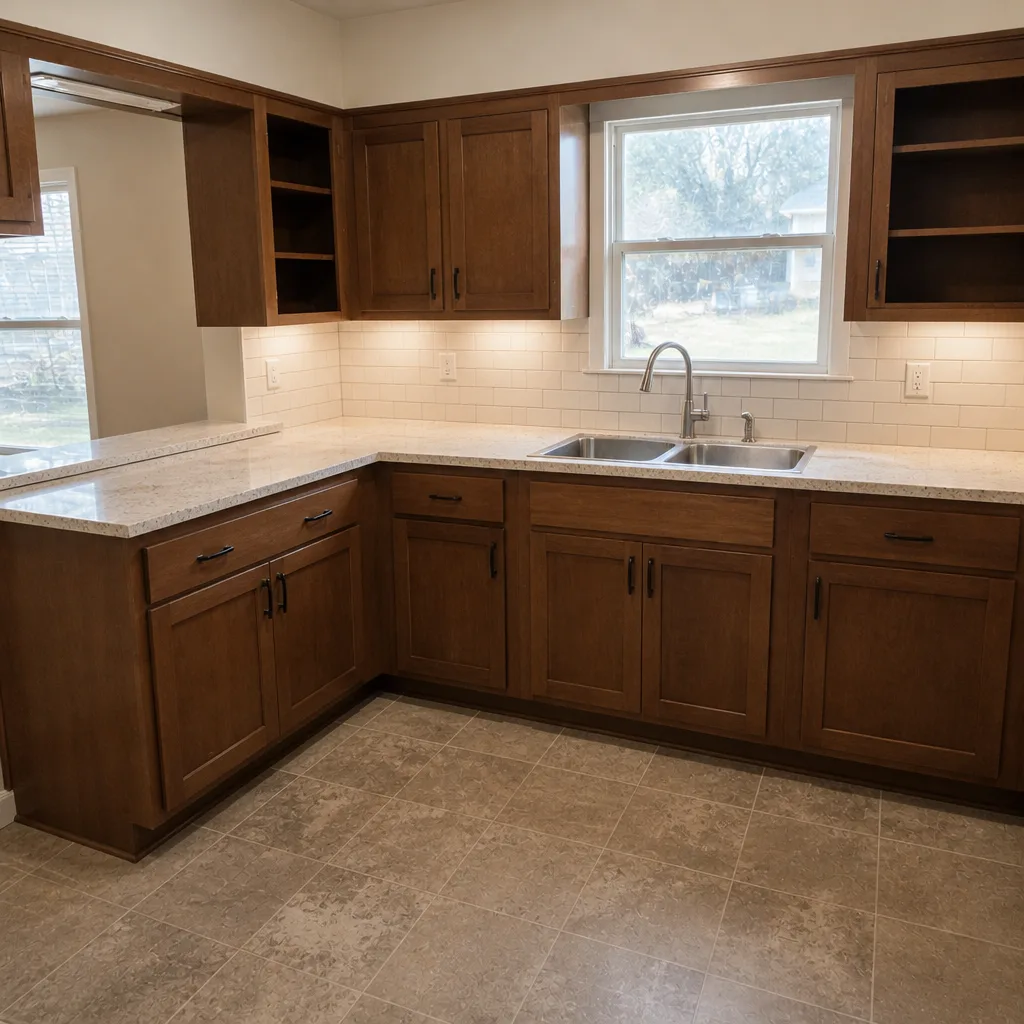 After
Replacement Cost & What’s Included
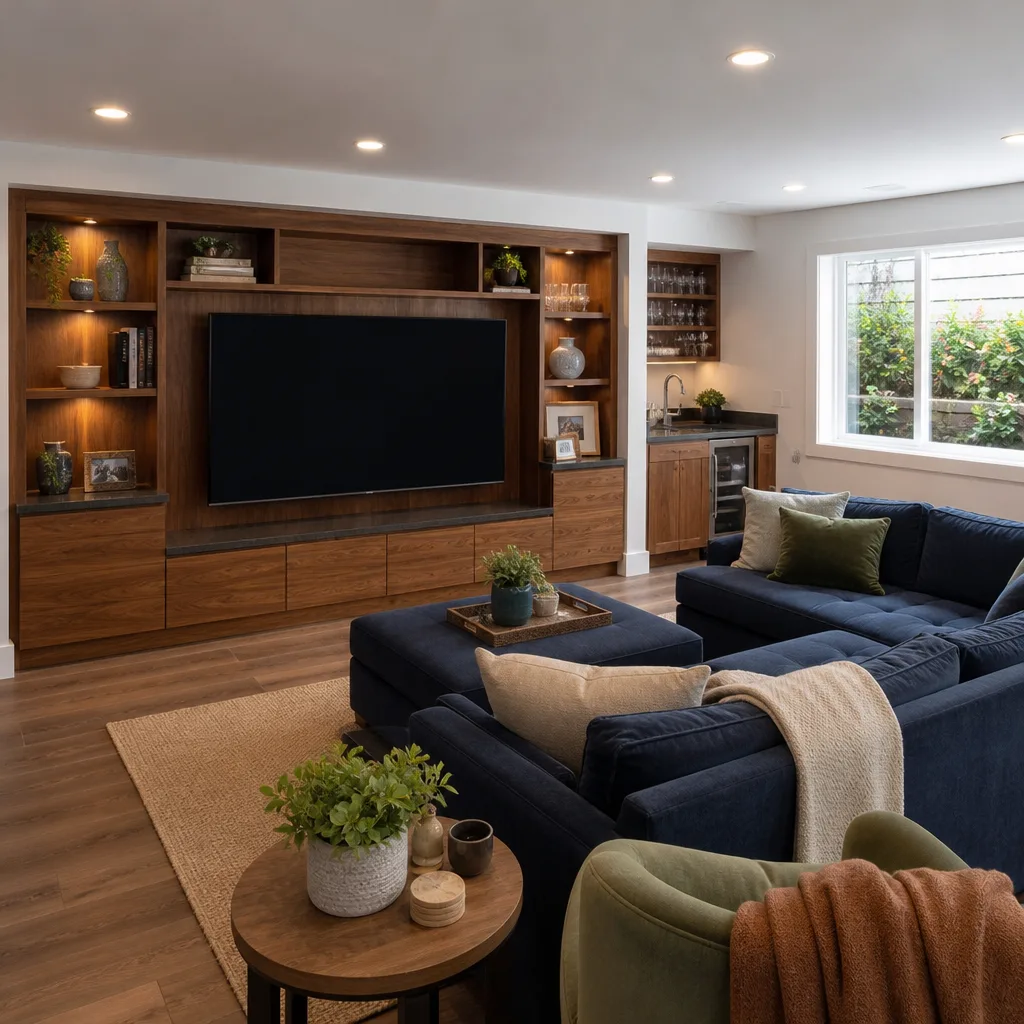
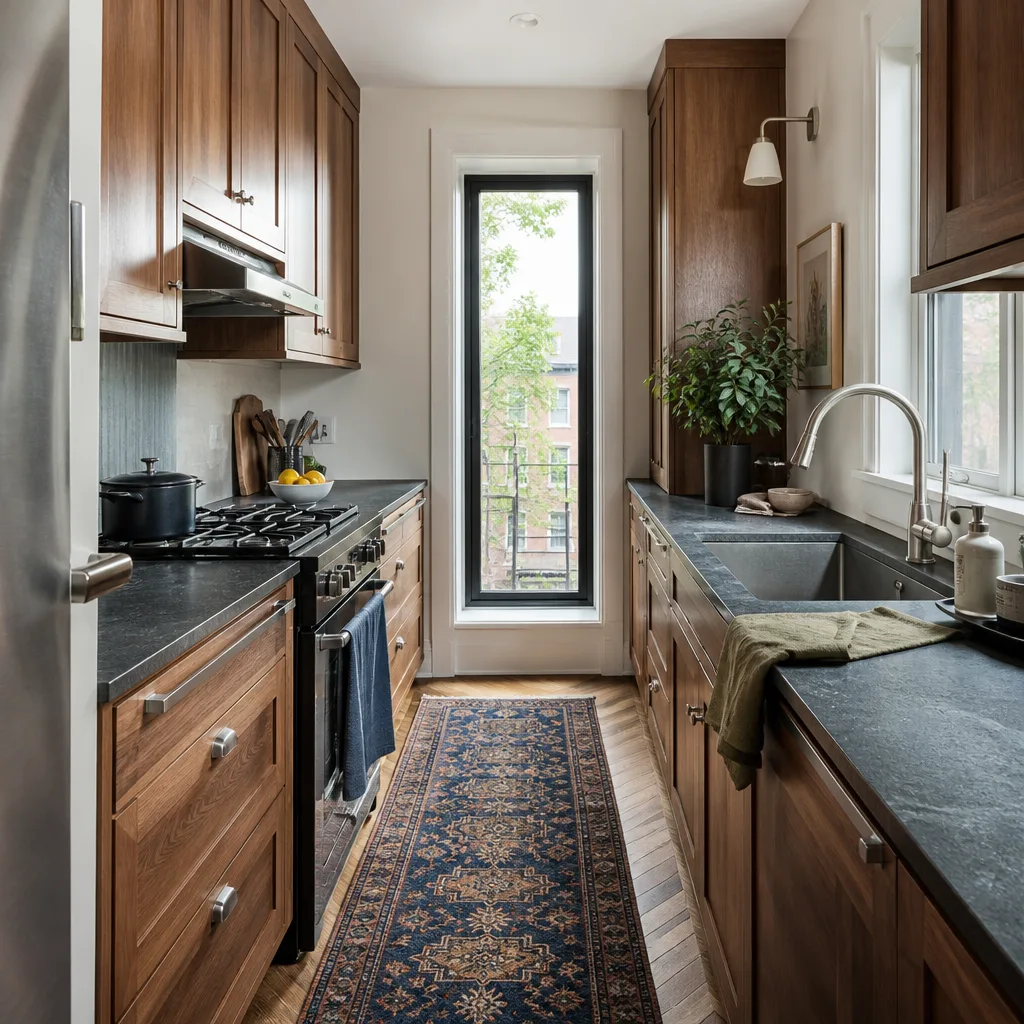
A Cambria surface package inside a Denton addition runs inside the $45,000 – $130,000 band for the addition itself; the Cambria line item within it is quoted separately. Standalone ADU construction with a Cambria kitchen is $90,000 – $220,000. A garage conversion into living space with a Cambria kitchenette lands $30,000 – $80,000. Those ranges hold whether you’re in the Denton square area, over near the university, or out toward the newer subdivisions. What moves the number: slab series, linear footage, edge profile, how many cutouts (sink, cooktop), and the condition of the substrate we’re working over.
What’s included: the written price before work starts, the slab spec named, cutouts and edge profile in the scope, haul-away of the old surface, and the labor to set it. What isn’t: a surprise invoice at the door, or a number that changes because someone “discovered” a substrate problem they should have seen on day one. The 365-Day Done Right Promise covers the finished work for a full year – if the install fails inside that window, we come back and correct it at no charge. That’s the guarantee, in writing, in your hand at close.
DIY or Call Us?
Here’s the honest split. What you can safely check yourself: run a hand under the counter edge to feel for chips, tap the surface to listen for hollow spots, and look at the seam with a flashlight at a low angle. What you should not do: pry at a set slab, try to re-glue a seam, or lift a surface to check the substrate. Cambria is heavy, it’s brittle at the cutout, and a dropped slab at a sink cutout is a genuine cut-risk injury, not a nuisance. A counter that comes loose and lands on a foot or ankle is an ER visit. That’s not a scare tactic – it’s what happens when a homeowner tries to move a slab meant for two trained hands.
We handle the spec, the substrate check, the set, and the guarantee. Call (844) 651-3175 for a free estimate, and we’ll give you a written number before any work starts. A live person picks up, day or night.
FAQs
A properly installed Cambria surface should hold up for decades in normal indoor use – quartz is engineered for wear. What shortens its life is a bad substrate or a seam that opens, not the material itself. West-facing runs take more UV load in North Texas, so if the addition has a lot of afternoon sun, that’s worth building into the spec. Call (844) 651-3175 for a free estimate if you’re weighing replace vs keep.
Sometimes. A single chip can often be filled and blended, and a lifted seam can be reset. A surface with multiple chips at a cutout, or one that’s gone flat from sun, is usually a replacement call. We diagnose the substrate before we recommend repair – a repair over a bad substrate fails again. Call (844) 651-3175 to get an honest read.
Typical surface replace-and-set in a Denton addition is one to two days on site once the slab is on hand. The slab itself has to be fabricated to your measurements first, and that lead time is the long part. We tell you the whole timeline, fabrication included, in the written scope. Call (844) 651-3175 for your estimate.
We spec from the documented Cambria fabricator chain and name the slab series, thickness, and finish in writing before work begins. We don’t claim to stock parts or carry slabs – each job is sourced to spec and that spec is yours. Bradford Remodeling Co Denton is an independent service provider, not affiliated with Cambria. Call (844) 651-3175 for a free estimate.
Written by the team at Bradford Remodeling Co Denton, serving Denton and nearby areas.