Last updated November 17, 2026





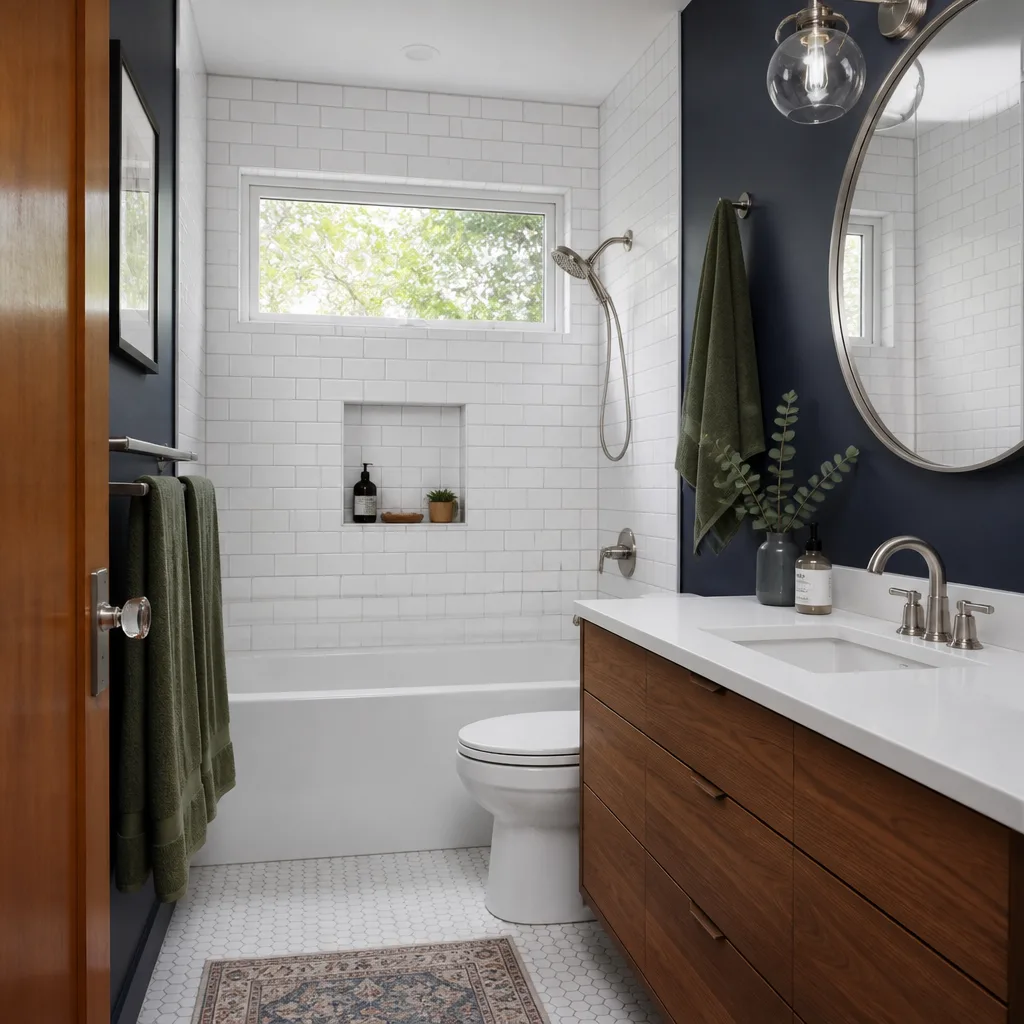
Free written scope consultation - allowances, timeline, and change-order rules on paper before a single trade is scheduled
Construction Permits, Codes & Inspections in TX: What You Need to Know
Here’s the part of Texas construction nobody puts on a flyer: an unpermitted room addition can be ordered demolished at the homeowner’s expense. Not the contractor’s. Yours. Under Texas law, the property owner carries final responsibility for code compliance, which means the crew that built the illegal addition walks away and you eat the teardown, the fines, and the disclosure problem when you try to sell. Texas is genuinely permissive about a lot of things, but permissive isn’t the same as optional. This guide walks through what actually requires a permit in Denton, how the pull-and-inspect process works, how to fix unpermitted work before you list, and where local rules override state law.
Quick Answer
In Texas, whether you need a permit depends on your city, not the state. The state sets minimum building standards through the International Residential Code as adopted locally, and each city decides what work crosses the permitting threshold. In Denton, structural work, additions, electrical, plumbing, and mechanical changes generally require a permit and inspections, while cosmetic work like paint, flooring, and cabinet refacing typically does not. The homeowner, not the contractor, holds final legal responsibility for compliance, which is why letting a contractor pull the permit versus pulling it yourself changes your exposure.
Styles & brands we work with
- Kitchen remodeling
- Bathroom remodeling
- Home additions & ADU
- Roofing
- Windows & doors
- Driveway & pavers
- Fence
Table of Contents
- What Work Requires a Permit in Denton (and What Doesn’t)
- The Dollar Thresholds That Actually Matter
- Pulling Your Own Permit vs. Letting the Contractor Pull It
- What a Denton Inspection Actually Checks
- How to Retroactively Permit Existing Unpermitted Work
- Texas HB 1743 and Denton Overlay Districts
- Common Mistakes to Avoid
- Frequently Asked Questions
What Work Requires a Permit in Denton (and What Doesn’t)
Denton follows the model most Texas cities use: if the work touches structure, life safety systems, or the building envelope, it needs a permit. If it’s surface-level, it usually doesn’t. The line isn’t about how much money you’re spending; it’s about whether an inspector needs to see something before it’s buried behind drywall.
Work that generally requires a permit in Denton:
- Any room addition, second-story addition, or square-footage increase
- New construction, including detached garages and accessory dwelling units
- Structural changes: load-bearing wall removal, beam additions, foundation repair
- Electrical work beyond swapping a light fixture or receptacle
- Plumbing rough-in, relocation, or new fixture circuits
- HVAC replacement, ductwork changes, and gas line work
- Roof replacement (full tear-off)
- Fence and retaining wall construction above typical height limits
- Pools, spas, and pool barriers
- Decks attached to the house or above grade
- Window and door replacement when the opening size changes
Work that typically does not require a permit:
- Interior and exterior paint
- Flooring replacement over existing substrate
- Cabinet refacing or swapping doors and hardware
- Countertop replacement (unless plumbing is relocated)
- Appliance swaps in existing hookups
- Fencing under the standard height threshold
- Cosmetic landscaping and sod
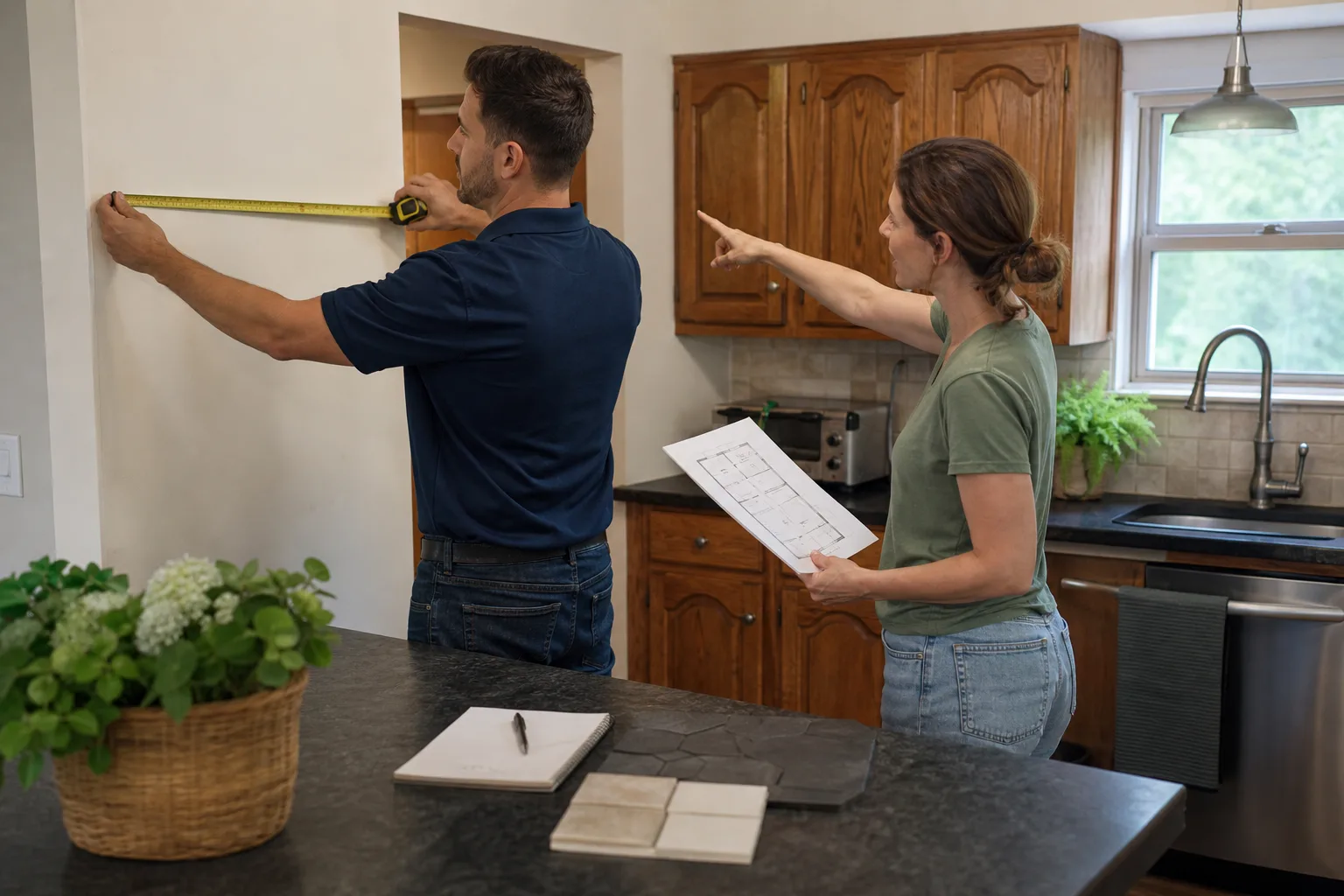
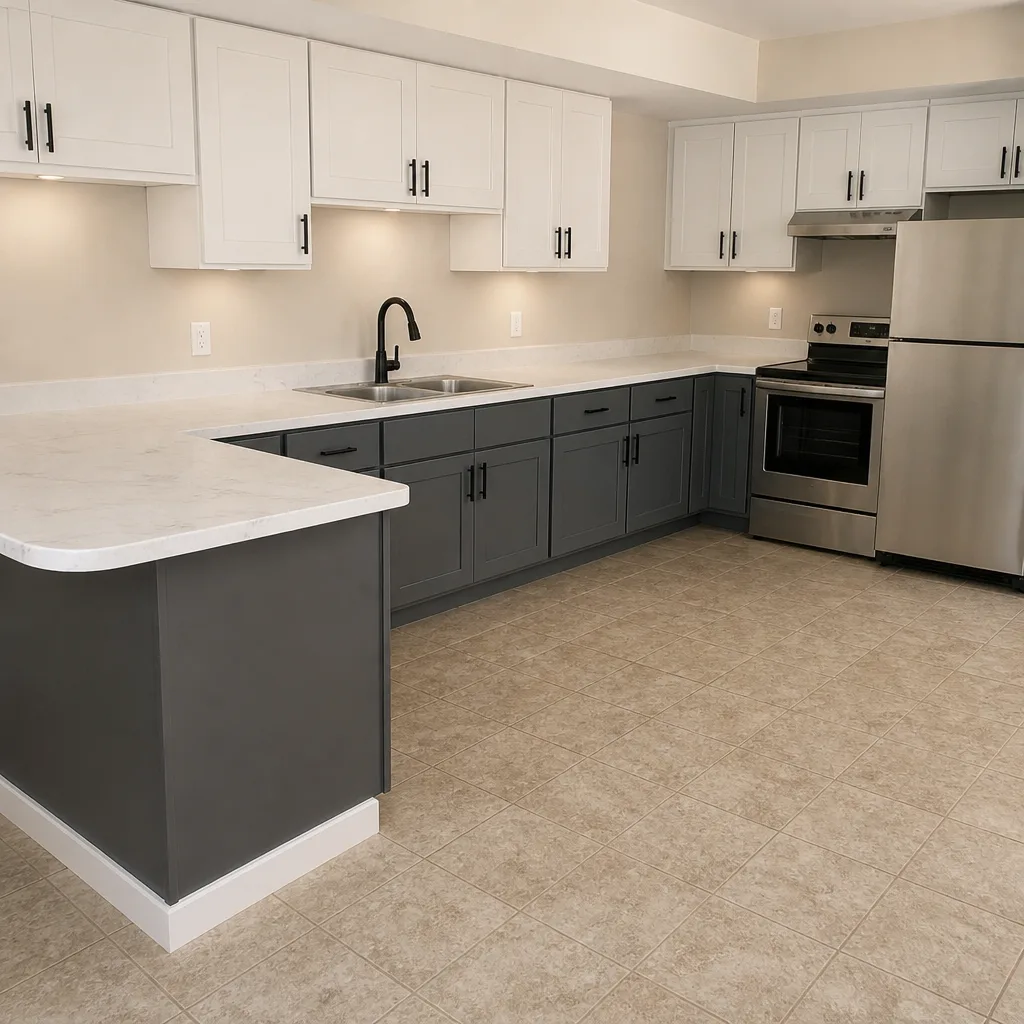
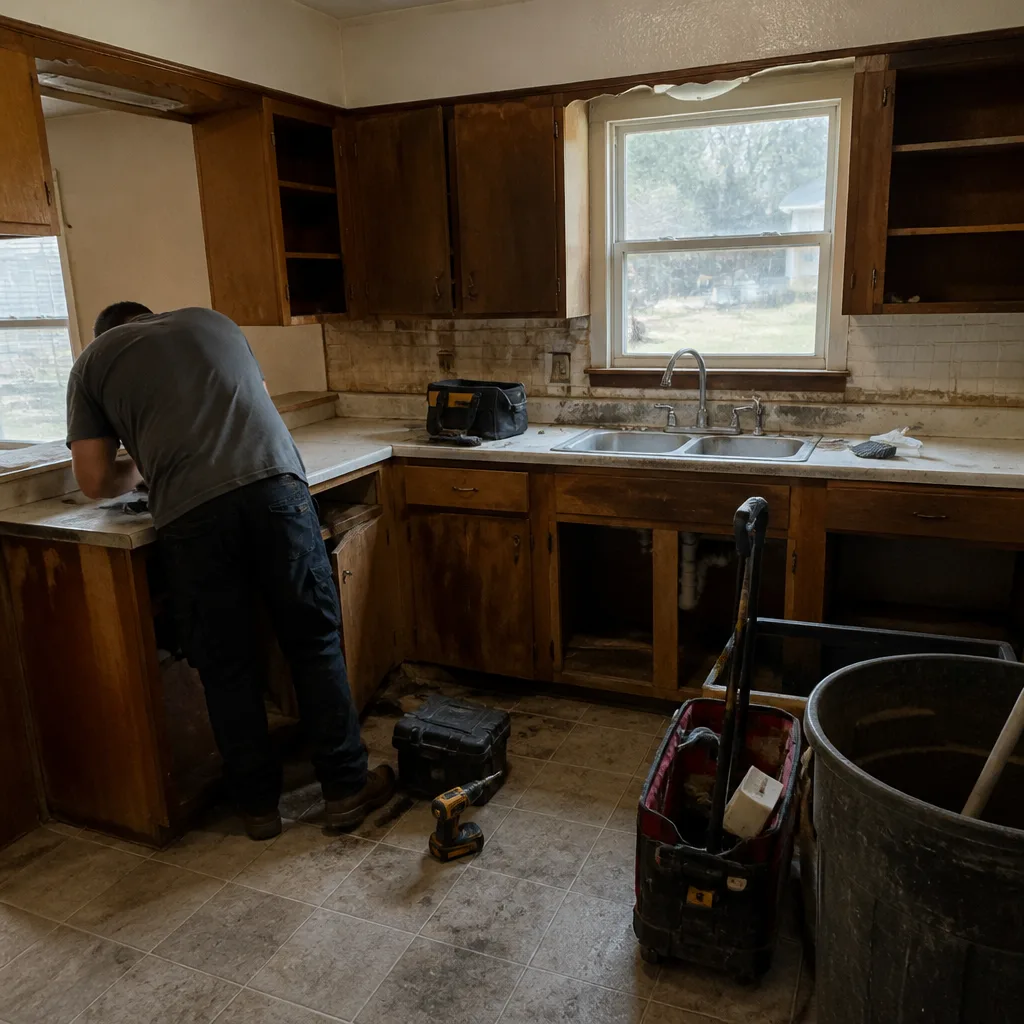
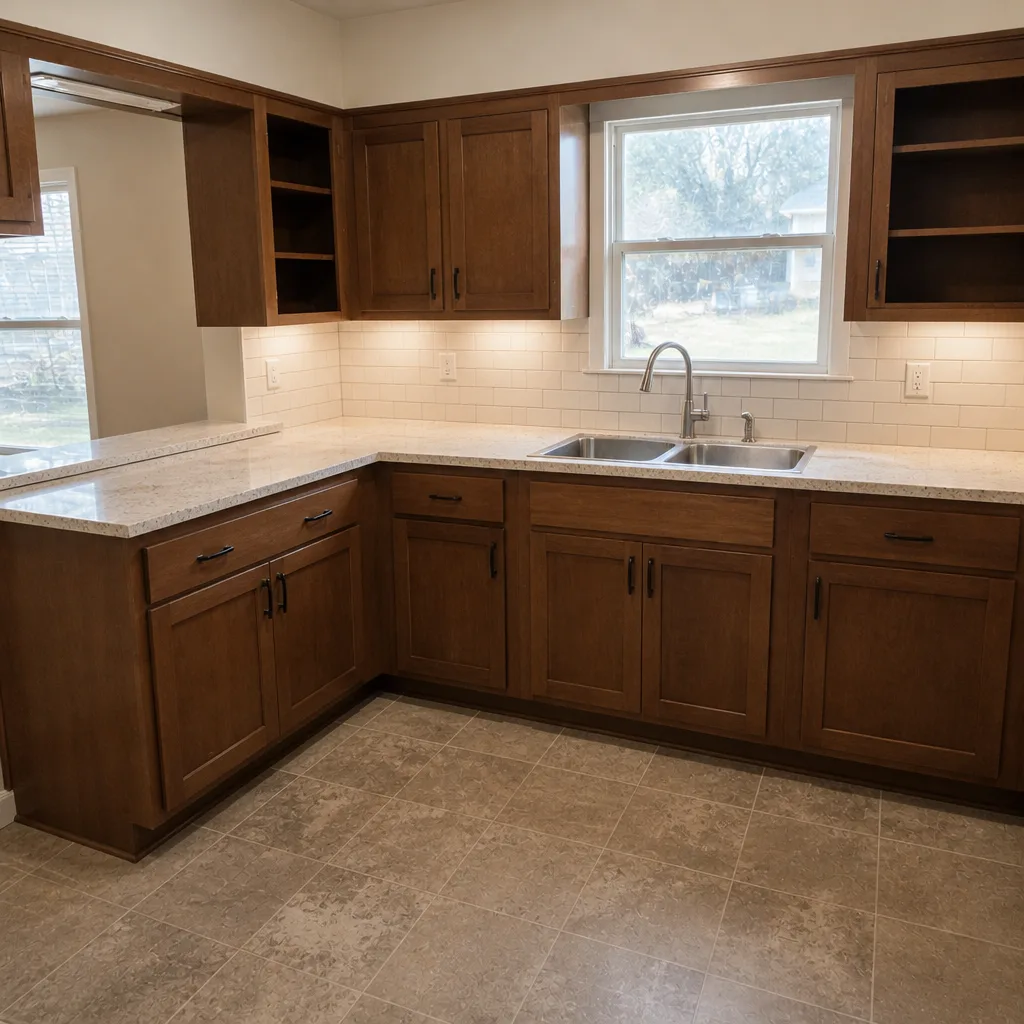
The trap is the middle ground. A kitchen remodel that moves a sink, adds a circuit for a new range, and takes out a wall may trigger three separate permits (plumbing, electrical, structural) that need to be coordinated. When we scope a kitchen remodeling in Denton, we pull every permit the job touches before demolition, and we list each one on the written scope so there’s no guesswork later. That kind of squared-away paperwork is what The Garrison Standard means by a price in writing before a single tool comes out.
The Dollar Thresholds That Actually Matter
Here’s where a lot of contractors wave their hand and say “it depends.” It does depend, but it depends on a number you can look up. Denton, like most Texas cities, uses a combination of valuation thresholds and work classifications to decide when a permit is required. When the valuation crosses certain thresholds, the plan review requirements ramp up.
What to know before you assume you’re under the threshold:
- Valuation is based on total project cost, including labor and materials, not just what you pay a handyman for the day.
- Cosmetic remodels under a nominal threshold may skip a permit, but structural, electrical, or plumbing work in that same project still triggers one.
- Repairs that restore a component to its original condition without changing size, use, or location are often exempt; replacements and alterations are not.
- Every permit application requires an accurate declared valuation. Understating it is a fast way to fail a final inspection, and it can be treated as a material misrepresentation.
The practical rule: call Denton’s Development Services office with the scope and the number before you break ground. If you’re working with us, we do that in the estimate phase and put the actual permit fees into the written price, not as a change order later. That’s the difference between a number that stays put and a number that moves at the door.
Also budget for the inspection line item, which applicants routinely forget: permit fees typically run a small percentage of project valuation, and plan review adds another fee on top. A $60,000 addition isn’t a $400 permit; a $60,000 addition is often several hundred to a few thousand in total permit and review cost depending on the scope and number of trades involved. If a contractor quotes you “$200 for permits” on a full addition, that number is either wrong or the permit isn’t being pulled.
Pulling Your Own Permit vs. Letting the Contractor Pull It
This decision has more legal weight than most homeowners realize. Texas law places final responsibility for code compliance on the property owner. When a contractor pulls the permit, the contractor signs as the responsible party for the work, and the inspector’s corrections go to them. When you pull the permit as an owner-builder, you sign as the responsible party. That means every correction notice, every failed inspection, and every stop-work order lands on your name, not theirs.
Here’s how the two paths differ in practical terms:
- Contractor pulls the permit: the contractor is listed on the application as the responsible party for that scope. Inspections are scheduled by them. Corrections are their job to fix in the field and then re-inspect. You still carry underlying ownership liability, but the day-to-day compliance obligations are theirs.
- You pull as owner-builder: your name is on the application. You schedule inspections, you receive correction notices, you’re the one the city calls when work is red-tagged. If a sub disappears mid-job, you’re the one standing in front of the inspector explaining why the rough-in doesn’t match the approved plans.
- Liability during a sale: if unpermitted work is discovered at sale (which it usually is, via the buyer’s inspector), the paperwork trail matters. A permit with the contractor’s name on it shows a paper trail. A permit with your name on it shows you were the responsible party, and that’s a different conversation with a buyer’s attorney.
There’s a real case for pulling your own permit when you’re doing a genuinely owner-managed project, such as a small DIY garage conversion you’ll never sell. There is no good case for pulling your own permit on a project that involves hiring subs, because you end up the general contractor on the permit whether you know what you’re doing or not. Our general contractor in Denton pulls permits under the company name so the compliance responsibility sits where the work sits.
What a Denton Inspection Actually Checks
Denton inspects in stages. You don’t get one visit at the end; you get a sequence of visits, and each one is a gate. If you skip a stage, the next stage usually can’t proceed. The three that matter most:
Rough-in inspection: this is before drywall goes up. The inspector checks framing (including stud spacing and any header sizing), electrical wiring and box locations, plumbing supply and drain lines, HVAC ducts and gas piping, and the alignment of the structural work with the approved plan. This is the stage where cheap shortcuts become visible, because the walls are open. If you’re building a bathroom, the rough-in covers the drain slope, the vent stack, and the shower valve rough-in. Those are the three items a failed rough-in is most often cited for. When we handle a bathroom remodeling in Denton, rough-in comes before tile, not after, because a tile-over that hides a bad drain route is the sort of thing that turns into a $4,000 fix two years later.
Framing inspection: on a new build or addition, the framing inspection checks studs, headers, ceiling joists, shear paneling and nailing patterns, window and door rough openings, and the fire-blocking at wall penetrations. If your crew uses engineered lumber (LVL headers, TJI joists), the inspector will want to see the manufacturer’s spec sheets to confirm the install matches the design.
Final inspection: everything above the studs is closed in, fixtures are set, and the inspector verifies against the approved plan one last time. Final is where the certificate of occupancy is issued for new construction or additions. Without a final inspection, you have completed work that isn’t legally occupiable, and that’s a real problem at resale or refinance.
What the inspector is not responsible for: verifying the contractor’s craftsmanship, checking whether you got what you paid for on materials, or catching damage that happened after their visit. Inspectors check code compliance, not quality. That’s the gap a written manufacturer spec and a documented brand list closes. When we install a Kohler fixture or a Moen faucet, the spec sheet is on file, not in someone’s head.
How to Retroactively Permit Existing Unpermitted Work
Let’s say you bought a house with a converted garage, or your previous contractor built an addition and never pulled a permit. That’s more common in Denton than people assume, particularly in neighborhoods where homes have been flipped multiple times. The fix is called a retroactive permit or a permit for existing construction, and it’s done before you list the house, because a buyer’s inspector will find it and unwind your sale if you don’t.
How the process usually works:
- Call Denton Development Services and describe the existing work. Ask what they require for existing-construction permitting. Some jurisdictions require a disclosure form and an as-built drawing; others require a full plan submittal.
- Have a licensed engineer or design professional review the existing structure. Any structural changes need to be documented with a stamped letter or stamped drawings confirming the existing work meets code. Expect this step to take a week or two.
- Submit the permit application with the existing-construction classification, the engineer’s letter, and the site plan showing the as-built square footage.
- Open the walls for inspection where required. The inspector may need to see framing, wiring, and plumbing that’s currently behind drywall. This is the step people underestimate; it means opening small access panels.
- Make the corrections the inspector identifies. This is not optional. If the framing is under-sized or the electrical isn’t grounded correctly, that gets fixed before the permit closes.
- Get the final inspection and the certificate. That closes the loop and gives you a paper trail to hand the buyer’s agent.
Timeline is typically four to twelve weeks depending on how much unpermitted work exists and whether corrections are needed. Cost is variable, but plan to budget a few thousand dollars for engineer review plus permit fees plus whatever corrections come up. Compare that to the alternative: a disclosed unpermitted addition can knock tens of thousands off a negotiated sale price, and an undisclosed one can be a lawsuit.
Texas HB 1743 and Denton Overlay Districts
Texas HB 1743, passed in recent sessions, is aimed at limiting a city’s ability to impose certain aesthetic and design restrictions on residential construction. The intent is to protect property rights and make it easier to build and remodel without fighting through subjective design review. The mistake people make is assuming HB 1743 overrides everything. It doesn’t. It’s a limit on local regulation, not a blanket permit waiver, and it explicitly carves out certain local controls.
What survives in Denton:
- Historic overlay districts. Denton has historic and conservation overlay districts, and exterior changes in those areas still go through design review. Changing the front façade of a home in a historic overlay is a different process than a straight permit.
- Floodplain regulations. Denton has floodplain overlays, and additions or structural work inside them can require elevation certificates and additional review. This is a code-compliance item, not a design restriction, so HB 1743 doesn’t touch it.
- HOA covenants and deed restrictions. These are private contracts, not city regulation, which means HB 1743 has no effect. A deed restriction is enforceable by other property owners, not the city, and enforcement is separate from permitting.
- Fire and life-safety codes. Egress windows, smoke and carbon monoxide alarms, pool barriers, and similar codes stay in force.
The practical read for a Denton homeowner: HB 1743 helps when you’re fighting a discretionary design review on an ordinary remodel; it does not help when you’re trying to skip a permit, an inspection, or a historic overlay review. Always confirm the scope against your specific property’s overlays and deed restrictions before the design is drawn, not after the permit application is refused.
Common Mistakes to Avoid
- Skipping the permit to save time. A permit adds a few weeks. Getting caught without one adds months, plus a stop-work order, a penalty, and the cost of opening walls so the inspector can see what’s behind them.
- Letting a contractor “handle the permit” without verifying it exists. Ask for the permit number. Ask for the inspection schedule. Any contractor who’s squared away will hand you both without hesitation. Our written scope lists each permit and each inspection date before demolition, because a job with no paper trail is a job with no accountability.
- Assuming a cosmetic kitchen remodel doesn’t need a permit. If it moves a sink, adds a circuit for a new range, or takes out a wall, it does. Here’s a case in point: a kitchen in a Denton home built in the 1970s is likely to have a 50-amp circuit where the current range needs more. That’s an electrical permit, whether or not the cabinets change.
- Pulling your own permit as an owner-builder on a project you don’t actually manage. The moment you hire subs, the responsible-party obligations are yours and you may not have the licensing or experience to fulfill them.
- Forgetting the final inspection. You get an occupancy permit for a reason. Skipping it leaves you with completed work the city doesn’t officially recognize as habitable.
- Selling with unpermitted work. A buyer’s inspector will find it. The disclosure requirement will catch it. Retroactive permitting before listing is always cheaper than negotiating it after the discovery.
- Not knowing your overlays. Denton’s historic districts, floodplain, and deed restrictions change the scope. Check before the design, not after the plans are stamped.
See the difference
 Before
 After
 Before
 After
 Before
 After
When to Call a Professional
Some work is fine to handle yourself: paint, flooring, cabinet hardware, light landscaping. That line is clear. But once the scope touches structure, life-safety systems, or the building envelope, the permit-and-inspection sequence has too many gates to manage without the right licensing and paperwork. Load-bearing wall removal, foundation repair, any addition, and full electrical or plumbing work are the four areas where a misstep becomes a $20,000 problem fast. Rough-in inspections fail for reasons that aren’t obvious from the outside, and a buried code violation behind finished drywall is a problem for whoever buys the house. Bradford Remodeling Co Denton offers free estimates in Denton; call (844) 651-3175 and we’ll walk the scope, list every permit the project requires, and give you a written price before any work begins.
Frequently Asked Questions
Usually yes. Any kitchen remodel that relocates a sink, moves or adds a circuit, changes plumbing, or removes a wall needs one or more permits from Denton Development Services. Cosmetic-only kitchens (cabinet refacing, new countertops, paint) typically don’t. Call (844) 651-3175 and we’ll walk the scope to see which permits apply and put those fees into the written price.
The exposure is real. Texas sellers are required to disclose known unpermitted work, and a buyer’s inspector will typically find it. Depending on the scope, the remedy can range from a price reduction to a mandated teardown. Retroactive permitting before listing is always cheaper than settling the problem mid-contract. Call (844) 651-3175 for a free estimate on retroactively permitting existing work in Denton.
The homeowner. State law places final compliance responsibility on the property owner, even when the contractor pulls the permit. That’s why verifying the permit exists, having it under the contractor’s name when they’re doing the work, and keeping copies of every inspection pass matters. Call (844) 651-3175 if you want the paperwork trail handled before demo.
No. HB 1743 limits certain discretionary local regulations on residential construction, but it doesn’t override permits, inspections, historic overlay districts, floodplain regulations, or deed restrictions. If your property is in a Denton historic overlay or a floodplain, the review process still applies. Call (844) 651-3175 for a free estimate and we’ll flag the overlays during scoping.
Simple permits (HVAC replacement, water heater, deck) can issue in days. Additions and structural remodels typically run two to six weeks depending on plan review load and the number of trades involved. Budget another two to four weeks on top if a historic overlay review is required. Call (844) 651-3175 to schedule a free estimate, and we’ll quote the permit timeline into the project schedule.
No. Denton’s inspection sequence is a gate, not a suggestion. Final cannot be scheduled until the rough-in and framing inspections pass for the trades involved. Skipping a stage means the work isn’t legally recognized as complete, which blocks the certificate of occupancy on new construction and creates a headache at refinance or resale on a remodel. Call (844) 651-3175 for a free estimate if you’re starting a Denton project that needs the full sequence.
The Bottom Line
Texas is a permissive state, not an unregulated one. Permits in Denton are required for structural work, additions, and life-safety systems, and the state law places final compliance responsibility on you, the homeowner, not the contractor. The dollar thresholds are real, the inspection sequence is a gate, and unpermitted work is the most common way a Denton home sale falls apart. The fix is disciplined paperwork: a permit under the right name, a documented scope, a written price before any work starts, and a walkthrough of every overlay before the design is drawn. That’s how a project ends squared away instead of litigated.
If you’re planning a remodel or addition in Denton and want the permits and inspections handled without surprises, call Bradford Remodeling Co Denton at (844) 651-3175 for a free estimate. We’ll scope the project, list every permit it requires, and put the price and the 365-Day Done Right Promise in writing before a single tool comes out. Every completed project carries a full-year written guarantee: if the work fails within that window, we come back and correct it at no charge. Background-checked, uniformed technicians on every job, live-person phone coverage around the clock, and a documented roster of name-brand materials including KraftMaid, Wellborn, Caesarstone, Kohler, and Moen. Start at our Bradford Remodeling Co Denton home page or call us today.
Written by the team at Bradford Remodeling Co Denton.