Last updated November 17, 2026

Free written scope consultation - allowances, timeline, and change-order rules on paper before a single trade is scheduled
DIY vs Professional Bathroom Remodeling: What’s Safe to Do Yourself
Painting a bathroom yourself saves real money. Waterproofing a shower yourself and doing it wrong costs between $3,500 and $8,000 to correct, because by the time you see the problem, the damage is already in the subfloor and framing. That gap is the whole story of DIY bathroom work. The question isn’t whether you’re handy. It’s which tasks carry permit requirements, waterproofing liability, or code consequences that make a DIY mistake cost more to fix than a pro would have charged to do it right the first time. In this guide, we break down what’s genuinely safe to do yourself in a Denton bathroom, what isn’t, and where the hybrid line sits.
Quick Answer
Paint, hardware, vanity tops, and toilet swaps are safe DIY work. Shower waterproofing, drain rough-in, and electrical changes require a licensed pro and, in Texas, often a permit. The failures that matter most happen behind the wall, which is why waterproofing is the one task a homeowner should never take on alone. Everything else can be a hybrid: pro handles the rough-in, you finish the surface.
Styles & brands we work with
- Kitchen remodeling
- Bathroom remodeling
- Home additions & ADU
- Roofing
- Windows & doors
- Driveway & pavers
- Fence
Table of Contents
- Task-by-task: what’s safe to DIY vs what needs a pro
- Texas rules: what needs a license and what doesn’t
- Why waterproofing is the highest-consequence DIY failure
- The hybrid approach: pro rough-in, DIY finish
- What unpermitted work does to a Denton County home sale
- What DIY actually saves vs what it risks
Task-by-Task: What’s Safe to DIY vs What Needs a Pro
Not all bathroom work carries the same risk. Here’s how we break it down for Denton homeowners who call us asking whether they can handle part of the job themselves.
Safe DIY tasks (low risk, low permit exposure)
- Paint. Walls, ceiling, and trim. The only variable is proper prep – degloss, fill nail holes, and use a bathroom-rated paint that resists moisture. In Denton’s humid summers, standard wall paint over a shower will mildew within a season. Use a satin or semi-gloss acrylic with mildewcide.
- Hardware swaps. Faucet trim (not the valve body), towel bars, toilet paper holders, cabinet pulls, showerheads. These are cosmetic and don’t touch the rough-in.
- Vanity top replacement. If the cabinet base and plumbing stay put, swapping a vanity top is a weekend job. Turn off the water, cut the caulk, lift the old top, set the new one, reconnect the supply lines. If the drain tailpiece or P-trap is corroded, replace it while you’re in there.
- Toilet replacement. Pulling and setting a toilet is genuinely DIY-friendly. New wax ring, new supply line, two bolts, done. The one catch: the flange has to be intact. If the flange is cracked or the subfloor is soft around it, stop and call a pro – that’s a sign of a leak that’s been running for a while.
- Accessories and caulking. Re-caulking the tub surround, replacing the exhaust fan cover, installing a new mirror or medicine cabinet at an existing location.
Professional required (permit, code, or liability exposure)
- Shower waterproofing membrane. This is the big one. We cover it separately below.
- Drain rough-in and relocation. Moving a drain means cutting into the subfloor, reworking the P-trap, and cutting slope to code. Wrong slope means standing water or a slow drain you’ll fight for years.
- Any electrical work beyond a fixture swap. New circuits, GFCI protection in wet areas, adding a receptacle near the vanity, moving a switch – all require a licensed electrician in Texas.
- Supply line and valve replacement. The valve body inside the wall is a licensed-plumber task. Faucet trim is not, but the body behind it is.
- Structural changes. Removing a wall, widening a doorway, sistering joists under a tile floor. Anything that touches framing.
- Exhaust fan installation. New fan, new duct, new roof or wall penetration. This crosses into electrical and envelope work.
Texas Rules: What Needs a License and What Doesn’t
Texas doesn’t license general contractors statewide. There is no “state-licensed GC” credential for residential remodeling. What Texas does license, through the Texas Department of Licensing and Regulation (TDLR), is plumbers and electricians. That distinction matters for how you plan a bathroom project.
Here’s how it works in practice:
- Plumbing beyond a fixture swap requires a licensed plumber. A licensed plumber pulls the plumbing permit, does the rough-in, and the work gets inspected. This is true in the City of Denton and Denton County.
- Electrical requires a licensed electrician. Same structure: permit, licensed trade, inspection.
- A general contractor manages the project and can self-perform finish carpentry, tile setting, drywall, and painting. Structural work typically requires an engineer’s letter and a building permit pulled by the GC.
- Permits are pulled at the city or county level. In Denton, that’s the City of Denton Development Services. Work in unincorporated Denton County runs through the county. Get the permit in writing before the first tool comes out.
What this means for a DIY homeowner: you can legally paint, tile over existing substrate (with skill), install a vanity top, and set a toilet. You cannot legally (or safely) do the plumbing rough-in or the electrical yourself and expect it to pass inspection at resale. This is the line most homeowners get wrong, because the licensed trades aren’t the visible work – they’re the work behind the wall. For a full picture of what a permitted Denton bathroom project looks like, see our Bathroom Remodeling in Denton service page.
Why Waterproofing Is the Single Highest-Consequence DIY Failure
This is the part of the guide we want every homeowner to read twice. Waterproofing a shower is not “paint on some red stuff.” It’s a specific method, laid out in the TCNA Handbook, and getting it wrong doesn’t show up as a leak. It shows up two to five years later as a soft spot at the base of the curb, a loose tile, or a musty smell you can’t find.
By then the damage is in the substrate. Here’s what improper waterproofing looks like before it fails, so you know what a bad job looks like while it’s still on the surface:
- No pre-slope under the liner on a traditional mud-bed shower. Water pools on top of the liner instead of draining, and the mud bed stays saturated. This is the most common failure we see in Denton homes built or remodeled in the 1990s and 2000s.
- Nail or screw penetrations through the waterproofing. Every fastener through a membrane is a hole. Backer board screwed through a liquid-applied membrane at the curb is a hole at the exact spot water sits.
- Thinset directly over greenboard or standard drywall. Greenboard is moisture-resistant, not waterproof. It will fail under a shower.
- No banding at changes of plane. Inside corners, curb-to-floor, floor-to-wall transitions. These need reinforcing fabric embedded in the membrane, not just a smear of sealant.
- Liner that doesn’t run up the wall at least 3 inches above the curb. Weeper holes clogged. Curb built of wood, wrapped in liner, then nailed through – the classic failure.
In our experience across Denton, we routinely see shower failures traced back to a weekend DIY waterproofing job where the homeowner used a paint-on membrane without fabric at the corners, or set the liner flat on the subfloor with no pre-slope. The repair range we quote for a torn-out shower pan that has to be rebuilt correctly – including new substrate, waterproofing, and tile – lands between $3,500 and $8,000. A pro waterproofing job on the same shower, done at the time of the original build, costs a fraction of that. This is the single biggest reason we tell homeowners to stop at the surface when they hit the shower.
The Hybrid Approach: Pro Rough-In, DIY Finish
Here’s the route we recommend most often when a Denton homeowner wants to save real money without taking on the risky scope. Split the project at the wall surface.
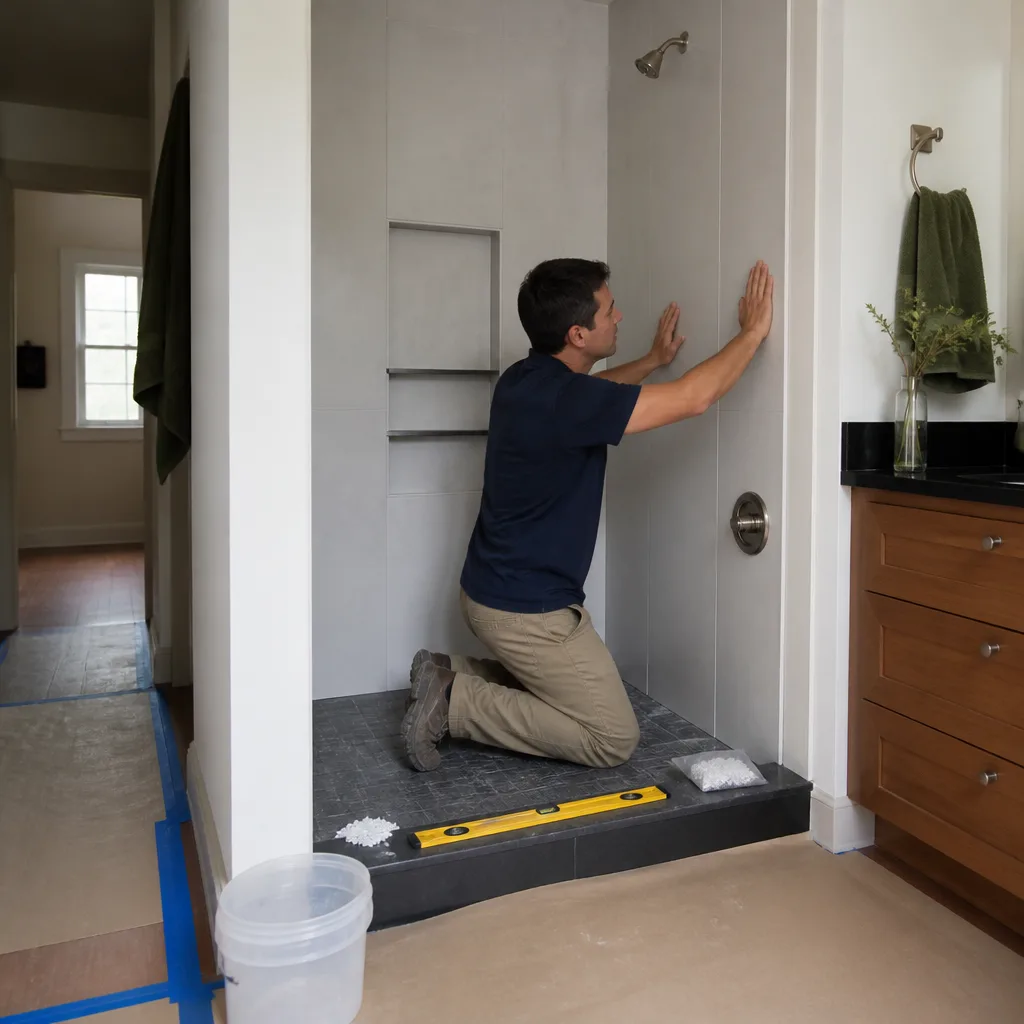
- Pro handles the rough-in and waterproofing. Licensed plumber does the drain and supply rough-in, pulls the permit, and the work gets inspected. A licensed GC frames and sets the waterproofing system to the TCNA method, or a qualified tile setter does. Either way, the shower is watertight and documented before finish goes on.
- Pro sets the base tile and leaves the field tile ready. Some homeowners stop here; some want to set the field tile and grout themselves on the walls.
- You take over the finish. Paint the rest of the bathroom, install hardware, set the vanity top, hang the mirror, caulk, and clean up.
This hybrid approach is where DIY saves real money without exposing you to the $3,500 to $8,000 correction cost. The labor you’re eliminating is the low-risk, high-visibility labor. The labor you’re keeping is the high-risk, invisible labor. If you want to talk through a hybrid scope for your Denton bathroom, our General Contractor in Denton page covers how that scope gets documented and priced in writing before work starts.
What Unpermitted Work Does to a Denton County Home Sale
Texas is a seller-disclosure state. If you remodeled a bathroom without a permit and it required one, you have to disclose that to the buyer. The Texas Property Code seller’s disclosure notice covers “required permits not obtained” as a known defect category. Buyers and their agents look for it, and it costs you leverage at the exact moment you can least afford it.
What actually happens at resale when unpermitted bathroom work surfaces:
- The buyer’s inspector flags it. Missing GFCI protection, a drain that fails a water test, a shower that shows moisture at the curb, an exhaust fan venting to the attic instead of outside. Any of these trigger a follow-up question about permits.
- The buyer asks for a credit. The typical ask is the cost to bring it to code, often plus the cost of undoing whatever the unpermitted work covered up. That credit comes straight off your number.
- Your agent has to disclose it anyway. Nondisclosure after the fact is a legal problem, not a negotiation problem. In Denton County, where a large share of homes were built between 1995 and 2015 and have seen at least one owner renovation, a resale inspection will find it.
- Financing can stall. Some loans require permitted work to be verified. An unpermitted shower pan rebuild can hold up a closing.
Pulling the permit isn’t the expensive part. The expensive part is discovering you needed one three years earlier. A permit pulled by us today costs a fraction of a credit demanded at closing. If you’re in the middle of a Denton bathroom project and you’re not sure what needs a permit, that’s a five-minute conversation, not a five-thousand-dollar problem.
What DIY Actually Saves vs What It Risks
We want to be honest about the numbers, because “just hire a pro” isn’t useful advice for a homeowner trying to make a real budget work. Here’s how the savings math actually breaks down in Denton.
- Paint the bathroom: DIY saves roughly $400 to $900 in labor on a standard 5×8 bathroom. Real, immediate savings. Almost zero risk.
- Set a toilet and vanity top: DIY saves roughly $300 to $600 in labor. Risk is a broken flange or a scratched new vanity, both of which are within your ability to manage.
- Tile the field: DIY saves roughly $1,200 to $2,500 in labor on a full bathroom floor and walls. Risk is a rookie tile layout that shows every offset. Not catastrophic, just visible.
- Waterproof the shower yourself: DIY saves roughly $800 to $1,500 in labor upfront. The correction cost if it fails runs $3,500 to $8,000, plus the cost of your time and the chance it fails after you sell. The expected-value math is not in your favor.
- Plumbing or electrical rough-in: DIY saves little in labor and risks the permit, the inspection, and the resale disclosure. Not a trade we recommend.
Add it up: the safe DIY scope saves between $1,900 and $4,000 on a typical Denton bathroom. The risky scope saves $800 to $1,500 in the moment and risks three to four times that. That’s the whole decision. If you want a written price on the pro scope so you can run your own math, our Kitchen Remodeling in Denton team also runs bathroom scopes and can price the rough-in and waterproofing separately from the finish. The Bradford Remodeling Co Denton home page walks through how our written-price process works on every project.
Common Mistakes to Avoid
- Skipping the permit because “it’s just a bathroom.” A bathroom has more code-regulated systems per square foot than any other room in the house – plumbing, electrical, GFCI, ventilation, waterproofing. The permit is the inspection sheet that tells the buyer the work was done to standard.
- Using greenboard in a shower. Greenboard is moisture-resistant drywall, not waterproof substrate. It fails under a shower, and in Denton’s humid summers, it fails faster than the product label suggests.
- Nailing through a waterproofing membrane at the curb. We see this in homes across Denton, often from a weekend remodel two owners back. The curb is where water sits. Every fastener there is a leak path.
- Venting the exhaust fan into the attic. Common in Denton homes built before 2010. It dumps warm, moist air into the attic, where it condenses on the roof deck. Vent it outside, through the roof or a wall, with a proper cap.
- Re-tiling over an existing shower pan without checking the liner. If the old pan is already leaking, you’re building new tile on a failing base. The tile looks new; the leak keeps running.
- Moving the toilet drain “just a few inches” without checking slope. Drain slope is 1/4 inch per foot, not negotiable. A DIY re-route that ignores it gives you a toilet that gurgles and a drain that clogs.
- Buying fixtures before the rough-in is inspected. A trim kit that doesn’t match the valve body your plumber installed is a return trip. Rough-in first, fixtures second, always.
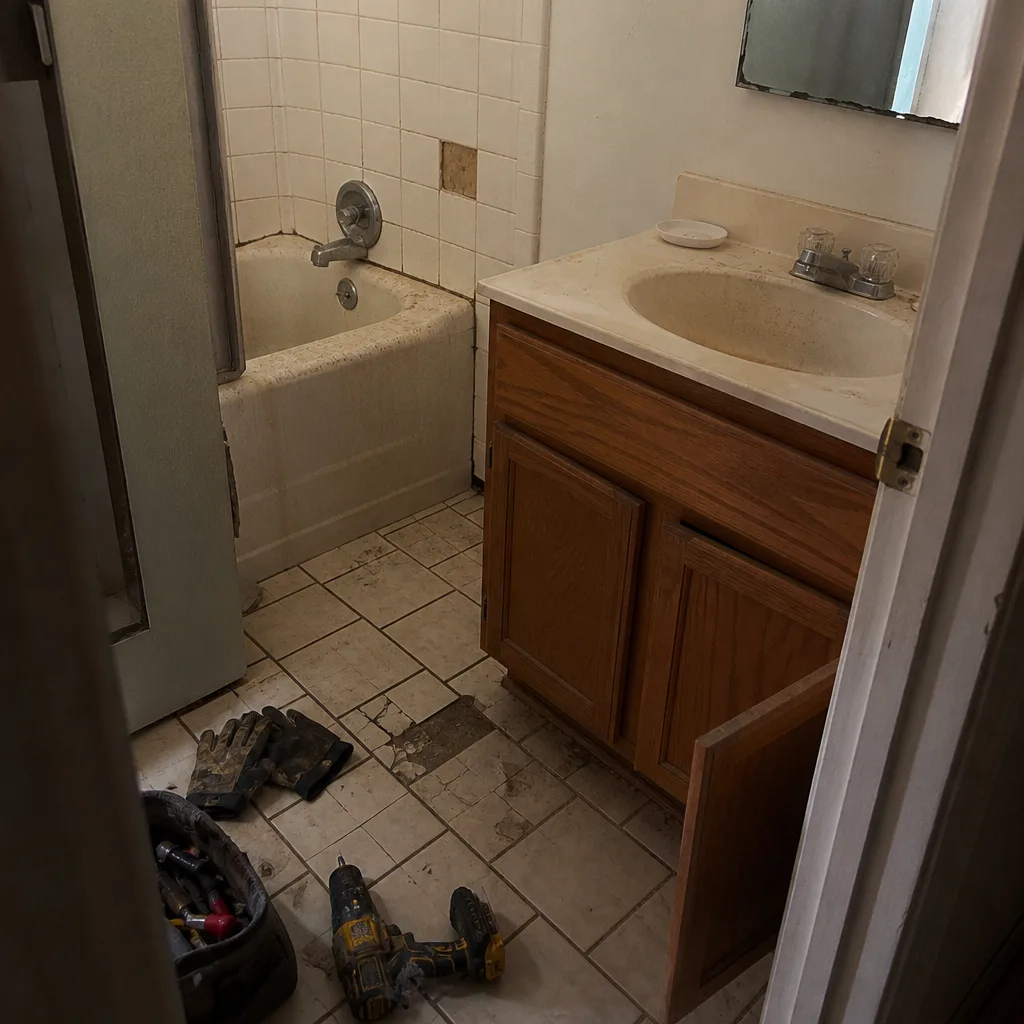
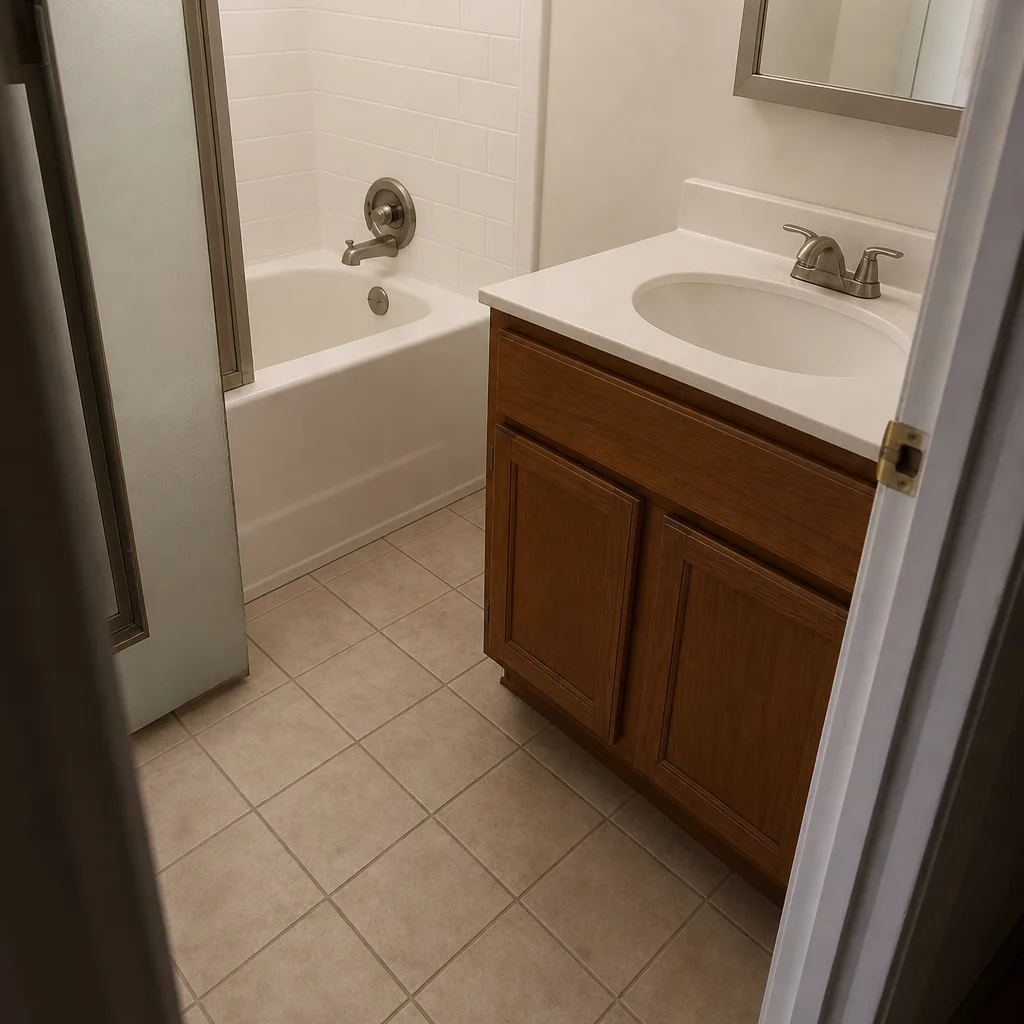
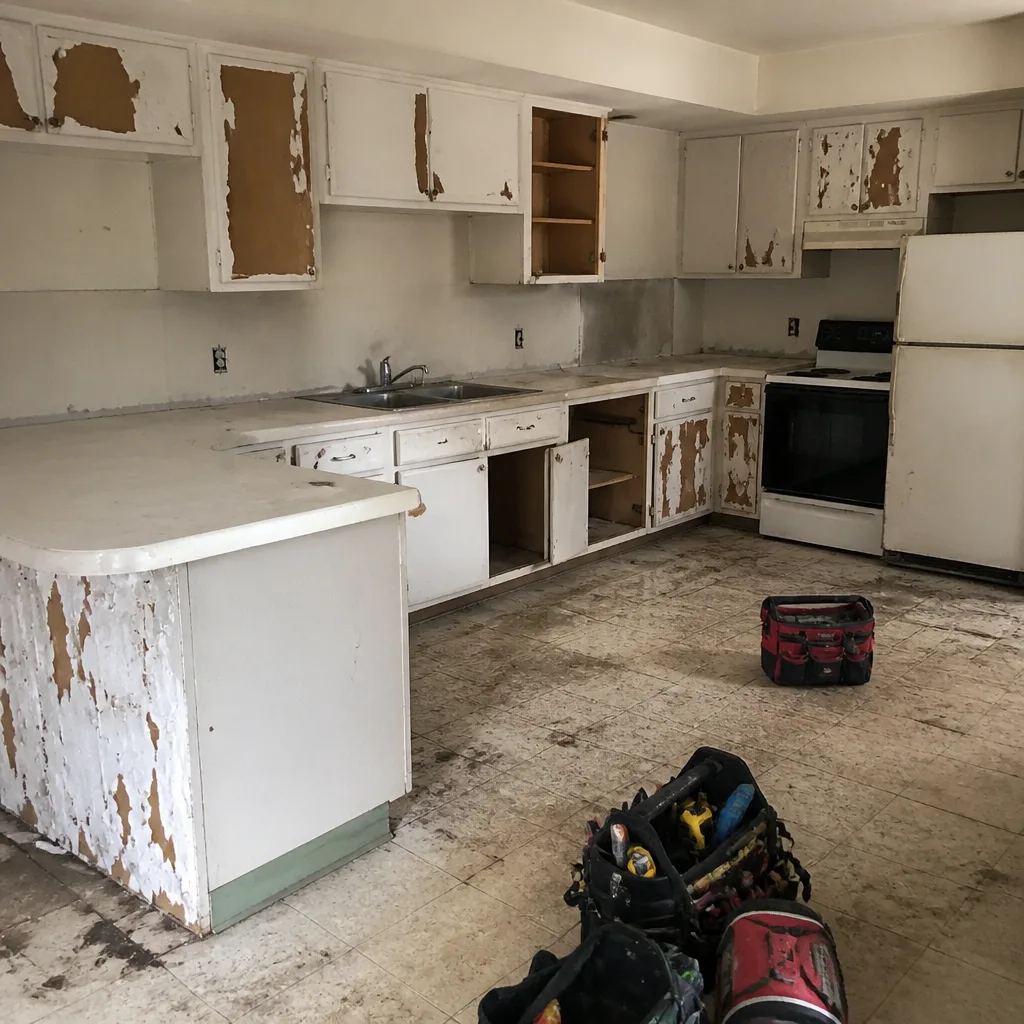
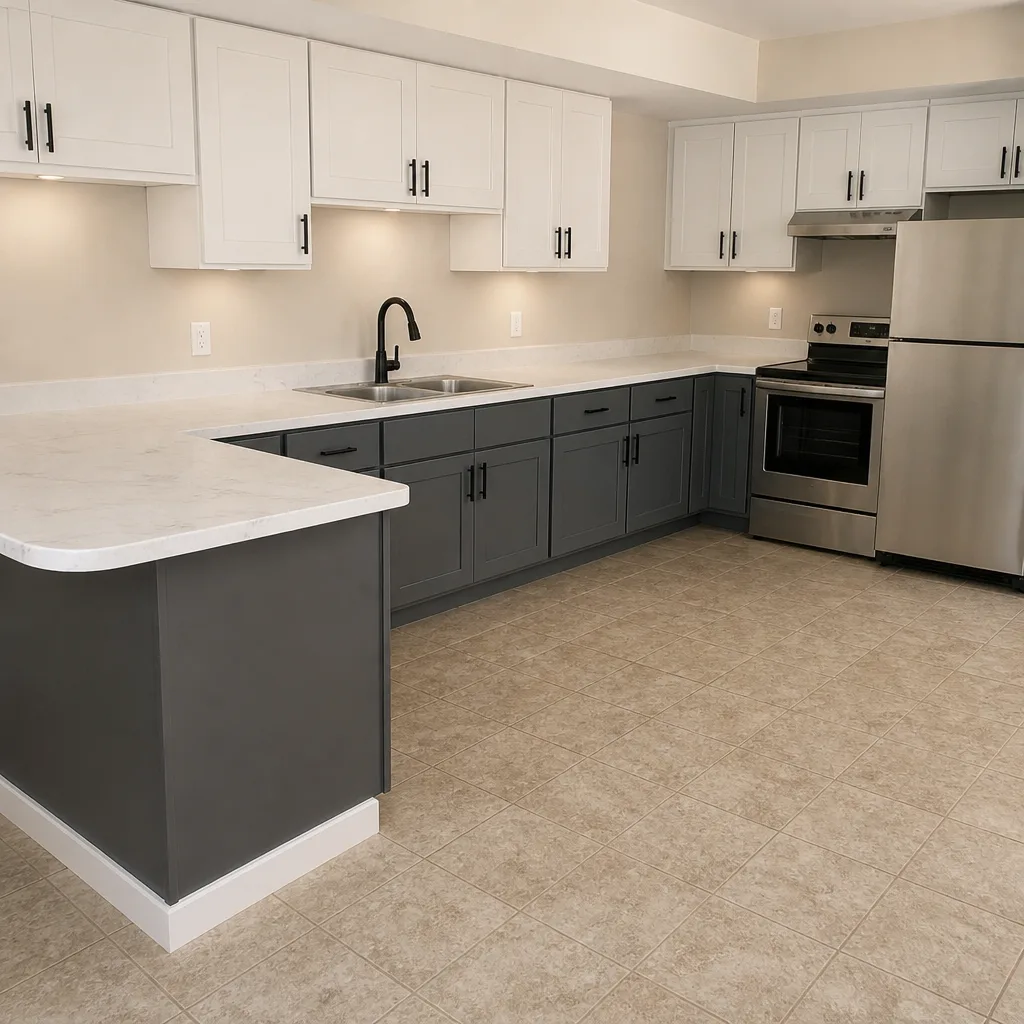
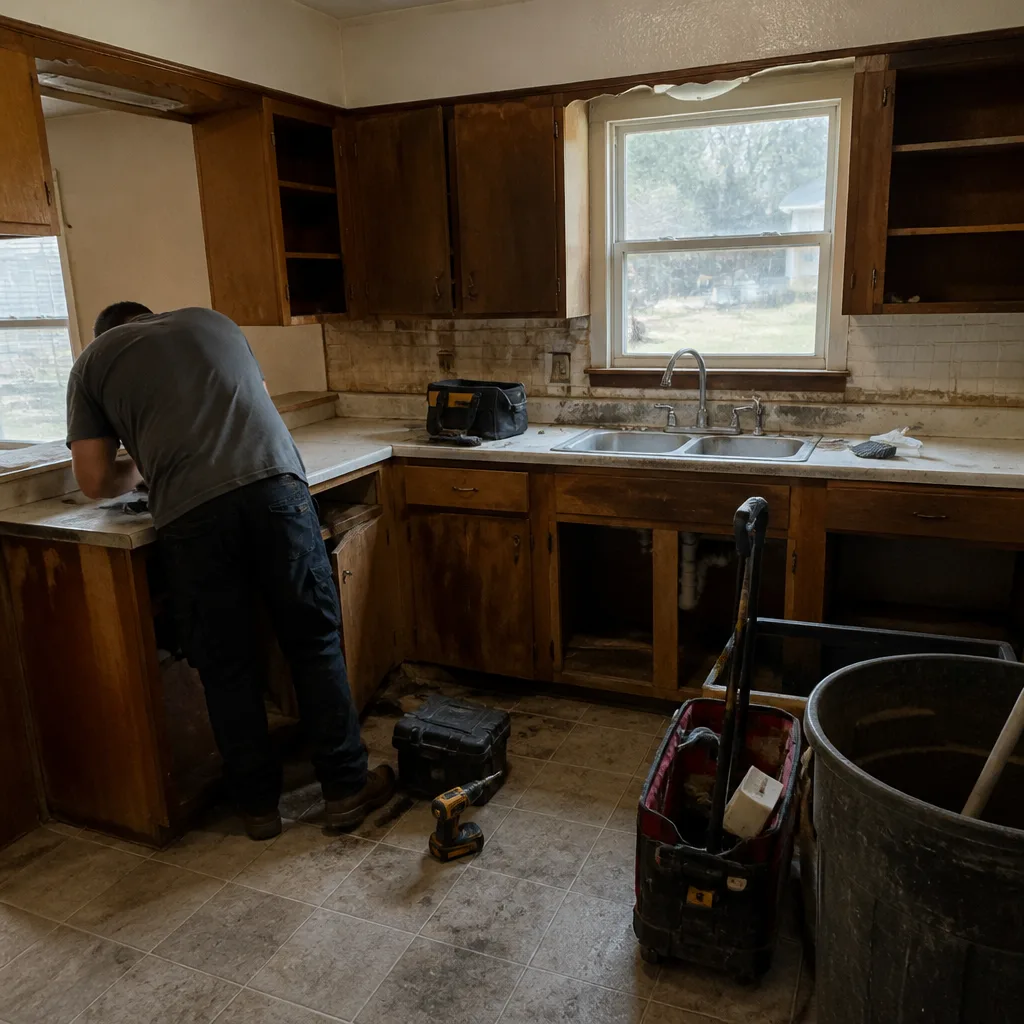
See the difference
 Before
 After
 Before
 After
 Before
 After
When to Call a Professional
Call us when you hit any of these: the shower needs to come out of the wall, the drain needs to move, a new circuit or GFCI is going in, a wall is coming down, or the project is a full bathroom that needs a permit pulled and an inspection passed. Also call when you’ve started a hybrid project and uncovered something you didn’t expect – a soft subfloor, a cracked flange, a shower pan that’s been leaking quietly for years. Those are not DIY problems. They’re diagnosis problems, and diagnosis is what the pro gets paid to do. Bradford Remodeling Co Denton offers free estimates in Denton, with a written price before work starts and the 365-Day Done Right Promise on every completed project. Call (844) 651-3175.
Frequently Asked Questions
We don’t recommend it, because waterproofing is the one DIY task where a mistake costs $3,500 to $8,000 to correct and doesn’t show up until years later. The membrane has to follow a specific TCNA Handbook method, and the failure modes – no pre-slope, penetrations at the curb, missing fabric at corners – are invisible under tile. Hire a licensed pro for the waterproofing; take on the finish work yourself.
Usually yes, if the work touches plumbing, electrical, structural, or the shower pan. Paint, hardware, and a straight vanity top swap generally don’t require a permit. Anything involving the rough-in does, and the permit is pulled at the City of Denton or Denton County depending on where the home sits. Call the city before you swing a hammer, or call us and we’ll walk you through what your project needs.
Correcting a failed shower waterproofing job typically runs $3,500 to $8,000 in our experience across Denton, because it involves tearing out the tile, removing the failed pan, replacing rotted substrate and sometimes framing, redoing the waterproofing to method, and re-tiling. The longer it’s been leaking, the higher the number. Call (844) 651-3175 for a free estimate – we’ll give you the range in writing before we start.
Yes, and it’s a smart way to save $1,200 to $2,500 in labor on a full bathroom. The pro does the plumbing rough-in, the waterproofing, and the permit; you set the field tile and grout. The one rule is that the shower pan tile and the drain connection stay in the pro’s scope – those are the failure points, and they’re not worth touching.
You have to disclose it on the Texas seller’s disclosure notice, and the buyer’s inspector will usually find it anyway. The typical outcome is a credit at closing equal to the cost of bringing the work to code, plus whatever it takes to undo the hidden work. It’s a worse number than having pulled the permit the first time.
A full bathroom, permitted and inspected, typically runs three to five weeks depending on tile, fixtures, and the trade schedule. The permit itself and the inspection windows add a few days. A hybrid project – pro rough-in and waterproofing, you doing the finish – usually lands on the shorter end of that range. Call (844) 651-3175 for a written scope and timeline before work starts.
The Bottom Line
DIY saves real money in the right scope. Paint, hardware, vanity top, and toilet. That’s $1,900 to $4,000 of labor on a typical Denton bathroom, with almost no risk. Everything behind the wall is where the math flips: shower waterproofing, drain rough-in, and electrical carry permit requirements in Texas and correction costs of $3,500 to $8,000 when they fail. The hybrid split is the answer for most homeowners – pro handles the rough-in and waterproofing, you take the finish. Pull the permit, get the inspection, and let the pro carry the risk that costs three times what the work would have. That’s what being squared away looks like at the end of a bathroom project.
If you’re planning a bathroom in Denton and want a written price on the pro scope, call Bradford Remodeling Co Denton at (844) 651-3175 for a free estimate. Every project comes with a written price before work starts, background-checked and uniformed technicians, and the 365-Day Done Right Promise – if it fails within the year, we come back and fix it at no charge.
Written by the team at Bradford Remodeling Co Denton.