Last updated November 17, 2026






Free written scope consultation - allowances, timeline, and change-order rules on paper before a single trade is scheduled
DIY vs Professional Construction: The Denton Homeowner’s Decision Guide
Here’s a fact that surprises a lot of Denton homeowners: a DIY electrical panel upgrade can void your entire homeowner’s insurance policy, not just the claim related to the panel. Texas requires a licensed electrician for service entrance work, and insurers treat unpermitted, unlicensed electrical work as a material misrepresentation of risk. The same logic applies to plumbing, gas, and HVAC. This guide walks through which jobs in Denton carry legal, insurance, and resale consequences when done by an amateur, which ones are genuinely fine to tackle yourself, and how to split a hybrid project so you stay legal and keep your costs down.
Quick Answer
In Denton, work on electrical service panels, gas lines, plumbing beyond fixture swaps, and HVAC refrigerant or duct systems legally requires a licensed Texas tradesperson and a permit. Everything else, from demolition to painting to trim work, can be done by a homeowner, and that’s where DIY makes financial sense. The real dividing line isn’t skill, it’s liability. Anything that touches a permit, a warranty, or your insurance policy should be done by a licensed contractor, and you should get that contractor’s written price and guarantee before work starts.
Styles & brands we work with
- Kitchen remodeling
- Bathroom remodeling
- Home additions & ADU
- Roofing
- Windows & doors
- Driveway & pavers
- Fence
Table of Contents
- What Work Legally Requires a Licensed Texas Tradesperson?
- What Happens If You Skip the Permit?
- How DIY Work Surfaces During a Denton Home Sale
- The Resale Value Math: What Adds, What Neutralizes, What Flags
- What a Licensed Contractor’s Insurance Covers That Yours Doesn’t
- How to Scope a Hybrid Project: Your Labor, Their License
- Denton-Specific Conditions That Affect the DIY Decision
- How to Vet a Contractor So You Don’t Get Burned
What Work Legally Requires a Licensed Texas Tradesperson?
Texas licenses electricians, plumbers, and HVAC technicians at the state level. That licensing isn’t a formality, it’s the trigger for permit requirements, code inspections, and your insurance policy’s coverage conditions. In Denton, the city’s building department enforces those requirements through the permit process, and inspectors check the licensed tradesperson’s credentials before they sign off.
Here’s the work that requires a licensed tradesperson by law:
- Electrical: Service panel upgrades, new circuits, subpanel additions, anything that ties into the main panel, and full rewires. A homeowner can swap a light fixture or a switch, but when the wire leaves the box and enters the panel, a licensed electrician is required.
- Plumbing: Anything involving supply line rough-in, drain line modifications, water heater replacement (including gas connections), gas line work, and sewer line work. Swapping a faucet or a toilet is generally allowed; anything inside the wall is not.
- HVAC: Refrigerant handling, equipment changeouts, duct system modifications, and gas furnace connections. Texas requires an EPA 608 certification for refrigerant work, and the state licenses HVAC contractors for the rest.
- Structural work: Load-bearing wall removal, beam additions, foundation repairs, and any framing change requiring an engineer’s stamp. Denton’s building department will require sealed drawings for most of these.
- Gas lines: Any new gas line or modification to an existing one, including running a line to an outdoor kitchen or a new range.
We’ve seen Denton homeowners get sideways on this in neighborhoods like Southridge and Robson Ranch, where an aging panel or a gas line to an outdoor kitchen seems like a weekend job. It isn’t. Electricians and plumbers aren’t gatekeeping, they’re the only ones who can pull the permit and get the inspection that keeps the work on record.
What Happens If You Skip the Permit?
Denton enforces permits through a combination of stop-work orders, fees, and required corrective work. Most of the time, an unpermitted job gets discovered when a homeowner tries to sell and the buyer’s inspector flags it. At that point, the city’s remedy is to require the work be brought up to current code, inspected, and permitted retroactively, which means opening walls and paying a penalty fee on top of the original work.
The steps play out like this:
- Discovery. A buyer’s inspector, an insurance adjuster, or a city code officer sees something that doesn’t match the permit history on file.
- Stop-work order. If the discovery happens during active construction, Denton’s code enforcement can halt the job.
- Retroactive permitting. The homeowner must apply for a permit for work already done, which typically requires exposing the work so an inspector can verify it. That means cutting drywall, and sometimes replacing it.
- Penalty fees. Denton charges extra for permits pulled after the work is complete, and the fee scales with how much time has passed.
- Correction. If the work doesn’t meet current code (and older DIY work rarely does), the homeowner pays a licensed contractor to redo it.
None of that is cheap, and none of it is covered by insurance. The insurance angle is the one most homeowners miss. A standard Texas homeowner’s policy includes a clause that excludes coverage for work performed by an unlicensed person if that work contributed to the loss. So if a DIY panel upgrade causes a fire, the carrier can deny the entire claim, not just the panel portion.
How DIY Work Surfaces During a Denton Home Sale
Texas requires sellers to disclose known defects and unpermitted work on the seller’s disclosure notice. What most homeowners don’t realize is how thoroughly a buyer’s inspector looks for signs of DIY work, especially in the trade systems. In Denton, where a large share of the housing stock dates to the 1970s through 1990s, inspectors have learned to look closely at the electrical panel, the drain lines under the house, and the HVAC closet.
Here’s what a Denton inspector typically checks that surfaces DIY work:
- Electrical panel labels, breaker types, and whether the panel matches the permit history.
- Solder joints and PEX crimp rings under sinks and in the attic, since a licensed plumber’s work signature is often visible in the fittings.
- HVAC equipment serial numbers and installation dates cross-checked against permit records.
- Drywall patches that don’t match the original texture, which often signal an unpermitted wall move or a re-route of plumbing or electrical.
- Foundation pier placement and repair stamps, since structural work requires an engineer’s letter.
When an inspector finds something, they list it as a “material defect.” The buyer’s agent will use it to renegotiate, and in a slower market that can mean a five-figure price reduction. We’ve watched a Denton seller lose $18,000 in negotiation over an unpermitted bathroom rough-in that could have been done legally for about $3,500. The math isn’t close.
If you’re planning major work that will affect resale, the Bradford Remodeling Co Denton home page is a reasonable place to start scoping what a licensed contractor’s paper trail actually looks like.
The Resale Value Math: What Adds, What Neutralizes, What Flags
Not all DIY is created equal. Some projects genuinely raise a Denton home’s value, some are neutral, and some get flagged by a buyer’s agent as a liability even when the work is fine. The difference is almost always documented vs undocumented, not skill. Here’s how the math breaks down:
- Adds value when DIY’d well: Interior paint, landscaping, tile backsplash, floor refinishing, closet systems, and light fixture swaps. These are cosmetic, reversible, and don’t touch a permit. Buyers pay for the result, not the installer’s license.
- Neutral when DIY’d well: Deck replacement (if permitted), privacy fence, hardscaping with Belgard or Unilock pavers, and finished concrete. These can add value, but only if the permit and inspection records are clean. Without them, buyers discount.
- Flags as a liability: Electrical panel upgrades, any plumbing behind walls, HVAC work, gas line extensions, structural changes, and additions. Even when done perfectly, a buyer’s agent will ask for the permit history. If there isn’t one, the deal reprices.
In our experience on Denton remodels, the projects that consistently return value are the ones with a paper trail: a permitted kitchen remodel, a permitted bathroom rebuild, a documented addition. The kitchen remodeling in Denton page is a good example of how a permitted project scopes out, and why the receipt matters more than the tile choice.
What a Licensed Contractor’s Insurance Covers That Yours Doesn’t
A homeowner’s policy covers the finished home, not the process of building it. If a licensed contractor’s crew drops a beam on your slab or damages a load-bearing wall during a remodel, the contractor’s general liability insurance pays, not yours. If an unlicensed worker is injured on your property, your homeowner’s policy is on the hook for medical bills, and some carriers will deny the claim if the worker should have been licensed for the work they were doing.
The difference in coverage, specifically:
- Workmanship defects: A licensed contractor’s warranty, and in Bradford’s case the 365-Day Done Right Promise, covers the finished work for a full year. If the work fails inside that window, the contractor returns and corrects it at no charge. Your homeowner’s policy does not cover workmanship, ever.
- Injury to workers: A licensed contractor carries workers’ compensation and general liability. Unlicensed help is often covered by the homeowner’s policy, which can trigger a rate increase or a denial.
- Damage to your home during construction: Contractor’s liability coverage pays. Your policy would only pay if the damage is a covered peril, which most construction damage is not.
- Subrogation: If your insurer pays a claim related to unlicensed work, they may subrogate against you, meaning they can come back for reimbursement. This is uncommon but happens in Texas on large losses.
- Manufacturer warranties: Products installed by unlicensed trades often lose their manufacturer coverage. A new water heater installed without a permit and license typically voids the warranty on the unit.
That last point matters more than homeowners think. Bradford works with a documented roster of name-brand materials because manufacturer specifications and warranties are part of what backs the work. If a $9,000 Cambria countertop or a Therma-Tru door installation is done outside the manufacturer’s requirements, the warranty evaporates, and you’re left with your homeowner’s policy covering nothing.
How to Scope a Hybrid Project: Your Labor, Their License
The best-value approach for many Denton remodels is a hybrid: the homeowner handles demolition, prep, and finish work; a licensed contractor handles the trade work and the permit. This keeps the cost down without creating liability. It takes planning, and the sequencing is the whole game.
Here’s the step-by-step:
- Get the permit first. Even if the homeowner is doing some of the work, the permit must be pulled by the licensed contractor for the trade portion. In Denton, a general contractor pulls the building permit; the electrician, plumber, and HVAC contractor each pull their own trade permits.
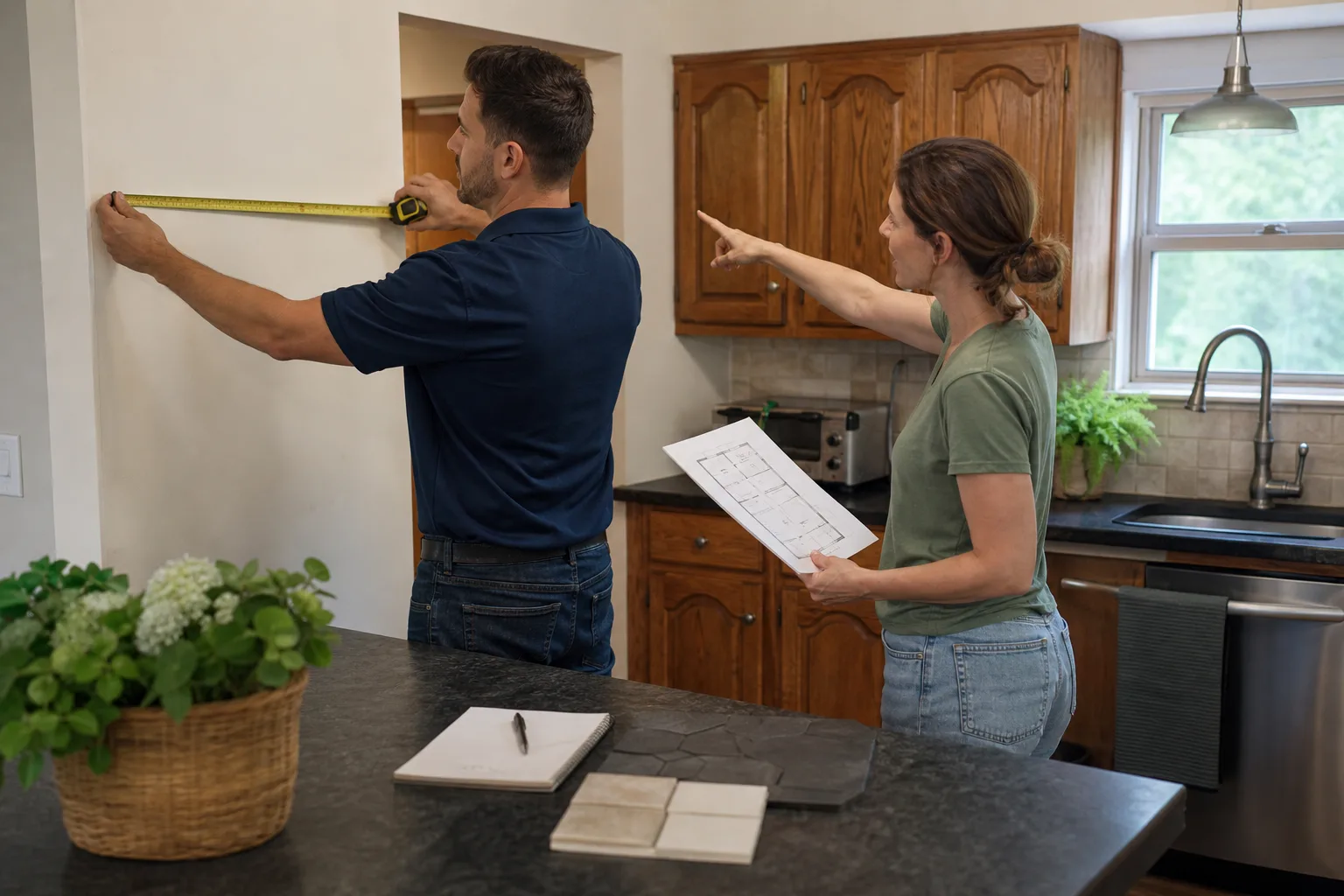
- Scope the split in writing. Before anyone swings a hammer, write down exactly which tasks are homeowner and which are contractor. This prevents the “I thought you were doing that” call.
- Have the tradesperson rough-in before finish work. Electrical rough-in, plumbing rough-in, and HVAC duct rough-in all happen before drywall, and all must be inspected before the walls close. This is where DIY work most often fails: the walls go up before the inspection, and the work must be opened to be verified.
- Do the demolition and prep yourself to save on labor. Demolition, hauling, floor removal, and site cleanup are safe DIY work for most homeowners and represent a meaningful chunk of a remodel budget.
- Have the contractor do the finish work on the licensed trades. Even if you can install a light fixture, the electrician who ran the circuit should make the final connections so the inspection passes and the warranty is intact.
- Document the work with photos and the signed inspection cards. When you sell, that documentation is what keeps the work from becoming a negotiation chip.
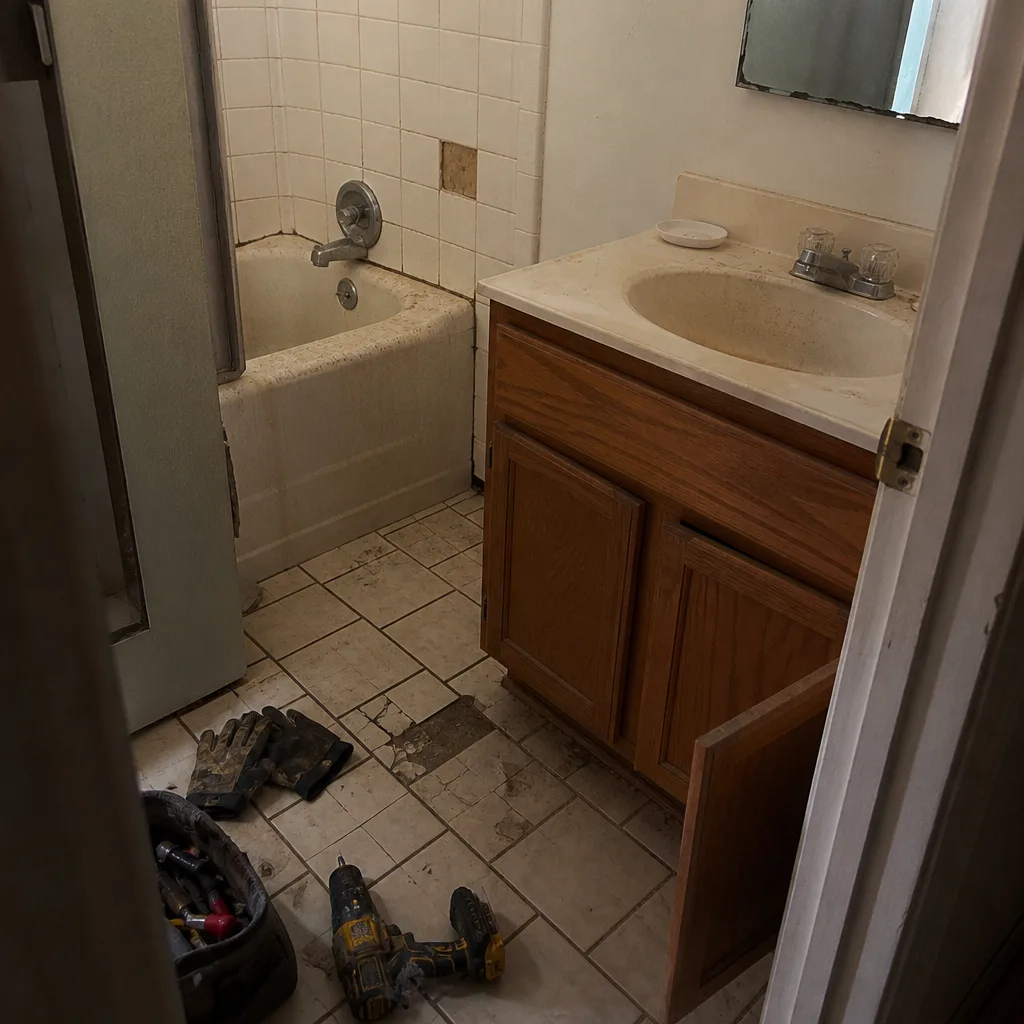
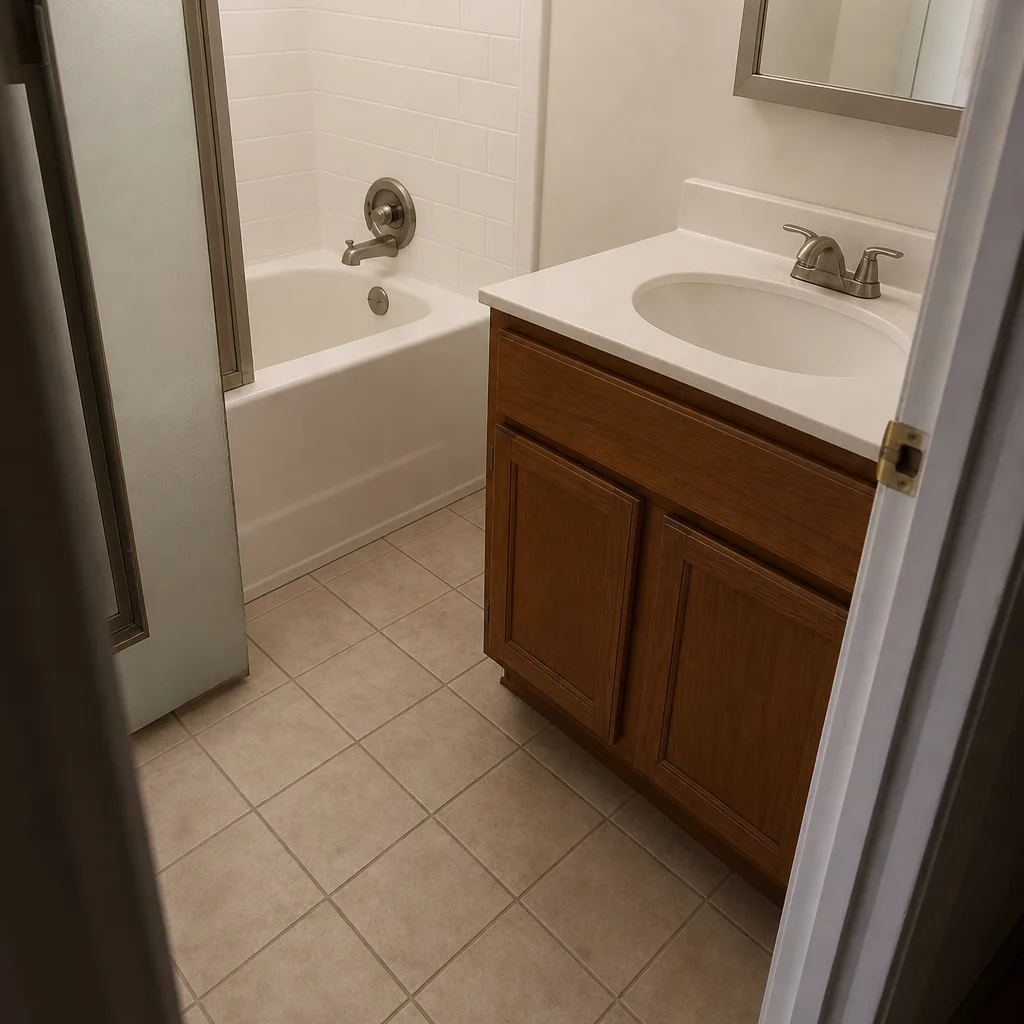
If your hybrid project touches a bathroom, the bathroom remodeling in Denton page shows how a licensed contractor would scope a typical project, which is a useful template for splitting the work.
Denton-Specific Conditions That Affect the DIY Decision
Denton’s climate and soil are their own argument for hiring the trades. The region’s expansive clay soil, combined with wet-and-dry cycles that have gotten more extreme, puts pressure on foundations, drain lines, and outdoor structures. DIY plumbing that fails under slab movement goes from a $400 repair to a $14,000 tunneling job. We’ve seen it in Oakmont and Wheeler Ridge, where a poorly sealed drain joint from an amateur installation leaked silently under the slab for two summers before anyone noticed.
The other Denton factor is the housing stock. A lot of homes built from the 1970s through the 1990s still carry original electrical panels and plumbing, and a homeowner who opens a wall for a “small” project often finds aluminum branch wiring, aging PEX, or a panel that’s maxed out on breaker slots. That discovery changes the scope mid-project. An unlicensed homeowner who started the job has no good move at that point, while a licensed contractor adjusts scope and documents the change before work continues.
Outdoor projects in Denton have their own rules. Pergolas, pavers, and hardscaping with Belgard or Unilock products can hold up well for decades in North Texas if the base is compacted correctly. We’ve seen patio installs fail within two seasons because the base wasn’t deep enough for the clay. That’s a base prep problem, not a materials problem, and it’s the kind of thing a contractor with experience in the area would catch. The general contractor in Denton page covers how we scope exterior work for the area’s soil conditions.
How to Vet a Contractor So You Don’t Get Burned
Most of the horror stories Denton homeowners tell about contractors come down to three things: price that moved after the job started, a company that disappeared mid-project, and a guarantee that turned out to be verbal only. You can screen for all three before you sign.
Here’s what to check:
- Get the price in writing before work starts. Not a range, not a “labor plus materials” estimate. A fixed price, by line item, with a stated scope. If the contractor won’t commit to that, walk.
- Ask what the guarantee covers and for how long. Bradford’s 365-Day Done Right Promise means every completed project carries a full-year written guarantee, and if the work fails inside that window, we come back and correct it at no charge. Ask every contractor you consider for the equivalent, in writing.
- Confirm the crew identity standards. Background-checked, uniformed technicians are the standard on every Bradford job, set at the Garrison Partners level. You should know who’s walking through your door before they arrive.
- Test the phone. Call the number at 7 p.m. on a Saturday and see if a live person answers. If you get voicemail, understand that’s the response system you’ll have during the job too.
- Ask for the material roster. A contractor who specifies KraftMaid, Wellborn, Cambria, Kohler, GAF, James Hardie, and Therma-Tru is working from documented products with manufacturer warranties. That’s traceable quality, and it matters when something fails.
- Verify the permit history. Ask the contractor for the last three Denton permits they pulled and the inspection results. A legitimate contractor will hand you the numbers without hesitation.
Bradford Remodeling is part of the Garrison Partners family, established in 2004, with each location independently owned and operated and held to The Garrison Standard. Our technicians have up to 22 years of experience, and every project runs on the same discipline: a written price before any work starts, a documented scope, and a signed written guarantee at close.
Common Mistakes to Avoid
- Doing electrical panel work without a licensed electrician. This is the single fastest way to void your homeowner’s policy in Texas. The panel upgrade is service entrance work, which requires a licensed electrician regardless of how comfortable you are with wiring.
- Assuming a permit is optional because “it’s just a small job.” Anything that touches the trade systems in Denton requires a permit, and inspectors treat unpermitted work as a code violation no matter how small the scope.
- Hiring the lowest bid without a written scope. The lowest bid is usually the one with the most room to reprice at the door. Ask for the line-item scope and the fixed price before you compare numbers.
- Relying on a verbal guarantee. A verbal guarantee is worth nothing when the work fails. Ask every contractor for the guarantee in writing, with the term and the remedy stated explicitly.
- Skipping the manufacturer warranty requirements. A water heater, HVAC system, or door installed outside the manufacturer’s specification often loses manufacturer coverage. Read the install requirements before you accept a bid.
- Forgetting the soil conditions. Denton’s expansive clay punishes shortcuts in base prep for patios, pavers, and outdoor structures. A hardscape that isn’t based correctly fails inside two seasons.
- Not documenting the work. Take photos of every rough-in, keep the inspection cards, and file the permits. The paper trail is what protects your resale value.
See the difference
 Before
 After
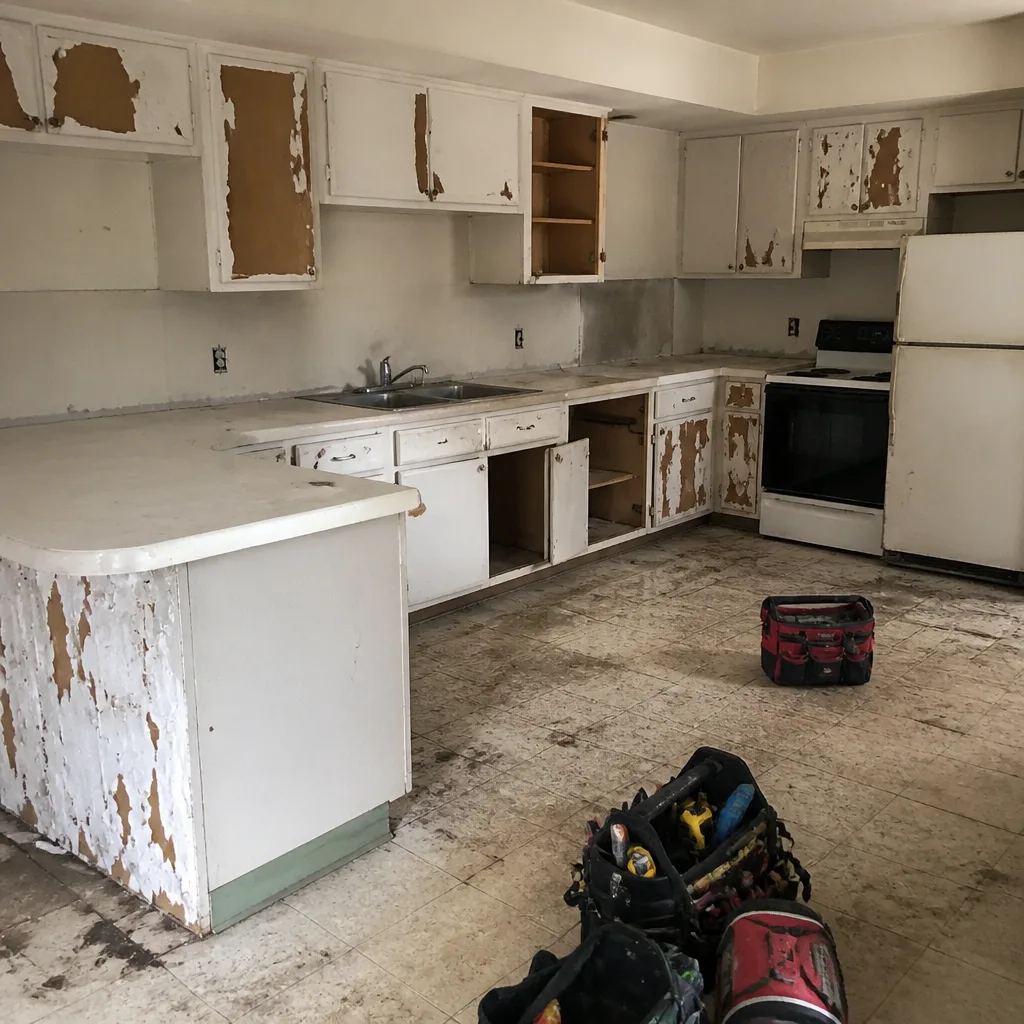 Before
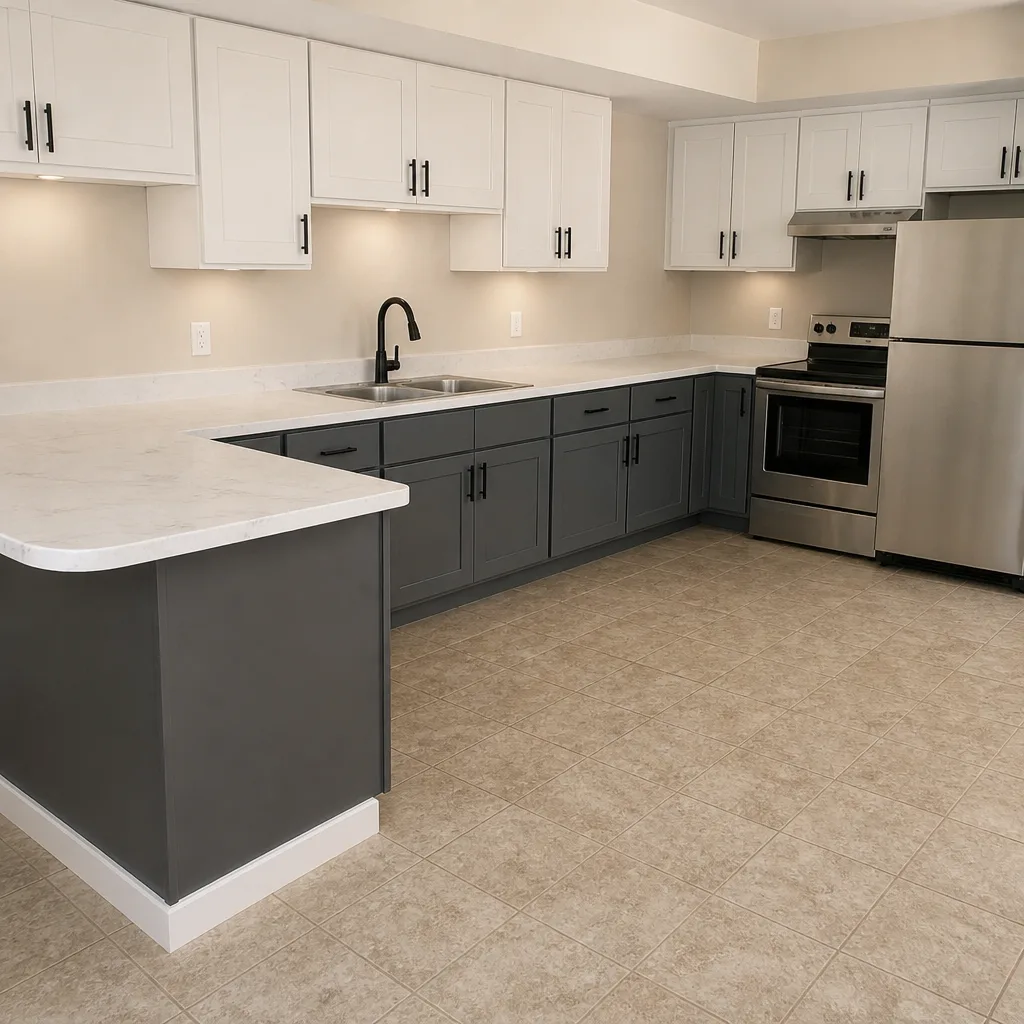 After
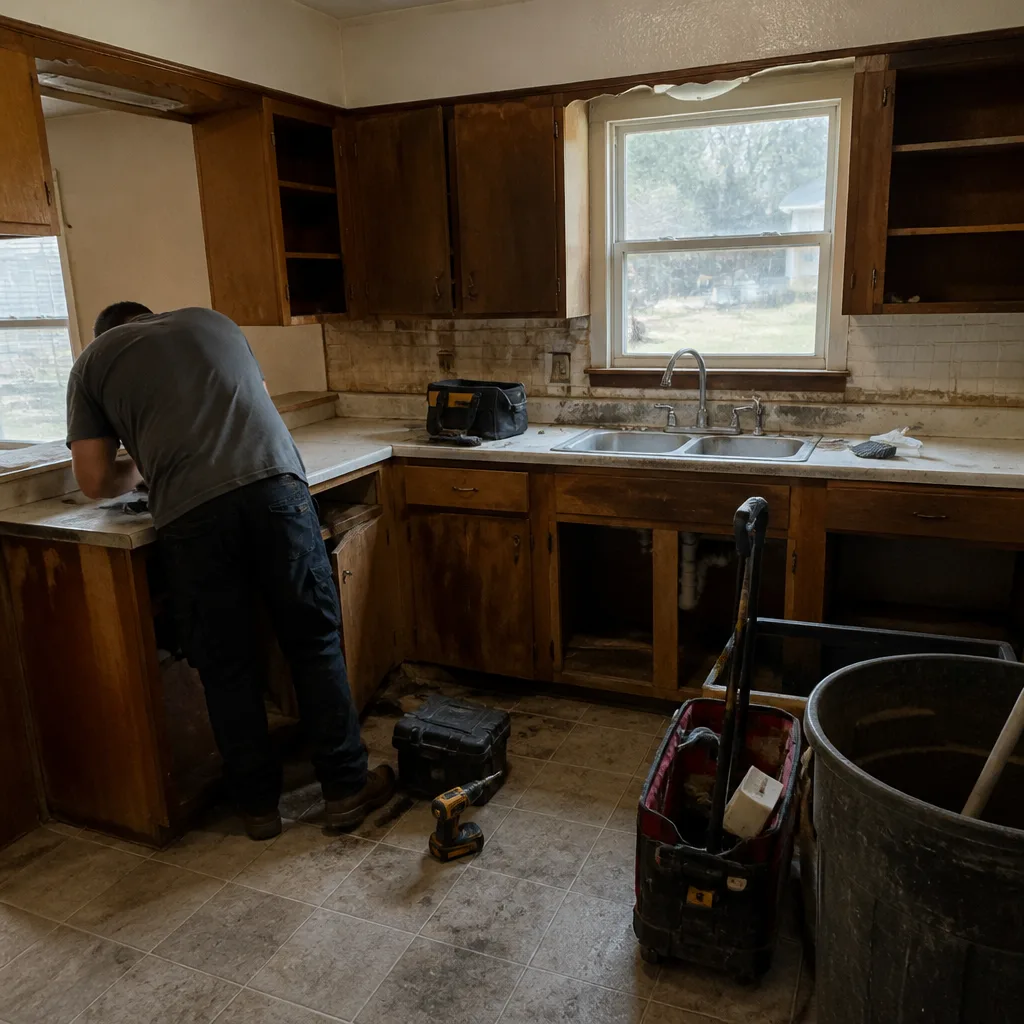 Before
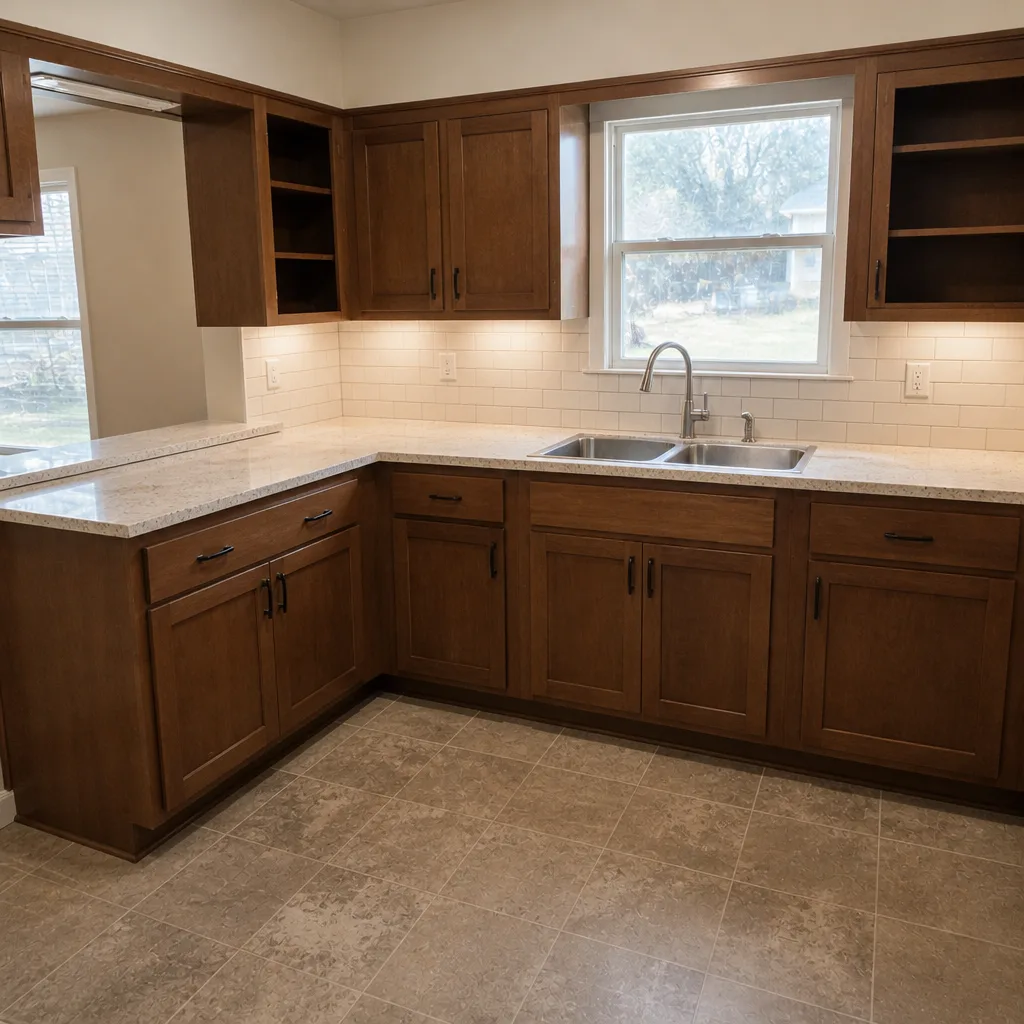 After
When to Call a Professional
Call a licensed professional the moment your project touches the electrical panel, gas lines, plumbing inside the walls, HVAC equipment, structural framing, or any work that requires a Denton permit. That’s not a judgment call, it’s the legal line. Call a professional sooner if you’re planning a hybrid project and want the scope split in writing before demolition begins, or if you’re weighing a resale decision and need to know which DIY work will flag during a Denton inspection. Bradford Remodeling Co Denton offers free estimates in Denton and will put the price in writing before any work starts. Call (844) 651-3175.
Frequently Asked Questions
You can swap a light fixture, a switch, or an outlet, but anything that ties into the panel, adds a circuit, or modifies the service entrance requires a licensed Texas electrician and a permit. A DIY panel upgrade can void your entire homeowner’s insurance policy, not just the claim on the panel. Call (844) 651-3175 for a written estimate if you’re weighing a panel or circuit change.
Yes, usually by more than the work would have cost to permit. A Denton buyer’s inspector will flag unpermitted work on the disclosure and in the inspection report, and the buyer’s agent will use it to negotiate the price down. Call (844) 651-3175 to talk through what a permitted version of your project would cost.
Interior paint, trim, tile backsplash, floor refinishing, landscaping, closet systems, and light fixture swaps are all reasonable homeowner projects in Denton. They don’t touch a permit or a trade system and they don’t affect your insurance. Projects that involve plumbing behind walls, HVAC, gas, structural work, or the electrical panel are not in that category. Call (844) 651-3175 to scope the hybrid if you want to do part of a larger remodel yourself.
Your carrier can deny the claim entirely if the work that caused the loss was performed by an unlicensed person on a system that required a licensed tradesperson. In Texas, service entrance electrical work, gas lines, and most plumbing and HVAC work all fall into that category. The claim denial can extend beyond the specific work to the broader loss, since the policy treats unlicensed work as a material risk misrepresentation. Call (844) 651-3175 before your project starts if you’re unsure which work needs a license.
A licensed contractor’s general liability insurance covers damage to your home and injury to their workers during construction, and their workmanship warranty covers defects in the finished work. Your homeowner’s policy doesn’t cover workmanship, and it may not cover injuries to unlicensed workers on your property. Bradford’s 365-Day Done Right Promise covers every completed project for a full year; if the work fails inside that window, we come back and correct it at no charge. Call (844) 651-3175 for the written terms up front.
Ask for the license numbers, the insurance certificates, and the last three Denton permits they pulled, and verify the permit history with the city’s building department. A legitimate contractor hands all of it over without hesitation. Bradford also provides a written price before any work starts and background-checked, uniformed technicians on every job, so the scope and the crew are known before anyone arrives. Call (844) 651-3175 to schedule a free estimate.
The Bottom Line
The DIY vs. hire question in Denton comes down to three lines you can’t cross: a permit, a license, and your insurance policy. Cosmetic work is yours to do. Trade work, structural work, and anything requiring a permit belongs to a licensed contractor. The rest is a hybrid decision, and that decision is best made before work starts, in writing, with the price and the guarantee stated up front. Bradford Remodeling Co Denton offers free estimates, a written price before any work begins, and the 365-Day Done Right Promise on every completed project. If your project touches the electrical panel, gas, plumbing, HVAC, or the building department, start with a call to (844) 651-3175.
Written by the team at Bradford Remodeling Co Denton.