Last updated November 17, 2026






Free written scope consultation - allowances, timeline, and change-order rules on paper before a single trade is scheduled
Construction Emergency Preparedness Guide for Denton Homes
After Denton’s 2019 tornado outbreak, more than a dozen homeowners signed emergency repair contracts within 24 hours with out-of-state contractors who pulled no permits, completed partial work, and left town. The Texas Attorney General’s office has documented that same pattern repeatedly after major weather events: storms hit, crews roll in, pressure sales fill the vacuum, and homeowners are left holding vague contracts and unfinished roofs. The real damage in a Denton construction emergency usually happens in the first four hours, and it’s almost never the wind or the water. It’s the order of the calls. This guide gives you that order, flat and specific, so you know what to do first, second, and third before you dial anyone.
Quick Answer
In a Denton construction emergency, your first four hours should go: make the scene safe and stop active damage, document everything with photos and video before touching a thing, then call your insurance company to open a claim before you sign any repair contract. Only after those three steps should you call a contractor. Skipping the documentation or the insurance call is what turns a covered loss into a denied claim.
Styles & brands we work with
- Kitchen remodeling
- Bathroom remodeling
- Home additions & ADU
- Roofing
- Windows & doors
- Driveway & pavers
- Fence
Table of Contents
- The Four-Hour Action Sequence
- How to Tell a Storm-Chaser From a Denton Contractor
- What Your Insurance Policy Requires You to Do
- What You Can Legally Do Yourself
- What a Written Emergency Repair Contract Must Contain
- Denton-Specific Risks: Soil, Storms, and Freezes
- The Documentation Kit Every Home Should Have Ready
- Common Mistakes to Avoid
The Four-Hour Action Sequence After Storm, Water, or Structural Damage
Most homeowners react to a construction emergency by calling the first contractor whose truck they see. That’s backwards. The sequence below is the one that protects your claim and your wallet. Work through it in order.
- Hour one: make it safe and stop the active damage. Shut off water at the main if there’s flooding. Kill power at the breaker if wiring is wet. Get everyone out if you smell gas or see structural sagging. Do not walk on a sagging roof or ceiling.
- Hour two: document before you move anything. Photos and video of every damaged surface, from wide shots to close-ups. Capture the make and model of damaged appliances. Note the date and time. This record is what your adjuster will use.
- Hour three: call your insurance company. Open the claim and get a claim number. Ask what mitigation steps they require and whether you need their approval before temporary repairs.
- Hour four: prevent further damage only. Tarp the roof, board a broken window, move furniture out of a wet room. Mitigation, not repair. Keep every receipt.
Only after those four steps do you call a contractor for the actual repair. In our experience across Denton, the homeowners who follow this order get claims approved faster and spend less out of pocket. The ones who sign first and document later are the ones who end up arguing with an adjuster about whether the damage existed before the storm. When it’s time to bring in a professional for the repair itself, a licensed General Contractor in Denton should be your first call, and they should be able to show you a written scope before work begins.
How to Tell a Storm-Chaser From a Denton Contractor
Storm-chasers follow the weather. They show up the day after a hailstorm in Denton, knock on doors, offer a price on the spot, and ask for a deposit or a signed contract before they “get you on the schedule.” The tell isn’t the out-of-state plate. It’s the pressure and the paperwork. Here’s how to separate them from a local contractor who will still be here in a year.
- Ask for a physical local address and a landline. A Denton contractor can give you a business address you can drive to. A storm-chaser gives you a phone number and a P.O. box.
- Ask to see the state license and insurance certificate. In Texas, roofing and general contracting work should come with proof of insurance. Ask for the certificate of insurance directly, not a photocopy from a binder.
- Ask who pulls the permit. A legitimate Denton contractor pulls the permit in their own name. A storm-chaser asks you to pull it as the homeowner, which shifts liability onto you.
- Ask for a written price before any work starts. Not a range, not a “we’ll figure it out.” A written line-item price. Pressure to sign before you’ve seen it is the biggest red flag there is.
- Ask for references from Denton jobs within the last year. A storm-chaser can’t give you a Denton address. A local contractor can.
- Watch for out-of-state plates and no local permit history. You can check permit history with the City of Denton before you sign.
The Texas AG has repeatedly warned that storm-chasing contractors often complete partial work and disappear, leaving the homeowner stuck with a failed inspection and a contractor who won’t answer the phone. The pattern is real, and it’s why a written contract and a local permit matter more than a fast promise.
What Your Insurance Policy Requires You to Do Before Repairs Begin
Your homeowner’s policy almost certainly requires you to do two things before repairs: prevent further damage, and report the loss promptly. Skipping either can create claim-denial risk. Most Denton homeowners never read that section until they need it.
Here’s the short version of what nearly every policy requires:
- Mitigate. You’re required to take reasonable steps to prevent further damage, like tarping a roof or shutting off water. The policy covers the mitigation cost. It does not cover damage that got worse because you did nothing.
- Report promptly. “Promptly” usually means within days, not weeks. Latency gives the adjuster room to argue the damage isn’t storm-related.
- Don’t discard damaged property. Keep the damaged materials until the adjuster has seen them. Don’t haul the wet drywall to the curb before the inspection.
- Get approval before permanent repairs. Temporary mitigation is fine. Permanent repair before the adjuster visits can complicate the claim.
- Keep every receipt. Mitigation costs, hotel stays, equipment rentals. All reimbursable, all require documentation.
One detail homeowners miss: if you sign an emergency repair contract before opening the claim, some insurers will treat the contract price as the agreed cost of repair, which can shortchange you on the actual scope. Open the claim first, get the adjuster’s scope, then get a written contractor price to compare against it. If the repair touches a bathroom that also needs long-term attention after the emergency, a Bathroom Remodeling in Denton contractor can fold the emergency repair into a documented scope so nothing falls through the claim gap.
What You’re Allowed to Do Yourself Without Voiding Your Insurance
There is a real line between mitigation and repair, and crossing it can hurt your claim. The rule of thumb: you can do anything that prevents further damage. You can’t do anything that replaces damaged materials or requires a permit.
Safe to do yourself:
- Shut off the water main and the gas supply if you know where they are.
- Tarp a damaged roof from the ground with a ladder, only if it’s safe and you’re not walking the roof.
- Move furniture, rugs, and electronics out of a wet room.
- Board a broken window from the inside.
- Place buckets and run fans to dry a room.
- Photograph and video everything before and after mitigation.
Do not do yourself:
- Any work on a sagging roof or ceiling. This is genuinely dangerous. A sagging ceiling can fail without warning, and roof work at height is a fall hazard even for experienced crews.
- Electrical work on wet or damaged wiring. Water and live current don’t mix. Call a licensed electrician.
- Gas line work. Leave it to a licensed plumber or gas fitter.
- Any structural repair, foundation work, or load-bearing wall work.
- Permanent repairs of any kind before the adjuster has inspected.
Keep your DIY to mitigation, document it, and hand the repair to a professional. A contractor who works with The Garrison Standard will give you a written price before any work starts, so there’s no guessing about where mitigation ends and repair begins.
What a Written Emergency Repair Contract Must Contain
An emergency repair contract is not a standard remodel contract with a faster schedule. It’s a different document, and it needs specific clauses that standard contracts leave out. Signing under pressure without those clauses is what the AG’s office sees again and again after Denton storms.
Demand these before you sign:
- A written line-item scope. Every item, every price, no ranges. The Garrison Standard requires a written price before any work starts, with no numbers that move at the door. That’s the standard to hold any contractor to.
- A clear completion date. Not “as soon as possible.” A date and a consequence clause if the contractor misses it.
- Who pulls the permit, in writing. The contractor pulls it in their own name, and it’s listed in the contract.
- A written workmanship guarantee. Bradford Remodeling Co Denton backs every completed project with the 365-Day Done Right Promise: if the work fails within the guarantee period, we return and correct it at no charge. Every emergency repair contract should carry a written guarantee like that, not a verbal promise.
- The deposit terms and the payment schedule. A large cash deposit before materials arrive is a red flag. Payment should track the work, documented in stages.
- A cancellation clause. Texas law gives you a right to cancel certain contracts within three days. Ask for it in writing.
- The insurance coordination clause. Who talks to the adjuster, who handles the claim paperwork, and what happens if the claim scope changes.
No contractor should rush you through this list. If they do, walk. A disciplined contractor will sit down and go through each clause because that’s how the job gets squared away.
Denton-Specific Risks: Soil, Storms, and Freezes
Denton sits on a mix of expansive clay soil and limestone, and that combination drives a specific kind of construction emergency that homeowners in other metros don’t see. The clay swells when wet and shrinks when dry. After a heavy rain event, the soil under a slab can shift, and foundation cracks show up in walls and floors within weeks, not the same day. We’ve seen it in neighborhoods all over Denton, and it’s the reason foundation movement is often the second emergency after the first one.
The three Denton emergencies we see most:
- Hail and wind damage. Denton sits in the hail belt. Roof and siding damage can be invisible from the ground. During a hailstorm, the shingles crack and the granules come off, and the damage doesn’t show until the next rain.
- Freeze events. When Texas gets a hard freeze, burst pipes in exterior walls and attics follow. The 2021 freeze left a lot of Denton homes with water damage that started inside a wall.
- Foundation movement after rain. The clay soil expands and contracts, and slab damage shows up as cracks in drywall, doors that stick, and gaps at the baseboards.
Knowing your specific Denton risk profile changes what you prepare for. If your home has a north-facing exterior wall with plumbing in it, your freeze risk is higher than the neighbor’s. If your slab is on heavy clay, your foundation risk is higher than a home on limestone.
The Documentation Kit Every Home Should Have Ready
The single most useful thing you can do before an emergency is build a documentation kit. Most Denton homeowners don’t have one, and they spend the first four hours of an emergency scrambling for the info they need.
Keep it in a waterproof folder, a cloud drive, and a printed copy:
- Photos of every room, every wall, every ceiling, taken now, before anything happens.
- The make, model, and serial number of major appliances.
- Your insurance policy number and the claims phone line.
- The location of your water main, gas shutoff, and electrical panel, with photos of each.
- A list of local contractors you trust, with their phone numbers, gathered before you need them.
- Receipts for major purchases and upgrades.
- A recent video walkthrough of the whole house.
This kit is not paranoia. It’s the difference between a claim that moves smoothly and a claim that stalls because you can’t prove the damage existed before the storm. And when you’re ready to plan ahead for a bigger remodel rather than react to an emergency, the team behind Bradford Remodeling Co Denton home can help you build the plan before you need it.
Common Mistakes to Avoid
- Signing an emergency contract before you open the claim. The contract price can become the claim’s agreed cost, and you lose the room to negotiate the scope.
- Letting a contractor talk you out of the permit. An unpermitted repair in Denton can fail inspection later, and a future buyer’s inspector will find it.
- Skipping the before photos. An adjuster can’t approve damage they can’t see. The pre-damage photos in your kit are what prove the storm caused it.
- Doing permanent repairs yourself to save the deductible. DIY structural or electrical work is dangerous and can void your claim.
- Paying a large cash deposit before materials arrive. Payment should track the work. A crew that wants half up front before the truck rolls is a crew to walk away from.
- Trusting a verbal guarantee. A verbal “we’ll come back if it fails” isn’t a guarantee. Demand it in writing, with a term.
- Ignoring minor cracks after a rain event. In Denton’s clay soil, a hairline crack can be the first sign of real foundation movement. Get it checked before it grows.
For a full plan-and-build scope once the emergency is behind you, the Kitchen Remodeling in Denton team can put a written scope together for any room the damage touched.
See the difference
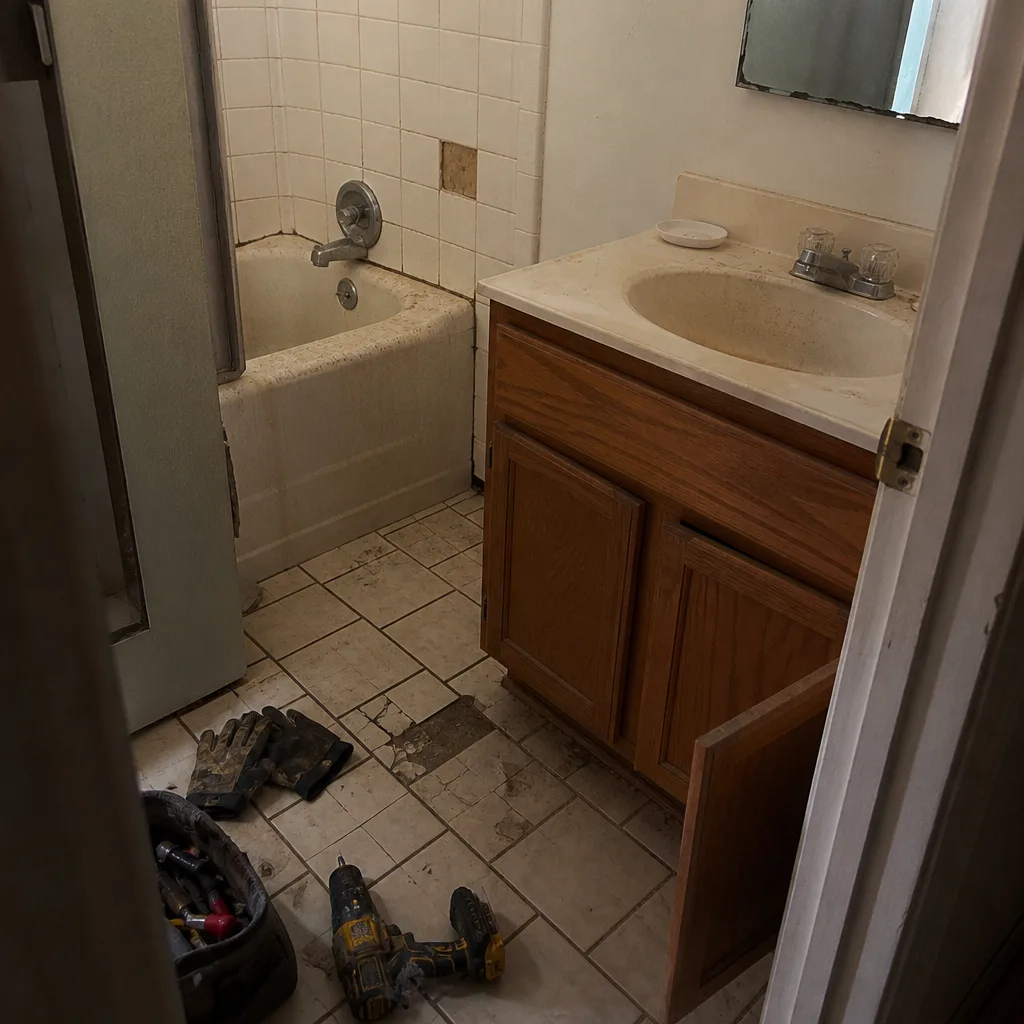 Before
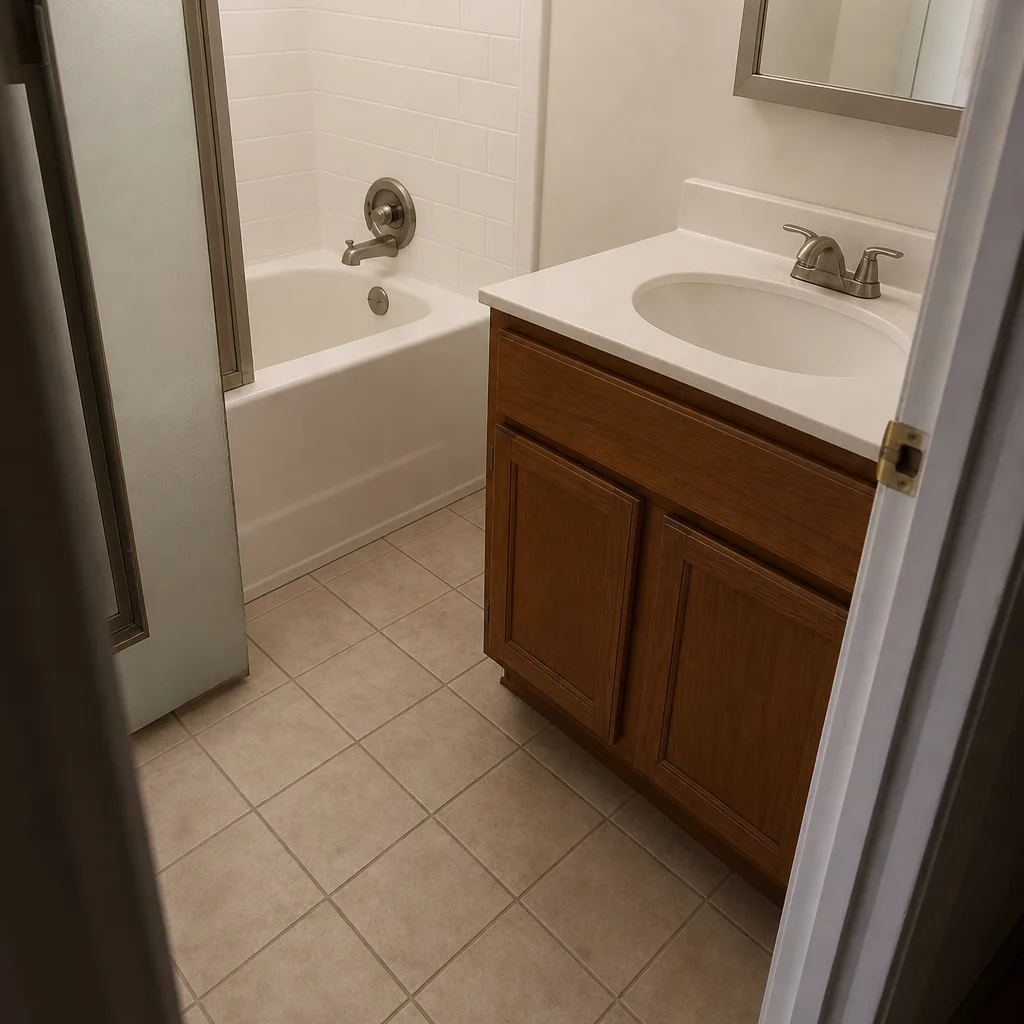 After
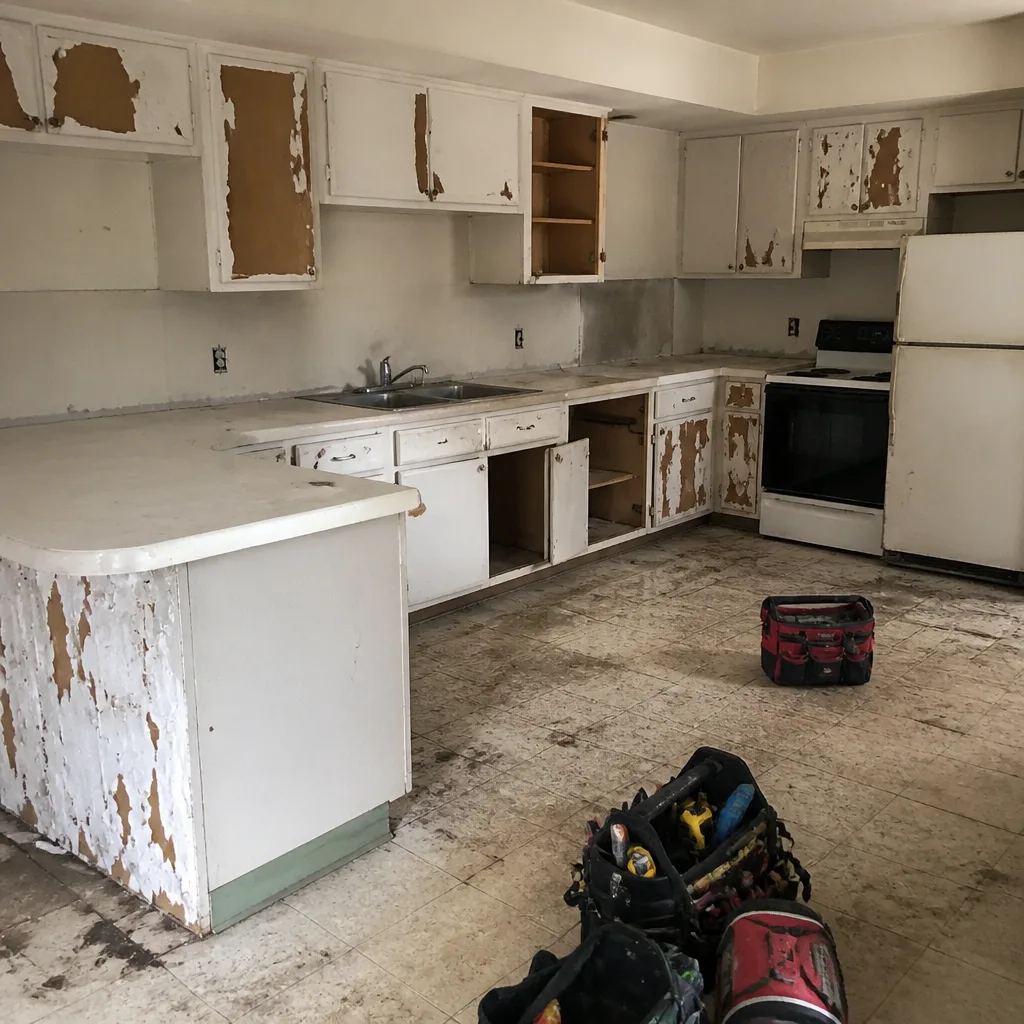 Before
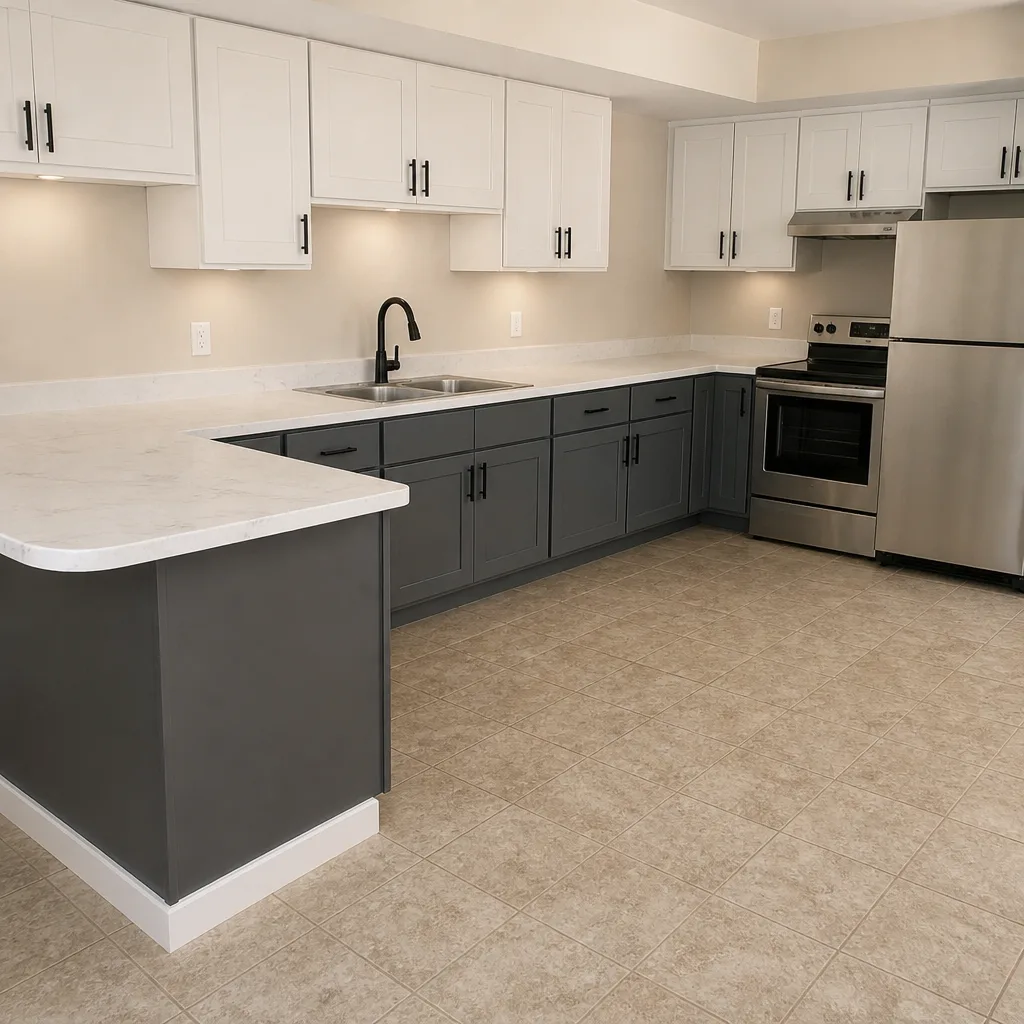 After
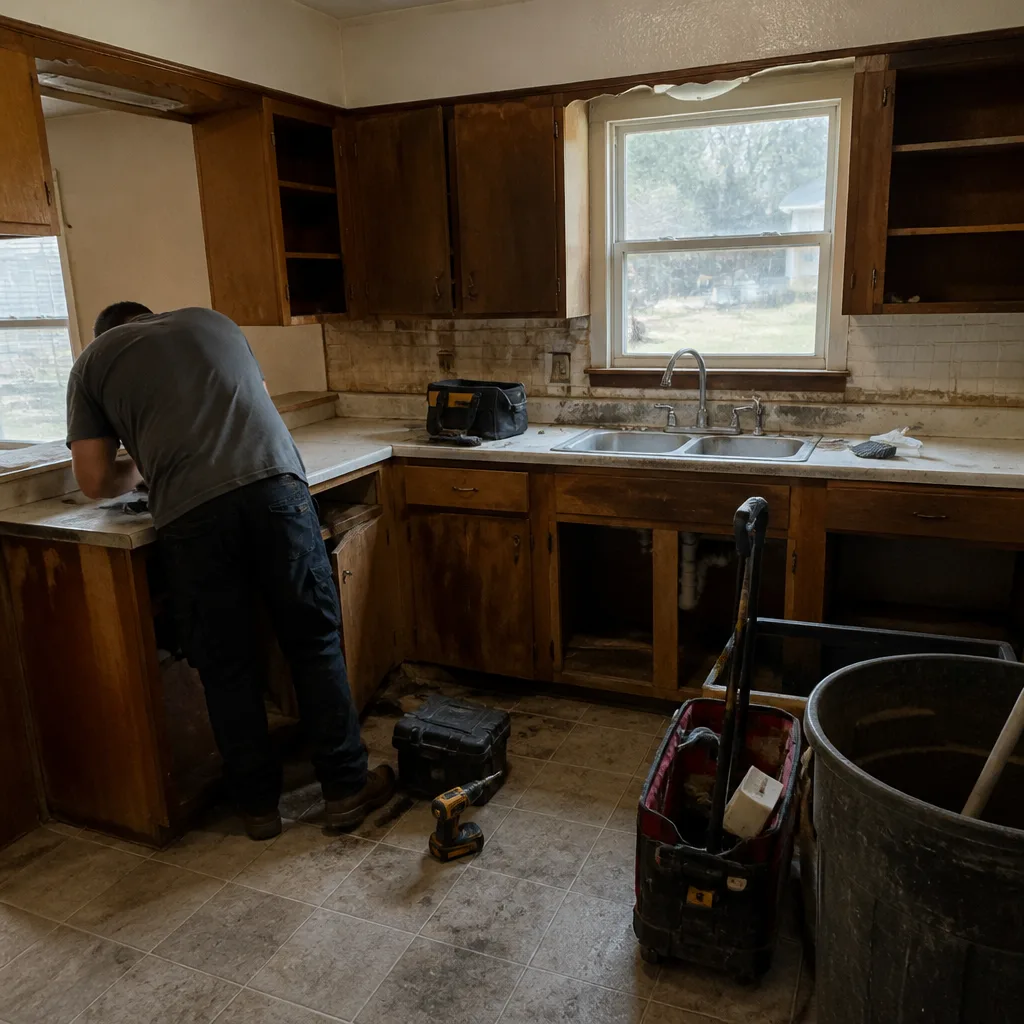 Before
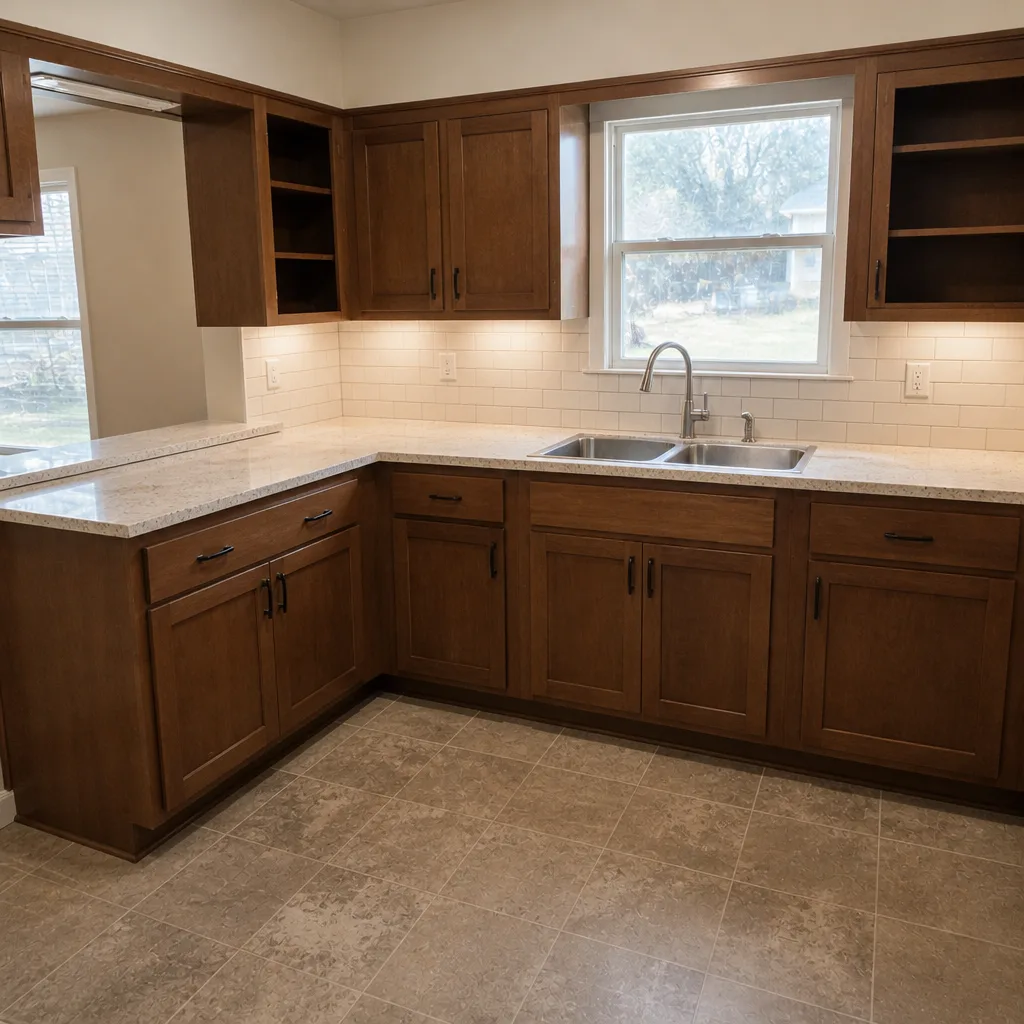 After
When to Call a Professional
Call a professional when the work crosses from mitigation into repair, when the work involves anything structural or electrical, or when the damage is in an area you can’t see. Any roof at height, any wet electrical panel, any gas line, any load-bearing wall. Those are the calls that prevent the second emergency. Bradford Remodeling Co Denton offers free estimates in Denton, and our technicians have up to 22 years of experience. We answer the phone with a live person 24 hours a day, and every project comes with a written price before work starts. If it’s not done right, the 365-Day Done Right Promise covers the fix at no charge. Call (844) 651-3175 when you’re ready for a written scope.
Frequently Asked Questions

Make the scene safe and stop active damage, then document everything with photos before you move anything, then call your insurance company to open the claim. Do not sign a repair contract until those three steps are done.
Ask for a physical local address, the certificate of insurance, and who pulls the permit. A storm-chaser can’t produce a Denton address, asks you to pull the permit yourself, and pushes you to sign before you’ve seen a written price. Call (844) 651-3175 for an exact quote from a contractor who works by the book – estimates are free.
Most Denton policies cover both the mitigation and the repair, but only if you report the loss promptly and get approval before permanent work begins. Keep every receipt and don’t discard damaged materials before the adjuster inspects.
You can do mitigation – tarping, boarding, shutting off water, moving furniture – but not permanent repairs, structural work, or anything electrical or gas-related. Do the mitigation, document it, and call a licensed pro for the repair.
It depends on scope, but the key is a written line-item price before work starts, not a verbal estimate. Bradford Remodeling Co Denton gives a written price before any work begins, with no numbers that move at the door. Call (844) 651-3175 for a free estimate.
At minimum: a line-item written scope, a completion date, who pulls the permit, a written workmanship guarantee, a staged payment schedule, and a cancellation clause. Demand all of it before you sign, no matter the pressure.
The Bottom Line
The first four hours of a Denton construction emergency decide the outcome more than the damage itself does. Make it safe, document it, open the claim, then call the contractor. Keep a documentation kit ready before you need it. Ask the questions that separate a storm-chaser from a local contractor: local address, insurance certificate, who pulls the permit, and a written price before any work starts. Demand a written guarantee like the 365-Day Done Right Promise, and don’t sign under pressure. When you’re ready for a written scope on the repair or the plan behind it, Bradford Remodeling Co Denton is here to put it in writing.
Call (844) 651-3175 for a free estimate. A live person answers, and the price is in writing before any work starts.
Written by the team at Bradford Remodeling Co Denton.