Last updated November 17, 2026
Free written scope consultation - allowances, timeline, and change-order rules on paper before a single trade is scheduled
Choosing the Right Construction Brand: A Buyer’s Guide for Denton
One of the most common warranty denials in home construction is manufacturer-side: the product failed, but the installation deviated from spec. The contractor’s choice of brand was fine; their knowledge of that brand was not. In Denton, where hail, a punishing UV index, and wide seasonal swings stress every exterior surface, that gap between brand name and brand knowledge is where money quietly disappears. This guide explains how to pick construction brands the way a contractor does – by distribution, warranty service infrastructure, and installer familiarity – and how to tell whether a Denton contractor actually knows the products they’re putting on your house.
Quick Answer
Choose construction brands in Denton based on three things: local distribution and warranty service (can a failed product be serviced here, or does the claim leave Texas?), installer familiarity with that brand’s published specs, and climate fit for North Texas heat, hail, and freeze-thaw cycles. A premium brand installed off-spec performs worse than a mid-tier brand installed correctly, so verify the contractor’s credentials with the manufacturer before you sign anything.
Styles & brands we work with
- Kitchen remodeling
- Bathroom remodeling
- Home additions & ADU
- Roofing
- Windows & doors
- Driveway & pavers
- Fence
Table of Contents
- Why brand choice in Denton is different than brand choice anywhere else
- How to verify a contractor is actually certified by the brands they claim
- Which brands have real warranty service in the DFW and Denton market
- Manufacturer warranty vs. workmanship warranty: why you need both in writing
- How Denton’s climate should drive brand selection
- Why contractor familiarity matters more than product tier
- The gap where homeowners lose money, and what a written guarantee closes
- A step-by-step way to evaluate brand and contractor together
Why Brand Choice in Denton Is Different Than Brand Choice Anywhere Else
Denton sits in a stretch of North Texas that gets the worst of several weather patterns at once. Summer UV exposure is high enough to age exterior paint and sealants years faster than the same products would in a milder climate. Hail season runs from roughly March through June, and it doesn’t respect the “impact resistant” label unless the product was actually tested and rated for it. Winter freezes push thermal expansion and contraction through siding, window frames, and roofing fasteners.
That combination means the brand question in Denton isn’t “which product is best?” It’s “which product has a track record in this climate, and can a failed unit be serviced without a claim leaving the state?” A roofing shingle with a strong hail rating and a local manufacturer rep is worth more here than a more famous brand whose claims process routes through a national call center in another region.
We see this play out in specific neighborhoods. In the older housing stock near the Denton square, exterior trim and window replacement runs into substrate conditions that demand a brand with published flashing and sealant details, not just a pretty product photo. In newer development on the city’s south and west edges, whole subdivisions share the same builder-grade materials, which means a cheap brand choice in one house shows up again and again across the block. When the same product fails repeatedly in a cluster, that’s data.
For homeowners doing kitchen or whole-home work, the brand question shifts indoors. Cabinetry and countertops in Denton face a specific stressor: the same wide humidity swings that affect exteriors also move wood cabinet boxes and natural-surface counters. A cabinet brand with a documented finish warranty and a local dealer who stocks replacement parts is a very different proposition than one you order and wait on.
How to Verify a Contractor Is Actually Certified by the Brands They Claim
This is the single most useful verification step a Denton homeowner can take, and almost nobody does it. Manufacturer certifications are specific and checkable. If a contractor says they’re a certified installer for a brand, that brand maintains a public directory or phone line to confirm it. Use them.
- Ask for the certification by exact name. “Certified installer,” “factory-certified,” and “authorized dealer” are three different things. Get the contractor to write the exact designation on the estimate.
- Use the manufacturer’s own locator. Most major brands publish an online dealer or contractor locator. Search the contractor’s name and confirm the listing exists and is current.
- Call the manufacturer’s contractor line. Brands that certify installers maintain a verification line. A two-minute call confirms or refutes the claim.
- Check what the certification actually covers. Some certifications apply only to specific product lines, not the whole brand catalog. Confirm the product being quoted is within the certified scope.
- Ask to see the certificate. A legitimate certified installer has documentation. A vague answer is your answer.
The reason this matters is warranty extension. Several manufacturers offer enhanced labor coverage when the product is installed by a certified contractor – sometimes extending the labor portion of the warranty from two years to five or longer. Install it uncertified and you may lose that extended coverage without ever knowing it existed. When we quote Therma-Tru entry systems or Barrette fencing, the certification question comes up early, because the difference shows up in the paperwork the homeowner holds at the end.
When you’re comparing contractors for a larger project, such as a general contractor in Denton, put the same certification question to every bidder. The ones who answer with specifics are the ones who’ll answer the phone after the job is done.
Which Brands Have Real Warranty Service in the DFW and Denton Market
A warranty is only as good as the network behind it. In practice, brands fall into two camps in the DFW and Denton market: those with local distribution and service infrastructure, and those that route everything through a national claims process. Here’s the distinction that matters at the moment something fails.
- Local distribution and service: the manufacturer has regional distribution and a presence in the DFW area, meaning replacement parts and a local rep are reachable. GAF roofing products, James Hardie siding, and Therma-Tru door systems all have established distribution in this market. Warranty service stays in-state and gets handled.
- National-only claims: the brand is sold here but serviced through a central process. This isn’t automatically a dealbreaker, but a claim can take weeks longer and the burden falls on you or the contractor to push it through.
- No local presence at all: the product is sold but not supported regionally. When it fails, you’re mailing a piece of siding to another state and waiting. Avoid this category for anything on the building envelope.
Fencing is a useful example. Master Halco has strong distribution across Texas, so a failed panel or post is a local replacement, not a freight claim. Compare a brand with no Texas distribution and the same failure becomes a months-long exercise in patience. On the interior side, cabinet and countertop brands with local dealers carry the same advantage – a replacement door or surface is a phone call, not a factory order from out of region.
When we quote an exterior package, the distribution question sits alongside the price. A brand you can service locally in Denton beats a brand you can only reach by phone from three time zones away – even when the spec sheet says the second brand is better.
Manufacturer Warranty vs. Workmanship Warranty: Why You Need Both in Writing
These are two different promises made by two different parties, and they cover two different failure modes. Homeowners confuse them constantly, and the confusion costs money.
- The manufacturer’s warranty covers the product. If a shingle tears or a window seal fails under conditions the manufacturer defines, they replace the product. This is a materials promise, made by a corporation.
- The contractor’s workmanship warranty covers the installation. If the leak is caused by the flashing being done wrong, or the window not being shimmed on spec, the manufacturer will deny the claim and you’ll be left to fight with the installer.
Here’s why this matters in Denton specifically. The hail and wind that hit this market produce a large share of the warranty denials we see, and a huge portion of those denials are attributed to installation. “Factory defect” is rare. “Installed outside the manufacturer’s published spec” is common. Without a workmanship warranty in writing, the homeowner is the one holding the bag.
Bradford Remodeling Co Denton carries a 365-Day Done Right Promise on every project: a full-year written workmanship guarantee. If the work fails inside that window, we come back and correct it at no charge. That’s the piece a manufacturer warranty won’t give you. We spell out what the guarantee covers, for how long, in writing, every time it’s mentioned – because a guarantee that’s only spoken isn’t a guarantee. For a larger build, our approach to a full bathroom remodeling in Denton ties the workmanship guarantee to the documented material warranty on the tile and fixtures, so the homeowner holds both documents at close.
How Denton’s Climate Should Drive Brand Selection
Three climate forces should drive which brand you pick for anything on the building envelope in Denton: UV index, hail, and thermal expansion. Each one maps to a specific product specification.
- UV exposure. North Texas gets high summer UV. Paints, sealants, and vinyl products that aren’t UV-stabilized fade and craze faster here. Look for explicit UV resistance in the spec, not just a color warranty.
- Hail rating. If the product doesn’t carry a published impact rating, assume it hasn’t been tested for hail. Shingles, siding, and windows should all be selected with impact performance on the data sheet.
- Thermal expansion. Wide temperature swings move materials through the year. Products with published expansion allowances and a matching fastener specification handle this. Those without one reveal the gap at the seams first.
- Freeze-thaw. North Texas freezes happen. Trim and flashing details need to draft water away from the wall in freeze conditions. Brands that publish frozen-weather detailing make the installer’s job clearer.
In practice, this shapes what we quote for exterior work. James Hardie fiber cement siding has published freeze and hail performance data and holds up well through North Texas swings. GAF roofing lines have impact-rated options that make a hail claim easier to substantiate. Therma-Tru door systems carry entry-door performance ratings that matter in this climate. Each of those choices is a climate decision, not a marketing decision – and it should be documented in writing before the work starts.
This is also where your Bradford Remodeling Co Denton home project sits on our intake conversation. Climate fit is a real question, and it belongs in the written estimate, not in a brochure.
Why Contractor Familiarity Matters More Than Product Tier
A premium product installed off-spec performs worse than a mid-tier product installed correctly. This is the argument homeowners don’t hear often enough, because it lets contractors sell brand names instead of skill. The truth is the opposite: the brand is only as good as the crew’s familiarity with its published installation details.
Installation specs for a given brand are precise. Nail patterns, fastener types, shim requirements, flashing details, and sealant types are all defined in the manufacturer’s written instructions. A contractor who has installed the brand dozens of times knows those details. A contractor installing it for the first time is learning on your house. Both will quote you the same brand. Only one will get the warranty honored when something fails.
This is where documented brand rosters matter. A contractor that publishes the brands it installs – KraftMaid and Wellborn cabinets, Cambria and Caesarstone surfaces, Kohler and Moen fixtures, GAF and James Hardie exteriors, Therma-Tru doors, Belgard hardscaping – is telling you which brands they’ve built a working knowledge of. Ask them how many installations of that specific product line they’ve done in the last year. The answer tells you more than the brand name on the quote.
We carry a documented brand roster, and our technicians have up to 22 years of experience across those product lines. That combination is what makes a mid-tier product perform like a premium one, and what makes a premium one hold up through a Denton hail season. For a full-home scope, the same reasoning applies to our kitchen remodeling in Denton work, where cabinetry and surface brands are chosen partly for local part availability and dealer support.
The Gap Where Homeowners Lose Money, and What a Written Guarantee Closes
Most homeowners don’t lose money on the product. They lose it in the gap between what the manufacturer will cover and what the contractor will admit. The failure lands in that gap, the manufacturer points at the installation, the contractor points at the product, and the work sits unfinished while the homeowner pays a second crew to make it right.
Three specific things close that gap, and all three belong in writing before work starts:
- A written price, agreed before work begins. No number moves at the door. Every line item is visible on the page, and the final invoice matches.
- A written workmanship warranty with a defined window. The 365-Day Done Right Promise is one full year from completion. The window is stated, the coverage is stated, and the remedy – Bradford returns and corrects at no charge – is stated.
- Documented material specs with manufacturer warranties attached. The brand, model, and spec sheet are part of the record, so if something fails, the claim has documentation behind it.
That’s what squared away looks like at job close in Denton: the site clean, the scope signed off, the material documentation in hand, and the workmanship guarantee signed in the homeowner’s hand. The manufacturer warranty covers the product. The workmanship guarantee covers the two-year gap in which most failures actually happen – the first 365 days.
A Step-by-Step Way to Evaluate Brand and Contractor Together
Here’s the process we recommend to every Denton homeowner evaluating a construction brand and a contractor for the same project. It takes about an hour and it saves years of headaches.
- List the products being specified on your project. Roof, siding, windows, doors, fence, cabinets, countertops, fixtures. Each is a separate brand decision.
- Check each brand’s local distribution and warranty service in DFW. Confirm that a failed unit can be serviced in Texas, not mailed out of state.
- Confirm the climate specs match Denton conditions. UV, hail rating, thermal expansion data. If it’s not on the data sheet, ask for it.
- Verify the contractor’s certifications with each manufacturer. Use the manufacturer’s own locator and contractor line. Ask for the exact designation in writing.
- Ask how many installations of each product line the contractor has done in the last year. Familiarity is a real number.
- Require a written workmanship warranty alongside the manufacturer warranty. Both documents, both signed, both in your hand at close.
- Confirm the price in writing before any work starts. No spec changes without a written change order, no surprises at the door.
Every step here maps to a specific habit that separates disciplined contractors from the rest. When we quote a job, both the price and the guarantee come in writing. The brand roster is documented. The technicians are background-checked and uniformed, so you know who’s walking through your door before the crew arrives. A live person answers the phone any hour you call – not a voicemail, not a callback queue.
Common Mistakes to Avoid
- Choosing the brand on reputation alone. A famous brand installed off-spec performs worse than a mid-tier brand installed correctly. Ask about installation familiarity before you judge the label.
- Assuming the manufacturer warranty covers labor. Most don’t, and the failures in Denton’s hail seasons often land on the installation side. The workmanship warranty is the piece that covers that gap.
- Not verifying the certification. A contractor claiming to be certified may not be, or may only be certified for a product line they aren’t quoting. Use the manufacturer’s locator to check.
- Ignoring local warranty service infrastructure. A brand without a Texas presence makes every failure a mail claim. In Denton hail season, weeks matter.
- Buying a product without climate data on the spec sheet. UV and hail ratings are the two specs that predict failure here. If they’re missing, that’s the brand’s answer.
- Accepting a spoken guarantee. A guarantee that isn’t in writing, with a defined window and remedy, isn’t a guarantee – it’s a conversation. Get it signed.
- Signing a quote without an exact material list. If the brand, model, and spec sheet aren’t on the written estimate, you don’t know what’s being installed. Demand the list.
See the difference
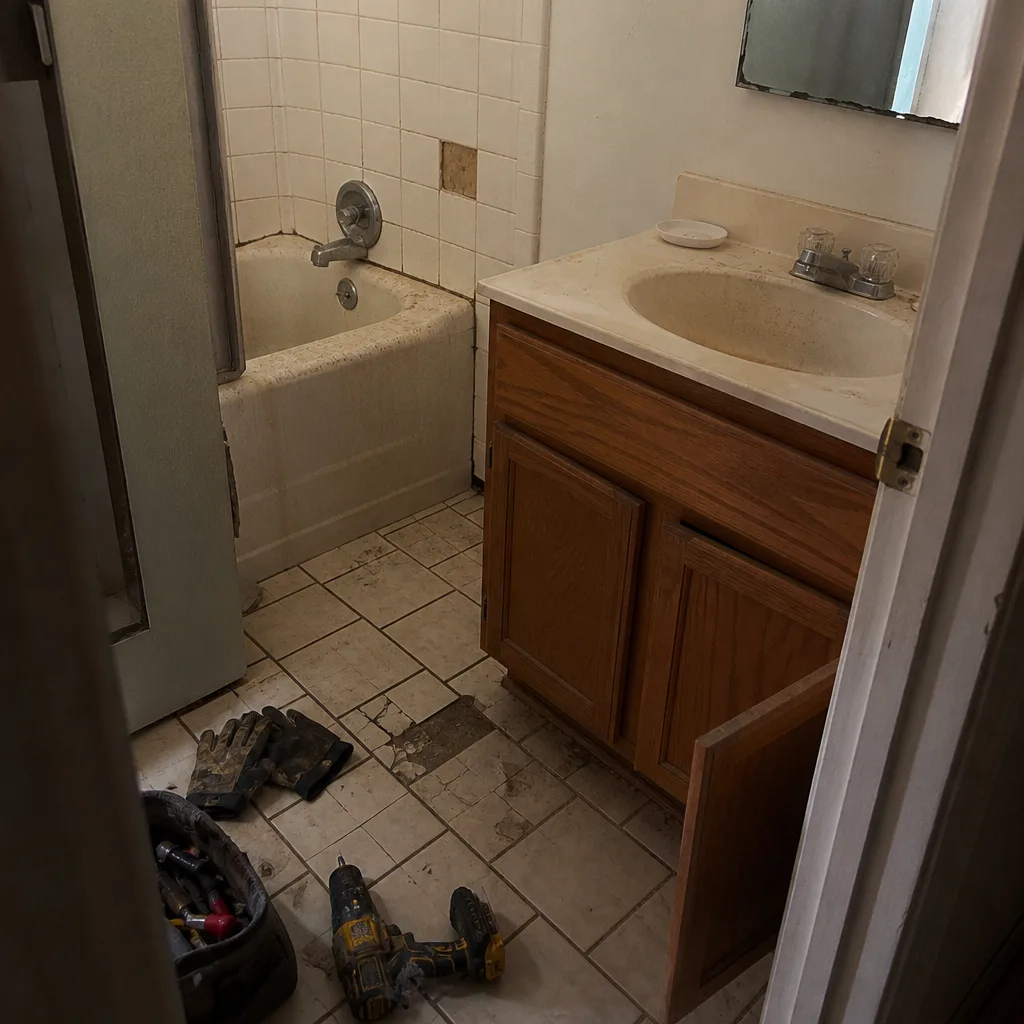 Before
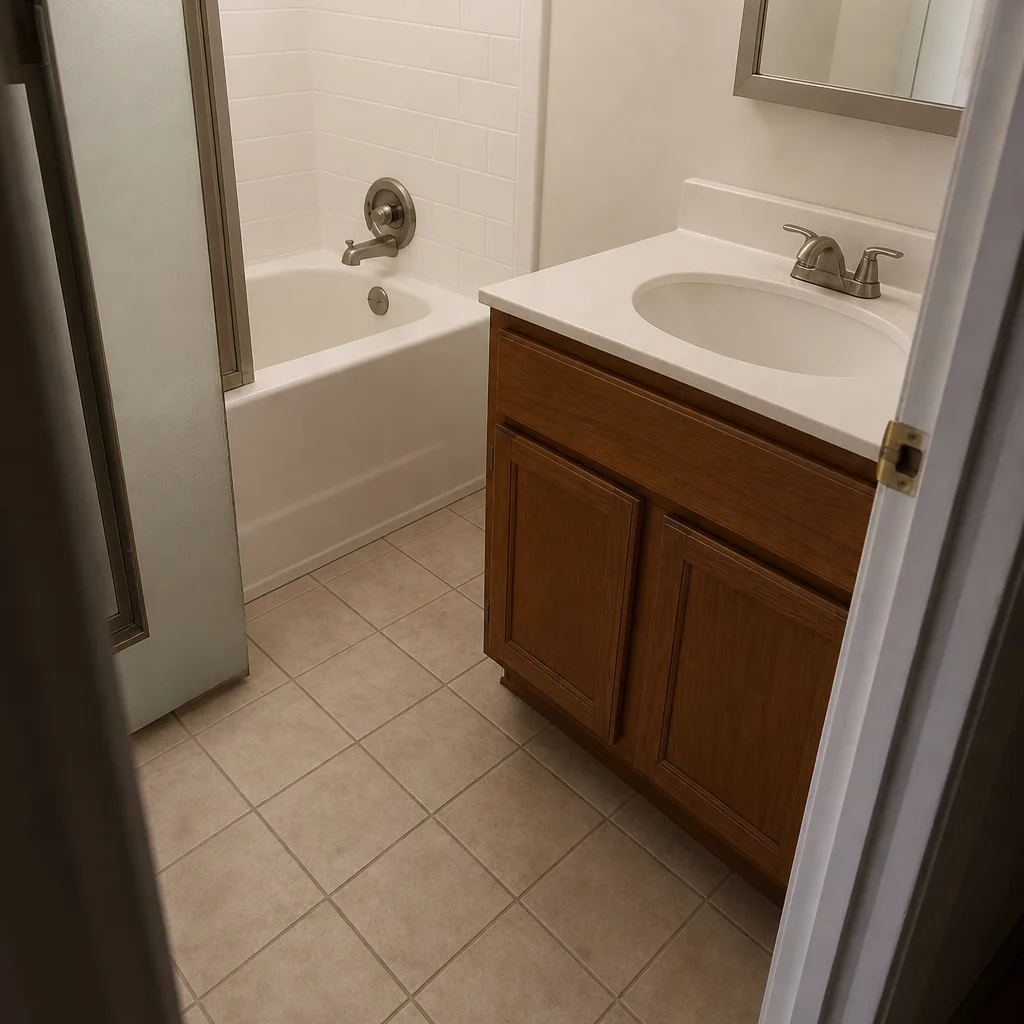 After
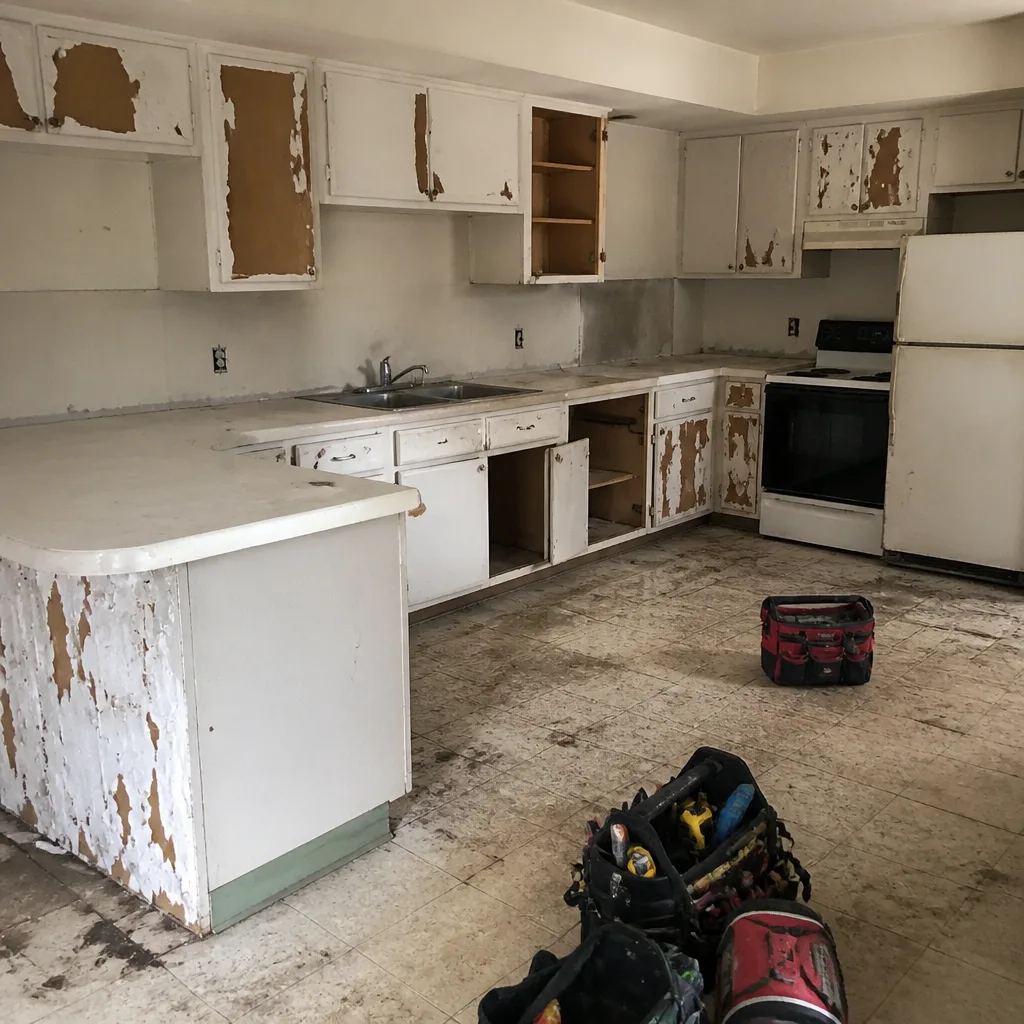 Before
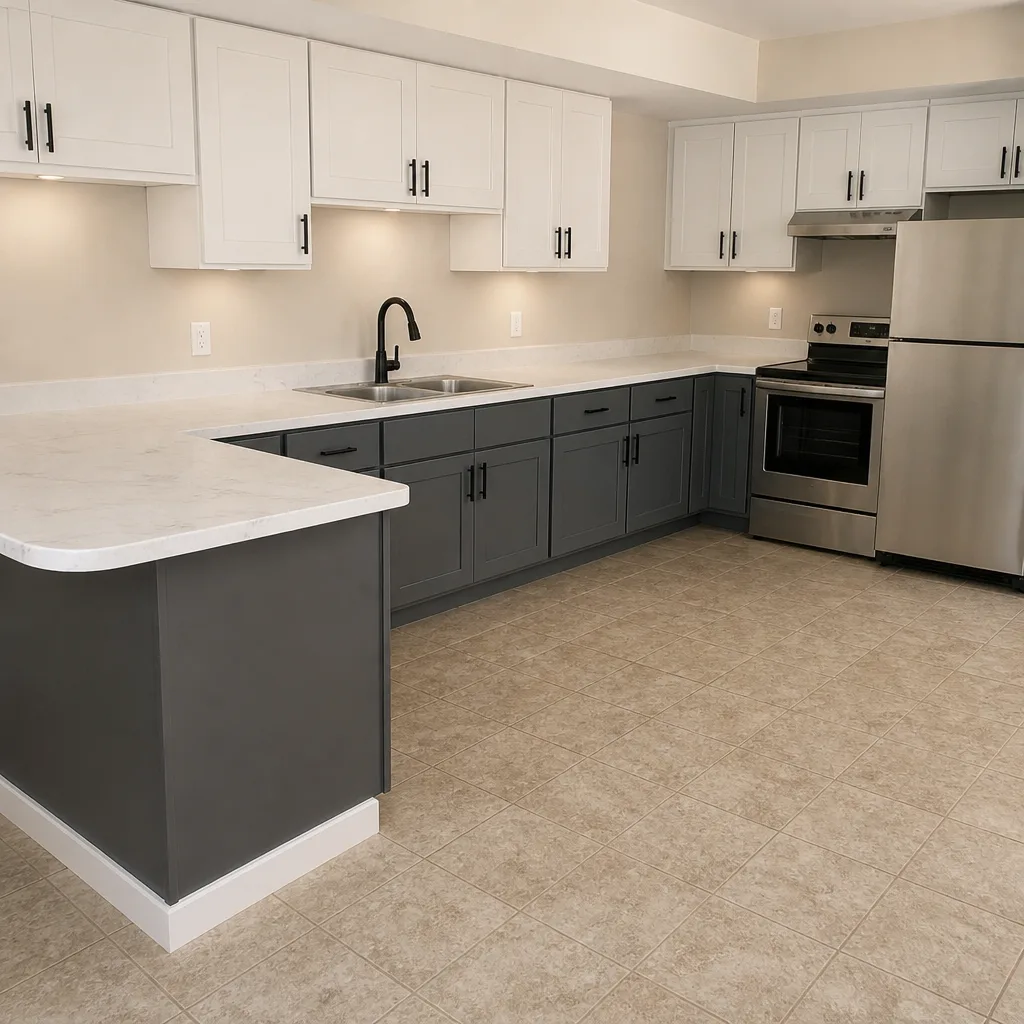 After
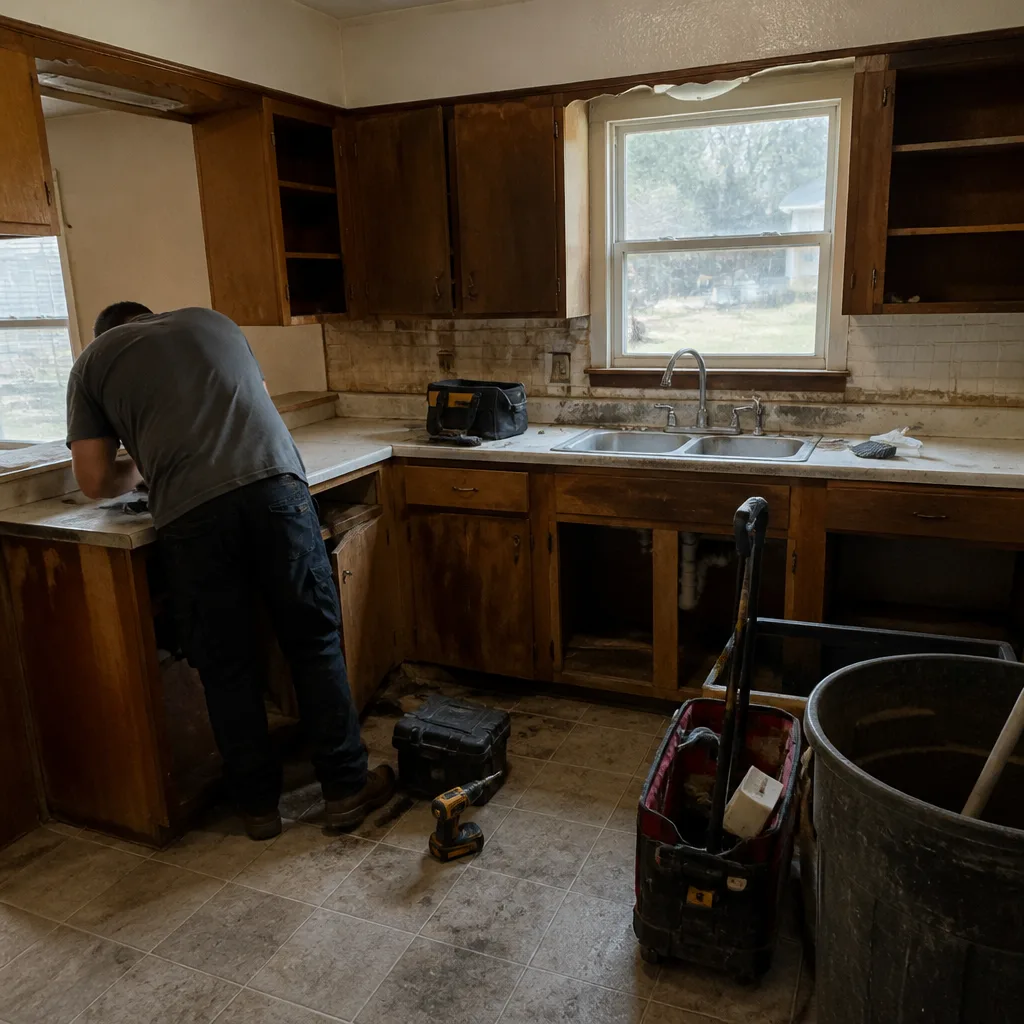 Before
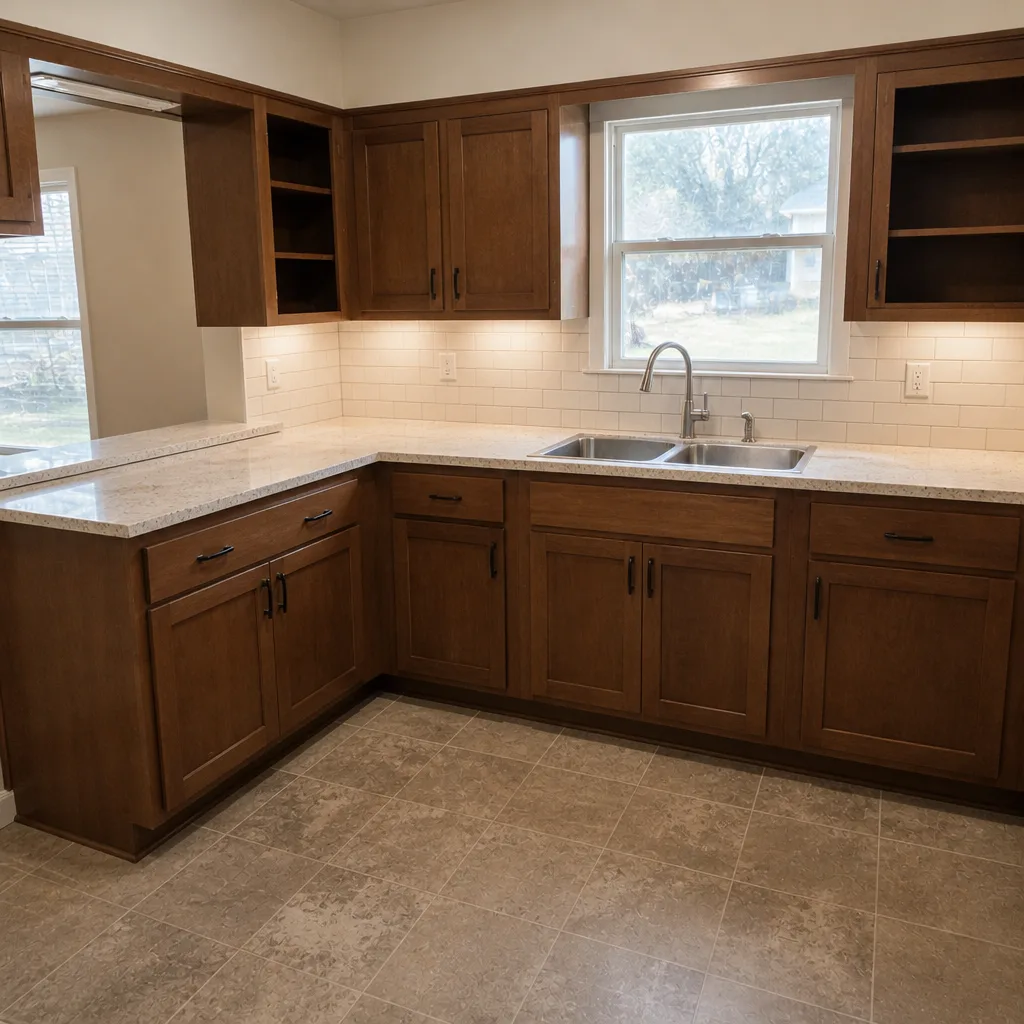 After
When to Call a Professional
Brand selection and installation are linked, and both are jobs for a trained professional. The moment to call is when any of the following is true: you’re replacing a roof, window, or exterior surface and need a hail and UV-rated product specified correctly; you’re remodeling a kitchen or bath and need cabinets and counters chosen for local part availability; a prior installation has failed and you need workmanship diagnostics, not just materials; or you have manufacturer warranty paperwork that’s unclear about who covers what. Roofing and exterior work involves height and structural safety, and cabinet, counter, and fixture installation involves plumbing and electrical connections that require licensed trades. Bradford Remodeling Co Denton offers free estimates in Denton – call (844) 651-3175 to schedule. Our technicians have up to 22 years of experience, and every project comes with a written price before any work starts and the 365-Day Done Right Promise in writing.
Frequently Asked Questions

Use the manufacturer’s own contractor locator and verification line. Ask the contractor for the exact certification name in writing, then confirm it directly with the brand. A certified installer has documentation. When we quote Therma-Tru, GAF, James Hardie, or Barrette products, the certification question is part of the estimate. Call us at (844) 651-3175 for a free estimate with the material documentation included.
The manufacturer warranty covers the product itself; the workmanship warranty covers the installation. If a leak comes from improper flashing rather than a defective shingle, the manufacturer will deny the claim, and only the workmanship warranty covers you. You need both in writing before work starts. Bradford’s 365-Day Done Right Promise is a full-year written workmanship guarantee – if the work fails inside that window, we return and correct it at no charge. Call (844) 651-3175 to schedule a free estimate.
Brands with local distribution and regional manufacturer presence – GAF, James Hardie, Therma-Tru, Master Halco, and others with established DFW distribution – have the shortest path to warranty service here. Brands without a Texas presence route claims through a central process that can take weeks longer. Ask any contractor how a failed product gets serviced locally before you sign. Call (844) 651-3175 for a free estimate and a written material list.
Pricing depends on the product line, roof pitch, and square footage, and no honest contractor quotes without a site visit. What we can commit to is a written price before any work starts – line items visible, no numbers that move at the door. Call (844) 651-3175 to schedule a free estimate for your Denton project.
Most denials are installation-related, not material defects. If the installation deviates from the manufacturer’s published spec – nail pattern, flashing, fastener type – the manufacturer denies the claim. That’s why a written workmanship warranty covers the gap. Bradford’s 365-Day Done Right Promise closes that hole for a full year after close. Call (844) 651-3175 for a free estimate.
Mixing brands is fine and often correct – the right roofing brand rarely matches the right cabinet brand. What matters is that every brand is specified in writing with the model and spec sheet, installed by a contractor familiar with it, and covered by both a manufacturer and a workmanship warranty. That’s a documented scope, not a brand logo. Call (844) 651-3175 to schedule a free estimate.
The Bottom Line
The right construction brand in Denton isn’t the one with the best marketing – it’s the one with local distribution, warranty service that stays in Texas, climate specs that fit North Texas heat and hail, and a contractor who has installed it enough times to know its published details by heart. Verify the certification, require the manufacturer warranty and the workmanship warranty in writing, insist on a written price before work starts, and read the guarantee to confirm exactly what it covers and for how long. That combination – documented brand, documented price, documented guarantee – is what separates a project that holds up from one that doesn’t.
Ready to get the price and the guarantee in writing? Bradford Remodeling Co Denton offers free estimates for Denton homeowners, with a written price before any work starts and the 365-Day Done Right Promise on every completed project. Call (844) 651-3175 to schedule your free estimate – a live person answers, any hour.
Written by the team at Bradford Remodeling Co Denton.