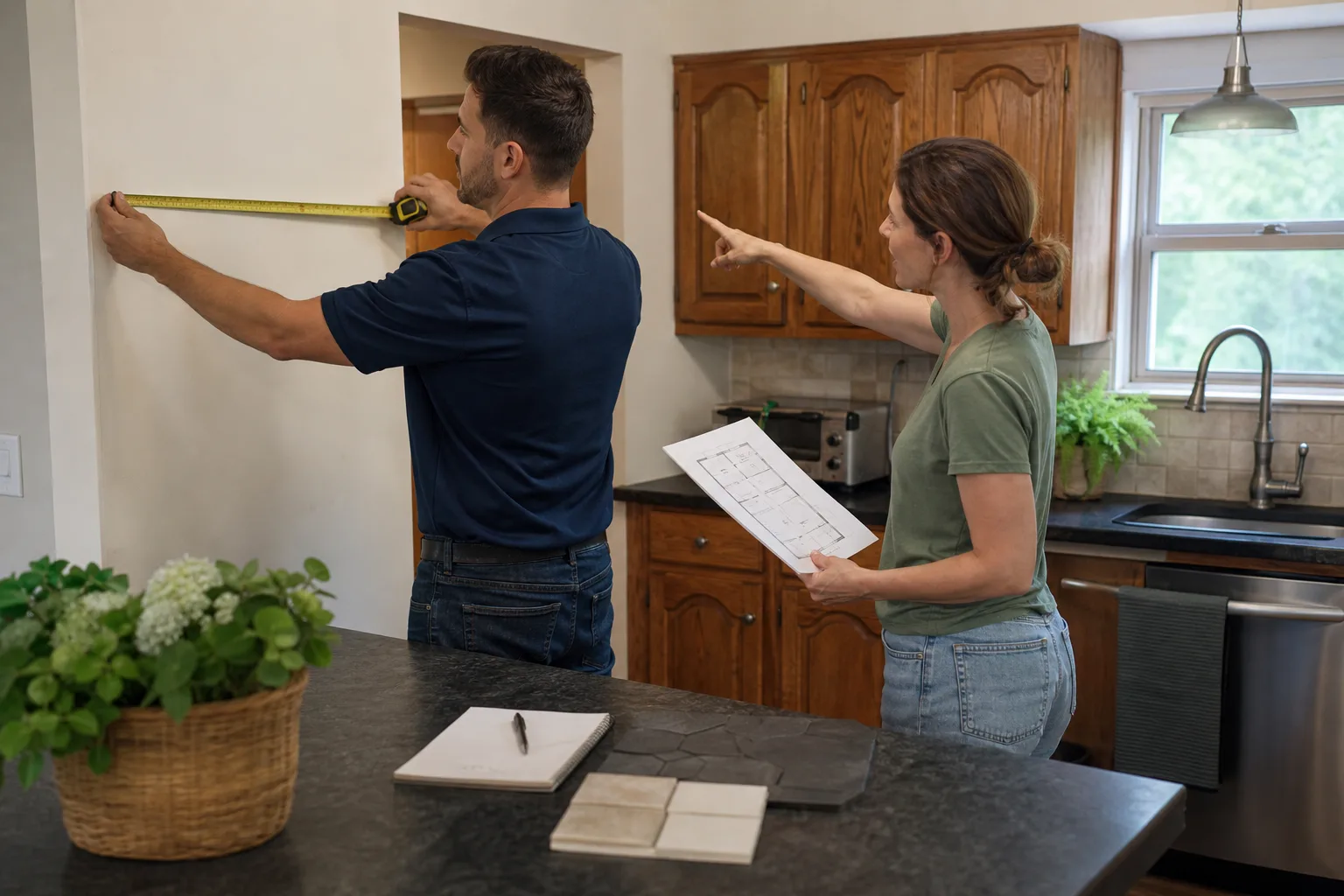
Last updated November 17, 2026







Free written scope consultation - allowances, timeline, and change-order rules on paper before a single trade is scheduled
Home Remodeling Warning Signs Every Homeowner Should Know
The contractor who can’t show you a current certificate of insurance before the first site visit will not get more organized once your money is in his account. That single failure predicts most of what goes wrong later: missing permits, unprotected materials, unvetted subs, and invoices that keep growing after the scope was “agreed.” We’ve walked into Denton homes where a half-finished kitchen sat idle for five months because the homeowner never got a written scope or a real draw schedule. This guide translates the contract language, job-site habits, and billing patterns that experienced contractors read as red flags into plain terms, so you can spot trouble before you sign anything or hand over a deposit.
Quick Answer
The biggest home remodeling warning signs are a contractor who can’t produce insurance and licensing documentation on request, a contract with no defined scope or a vague “time and materials” clause with no cap, a request for more than 30-33% upfront, and resistance to pulling permits. Any one of these is a strong reason to walk. Combined, they’re a near-certain sign the project will run over budget, over schedule, or both.
Styles & brands we work with
- Kitchen remodeling
- Bathroom remodeling
- Home additions & ADU
- Roofing
- Windows & doors
- Driveway & pavers
- Fence
Table of Contents
- Contract Red Flags: The Language That Costs You Money
- Why a Contractor Who Avoids Permits Is a Real Problem
- Job-Site Warning Signs During Active Work
- Payment Schedule Red Flags
- What an Unlicensed Subcontractor Means for Your Liability in Texas
- How to Vet a Remodeler Before You Sign
- Denton-Specific Things Worth Knowing
Contract Red Flags: The Language That Costs You Money
The contract is where most remodeling disputes are actually decided, months before anyone picks up a hammer. Three specific terms come up again and again in the disputes we see around Denton, and each one is worth understanding before you sign.
“Time and materials” with no cap. A true time-and-materials agreement bills you for hours worked plus materials, with no ceiling. That structure can be legitimate for small repair work, but on a full kitchen or whole-home remodel it hands the contractor a blank check. If you see T&M language, ask for a not-to-exceed cap in writing. If the contractor won’t put a number on it, that tells you what you need to know.
No lien waiver language. In Texas, a subcontractor or material supplier who doesn’t get paid can file a mechanic’s lien against your property, even if you already paid the general contractor in full. A properly written contract includes conditional lien waivers tied to each payment, so you get proof that subs and suppliers were paid before the next draw releases. No waiver language means you could pay twice.
No defined scope of work. “Remodel kitchen” is not a scope. A real scope lists cabinet brands and door styles, countertop material and edge profile, fixture models, tile square footage, paint colors, and what’s explicitly excluded. At Bradford Remodeling Co Denton, we put every one of those line items and a written price in front of you before work starts, backed by The Garrison Standard. Compare that to a one-page proposal with a total at the bottom and no detail. The vagueness always favors the person writing the invoice.
- No start date or completion date, or dates written as “TBD”
- No change-order process described in writing
- No warranty or guarantee language of any kind
- No mention of who pulls permits or who pays for them
- No dispute resolution clause
Why a Contractor Who Avoids Permits Is a Real Problem
When a remodeler suggests skipping the permit to “save you time and money,” the savings are his, and the risk is yours. Permits exist so that a city inspector confirms structural, electrical, plumbing, and mechanical work meets code. In Denton, that means a paper trail tied to your address. Without it, you own a project with no inspection record, and that has consequences that outlast the remodel itself.
The financial cost. Unpermitted work discovered later, often at resale or during an insurance claim, typically has to be opened up and inspected retroactively. That can mean tearing out finished walls to expose wiring or framing. Homeowners have paid thousands to correct work that was already “done.”
The legal cost. Many homeowner insurance policies exclude damage caused by unpermitted or non-code work. If a fire traces back to wiring that never got inspected, the claim can be denied. Your mortgage lender may also have grounds to call the loan if undisclosed unpermitted structural work is found.
The resale cost. Appraisers and buyers flag permit history. A finished basement or added bathroom with no permit on file is a negotiating chip against you, or a deal-killer.
A legitimate contractor pulls permits as a matter of routine and includes the cost in the written price. If a Denton remodeler tells you the permit “isn’t necessary for this kind of work,” get a second opinion before you sign. The Garrison Code is simple on this point: permits get pulled and inspections get passed, because that’s what protects the homeowner.
Job-Site Warning Signs During Active Work
Once work begins, the job site tells you more about a contractor’s discipline than any reference call. Walk the site at different times of day and watch for these patterns.
- Unsupervised subs. If the same crew shows up day after day with no lead carpenter, project manager, or site supervisor ever on site, nobody is checking quality or sequencing. Ask who the point of contact is and how often they’re physically present.
- Materials left unprotected. Cabinets sitting in the driveway, drywall stacked against a wet exterior wall, or countertops leaning in the yard without cover are signs of a crew that doesn’t respect the product. Water damage and warping from weather exposure show up months later, after final payment.
- No posted permit. Texas requires the permit to be posted visibly on the job site. If you don’t see it, ask where it is and check the permit number with the city.
- No dust containment or floor protection. A crew that doesn’t plastic off the work zone or lay down floor protection is telling you how they’ll treat the rest of your house.
- Debris piling up. Daily cleanup is part of the job. A site that fills with trash and offcuts for a week is a site with no plan for close-out.
Bradford runs on the opposite model: background-checked, uniformed technicians on every job, so you know exactly who’s walking through your door before they arrive. For the full scope of what a disciplined Denton remodel looks like, our General Contractor in Denton page lays out how we structure a project from first walkthrough to signed guarantee in hand.
Payment Schedule Red Flags
The payment schedule is the fastest test of whether a contractor is financially stable or using your deposit to fund someone else’s job. Here’s what a healthy schedule looks like, and the specific signals that mean trouble.
- More than 30-33% upfront is a red flag. A deposit covering materials and mobilization is normal. A request for 50% or more before anything is delivered or installed usually means the contractor is cash-strapped or funding another project with your money.
- “Pay me so I can order materials” without receipts or a purchase order is a specific pattern to refuse. You should see the order confirmation or invoice from the supplier, with the material and quantity listed.
- Payments tied to nothing. Each draw should be tied to a completed, inspected, and approved phase of work, not to a calendar date. A schedule that pays for “week 3” regardless of what got done gives the contractor no reason to hit milestones.
- Cash only, no invoices. Every payment should be documented, invoiced, and traceable. Cash-only requests defeat your lien protections and your paper trail.
- Requests to pay subs or suppliers directly. If the general contractor asks you to pay a sub directly, that usually means the sub won’t extend credit to the contractor. That’s his problem, not yours, until the lien lands on your title.
A written, milestone-based schedule with documented draws and conditional lien waivers attached to each payment is standard on a real project. Bradford gives you a written price before any work starts, and that number doesn’t move at the door. If you want to see how a full schedule lines up on a real scope, our Kitchen Remodeling in Denton page walks through the phases.
What an Unlicensed Subcontractor Means for Your Liability in Texas
This is the section homeowners skip and later wish they hadn’t. In Texas, if an uninsured worker is injured on your property, you can be exposed. Homeowners can face liability for injuries to workers in some circumstances, and if the contractor’s coverage is invalid or lapsed, your own homeowner’s policy becomes the backstop everyone fights over.
Suppose a crew member falls from a ladder while hanging cabinets and the subcontractor has no workers’ compensation insurance. The injured worker, or his family, can come after the property owner. Meanwhile, if a sub causes damage to your neighbor’s property or a fire, and there’s no general liability coverage in force, your own insurance may be the only deep pocket in the room.
What this means practically:
- Ask for the certificate of insurance from the general contractor and, for major subs, from them too. Verify the dates are current and the policy covers both general liability and workers’ compensation.
- Confirm that the subs working on your job are licensed where Denton requires it (electricians and plumbers in Texas are licensed at the state level).
- Get it in writing that all subcontractors used on your job carry insurance and that the contractor verifies it. Uninsured subs are a liability you’re inheriting.
This is one reason Bradford’s standards are set at the Garrison Partners level rather than left to individual job sites. Every location is independently owned and operated, but every one answers to the same background-check and documentation requirements. Our Bathroom Remodeling in Denton page shows how we document materials and subs on a smaller, high-fixture project like a bath, where plumbing and electrical exposure is highest.
How to Vet a Remodeler Before You Sign
Use this as a script. A disciplined contractor answers every one of these questions in the first conversation, in writing, without pressure.
- Certificate of insurance, current and in your hands. General liability and workers’ comp, with dates you can read.
- A written scope of work with brand and model names. Cabinets, surfaces, fixtures, doors, exterior products. Traceable specs, not “premium materials.”
- A written price before any work starts. Line items, not a lump sum, and a stated process for any change order.
- A permit plan in writing. Who pulls it, who pays, and confirmation that inspection records will exist at your address.
- A milestone-based payment schedule with lien waivers. No deposit above 30-33%, and each draw tied to completed, approved work.
- A written guarantee and its exact terms. Ask what it covers, how long, and how a repair gets scheduled.
- A live person on the phone. Call the number at an odd hour and see who picks up.
This checklist applies whether you’re doing a targeted kitchen refresh or a whole-home remodel. Our Bradford Remodeling Co Denton home page is a good starting point for seeing how the Garrison Standard maps to each step above.
Denton-Specific Things Worth Knowing
A few local realities shape which warning signs matter most in Denton. North Texas clay soils move with seasonal moisture, so foundation and structural work on additions gets scrutinized more closely here than in more stable soil regions. If a remodeler proposes an addition or a load-bearing wall removal and waves off the structural permit, that’s a real flag specific to this area. The same clay soil and summer heat put extra stress on exterior products, which is why documented exterior materials matter on Denton remodels.
Older Denton neighborhoods also have a mix of homes that predate current code. Remodels in those homes often uncover work that was never permitted in the first place, and a good contractor plans for what might be behind the wall and writes an allowance for it up front. A remodeler who insists “it’ll be fine once we open it up” and refuses to put an allowance in writing is setting you up for a surprise invoice.
We’ve seen it on both sides of the table: the projects that go smoothly in Denton are the ones with the most paperwork done before day one. That’s the whole point of The Garrison Standard. Every price and every guarantee is in writing before a single tool comes out.
Common Mistakes to Avoid
- Hiring off the lowest bid alone. A bid that’s 30% below the others usually means something is missing from the scope. Compare line items, not totals.
- Skipping the insurance check because the contractor “seems honest.” Honesty and a current certificate are separate things. Get the certificate either way.
- Paying a deposit above 30-33% because the contractor says materials need ordering. Ask for the purchase order instead. A real contractor can produce it.
- Agreeing to a verbal change order. Every change gets a written change order with a price before the work happens. No exceptions, even for a $200 swap.
- Letting the permit slide because the timeline is tight. Unpermitted work in Denton can stall a resale and void insurance on the affected area. The schedule can be rebuilt; a code violation on title is harder to undo.
- Not asking who’s on site each day. If you can’t name the lead carpenter or project manager, neither can anyone else. Get the name and the phone number before work starts.
- Accepting a “warranty” that’s never put in writing. A verbal guarantee is worth about what you paid for it. Ask for the guarantee document and read what it covers.
See the difference
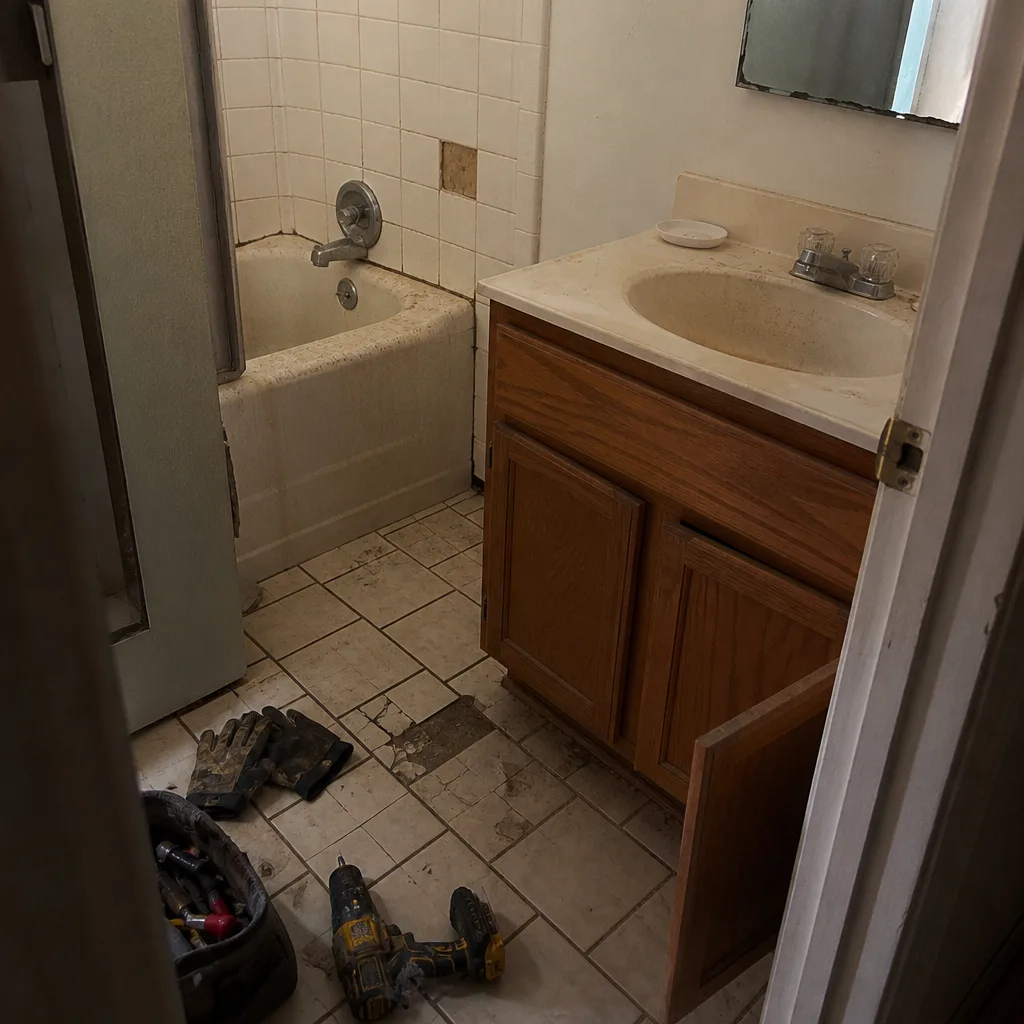 Before
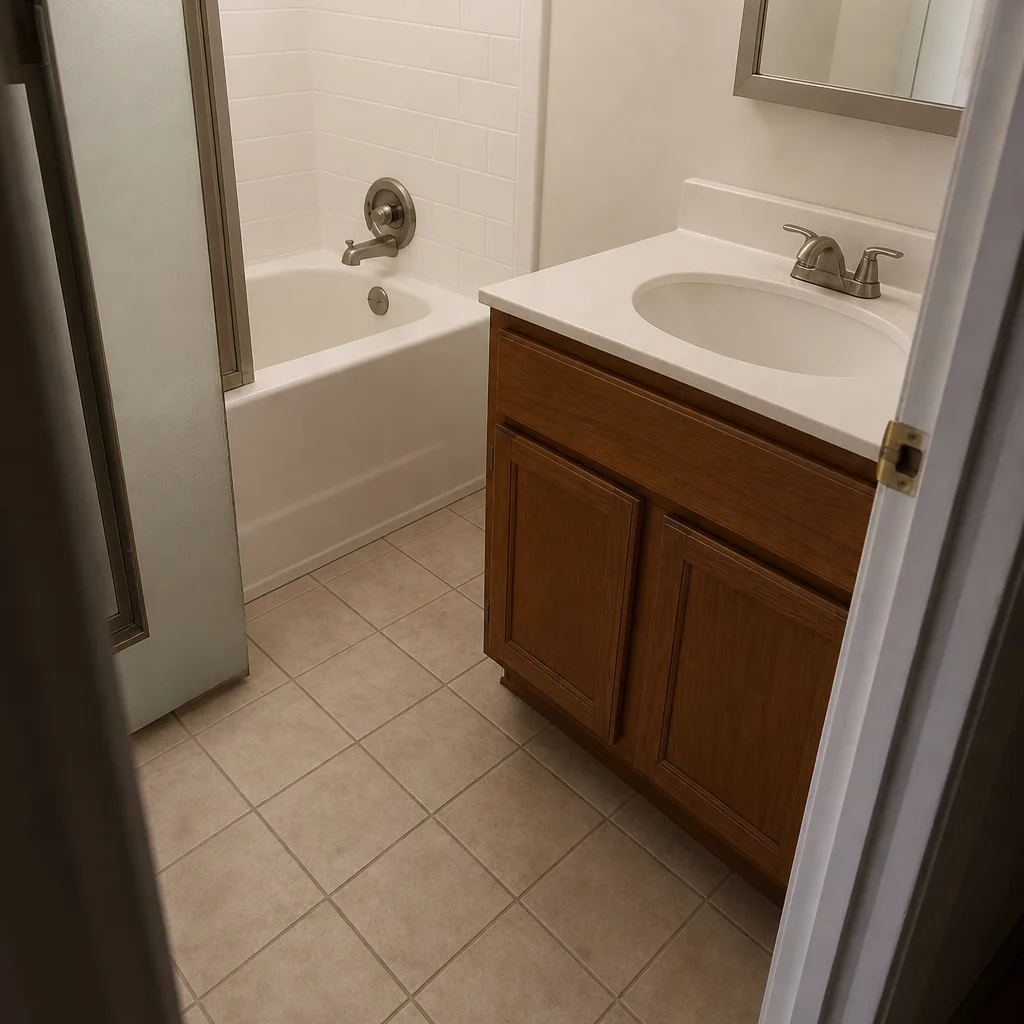 After
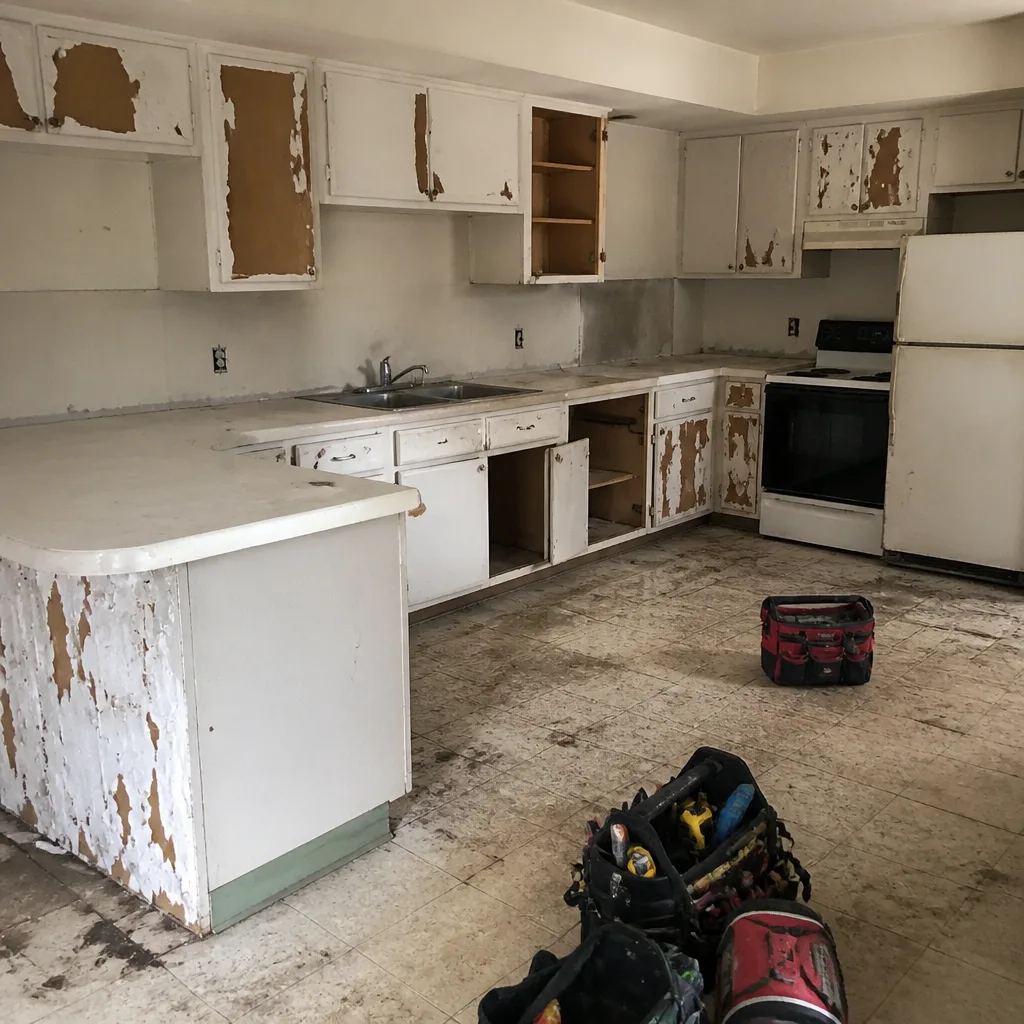 Before
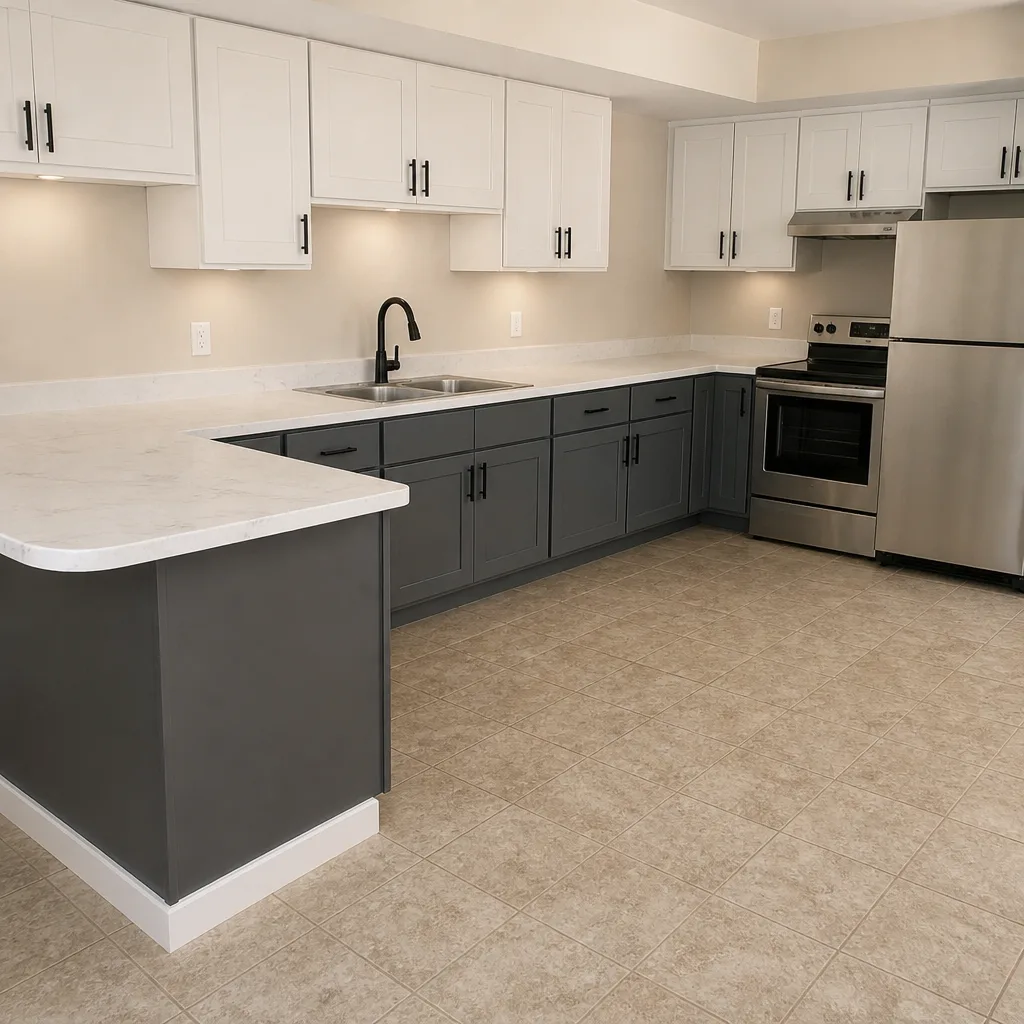 After
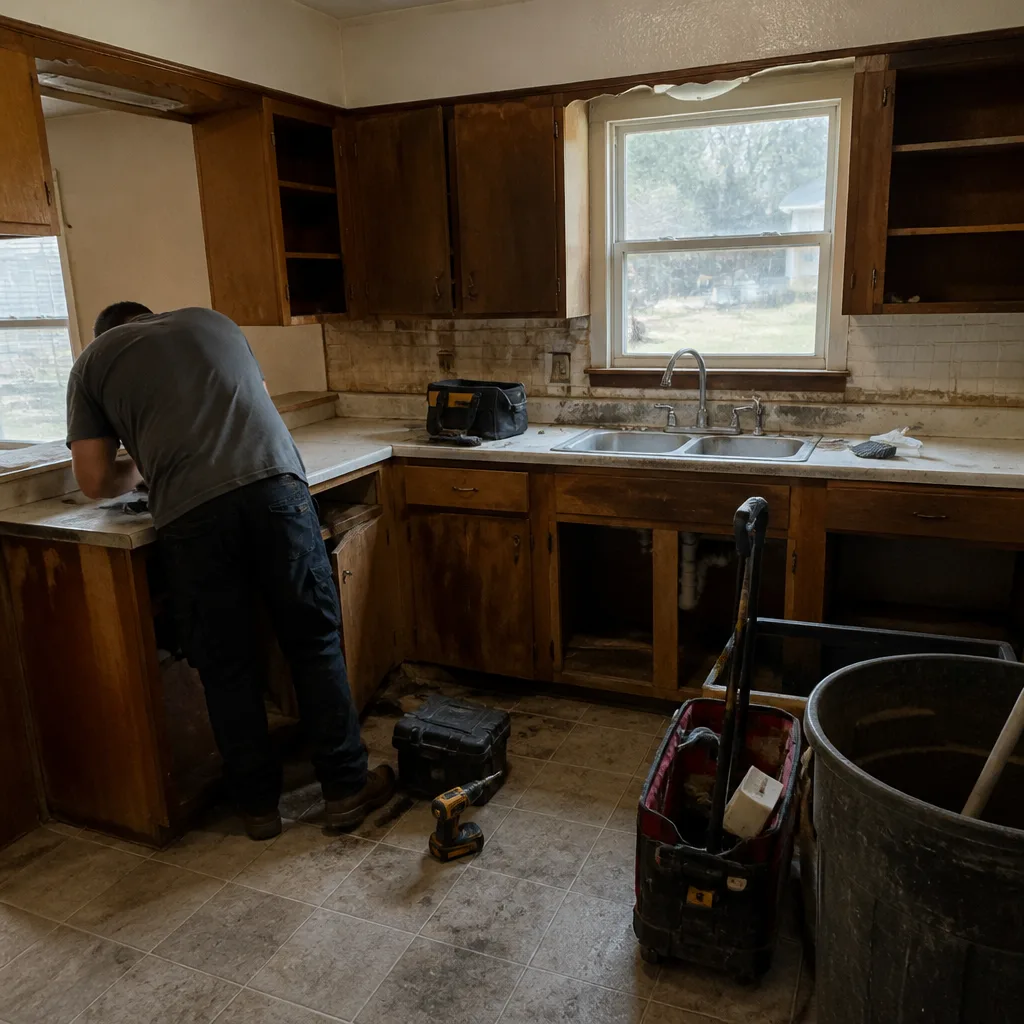 Before
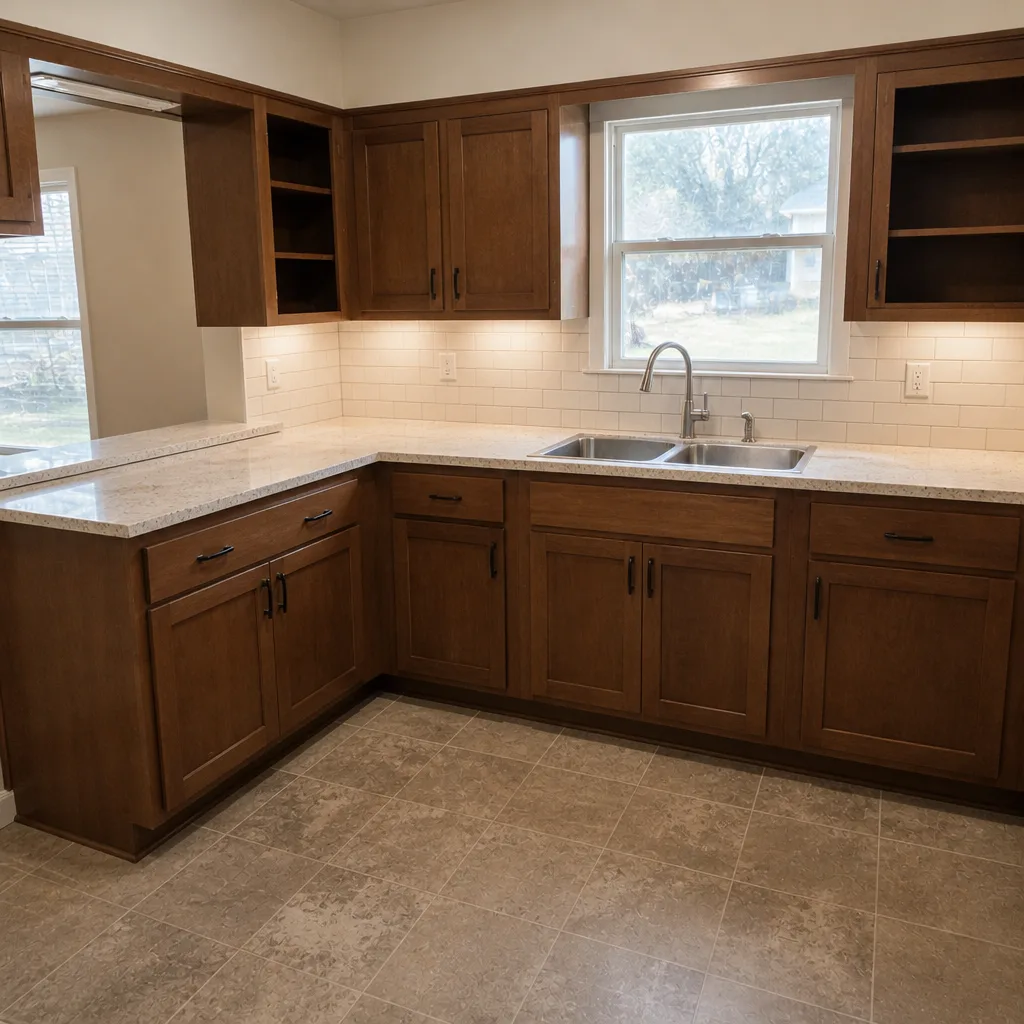 After
When to Call a Professional
Some remodels are DIY-friendly. Others are not. Call a licensed professional when the project touches structural framing or load-bearing walls, when it moves or adds electrical circuits, plumbing lines, or gas, when it involves a roof or exterior envelope, or when you’re in a Denton home old enough that what’s behind the wall is unknown. Those are the areas where a mistake isn’t just expensive to fix, it’s a safety issue. A trained contractor knows the code requirements and pulls the permits that keep the work insurable and legal. If you’re mid-project with another contractor and the work has stalled, it’s also worth a second look before you hand over another deposit. Bradford Remodeling Co Denton offers free estimates in Denton, and a live person answers the phone around the clock. Call (844) 651-3175 to schedule yours.
Frequently Asked Questions

No current certificate of insurance, or reluctance to show it. Insurance is the most basic proof a contractor is operating legitimately, and a contractor who can’t produce a current certificate before the first site visit is likely to be disorganized in every other area too. Ask for the certificate in writing, with dates you can verify. If it isn’t produced within a day, treat that as your answer and call (844) 651-3175 for a second opinion or a free estimate on a project that’s been stalled.
Keep the initial deposit at 30-33% of the total contract price at most. That covers mobilization and initial materials. Anything above that, especially a request for “half now to order materials,” is a red flag that the contractor may be funding another project with your money. Ask for purchase orders or supplier invoices for any material payment. Call (844) 651-3175 if you’d like a written price structure from a contractor that puts the number in writing before work starts.
Yes, and a serious one. The permit is what triggers the city inspection that confirms the work meets code, and it’s the paper trail that protects your insurance coverage and resale value. Unpermitted work in Denton can be discovered at resale and may need to be opened up and retroactively inspected. If a remodeler discourages permits to save time, that’s a sign to walk.
Stop making further payments immediately, put your concerns in writing to the contractor, and request a written status update including what’s been completed and what’s outstanding. Document the current condition of the job site with photos and dates. If the contractor goes silent or won’t put anything in writing, get a second opinion before paying another dollar. Calling (844) 651-3175 for a free estimate on completing the work is a reasonable next step, and it gets a real person on the phone who can talk through your options.
It’s in writing, it specifies the coverage period, and it explains the process for filing a claim. At Bradford Remodeling Co Denton, the 365-Day Done Right Promise puts a full-year written guarantee on every completed project: if the work fails inside that window, we come back and correct it at no charge. A verbal “we stand behind our work” with no document behind it is not a warranty.
The basics are the same in that permits are pulled through the city and inspections are scheduled, but the specifics of which projects require permits and what inspections are required do vary by jurisdiction and by project type. The safe assumption is that any structural, electrical, plumbing, mechanical, or envelope work needs one. Before signing, get the permit plan in writing and confirm the contractor pulls it and includes the cost in the written price. Call (844) 651-3175 if you want to talk through your specific project.
The Bottom Line
The warning signs in this guide are not about vibe or personality. They’re specific: no insurance certificate, a vague or absent scope of work, “time and materials” with no cap, more than 30-33% upfront, resistance to permits, no lien waiver language, and unsupervised or unverified subs. Any one of these is enough to slow down and ask harder questions. Combined, they’re a walk-away signal. The homeowners who come out of a remodel without a fight are the ones with the most paperwork done before the first day. Bradford Remodeling Co Denton runs on The Garrison Standard for exactly that reason: a written price before any work starts, background-checked and uniformed technicians on every job, documented brand materials from makers like Cambria, Kohler, and Therma-Tru, a 365-Day Done Right Promise on every completed project, and a live person answering the phone around the clock. Call (844) 651-3175 to schedule your free estimate and get the number in writing.
Written by the team at Bradford Remodeling Co Denton.