Last updated November 17, 2026

Free written scope consultation - allowances, timeline, and change-order rules on paper before a single trade is scheduled
The Complete Kitchen Remodeling Guide for Denton Homeowners
Cabinets have a 6-to-14-week lead time from most semi-custom manufacturers. That single number reshapes the entire schedule of a kitchen remodel, and it’s the reason homeowners who wait until demo day to order cabinetry end up staring at a torn-out room for two months. In Denton, there’s a second clock running too: the city requires separate rough-in inspections for plumbing and electrical, and a general contractor who schedules those back-to-back can burn a week in hold time between trades. This guide walks you through the real sequence for a Denton kitchen remodel, from the measurement pass that prevents costly remeasures to the line-item bid that separates a squared-away contractor from a vague one.
Quick Answer
A successful kitchen remodel in Denton starts with a written, fully-scoped bid and a measurement pass taken before demo, orders cabinets 6-to-14 weeks out, and sequences trades around separate city rough-in inspections for plumbing and electrical. Budget 8-to-14 weeks of construction time for a full gut remodel, and expect the total to land between $28,000 and $85,000 depending on cabinet grade, countertop material, and whether the layout moves.
Styles & brands we work with
- Kitchen remodeling
- Bathroom remodeling
- Home additions & ADU
- Roofing
- Windows & doors
- Driveway & pavers
- Fence
Table of Contents
- The Correct Order of Operations for a Denton Kitchen Remodel
- Denton’s Inspection Reality: Mapping Hold Points to Each Trade Phase
- How to Spec Cabinets, Countertops, and Appliances Before Demo
- Denton Ventilation, GFCI, and Circuit Load Requirements
- How to Evaluate Kitchen Remodel Bids in Denton
- What The Garrison Standard Guarantee Covers in a Kitchen
- What a Kitchen Remodel Costs in Denton
- Common Mistakes to Avoid
The Correct Order of Operations for a Denton Kitchen Remodel
Most remodeling headaches come from getting the sequence wrong, not from the trades themselves. A kitchen in Denton runs on the same basic order every time, and the projects that go sideways are almost always the ones where a step got skipped or compressed to save a day.
- Design and measurement pass. Finalize the layout, take field measurements, and lock appliance specs before anything gets ordered.
- Written bid and signed contract. Every line item, every brand, every allowance, in writing. No work begins before this is in hand.
- Cabinet and material orders. This is the long pole at 6-to-14 weeks. Place it now, not later.
- Demo and haul-away. Strip the room to studs where the scope requires it, protect the floors and adjacent rooms.
- Rough-in plumbing and electrical. New supply lines, drain moves, and circuit work. Each inspected separately by the city.
- Rough-in inspection. Both trades signed off before insulation and drywall close the walls.
- Insulation, drywall, and finish prep. Walls closed, texture matched, primer down.
- Cabinet installation. Base cabinets set level, uppers hung to a laser line, boxes shimmed and screwed to studs.
- Countertop template and install. Stone templated after cabinets are set, fabricated, then seamed on site.
- Tile, fixtures, and finish work. Backsplash, plumbing trim, electrical devices, appliance hookup.
- Final inspection and punch list. Then a clean site and a signed written guarantee in your hand.
The step most homeowners underestimate is number three. If you’re working with kitchen remodeling in Denton professionals, the cabinet order goes in during week one of construction at the latest, not after the room is gutted. Our technicians have up to 22 years of experience, and the single most common schedule failure we see is a cabinet order placed on demo day.
Denton’s Inspection Reality: Mapping Hold Points to Each Trade Phase
Here’s where a Denton kitchen separates from a generic guide. The city requires separate rough-in inspections for plumbing and electrical. That means a general contractor can’t bundle both trades into one inspection slot. If the plumber finishes Monday and the electrician is booked Thursday, the wall stays open until both are individually signed off. A crew that plans for this loses almost nothing. A crew that doesn’t builds in a week of hold time in the middle of your remodel.
Rough-In Hold Points
- Plumbing rough-in. Supply and drain lines inspected after rough framing and before insulation. Moves fast, but the inspection slot is separate.
- Electrical rough-in. Boxes, wire runs, and panel work inspected after the plumber’s sign-off is logged.
- Mechanical or ventilation inspection. Required when you add or relocate a range hood or downdraft, which most appliance upgrades trigger.
- Final inspection. Devices installed, plumbing trim set, appliances connected, then signed off before you take occupancy of the finished room.
The trick to compressing hold time is scheduling the plumber and electrician to overlap on rough-in so both inspections land on the same or consecutive days. That’s where a Denton general contractor who has done this before earns their fee. The sequencing isn’t glamorous, but it’s the difference between a 9-week remodel and an 11-week one. If you’re remodeling a bathroom at the same time, the same inspection logic applies, and our bathroom remodeling in Denton page walks through how that timeline differs.
How to Spec Cabinets, Countertops, and Appliances Before Demo
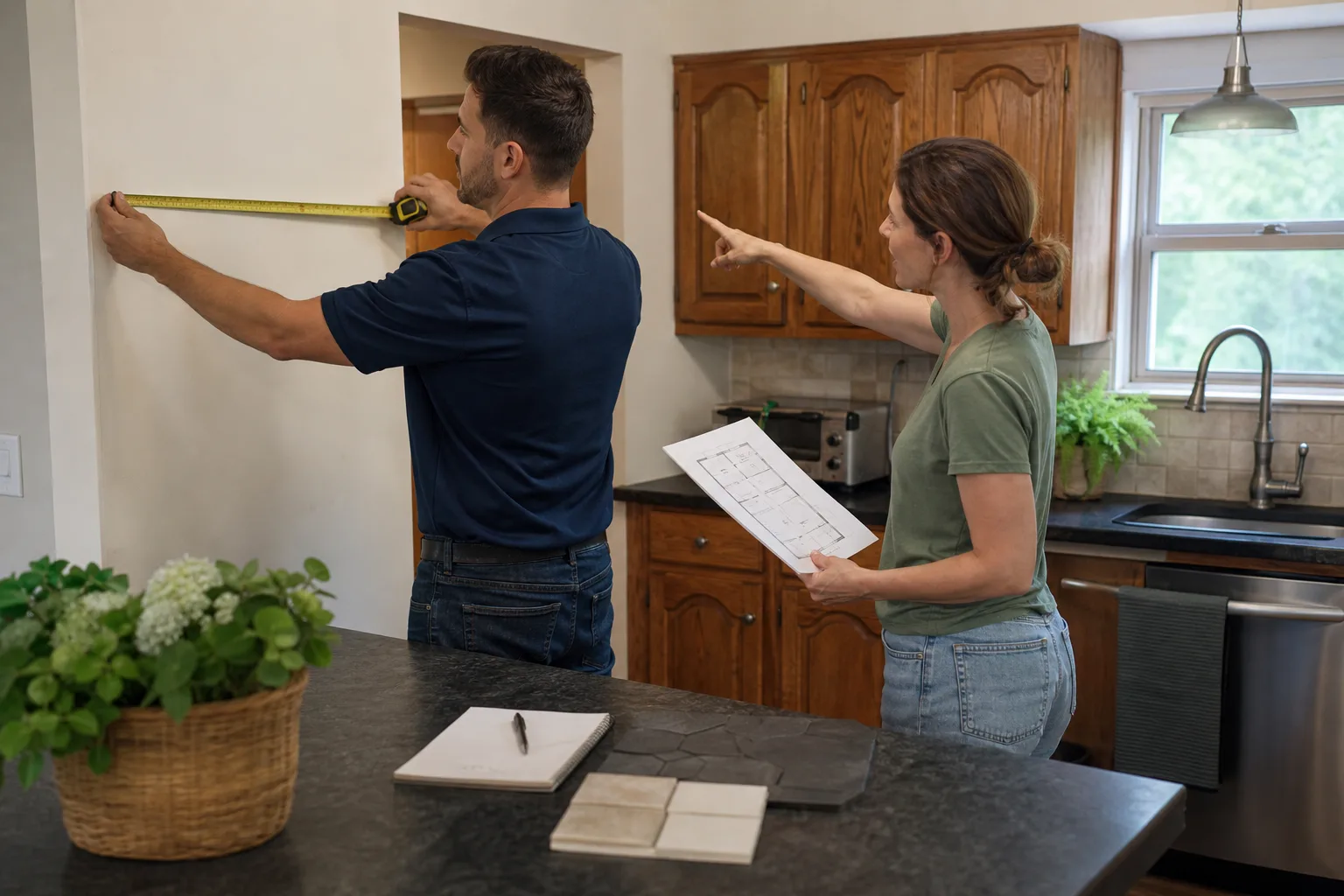
The measurement pass is where a kitchen remodel is won or lost. Get this right and the cabinet order, the countertop template, and the appliance delivery all land in the right window. Get it wrong and you’ll be paying for a remeasure and a re-order.
- Measure the finished space, not the stripped room. Record wall-to-wall dimensions at the finished drywall face, ceiling height, and window and door rough openings.
- Lock appliance specs first. Refrigerator depth, range width, dishwasher panel dimensions, and range hood ceiling height all change cabinet box sizes. Pick the models before you order the boxes.
- Confirm rough-in dimensions. Plumbing stub-out locations, electrical box placement, and gas line location all need to match the appliance you selected, not the appliance you had.
- Take a second pass. Measure everything twice, and measure the room at three points on the wall (top, middle, bottom) to catch out-of-square walls, which are common in older Denton homes.
- Verify cabinet grade and lead time. Semi-custom KraftMaid or Wellborn boxes run 6-to-14 weeks depending on finish and door style. Stock boxes turn faster but limit layout flexibility.
- Template the countertop after cabinets are set. Never template against a stripped room. Stone fabricators measure against installed cabinet tops, which is when you find out the wall curves by a half inch.
This is the sequence a general contractor in Denton should walk through with you before signing the contract. If a bid doesn’t include a documented measurement pass, the allowances in it are guesses.
Denton Ventilation, GFCI, and Circuit Load Requirements
Kitchen code isn’t optional, and Denton’s inspectors check the same things yours will. Here’s what a Denton remodel needs to account for, in plain language.
Ventilation
A range hood must vent to the exterior, either through a wall or up through the roof. Recirculating hoods are allowed in some builds, but a real ducted vent is what clearing the air in a Denton kitchen actually requires. When you upgrade to a high-BTU gas range, the hood’s cubic-feet-per-minute rating has to match the appliance. A hood that moves less air than the range produces is a failed inspection.
GFCI Placement
Every kitchen countertop receptacle needs GFCI protection. That’s every outlet within reach of the sink and every outlet above the counter, not just the ones near water. If you add a dishwasher, garbage disposal, or an island outlet, each is on its own GFCI or a GFCI-protected circuit. This is one of the most common inspection corrections on a Denton kitchen.
Circuit Load
Upgrading appliances is where circuit load bites. A modern range, double oven, or induction cooktop may need a dedicated 240-volt circuit that wasn’t in the original panel. If your Denton home has an older panel, a subpanel may be required. That’s a cost you want to know about before demo, not after the walls come down. This is genuinely dangerous work: electrical panels and wiring should be handled only by a licensed, insured electrician. A DIY attempt at adding a 240-volt circuit is a fire risk and a code failure, and we don’t recommend or describe a homeowner version of it.
How to Evaluate Kitchen Remodel Bids in Denton
A fully-scoped kitchen bid is a document you can read line by line and check against the room. A vague lump-sum bid is a number, and it’s the number that moves at the door. Here’s what to look for.
The Signs of a Scoped Bid
- Cabinet line item names the manufacturer and door style (KraftMaid, Wellborn), with a per-cabinet or per-linear-foot price.
- Countertop line names the material and thickness (Cambria or Caesarstone quartz, for example) and whether fabrication and template are included.
- Appliance allowance is a dollar figure, not “TBD” or “by owner.”
- Tile, backsplash, and flooring priced per square foot, with a stated area.
- Electrical and plumbing rough-in priced as separate line items, not “included.”
- Permits and inspections listed as a separate cost or noted as included.
- Every material brand is named, so the specification is traceable after the fact.
The Red Flags
- A lump-sum price with no breakdown, which makes line-item comparison impossible.
- Allowances so low they can’t buy the material specified (a $1,200 countertop allowance on a 40-square-foot quartz job, for instance).
- No written price before work starts, or a price that “may adjust on site.”
- No mention of permits, or a contractor who wants you to pull the permit yourself.
- No written guarantee, or one that excludes workmanship.
This is why we put every price in writing before a tool comes out, and why we work with a documented roster of premium brands: KraftMaid and Wellborn cabinetry, Cambria and Caesarstone surfaces, Kohler and Moen fixtures, GAF and James Hardie exterior products, Therma-Tru doors, and Belgard hardscaping. When a brand is named in the bid, you can verify the spec and the manufacturer’s warranty against it later.
What The Garrison Standard Guarantee Covers in a Kitchen
Here’s where a written guarantee earns its keep. Bradford Remodeling operates under The Garrison Standard, and every completed project carries the 365-Day Done Right Promise: if the work doesn’t hold within the first year, we come back and correct it at no charge. What matters in a kitchen is what “workmanship” actually means, because the phrase gets thrown around loosely.
Tile
Workmanship for tile means the bond holds. A backsplash or floor tile that lifts, cracks along a grout line, or de-bonds from the substrate inside the guarantee window gets corrected, not blamed on the tile. Improper thinset coverage or the wrong substrate is a workmanship failure, and the 365-Day Done Right Promise covers it.
Cabinet Installation
Workmanship for cabinets means the boxes are plumb, level, and square, doors and drawers operate smoothly, and the boxes stay anchored to the wall. A base cabinet that rocks or a drawer that binds within the guarantee window is on us to fix. A hinge that fails because a manufacturer’s part was defective is a warranty claim we handle with the manufacturer.
Countertop Seaming
Workmanship for countertop seaming means the seam is tight, level, and structurally sound. A seam that separates or lifts within the guarantee window gets corrected. A chip caused by dropping a cast iron pan on the counter does not, because that’s damage, not workmanship. The distinction is written into the guarantee, so you know exactly what’s covered and what isn’t.
The Garrison Standard is the framework behind every Bradford project, and it’s held across every independently owned and operated Garrison Partners location. When a job closes, you get a clean site, documented scope, and a signed written guarantee in your hand.
What a Kitchen Remodel Costs in Denton
Denton kitchen remodel costs vary by scope, but these ranges reflect what we see across the city. They’re real numbers, not “call for a quote.”
- Minor refresh (paint, hardware, backsplash): $8,000-$18,000.
- Mid-grade full remodel, same layout: $28,000-$52,000, including semi-custom cabinets, quartz countertops, and new appliances.
- Full gut remodel with layout changes: $52,000-$85,000, including electrical, plumbing, and ventilation work.
- High-end remodel with custom cabinetry: $85,000 and up, driven by custom cabinet lead time and stone selection.
Construction timelines track scope. A same-layout mid-grade remodel runs 8-to-10 weeks of build time, plus cabinet lead time. A layout-change gut remodel runs 10-to-14 weeks of build time. The Denton permit and inspection schedule adds the hold points we described earlier, which is why the sequencing matters as much as the numbers.
These figures don’t account for surprises. A kitchen in a Denton home built before 1980 may reveal galvanized supply lines or undersized electrical service behind the wall, and that changes the number. A written bid with allowances gives you visibility into that risk. A lump-sum bid hides it until it surfaces.
Common Mistakes to Avoid
- Ordering cabinets after demo. This is the single biggest schedule killer. Semi-custom cabinets run 6-to-14 weeks. Order in week one, not after the room is gutted in Denton.
- Buying appliances after the cabinets are ordered. Refrigerator depth and range width dictate cabinet box sizes. Lock the appliance specs before the order goes in.
- Scheduling plumbing and electrical rough-in back-to-back. In Denton, those are separate inspections. Overlap the trades so the two sign-offs land together, or you’ll lose a week to hold time.
- Accepting a lump-sum bid. A single number with no breakdown is unreadable and unverifiable. Ask for line items with manufacturer names and dollar figures.
- Skipping the electrical panel check. Upgrading an appliance can require a new dedicated circuit or subpanel. Finding that out after demo is a budget surprise.
- Assuming recirculating vent is enough. Exterior ducting is what clears the air in a Denton kitchen. A high-BTU range needs a hood with matching CFM rating.
- Not asking what “workmanship” covers. Get the guarantee in writing and read the tile, cabinet, and countertop clauses before signing.
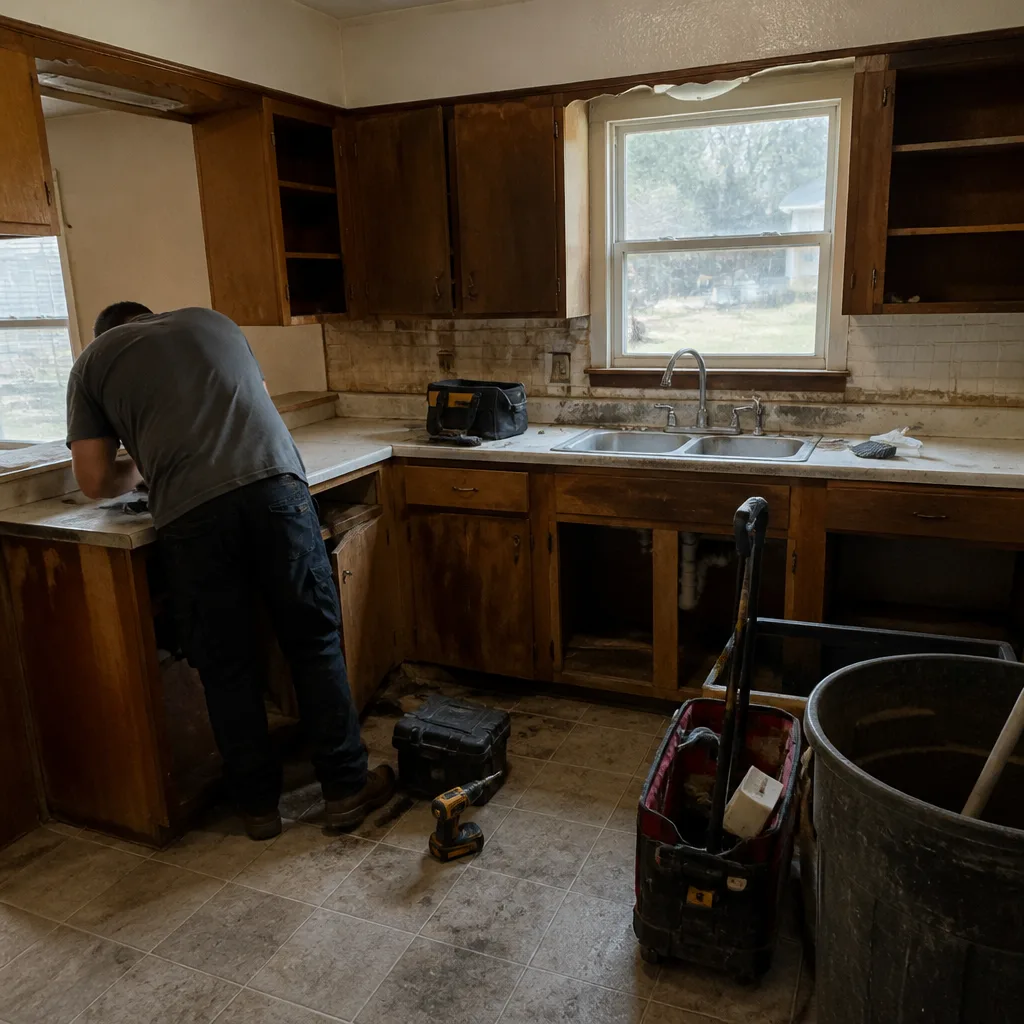
See the difference
 Before
 After
 Before
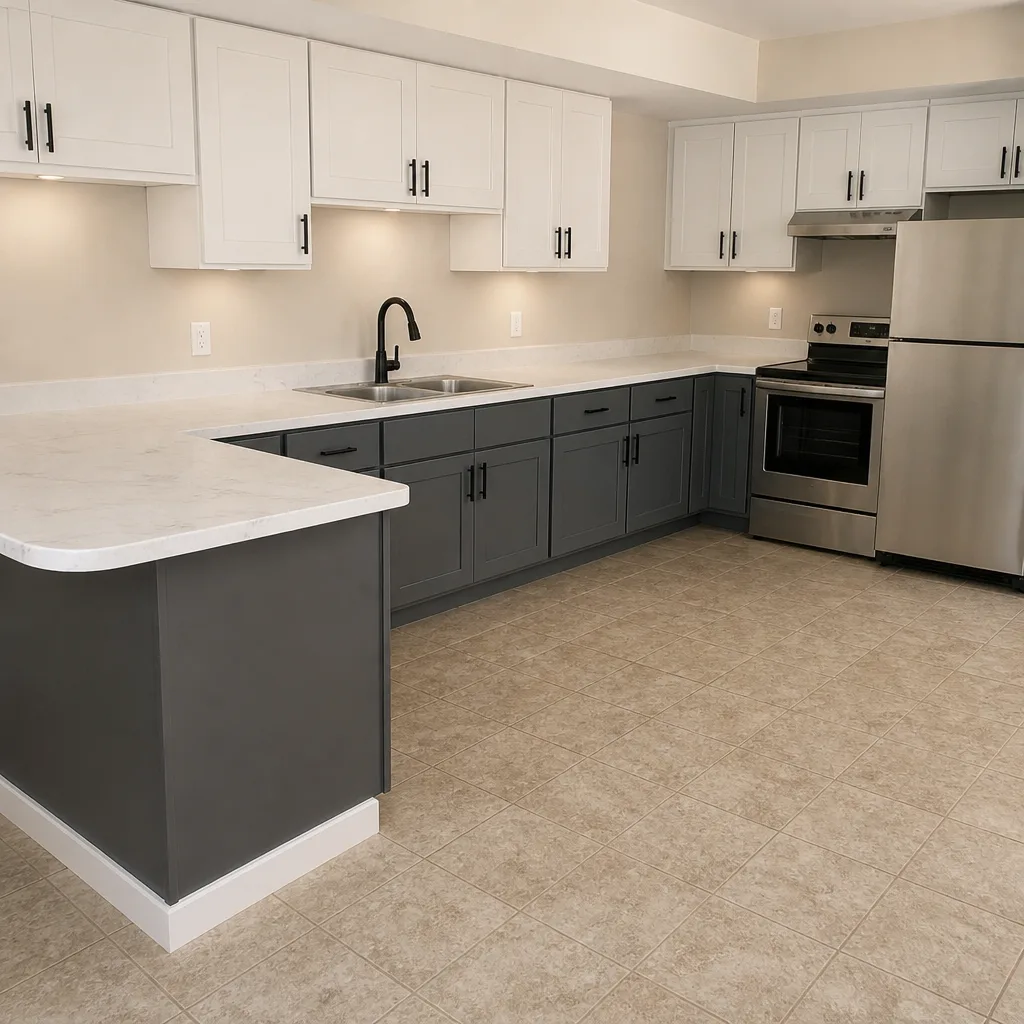 After
 Before
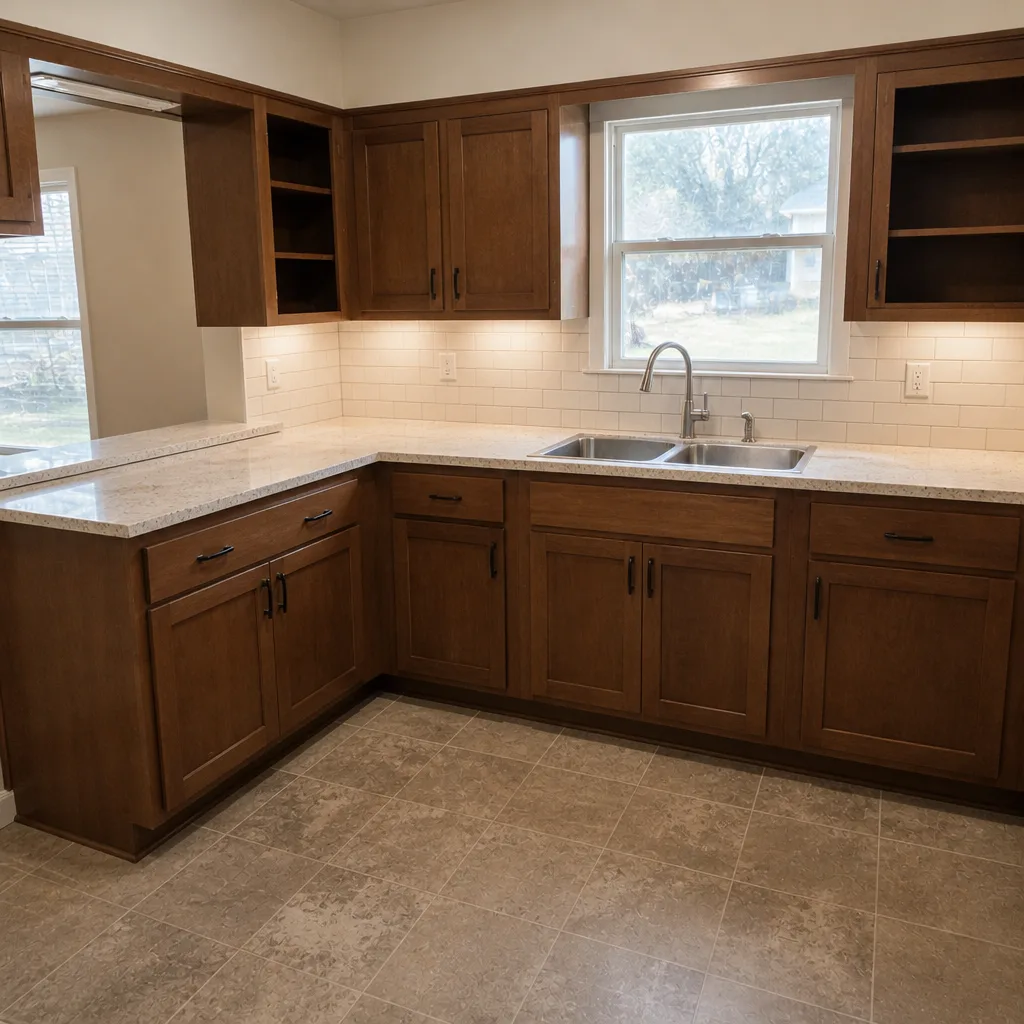 After
When to Call a Professional

Some kitchen projects are genuinely a homeowner’s to take on: painting cabinets, swapping hardware, laying a backsplash over sound substrate. Other kitchen work in Denton needs a licensed professional. Electrical panel and circuit work is dangerous and code-regulated, and a DIY attempt is a fire risk. Plumbing rough-in and drain moves need a plumber for permits and inspection. Range hood installation through a wall or roof involves cutting structure and venting to the exterior. Countertop fabrication and template are stone-shop territory. And any remodel that touches multiple trades at once needs the sequencing of a general contractor to keep the inspection schedule moving.
Bradford Remodeling Co Denton offers free estimates in Denton, with a written price before work begins. Call (844) 651-3175 to schedule yours. A live person answers the phone every time, so you won’t be sitting in a callback queue.
Frequently Asked Questions
A full kitchen remodel in Denton typically runs $28,000 to $85,000 depending on scope, cabinet grade, and whether the layout changes. A same-layout mid-grade remodel with semi-custom cabinets and quartz countertops lands in the $28,000-to-$52,000 range, while a layout-change gut remodel runs $52,000 to $85,000. Call (844) 651-3175 for an exact written quote, with estimates that are free.
A same-layout kitchen remodel in Denton runs 8 to 10 weeks of construction time, and a layout-change gut remodel runs 10 to 14 weeks. Cabinet lead time of 6 to 14 weeks runs in parallel, so the total timeline from signed contract to finished room is often 12 to 20 weeks. Call (844) 651-3175 to walk through your project scope and get a real schedule.
Yes, most kitchen remodels in Denton require a permit, including any project that moves plumbing, adds electrical circuits, relocates a range hood, or changes the layout. The permit triggers separate rough-in inspections for plumbing and electrical, which is why the sequencing matters. Call (844) 651-3175 to confirm your project’s permit needs, with estimates at no cost.
Yes, if the cabinet boxes are structurally sound, level, and square. Refacing or front replacement is often possible and cuts the cost significantly, since cabinet boxes are the most expensive line item in a remodel. It’s a good option for a Denton kitchen with solid 1990s boxes. Call (844) 651-3175 to schedule a free assessment of your existing cabinetry.
With our written-price process, the price doesn’t change at the door. Every line item, allowance, and material spec is in the contract before work starts, so there’s no repricing once the crew is on site. If a hidden condition emerges behind the wall (old galvanized plumbing, undersized electrical panel), we document it and price the change in writing before doing the work. Call (844) 651-3175 for a written bid with no surprises.
Every completed Bradford project carries the 365-Day Done Right Promise, a written guarantee that lasts a full year from completion. If workmanship fails inside that window, whether it’s tile that lifts, cabinets that pull loose, or a countertop seam that separates, we come back and correct it at no charge. Call (844) 651-3175 to talk through the guarantee terms for your project.
The Bottom Line

A Denton kitchen remodel goes smoothly when the sequence is right and the price is written down before work starts. Order cabinets in week one, lock appliance specs before the order goes in, overlap the plumbing and electrical rough-in so both Denton inspections land together, and hold out for a fully-scoped line-item bid instead of a lump sum. Those four moves alone prevent most of the delays and surprises homeowners run into. The 365-Day Done Right Promise backs the workmanship for a full year, so if something fails inside the window, the fix is covered. For the broader picture on how a kitchen fits into a whole-home plan, our Bradford Remodeling Co Denton home page is the place to start.
Written by the team at Bradford Remodeling Co Denton.