Last updated November 17, 2026








Free written scope consultation - allowances, timeline, and change-order rules on paper before a single trade is scheduled
Home Remodeling Maintenance Schedule: What to Do and When
A $12 tube of roofing sealant applied in September stops the same water that costs $4,200 in soffit replacement by March. That gap isn’t luck. It’s knowing which 90-day window to act in. Most maintenance checklists hand you a generic list sorted by season, but the trades don’t work that way. Roofers think in flashing and penetrations. Plumbers think in supply lines and shutoffs. Electricians think in load and heat. This guide is built around those trade sequences, so you know which systems to inspect before they turn into scope items on a future project. We’ll cover the windows that matter in Denton, what deferred maintenance does to a written price, and where homeowner checks should stop and a licensed trade should start.
Quick Answer
A home remodeling maintenance schedule groups inspections by trade discipline rather than by month: roofing and water management in spring and fall, plumbing twice a year, electrical annually, and structural checks tied to the seasonal soil cycle. In Denton, the compaction-expansion cycle of our clay soil, hail season from March to June, and summer heat cycling over 100°F are the three forces that drive most repair scope. Handle the small tasks inside those windows and you’ll rarely face a framing repair where a caulk joint would have done.
Styles & brands we work with
- Kitchen remodeling
- Bathroom remodeling
- Home additions & ADU
- Roofing
- Windows & doors
- Driveway & pavers
- Fence
Table of Contents
- Why a Season-Based Schedule Fails You
- Roofing and Water Management: The First Line of Defense
- Plumbing: Twice a Year, No Exceptions
- Electrical: Annual Inspection With a Hard Stop
- Structural Checks and the North Texas Clay Cycle
- What “Deferred Maintenance” Means on a Contractor’s Scope
- Homeowner-Safe Inspections vs. Licensed Trade Work
- The Denton Maintenance Calendar at a Glance
Why a Season-Based Schedule Fails You
A “spring cleaning” schedule assumes your house fails on a calendar. It doesn’t. Your house fails where water gets in, where materials move, and where something runs hot. Those forces don’t care what month it is. Grouping tasks by trade instead of by season tells you something more useful: why the task exists and what happens if you skip it.
Here’s the reasoning. Roofing tasks exist to keep water out of the building envelope. Plumbing tasks exist to keep pressurized water inside pipes. Electrical tasks exist to keep current from meeting heat or moisture. Structural checks exist to catch movement before it becomes settlement. When you understand the reason, you can triage. If you only have a Saturday afternoon, you spend it on roofing and plumbing, because those are the two failures that convert into ten-thousand-dollar scope items fastest.
In Denton, this matters more than it does in a milder climate. We get intense sun that bakes sealant and siding, clay soil that swells and shrinks with every wet-dry cycle, and hail that arrives in dense spring storms. A maintenance item that could wait a year in a temperate market often can’t wait here. The trade-grouped approach lets you catch failures inside the window where they’re still cheap to fix.
Roofing and Water Management: The First Line of Defense
Roofing is where we see the widest spread between a cheap catch and an expensive miss. A failed pipe boot costs a few dollars in parts. The same leak left through a rainy season can rot a deck, soak insulation, and stain ceilings until it’s a full tear-off plus interior repair. No other single system on your house has that kind of price leverage.
What to inspect on the roof and envelope
- Flashing around chimneys, skylights, and wall-to-roof junctions. These are the most common leak origin points after hail.
- Pipe boots and vents – the rubber collars around plumbing penetrations crack in the Texas sun within a decade.
- Granule loss and shingle lift after any hail event, especially on south- and west-facing slopes that take the most heat.
- Gutter seams and downspout discharge – water should leave the roof at least 4 feet from the foundation, which matters with our expanding clay.
- Soffit and fascia – soft spots or peeling paint signal water that’s already found a path behind the trim.
When to do it in Denton
- March into April, right before hail season peaks. Check flashing and boots so a spring storm finds the roof ready.
- Immediately after any hail of golf-ball size or larger. Don’t wait for a leak to appear. Granule loss and dented soft metal on vents are early indicators worth a look.
- October, after the heat has done its damage. This is when sun-baked sealant and caulk joints get refreshed before winter rain.
Window systems belong in this same water-management conversation. A failed seal around a window frame lets water track behind siding the same way a bad flashing does, and brands like ES Windows and CWS build units with specific installation and warranty requirements that a by-the-book installer will follow. If your windows look original or the frames are moving, that’s an envelope item worth pricing during a larger project rather than patching alone. If any of this points toward a bigger exterior scope, our General Contractor in Denton page covers how we sequence envelope work into a written project.
Plumbing: Twice a Year, No Exceptions
Plumbing fails silently and then expensively. A slow supply-line weep behind a cabinet can run for months before a soft floor tells you. In our experience the failures that turn into remodel scope are the ones nobody looked at, not the ones that suddenly burst. A twice-a-year walk-through keeps the cheap problems cheap.
Homeowner-safe plumbing checks
- Under-sink supply lines and shutoff valves. Look for corrosion, mineral crust, or a valve that won’t turn. If a shutoff won’t close, that’s a small fix now and a flood later.
- Toilet base and tank. Rocking at the base can mean a failed wax ring; tank condensation or a running fill valve wastes water and points to wear.
- Water heater. Check the age sticker, look for rust at the base, and confirm the drain pan and pressure relief line are clear. An aging heater is one of the most common surprise line items in a bathroom project.
- Visible drain traps under sinks and the laundry. Slow drains signal buildup before a clog backs up.
- Outdoor hose bibs and irrigation before the first freeze and again in spring, since our occasional hard freezes crack an unprotected bib fast.
Anything inside a wall, any soldering, any gas line, any new rough-in: that’s licensed trade territory. A homeowner can look and report. A plumber diagnoses and repairs. We draw that line hard on every project, and we build the plumbing rough-in and inspection into the schedule from the start, so it’s on the written scope rather than appearing as a surprise. When a plumbing failure has already reached a bathroom’s subfloor, that’s where a full rebuild usually starts, which is what our Bathroom Remodeling in Denton page addresses.
Electrical: Annual Inspection With a Hard Stop
Electrical inspection is a homeowner task only at the surface. Look for heat, look for damage, look for overloaded circuits. Do not open a panel, do not pull a receptacle, do not touch wiring. This is the one area where the safety line is absolute, and we say so to every homeowner we work with.
What a homeowner can safely observe
- Warm or discolored outlet and switch plates. Heat at a plate means resistance somewhere behind it, which is a real fire signal.
- Buzzing or a faint burning smell at a device or at the panel.
- Breakers that trip repeatedly under normal load.
- GFCI outlets that won’t reset, especially in bathrooms and kitchens where code requires them.
- Flickering lights that aren’t a bulb problem, which can point to a loose connection.
Any of those signs means you call a licensed electrician, not that you troubleshoot it yourself. The same applies to panel work and to anything involving a gas line, which carries a burn and carbon monoxide risk that no maintenance checklist should talk a homeowner through.
In Denton, an older home with a panel that’s undersized for modern load is a common item that surfaces during a kitchen or whole-home project. That’s not a reason to panic. It’s a reason to know, so the panel upgrade is priced and permitted up front instead of discovered mid-demo. We build electrical scope, permits, and inspections into the written price before work starts. Our Kitchen Remodeling in Denton page explains how that scope is drawn for the room that carries the most electrical load in the house.
Structural Checks and the North Texas Clay Cycle
Denton sits on expansive clay soil, and that soil is the quiet force behind a lot of cosmetic damage that looks like a remodel problem. When clay wets, it swells. When it dries, it compacts. The result is a slow cycle of movement against your foundation, and it shows up as diagonal cracks, doors that stick in summer and free in winter, and gaps at exterior corners.
What to check and when
- Walk the exterior twice a year, spring and fall, and look at the foundation line for new cracks or step-cracks in brick or siding.
- Check interior corners, door frames, and ceiling-to-wall junctions for diagonal cracks that appear or widen.
- Confirm grading and drainage slope away from the house so water isn’t pooling against the foundation.
- Watch doors and windows through the seasons. A door that always sticks in late summer is telling you something.
- Look at the attic and eaves for sagging rooflines, which can signal a structural issue worth a professional look.
Structural work is not a homeowner fix, and it’s not a caulk fix either. A widening crack that follows a defined pattern deserves a professional assessment before you plan any finished surface over it. We see this most in Denton’s older neighborhoods where homes have been through decades of wet-dry cycles. If a project already involves opening walls, structural review belongs in the written scope, not as an add-on. That’s part of how our company holds to The Garrison Standard on every job.
What “Deferred Maintenance” Means on a Contractor’s Scope
Deferred maintenance is the gap between what a building needs and what it has been given. On a written scope, it shows up as the condition correction line: the rotted subfloor under the old tile, the framing that has to be replaced before new drywall goes up, the electrical that fails inspection once walls are open. It is a real line item, and it’s the single most common reason a project price moves after demo begins.
The fix is not to hide it. It’s to find it before you sign. A by-the-book contractor walks the project, documents existing conditions, and writes a price that accounts for what can reasonably be foreseen. Where a hidden condition can’t be confirmed until walls are open, a good scope states the assumption and the unit price for the correction in writing, so nobody’s inventing a number at your kitchen table with a hammer in hand. That single commitment is at the heart of why Bradford puts every price in writing before any tool comes out.
Your maintenance schedule is the cheapest defense against deferred maintenance. Caulk joints you refresh each fall keep water out of the wall assembly. Plumbing checks catch the weep before it reaches subfloor. Each task you complete on schedule is one fewer condition correction waiting in your next project’s scope. In our experience, a homeowner who has kept up the trade-grouped checks opens a remodel with a shorter, cleaner scope and a more predictable price. Our Bradford Remodeling Co Denton home page lays out the written-price and guarantee approach that backs it.
Homeowner-Safe Inspections vs. Licensed Trade Work
Knowing where to stop is as important as knowing what to check. The rule we give every homeowner: you can look, report, and call. You don’t work inside a panel, a gas line, a pressurized system you can’t shut off at the source, or the energized parts of a roof.
Safe for the homeowner
- Visual roof and gutter checks from the ground, including soft spots in fascia and sofit
- Under-sink leak and corrosion checks with the shutoff confirmed working first
- Outlet and switch plate heat checks
- Exterior foundation crack walks and grading checks
- Seasonal caulk refreshes on trim and window surrounds
Requires a licensed trade
- Anything opening an electrical panel or touching wiring
- Gas line work of any kind
- Soldering or replacing inside-wall plumbing
- Roofing where you must leave the ground to inspect the field of shingles
- Any structural repair or framing correction
Roof work and any high-tension or energized system carries a real injury risk, and that’s not a place to save a service call. Hire the trade. On our projects, every trade is background-checked and the scope is documented before work begins, so you know who is on your roof and why.
The Denton Maintenance Calendar at a Glance
Here’s how the trade-grouped schedule lands in our North Texas climate. Treat the months as windows, not hard dates.
- Late winter (Feb-March): Plumbing freeze checks, roof flashing review ahead of hail season, HVAC service, exterior walk.
- Spring (March-May): Post-hail roof inspection, window and door seal checks, irrigation startup, gutter cleanout.
- Summer (June-August): Watch for heat cycling on sealant and siding; keep AC condensate lines clear; no major roof work unless repair is needed.
- Fall (September-November): Envelope caulking, plumbing second check, water heater review, foundation and grading walk before winter rain.
- Winter (December-February): Freeze prep on exposed pipes and hose bibs, indoor moisture and window condensation checks.
Our technicians have up to 22 years of experience reading these signs across Denton homes, and the calendar above is close to how we sequence inspections on every project.
Common Mistakes to Avoid
- Treating caulk as cosmetic. A shrinking caulk joint at a window or trim is a water entry point. In Denton’s sun, sealant fails fast; left through a rainy season, it wets the framing behind the trim.
- Skipping the post-hail roof look. Hail season runs March into June here. Waiting until a ceiling stain shows up turns a boot replacement into a deck and drywall job.
- Ignoring a shutoff that won’t close. If a supply valve is frozen open, a small drip becomes a flood when you can’t stop it. Fix valves, not just leaks.
- Blaming the foundation for everything. Our clay soil causes real movement, but not every crack is structural. Get a professional read rather than guessing, and don’t caulk over a widening crack.
- Letting deferred maintenance stay invisible. Walk your house with the trade checklist before you plan a remodel, so condition corrections are priced in writing instead of discovered at demo.
- Doing electrical or gas troubleshooting yourself. Heat stains at an outlet or a gas smell are a call-the-pro moment, every time.
- Assuming a maintenance check replaces a real inspection. A homeowner walk catches surface signals. A licensed trade catches what’s behind the wall, and on a project, the written scope reflects it.
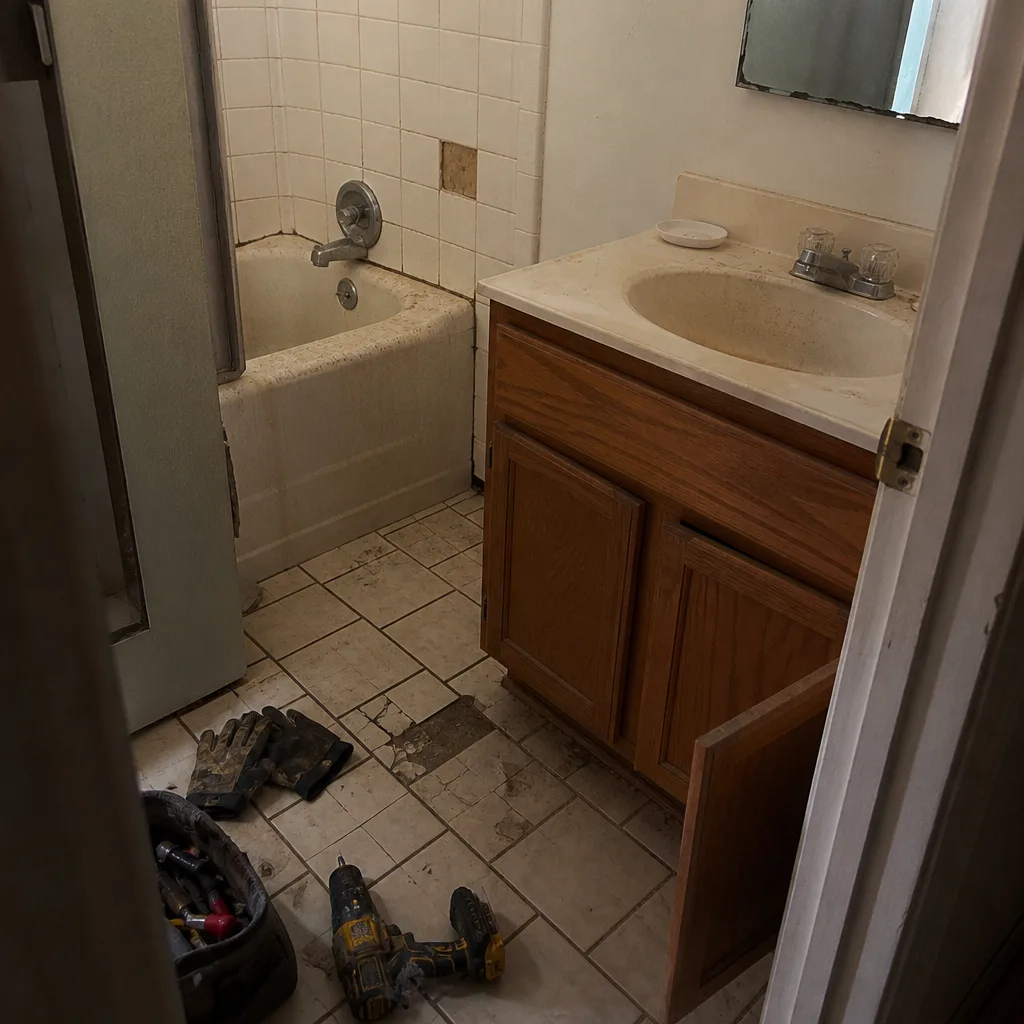
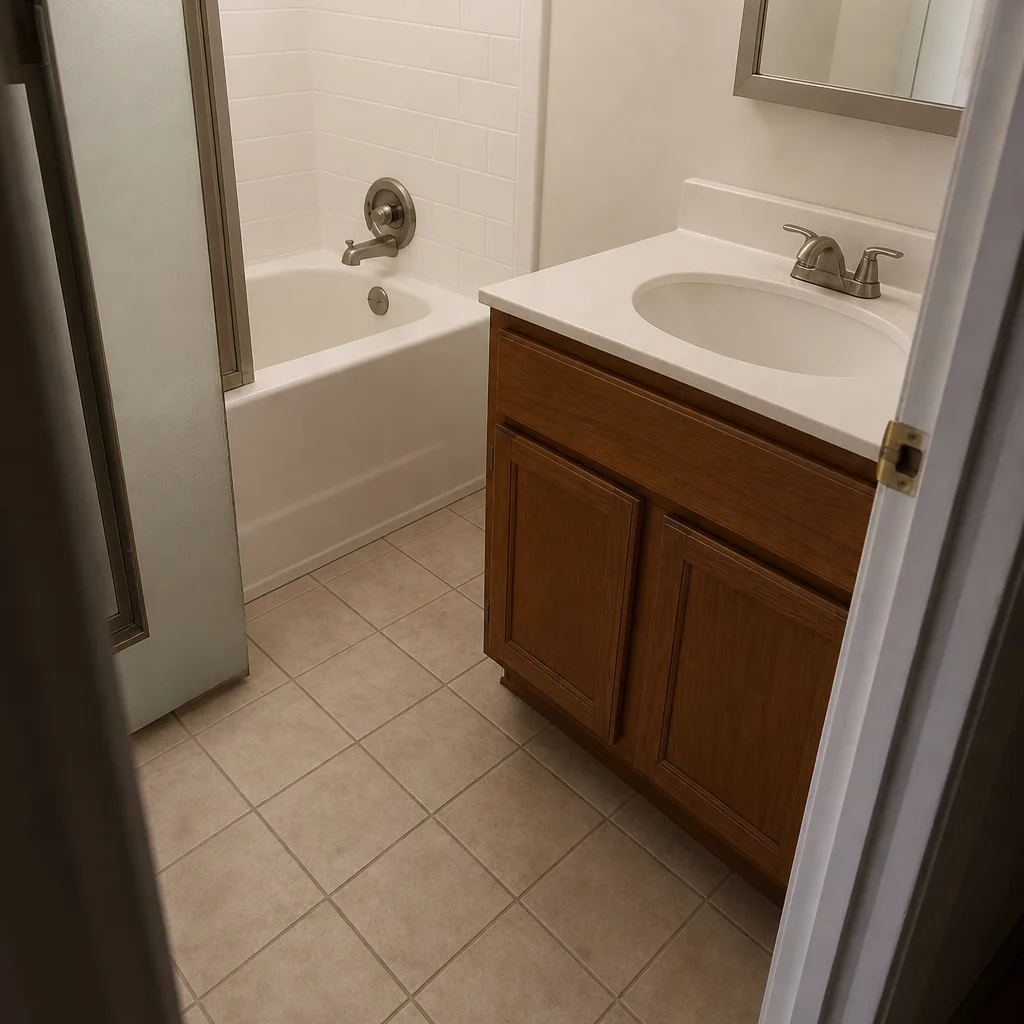
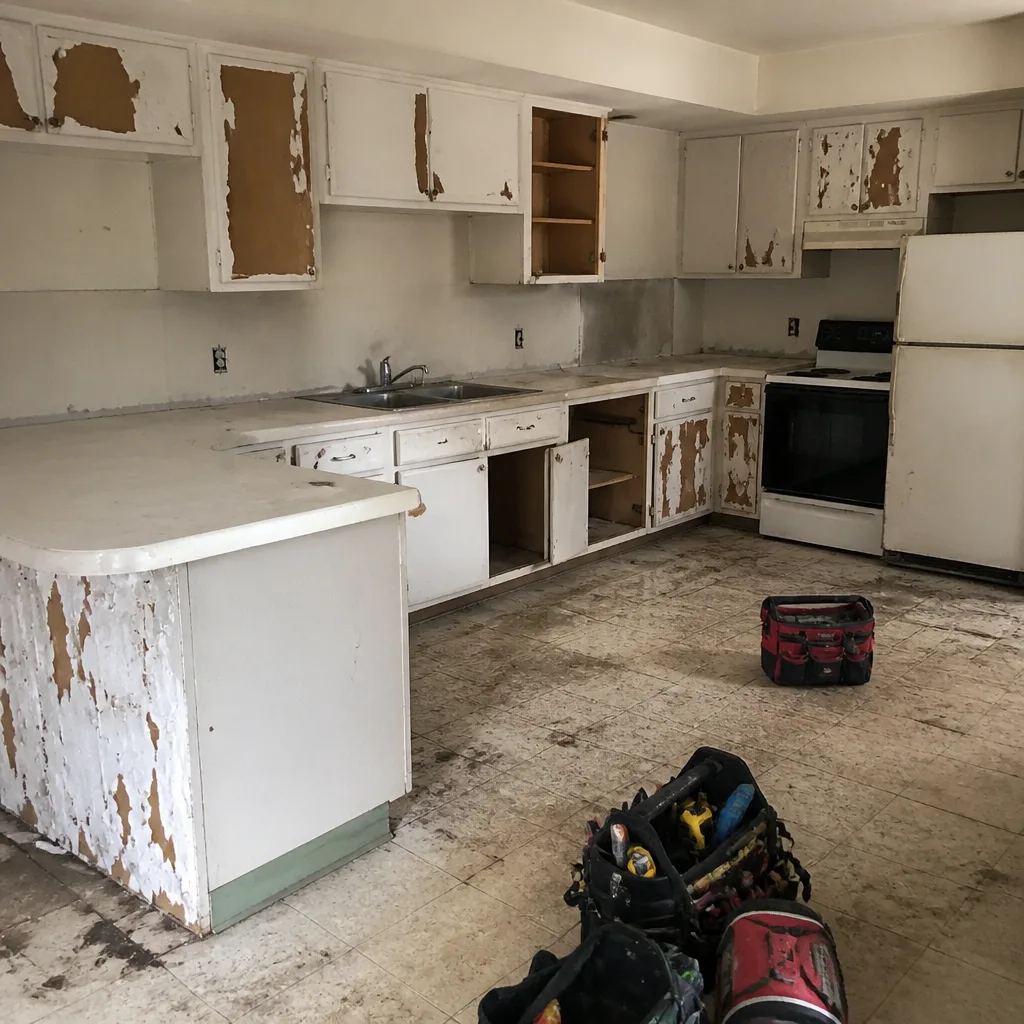
See the difference
 Before
 After
 Before
 After
 Before
 After
When to Call a Professional
Call a professional when you see water where it shouldn’t be, widening diagonal cracks, heat or a burning smell at an outlet, a gas odor, or a supply valve that won’t shut off. Call before the condition spreads and before you plan a finish over it. Bradford Remodeling Co Denton offers free estimates in Denton, and we’ll walk the condition, write the scope, and give you a price in writing before any work starts. Every project is backed by the 365-Day Done Right Promise: if the work doesn’t hold within a full year, we come back and correct it at no charge. Call (844) 651-3175 to schedule your free estimate; a live person answers, day or night.
Frequently Asked Questions

Twice a year for the full trade walk, plus immediately after any significant hail or freeze. A spring and fall pass covers plumbing, electrical observation, envelope, and structural checks, and each season’s window catches different failures before they spread.
Ignored caulk and flashing failures that let water reach subfloor and framing are the biggest ones, followed by an aging water heater and an undersized electrical panel found at demo. Catching the first cheap and knowing the second two before you price a project keeps the scope clean.
You can look from the ground, at gutters, fascia, and visible flashing, but don’t climb the roof to walk the shingle field. Roof work at height is a genuine fall risk and a job for a professional. Call for a roof inspection after hail rather than getting on it yourself.
Deferred maintenance is the backlog of condition corrections the building has accumulated, and on a written scope it shows up as the repair line for rotted subfloor, bad framing, or failing systems found at demo. A contractor who documents existing conditions up front shrinks the surprise. Our written price states assumptions and correction pricing before work starts, and calls to (844) 651-3175 come with a free estimate.
Yes. Expansive clay swells when wet and compacts when dry, and that cycle shows up as diagonal cracks and doors that stick in certain seasons. It doesn’t always mean structural failure, but a widening crack deserves a professional read before you cover it over.
A by-the-book contractor writes the price before any work begins and documents foreseeable conditions so it doesn’t move. Where a hidden condition can’t be confirmed until walls are open, the scope states the assumption and correction price in writing. Call (844) 651-3175 for an exact quote; estimates are free.
The Bottom Line
Maintenance is cheaper than remodeling by an order of magnitude, and the whole game is timing. Group your checks by trade so you understand why each one exists. Handle roofing and plumbing first because they convert into the biggest scope items fastest. Let a licensed trade touch anything energised, gas-fed, or inside a wall. In Denton, respect hail season and the clay cycle, and walk your house before winter rain. Every task you complete on schedule is one condition correction that won’t appear in a future written scope. Do it by the book and your house stays ahead of the repair cost. Call (844) 651-3175 for a free estimate when you’re ready.
Written by the team at Bradford Remodeling Co Denton.