Last updated November 17, 2026








Free written scope consultation - allowances, timeline, and change-order rules on paper before a single trade is scheduled
General Contractor Maintenance Schedule: What to Do and When
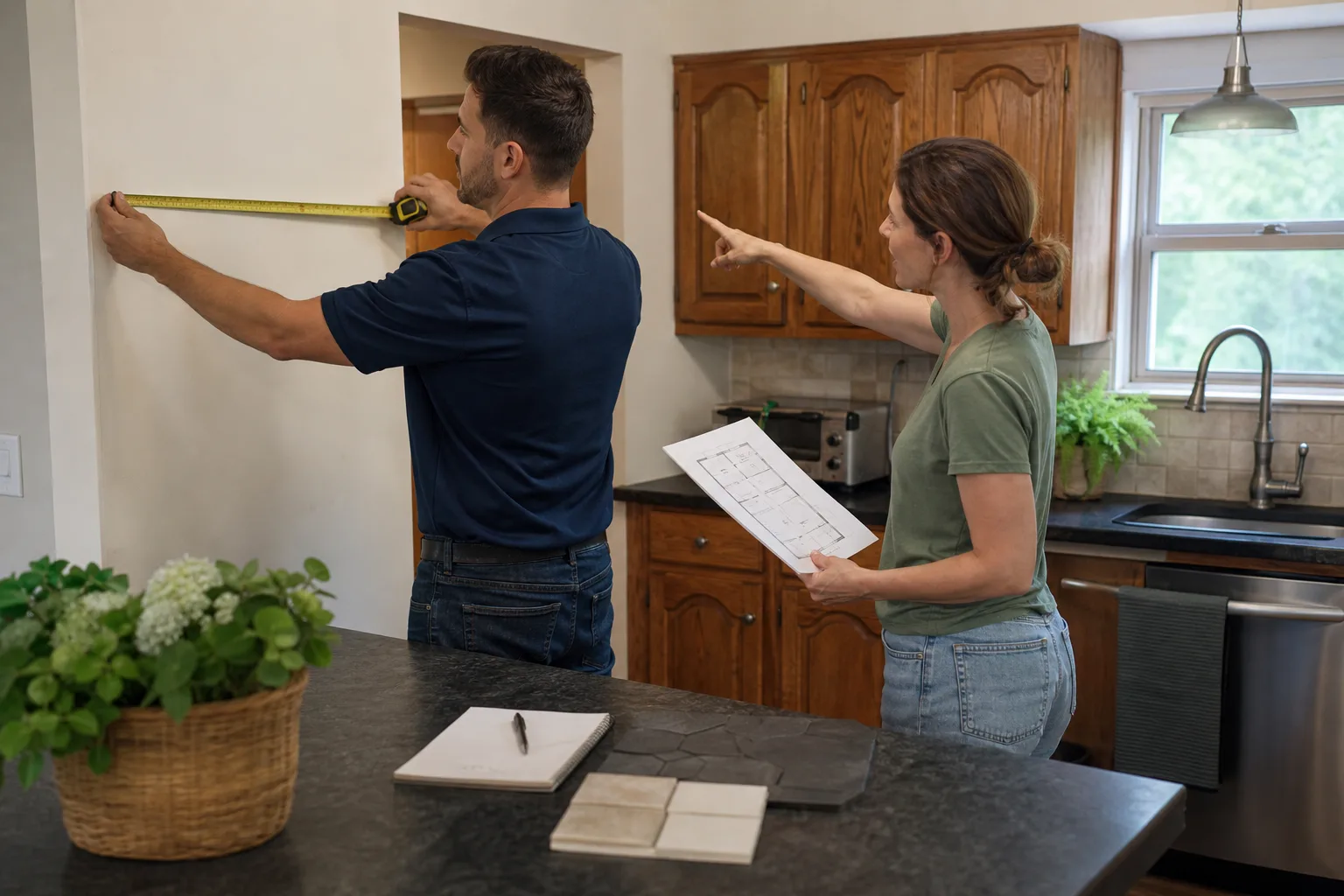
The place your remodel leaks first is almost never the tile or the drywall. It’s the flashing joint where your roofer’s work met your framer’s work and the general contractor signed off without a third-party eye on it. Trade handoffs are where homes quietly fail: the HVAC sub seals a plenum, the drywaller buries it, nobody checks it again for three years. This guide walks through the maintenance points that actually matter after a renovation in Denton – not the obvious filter swaps, but the handoff seams, the seasonal pressures of North Texas clay soil, and how to read the documentation your contractor left behind.
Quick Answer
After a renovation, plan maintenance in four cycles: monthly (HVAC filters, range hood, recirculating hot water flush check), quarterly (foundation crack monitoring, expansion gaps in engineered flooring, exterior caulk), twice a year (roof-to-wall flashing, attic ventilation, gutters before and after storm season), and annually (panel and GFCI testing, plumbing shutoff exercise, as-built documentation review). The highest-risk points are the trade handoffs – HVAC-to-drywall, plumbing-to-tile, roofing-to-framing – which need an annual inspection with the paperwork in hand.
Styles & brands we work with
- Kitchen remodeling
- Bathroom remodeling
- Home additions & ADU
- Roofing
- Windows & doors
- Driveway & pavers
- Fence
Table of Contents
- Why Trade Handoffs Fail First: What to Inspect Annually
- Maintaining New Systems You’ve Never Owned Before
- North Texas Seasonal Checks: Foundation, HVAC, Flooring
- Reading Your As-Built Documentation
- What Your Written Guarantee Covers vs. Normal Wear in Texas
- The Full Maintenance Calendar: Month-by-Month
- Storm-Season Prep Before and After
Why Trade Handoffs Fail First: What to Inspect Annually
A general contractor runs a project by sequencing trades: framer, then roofer, then HVAC rough-in, then electrician, then plumber, then insulation, then drywall, then finish trades. Each handoff is a moment where one crew’s work gets covered by another’s and stops being visible. In our experience running remodels in Denton, the failures we get called back for cluster at three seams. Here’s what to watch.
The HVAC-to-Drywall Seam
When the HVAC crew sets a return plenum in a closet or above a hallway ceiling, the drywaller closes it up. If that joint wasn’t sealed with mastic before the drywall went on, you’ll pull attic air into the living space – raising cooling load in July and introducing dust. Once a year, before cooling season, walk every room and feel for air leakage at return grilles and supply boots. A thermal camera or a smoke pencil from any hardware store will show you a bad seal in under a minute. If you find one, the fix is a mastic re-seal of the boot, not a re-tape.
The Plumbing-to-Tile Seam
Shower valve rough-ins sit behind tile. The seam between the valve body and the waterproofing membrane (usually a bonded sheet or liquid-applied product) is where pinhole leaks begin. Check the ceiling below every bathroom once a year for water staining – a faint ring, not a drip. In Denton’s older housing stock near the Square, we regularly find discoloration above showers that traces back to a rough-in connection that was tightened but never re-checked after tile-set. The annual check is visual: look, don’t touch.
The Roofing-to-Framing Seam
Roof-to-wall flashing is the number-one leak point in North Texas homes. It’s a metal piece that laps over the wall sheathing, then gets covered by siding or brick. Check the exterior once a year after a heavy rain: run water from a hose on the roof uphill of the flashing and watch the interior wall for moisture. If it shows, the flashing needs to be re-lapped and re-sealed by a roofer – this is a job for a trained professional on a roof, not a homeowner with a ladder.
Maintaining New Systems You’ve Never Owned Before
Remodels introduce systems that most homeowners have never had to maintain. Here’s what each one needs and how often.
Recirculating Hot Water
A recirculating system keeps hot water ready at the tap, which means a pump runs continuously or on a timer. Maintenance is simple: flush the pump’s sediment trap (if it has one) every six months; check for pump noise or short-cycling once a quarter; and if the line runs under slab, watch for hot spots on the floor. In North Texas, hard water scales the recirculation loop faster than in softer-water regions, so a descale at year three is standard.
Range Hood Venting
A new hood is only as good as its duct run. Check the exterior vent flap twice a year for bird nests and wasp buildup. In Denton, mud daubers love a vent flap that hasn’t been screened. Clean the hood’s grease filter monthly; replace a charcoal filter every six months if the hood recirculates instead of venting outside.
Panel Upgrades
If your renovation included a service panel upgrade, you now have GFCI and AFCI breakers that need to be tested. Press the test button on every GFCI outlet quarterly and reset it. Test AFCI breakers twice a year. Never open the panel cover yourself – that’s a licensed electrician’s job, and the risk of an arc flash is real.
North Texas Seasonal Checks: Foundation, HVAC, Flooring
Denton sits on expansive clay soil that moves with moisture. That movement doesn’t stop because you remodeled – it just moves the stress to different places.
Foundation Movement
Walk the perimeter of your home once a quarter with a level and a photo log. Check for new cracks over doorways, sticking exterior doors, and gaps at windows. Hairline cracks are normal; a crack you can slide a dime into, or one that grows noticeably over 60 days, warrants a structural engineer’s look. In our experience running general contracting work in Denton, the slab movement we see most often follows a dry summer after a wet spring, when the soil shrinks and pulls at the slab’s edge. Soaker hoses along the foundation during August and September help, but they don’t replace a proper drainage plan.
HVAC Load Shifts
North Texas summers push a system hard. Change filters every 30 days from June through September, then every 90 days the rest of the year. Schedule a professional tune-up in April before the first 100-degree day. If you added square footage in your remodel, the system may be undersized for the new load – watch for rooms that won’t cool. This is why your as-built documentation matters (more on that below).
Engineered Flooring Expansion Gaps
Engineered wood and laminate flooring need a gap at the perimeter, usually 1/4 to 3/8 of an inch, hidden under baseboard. In Denton’s humidity swings, that gap does real work. Check baseboards twice a year for buckling – a bulge in a baseboard often means the floor beneath it is expanding with no room to move. Do not fill gaps with caulk; they’re there on purpose. If you see buckling, the fix is to relieve the tight point, which is a job for the installer.
Reading Your As-Built Documentation
Your contractor should have left you as-built drawings, a material list, and the submittals for any systems installed. These are your maintenance bible. Here’s how to use them.
- Find the plumbing and electrical chases. The as-built shows where pipe and wire run behind the wall. Before you hang a mirror, mount a TV, or cut into drywall, check those pages. Cutting into the wrong wall in a remodeled Denton kitchen we’ve worked on has meant hitting a recirculation line that wasn’t in the old house’s original layout.
- Note the substrate and framing specs. If the drawings call for 5/8-inch drywall on ceilings, that tells you the ceiling can carry a heavier fan. If they call for cement board in the shower, that tells you the tile is bonded to a proper substrate, not drywall.
- Keep the submittals. Each premium brand you installed – say, a Krispy Kreme of fixtures, a GAF shingle, a James Hardie panel – comes with manufacturer specifications. When a warranty claim comes up, the manufacturer will ask for the submittal. Keep them in a fireproof folder or scanned to cloud storage.
- Photograph the walls before drywall went up. Ideally, your contractor did this. If not, ask for it after the fact; many will have it.
If you’ve lost your as-built package, a licensed GC or a home inspector can recreate a rough version. Bradford Remodeling Co Denton keeps a documented file on every project and can walk you through yours. See our General Contractor in Denton page for how documentation is handled on our jobs.
What Your Written Guarantee Covers vs. Normal Wear in Texas
Texas doesn’t mandate a specific workmanship warranty, so what you get is entirely what’s in writing. That’s why the written guarantee matters more than the handshake. Here’s the legal and practical split.
What a Written Guarantee Should Cover
- Workmanship defects – a tile that pops because the thinset failed, a cabinet door that sags because the hinge was set in the wrong place, a roof flashing that leaks because it was lapped backward.
- Material failures under normal use – a faucet cartridge that fails inside the manufacturer’s warranty, a shingle that blisters.
- A defined correction window – a written guarantee should name how long it’s in force and what the remedy is. Bradford’s 365-Day Done Right Promise, for example, gives a full year of written coverage; if the work fails in that window, we return and correct it at no charge.
What Counts as Normal Wear
- Paint fading on a south-facing wall in the Texas sun.
- Caulk shrinking and cracking at exterior joints after a summer.
- Grout discoloring in a shower from soap scum.
- Foundation hairline cracks that appear from clay movement, not workmanship.
- Filter clogging, thermostat batteries dying, or a fixture’s finish dulling from cleaning products.
The line between guarantee and wear is documented in your as-built and your scope of work. If you can’t find your guarantee terms, call the contractor and ask for a copy in writing. Any legitimately-run operation will have it on file.
The Full Maintenance Calendar: Month-by-Month
Here’s the schedule we hand homeowners at job close. Print it, tape it inside a kitchen cabinet, and use it.
- January – Test AFCI breakers. Check attic for rodent entry. Inspect foundation perimeter for new cracks.
- February – Clean range hood grease filter. Check under-sink cabinet for slow leaks.
- March – Service HVAC before cooling season. Walk the roof from a ladder, not on it – look for lifted shingles and flashing trouble.
- April – Test all GFCI outlets. Check exterior caulk and re-caulk any cracked joints.
- May – Start monthly HVAC filter changes. Flush recirculating hot water sediment trap.
- June – Storm-season gutters check. Inspect window and door weatherstripping.
- July – Check HVAC load: any room more than 3 degrees warmer than the rest is a sign of a duct or sizing issue.
- August – Foundation soaker-hose season begins. Monitor for door sticking.
- September – End-of-summer caulk re-check. Inspect engineered flooring baseboards for buckling.
- October – HVAC pre-winter tune-up. Clear gutters before fall leaves drop.
- November – Test smoke and carbon monoxide detectors. Check attic insulation gaps around newly installed can lights.
- December – Review your as-built file. Note any projects you’re planning for the next year and pull the documentation you’ll need.
Storm-Season Prep Before and After
Denton sits in the crosshairs of spring hail and fall wind events. Before the first storm warning of the season, do three things: verify roof flashing on the seams your contractor worked on, confirm your gutters are clear and discharging away from the foundation, and photograph every exterior joint you can reach. After a storm, walk the exterior and photograph hail dings on siding and roof shingles before you call insurance. If you find water intrusion inside, that’s a call to a professional, not a DIY patch.
If you’re considering a new roof or a siding replacement as part of the fix, look at GAF or James Hardie products. Those brands are on our documented material roster, and their specs and warranties are traceable, which means they hold up at claim time. Our Bradford Remodeling Co Denton home page lists the full brand set we install.
Common Mistakes to Avoid
- Assuming the GC checked every handoff. Even a disciplined GC relies on the sub for a final self-check. Ask for photos of the handoff seams at close, or have a third party look.
- Filling the perimeter expansion gap in engineered flooring. That gap is there for Denton’s humidity swings; caulking it forces the floor to buckle.
- Opening the electrical panel. GFCI and AFCI breakers should be tested by the button, not by removing the cover. Arc flash is not a risk worth taking.
- Skipping HVAC filter changes in summer. Texas heat will find the restriction fast. A clogged filter is the most common cause of compressor strain we see.
- Throwing out the as-built documents. Without them, you’re guessing which wall has a water line behind it.
- Treating normal wear as a guarantee claim. Caulk cracking is not a workmanship failure; it’s the material doing what it does in the sun. It’ll be replaced, but not under guarantee.
- Patching roof flashing yourself. Leaks always return in a different spot. Flashing is a two-layer job best handled by a trained professional.
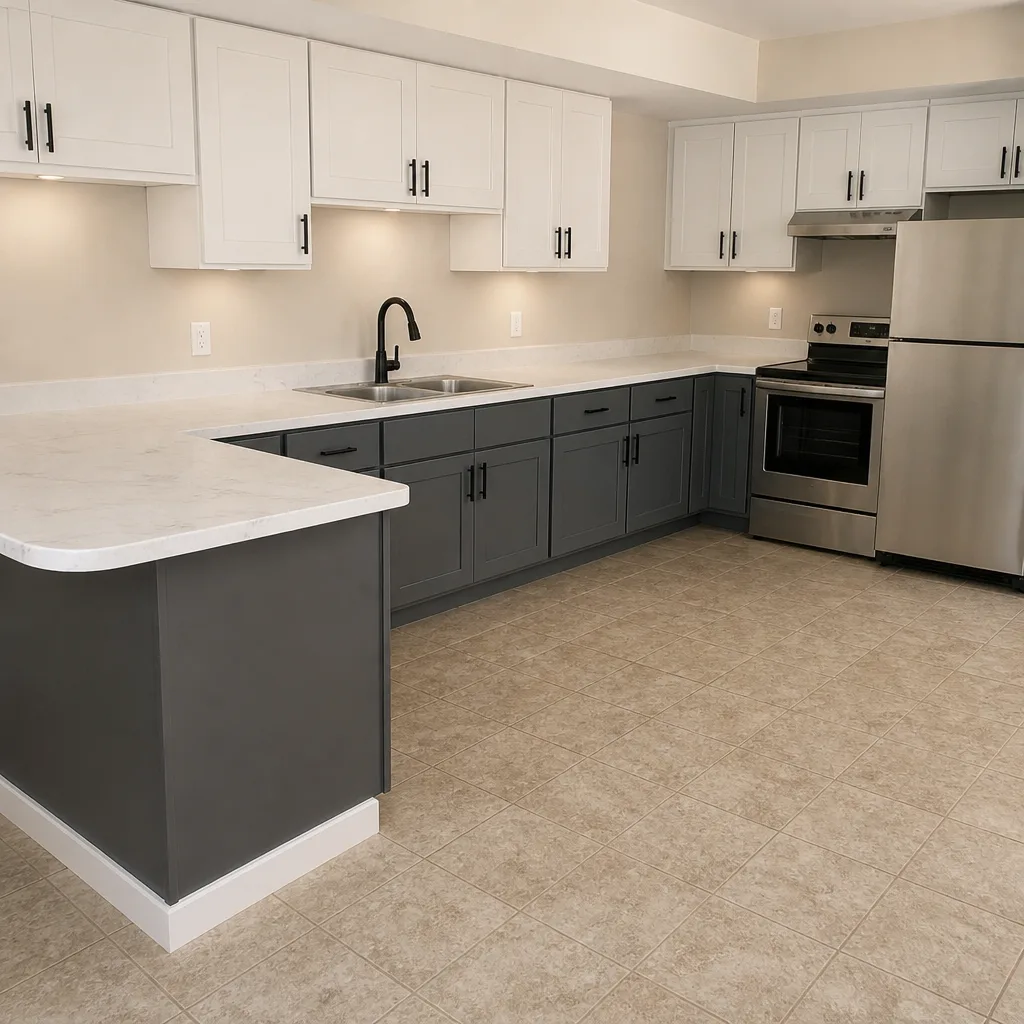
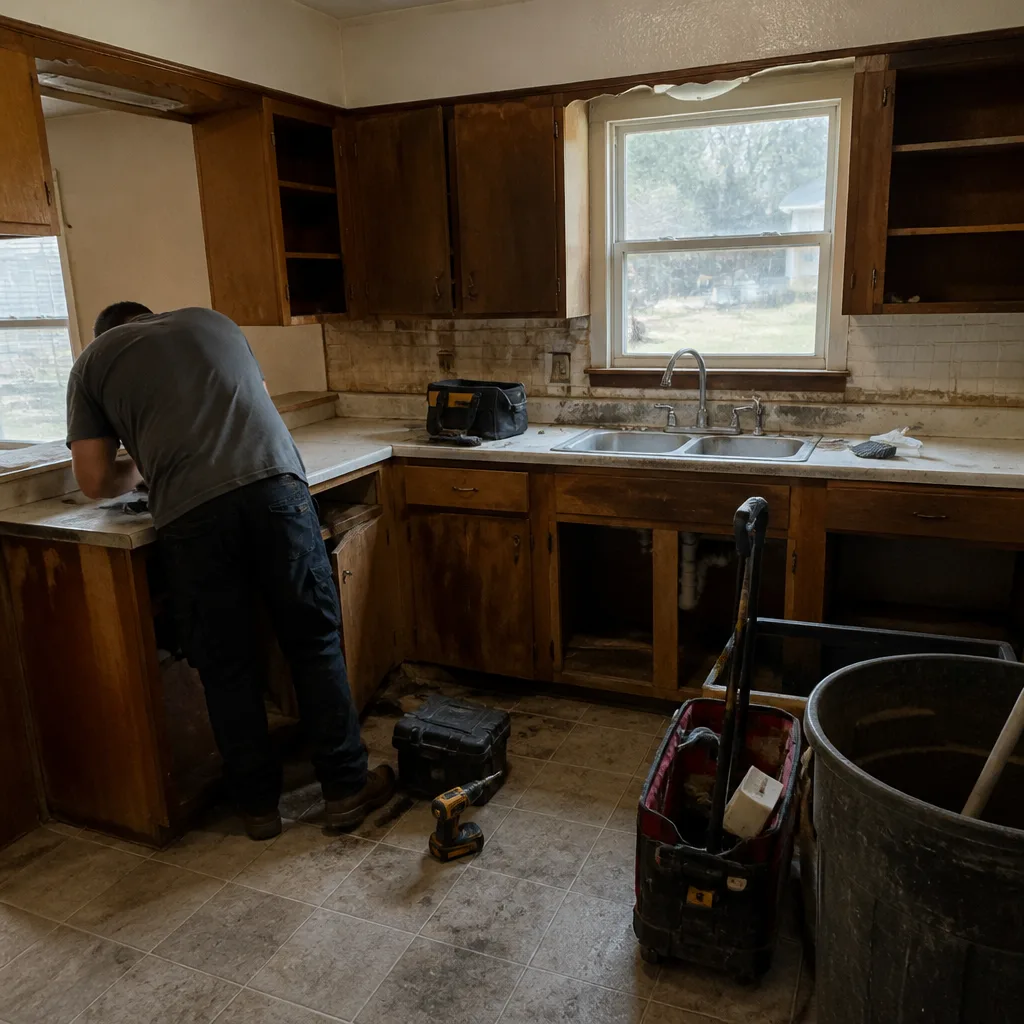
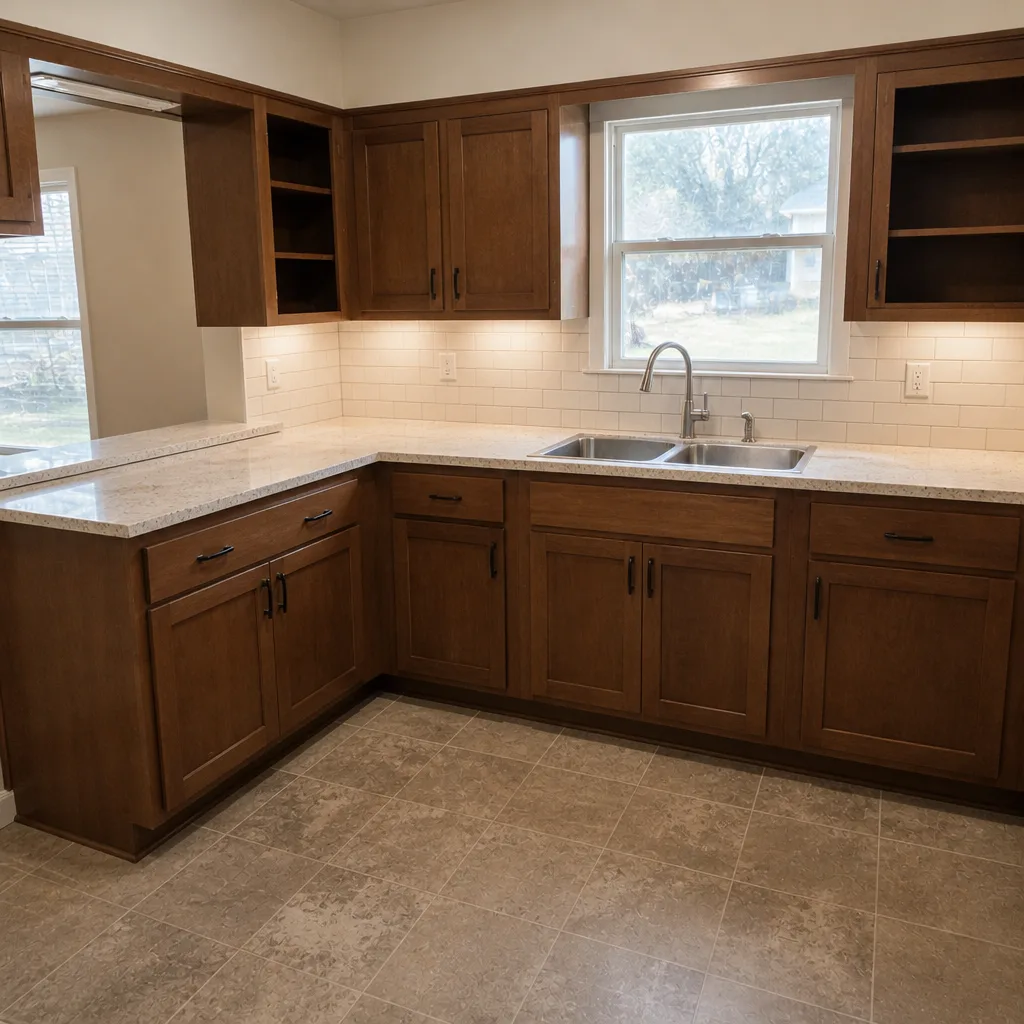
See the difference
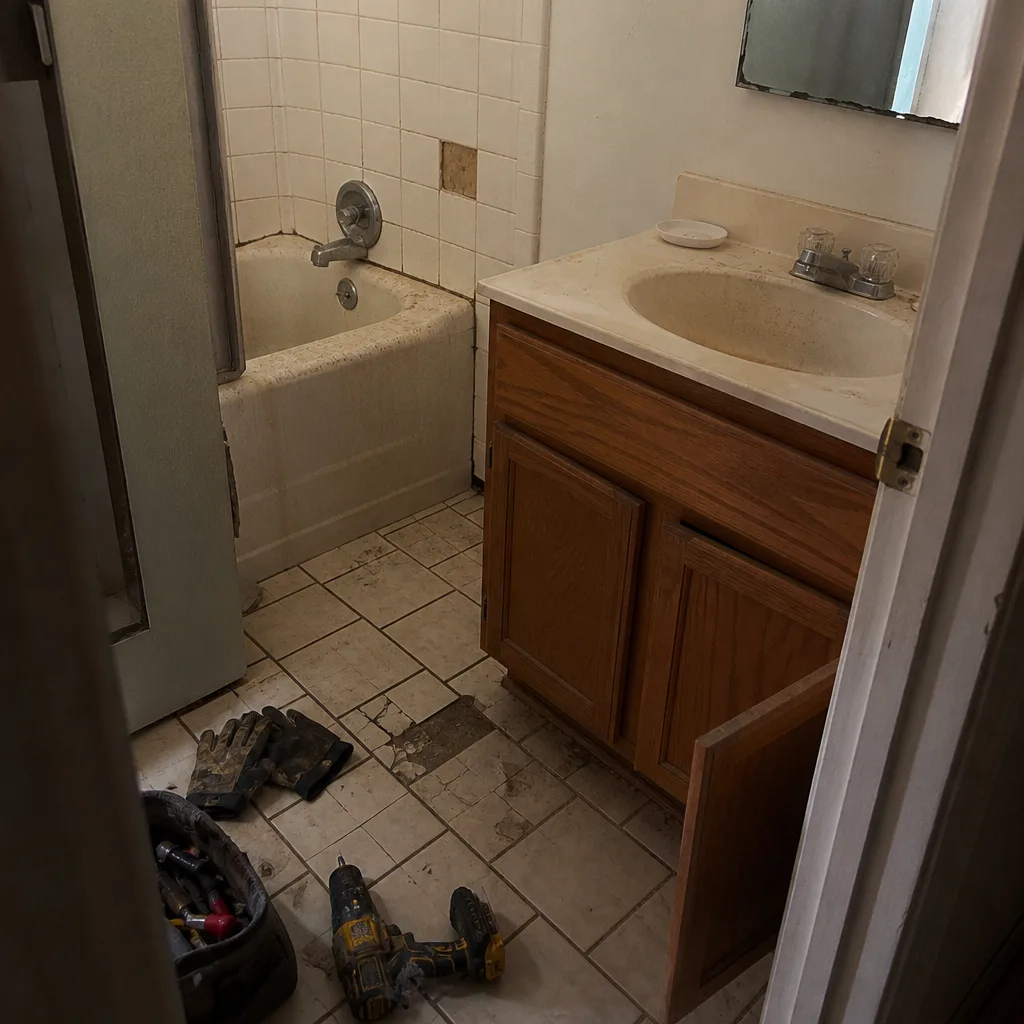 Before
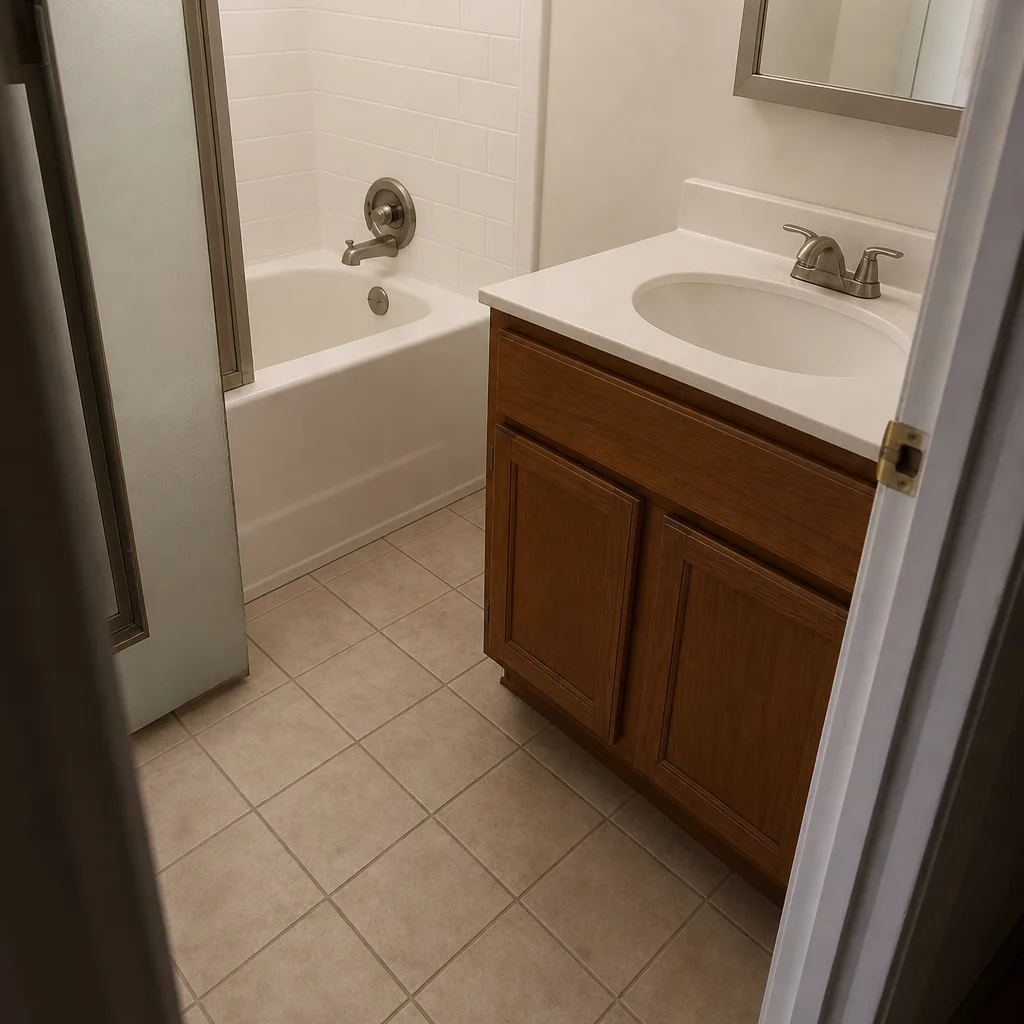 After
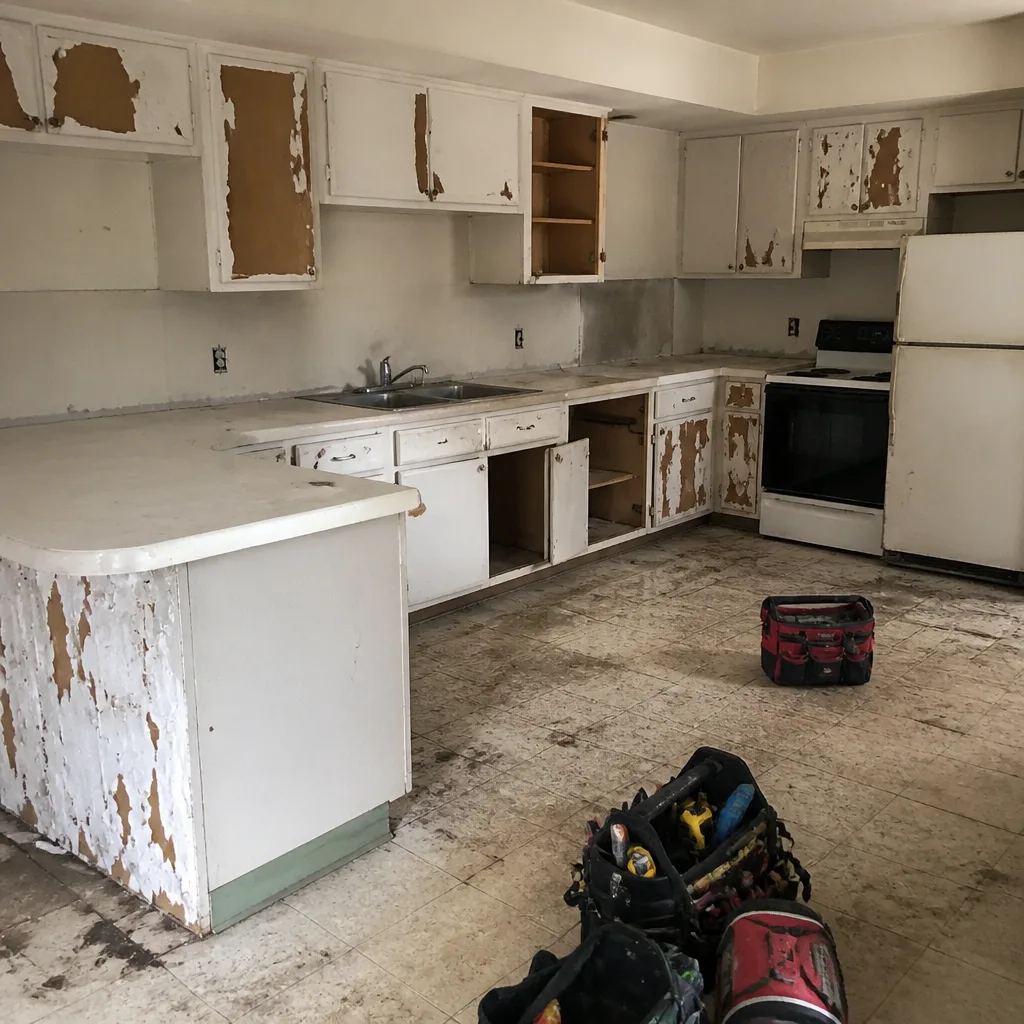 Before
 After
 Before
 After
When to Call a Professional
Some maintenance is DIY-friendly: filter changes, caulk inspection, GFCI button tests, cabinet hardware tightening. Other tasks should not be handled alone. Call a licensed professional if you find water staining below a bathroom or along a wall after rain, if a crack in drywall or foundation is longer than a few inches or growing, if a breaker trips repeatedly, if a shower valve is dripping behind the wall, or if any roof work is needed. Bradford Remodeling Co Denton offers free estimates in Denton – call (844) 651-3175 to schedule yours. We’ll give you a written price before any work starts, backed by the 365-Day Done Right Promise. Our technicians have up to 22 years of experience with handoff inspection and repair.
Frequently Asked Questions

Once a year, minimum. Inspect the HVAC-to-drywall seam before cooling season and the roofing-to-framing flashing after the first heavy rain of spring. Plumbing-to-tile seams are visual: check the ceiling below each bathroom annually for staining. If you’re in Denton and you’ve had a recent remodel, call (844) 651-3175 to schedule a free estimate for a handoff inspection.
Yes. Watch foundation movement quarterly and monitor door sticking and new drywall cracks. Denton’s expansive clay moves most in late summer after a wet spring, so run soaker hoses along the foundation during August and September. If a crack grows over 60 days, call a structural engineer.
Workmanship defects and material failures under normal use, with a named correction window and a remedy. Bradford’s 365-Day Done Right Promise gives a full year of written coverage; if work fails inside that window, we return and correct it at no charge. Normal wear – faded paint, cracked caulk, grout discoloration – is not a guarantee issue. Ask any contractor for the guarantee terms in writing before you sign.
No. Flush the sediment trap every six months and watch for pump noise or short-cycling. Hard water in North Texas scales recirculation loops faster than in softer-water regions. If the line runs under slab, watch for hot spots on the floor – those indicate a failing line and warrant an immediate call.
Contact the contractor who did the work. Most keep a file. If the file is gone, a licensed GC or home inspector can reconstruct a rough version. Bradford keeps documented files on every project for its Denton clients and can walk you through yours. Call (844) 651-3175.
The workmanship warranty covers the contractor’s installation – the tile-set, the flashing lap, the drywall hang. The manufacturer warranty covers the product itself – a shingle blonding, a faucet cartridge failure. Keep both. If a claim is disputed, having both in writing matters. The brands we install – GAF, James Hardie, Therma-Tru, KraftMaid, Cambria, Kohler, Moen, and others – come with traceable manufacturer specs that back our own 365-Day Done Right Promise.
The Bottom Line
Post-renovation maintenance comes down to four habits: a monthly filter and hood check, a quarterly foundation and flooring inspection, a twice-a-year flashing and caulk walk, and an annual handoff inspection with your as-built documentation in hand. The trade handoffs – HVAC-to-drywall, plumbing-to-tile, roofing-to-framing – are where homes fail first, and those points need a real inspection once a year. Keep your written guarantee separate from normal wear. Plan for it. When you need a handoff repaired or a full rework, call Bradford Remodeling Co Denton at (844) 651-3175. Free estimates, written price before work starts, and a 365-Day Done Right Promise that holds for a full year. You can also explore our Kitchen Remodeling in Denton and Bathroom Remodeling in Denton pages for post-project maintenance guidance specific to those rooms.
Written by the team at Bradford Remodeling Co Denton.