Last updated November 17, 2026








Free written scope consultation - allowances, timeline, and change-order rules on paper before a single trade is scheduled
General Contractor Warning Signs Every Homeowner Should Know
Here’s a fact that unsettles most people shopping for a remodeler: the contractor with the best reviewed profile in your area might be the same one with a lien filed against a homeowner three counties over. Those two records live in separate databases, and almost nobody checks both. In our experience across Denton, the warning signs that actually predict a bad outcome are not in the contractor’s attitude or star rating. They’re in the contract language, the payment structure, and the permit conversation. This guide teaches you to audit documents rather than personalities.
Quick Answer
The most reliable warning signs of a bad general contractor are vague scope language in the written contract, a front-loaded payment schedule that isn’t tied to inspection milestones, reluctance to pull permits, unverifiable subcontractors, and a “guarantee” with no written term or remedy. Check the contractor’s TDLR license status, county lien records, and complaint history before you sign. A confident sales pitch tells you almost nothing; a written price, a permit trail, and a guarantee with teeth tell you most of what you need.
Styles & brands we work with
- Kitchen remodeling
- Bathroom remodeling
- Home additions & ADU
- Roofing
- Windows & doors
- Driveway & pavers
- Fence
Table of Contents
- Run the Three Checks Before You Sign
- What a Payment Schedule Reveals About a Builder
- Scope-of-Work Gaps That Generate Change Orders
- How to Read a Contractor’s Subcontractor Relationships
- The Permit Conversation That Separates Pros From Pretenders
- Guarantee Language: Real Coverage vs. a Promise That Dissolves
- Why Denton Homeowners Face Specific Risks
- Common Mistakes to Avoid
Run the Three Checks Before You Sign
Most homeowners check one thing: reviews. That’s the least revealing of the available records. Run these three checks in order, and keep notes. Each one surfaces something different, and together they give you a picture no single review site can.
- Texas TDLR license check. The Texas Department of Licensing and Regulation maintains a public database of licensed professionals and complaint records. Search the contractor’s legal business name, not the trade name on the truck. What it reveals: whether the license is active, whether it was ever revoked, and whether formal complaints were filed and how they were resolved. A contractor operating without a required license is a hard stop.
- County lien search. Denton County deed records show mechanic’s liens filed against properties. Search the contractor’s business name and any principals listed on the contract. What it reveals: whether the contractor has a history of unpaid subcontractors or suppliers filing liens on homeowners’ properties. A lien filed against a past customer’s home usually means the contractor didn’t pay the trades, and the homeowner absorbed the loss.
- BBB complaint history. The Better Business Bureau isn’t a ranking system, but it tracks complaint patterns. What it reveals: how the contractor responds to disputes. A single old complaint with a documented resolution is less concerning than a cluster of unanswered complaints in the last twelve months.
None of these checks takes more than twenty minutes total. In Denton, where remodeling demand has stayed steady and the pool of licensed contractors is smaller than the pool of people advertising, that half hour is the highest-return diligence you’ll do.
What a Payment Schedule Reveals About a Builder
The payment schedule is the clearest read on a contractor’s finances and intentions. A well-built schedule ties your money to completed, inspected milestones. A badly built one moves cash toward the contractor before the work follows.
- Front-loaded draws. A request for 30% to 50% before demolition even starts is a warning. That money funds the contractor’s operations, not your project. If the contractor walks, you’ve paid for work that doesn’t exist.
- Cash-only requests. “Cash saves us the card fee” is a reprice waiting to happen. There’s no record of payment, and disputes become your word against theirs. Legitimate contractors take checks and cards.
- No milestone tie. Payment should be released at defined points: rough-in complete, inspection passed, drywall hung, final walkthrough. If the schedule lists percentages with no reference to inspections, the contractor controls the entire cash curve.
- Large final balloon. A final payment bigger than 10% to 15% of the contract, held until completion, protects you. If the contractor resists a meaningful holdback, ask why.
We put a written price in front of every homeowner before any work begins, and the payment schedule in that document maps to milestones you can verify. That’s not a sales technique. It’s the discipline that keeps a job from becoming a negotiation at the door.
Scope-of-Work Gaps That Generate Change Orders
An intentionally vague scope is the most profitable document in construction. Every gap becomes a change order priced under pressure, once the walls are open and you have no leverage. Read for what’s missing, not just what’s listed.
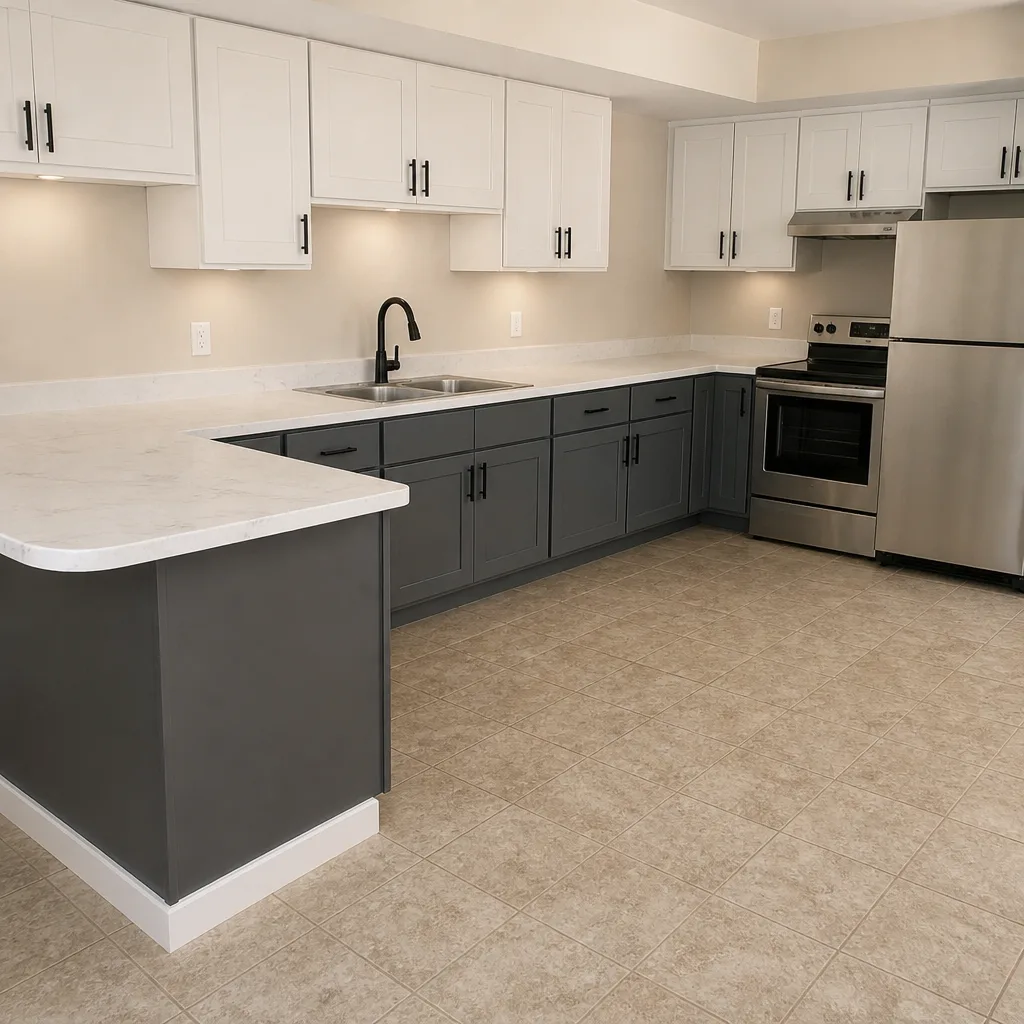
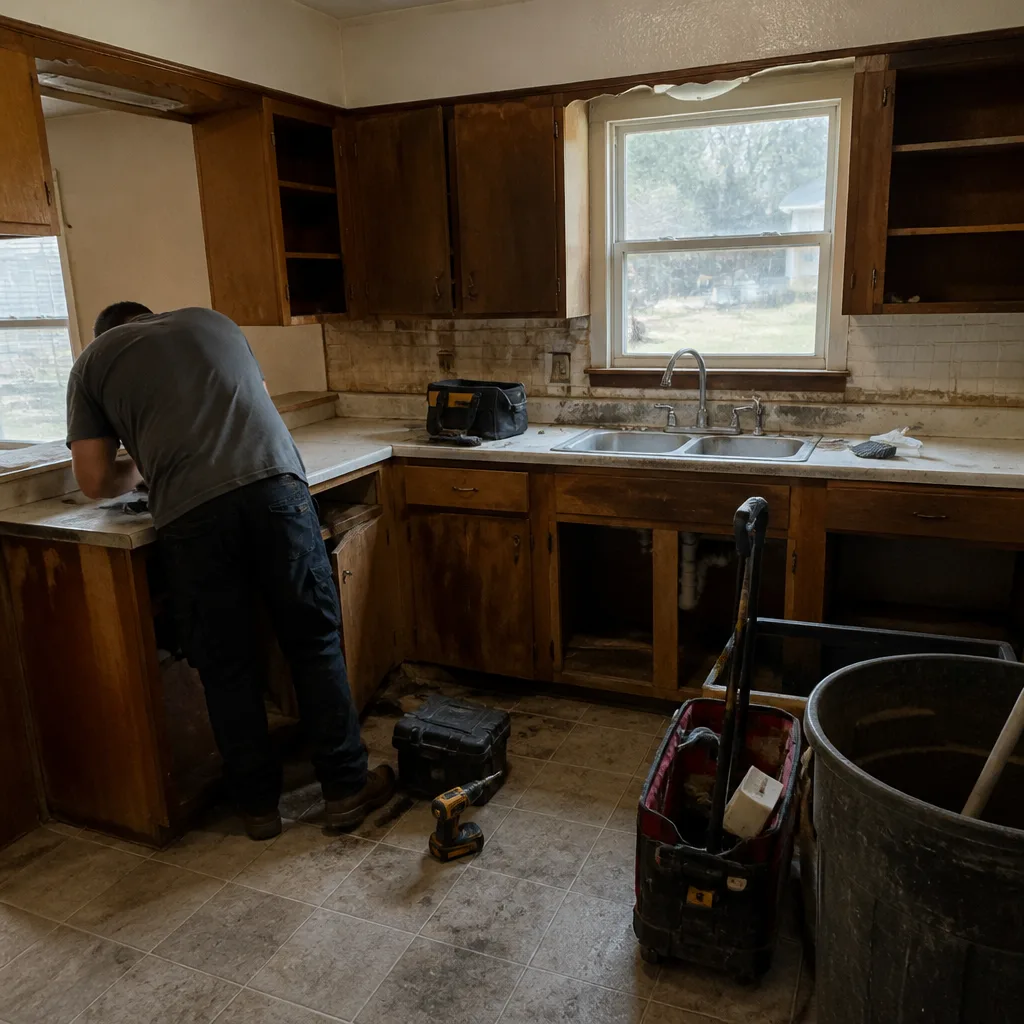
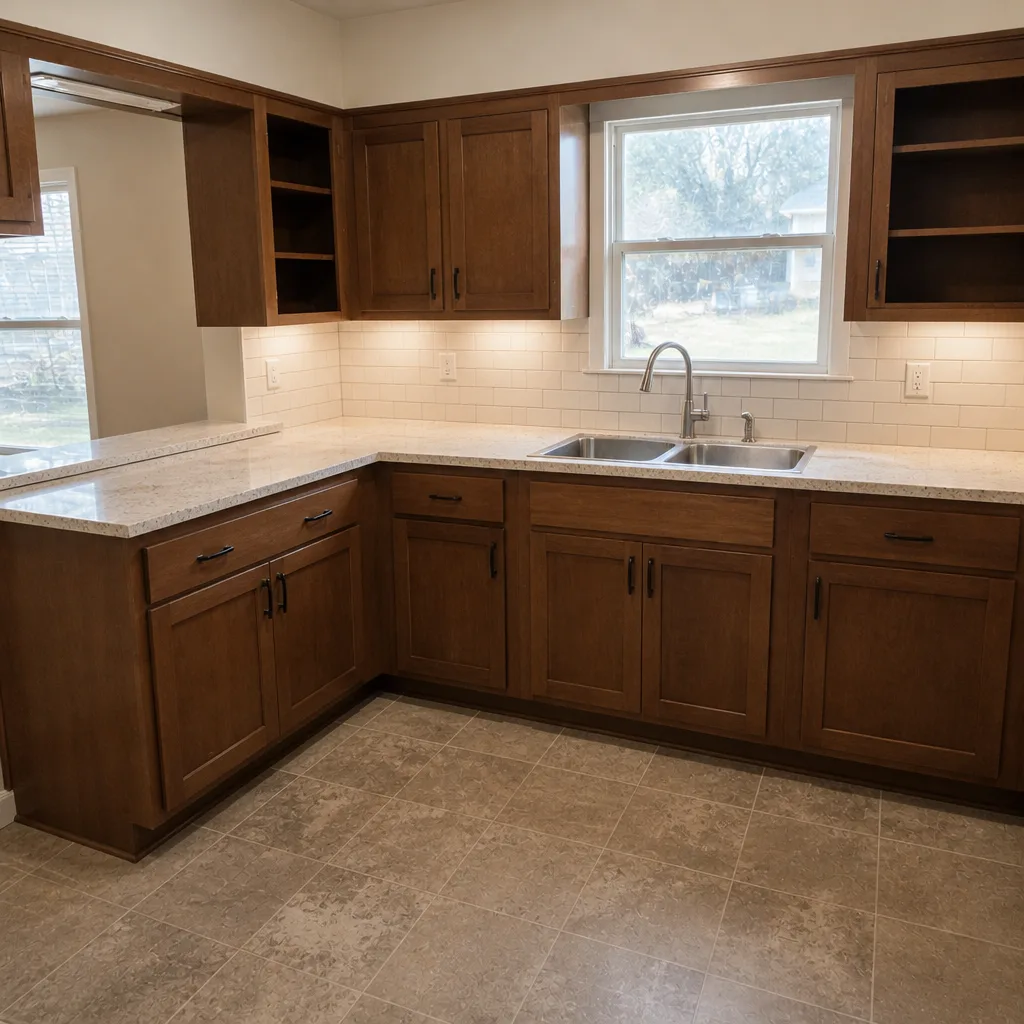
Watch for a one-page contract on a kitchen remodel. A properly written scope spells out the substrate, what’s behind the drywall, and how surprises will be handled. A vague one says “install cabinets and countertops” and stops there.
- No demolition-and-disposal line. Who hauls off the old materials, and where does it go?
- No substrate language. What happens if the subfloor under the tile is rotten? Is that covered or a change order?
- No allowance definitions. An allowance means “budgeted, may adjust.” A vague allowance with no cap is where budgets break.
- No finish schedule. Which brand and model of faucet, which cabinet line, which paint sheen? A contract that names brands you can look up is traceable. One that says “premium fixtures” is not.
- No inspection-and-contingency language. Who pays if the city inspector requires a correction?
A sharp scope document names KraftMaid cabinetry and Cambria surfaces or it names nothing at all. In a Denton kitchen, specifying products by brand and model keeps the finish schedule honest and keeps your change orders for genuine surprises, not items that were deliberately left out.
How to Read a Contractor’s Subcontractor Relationships
Your general contractor likely won’t do the electrical, plumbing, or drywall personally. What matters is whether the subs are verified as licensed and insured, or just whoever answered the phone that week. The contract should state that every sub will be verified before working on your property.
Ask the right questions:
- “Which trades will be on this job, and who are your subs for each?”
- “Will you provide certificates of insurance for every sub before they start?”
- “How long have you worked with each of these crews?”
- “If a sub’s work fails, who’s on the hook for fixing it?”
Long-running relationships are a good sign because the contractor has a reputation to protect with a specific plumber or electrician. A rotating cast means the contractor is price-shopping at your expense. We work with a documented roster of name-brand materials, from GAF roofing to James Hardie siding to Therma-Tru doors. Specifications that can be looked up and verified are the same specifications that can be fixed if something goes wrong.
If the answer to any of these questions is a shrug, that’s your sign. A contractor who can’t name the subs on your job hasn’t built the job yet.
The Permit Conversation That Separates Pros From Pretenders
Asking “who pulls the permits?” is a fast way to sort contractors. State law and city code require permits for structural, electrical, plumbing, and mechanical work. A contractor who dodges permits is either cutting corners or hasn’t kept current with local code.
Denton follows the current adopted building code, and the inspection process exists to protect the homeowner, not the contractor. A short list of what a permit pulls in:
- Inspection milestones. Rough-in inspections verify the work is correct before drywall covers it. That protects you.
- Accountability. The permit creates a record with the city, which makes the licensed contractor responsible for a code-compliant outcome.
- Resale protection. Unpermitted work discovered at inspection during a sale is expensive to fix, and buyers negotiate hard against it.
“We don’t need a permit for this” is accurate on some minor jobs and a red flag on most major ones. If you’re replacing a kitchen’s plumbing and electrical or opening a load-bearing wall, the permit is non-negotiable. Ask the contractor to show you the permit number once it’s pulled, and confirm the inspection results live in the city’s portal before the project closes. If you’re exploring a General Contractor in Denton for a larger project, ask the same question at the first meeting.
Bradford Remodeling works by the book: permits are pulled and inspections passed on every job that requires them, and the paperwork ends up in the homeowner’s hand at close, alongside the written guarantee.
Guarantee Language: Real Coverage vs. a Promise That Dissolves
“We guarantee our work” is a sentence without meaning until you find the term and the remedy. Real coverage names what’s covered, how long, and what happens if it fails. A guarantee that dissolves the day you sign the final check isn’t a guarantee.
Read the written guarantee against these questions:
- How long is the written term? “Lifetime” is emotional; a specific window is measurable.
- What does the remedy say? Repair at no charge is real coverage. “We’ll discuss it” is not.
- Does it survive labor or material failure? A guarantee that only covers a manufacturer’s warranty leaves the labor cost on you.
- Is the guarantee in writing and in your hand at close? A verbal promise is worth what you paid for it.
We put a free return visit in writing on every project: if the work fails within the guarantee period, we come back and correct it at no charge. That’s the 365-Day Done Right Promise, and it’s the same question we’d ask any contractor we hired for our own homes.
Why Denton Homeowners Face Specific Risks
Denton’s clay soils shrink and swell with the seasons, and that movement works its way into every remodeling decision. Foundations in older neighborhoods shift, which means door frames go out of square and tile cracks along the subfloor. Reputable contractors account for that in the substrate and framing stages. A contractor who writes a one-page scope for a Denton bathroom and skips foundation-prep assumptions is setting your budget up to break six months in.
Denton also has older housing stock mixed with fast new construction on the edges. A kitchen in an established neighborhood may have plumbing and wiring that doesn’t match current code, and that’s where an intentionally vague scope becomes a runaway change order. Ask specifically how the contractor handles “surprises behind the wall.” A serious answer is a written contingency and a schedule that proves it. A vague answer is a contract that means “we’ll deal with that later.”
And check the brand roster. In our experience, Denton homeowners who ask about specific products like Belgard or Unilock hardscape and name-brand exterior products end up with fewer disputes, because the materials are traceable and the manufacturer’s warranty backs up the written guarantee. Compare what a contractor has written down against what actually appears on the job. If the gap is wide, the gap will only widen once the walls come down.
That’s where The Garrison Standard shows up in practice: written prices, inspections passed, and a written guarantee at close. If you’re comparing Kitchen Remodeling in Denton options right now, use the same questions on every bidder. You can see how we run it on our Bradford Remodeling Co Denton home.
Common Mistakes to Avoid
- Skipping the lien search. Most Denton homeowners check reviews and skip county deed records. A lien history on a contractor’s past jobs is the fastest way to spot a cash-flow problem in progress.
- Paying too much upfront. A 40% deposit before demolition is a red flag, not a discount. Tie payments to inspection milestones and hold back the final 10% to 15% until completion.
- Accepting a one-page scope. Vague contracts cost more, not less. Name the materials, the substrate, and the finish schedule in writing.
- Not asking about subs. Unverified subcontractors can carry no license and no insurance, which puts the property and the schedule at risk. Ask for certificates of insurance before any crew shows up.
- Taking the “we don’t need a permit” shortcut. Unpermitted work can be discovered at resale and is expensive to correct. Confirm the permit and the inspection results in the city’s portal.
- Trusting a verbal guarantee. A guarantee with no written term and no remedy is a courtesy, not coverage. Get it in writing and in hand at close.
- Hiring on attitude alone. A friendly contractor with vague documents is riskier than a businesslike one with clear paperwork. Audit the documents, not the personality.
See the difference
 Before
 After
 Before
 After
 Before
 After
When to Call a Professional
If your project touches structural framing, electrical, plumbing, or gas, call a licensed professional and don’t open the wall yourself. Confirm permits and inspections are part of the written scope, and read the guarantee before signing anything. If you’re on a Bathroom Remodeling in Denton project and the contractor can’t name the substrate assumptions in writing, that’s the moment to get a second written estimate. Bradford Remodeling Co Denton offers free estimates in Denton that spell out the price, the permit path, the brand roster, and the 365-Day Done Right Promise before any work begins. Call (844) 651-3175 to schedule your free estimate.
Frequently Asked Questions

An intentionally vague written scope tied to a front-loaded payment schedule. That combination lets a contractor move money before the work lands and guarantees a change order once demolition exposes what’s behind the wall. Vague documents cost more over a project than a slightly higher but tightly written bid.
Search the contractor’s legal business name in the Texas Department of Licensing and Regulation public database, not the trade name on the truck. Look at license status, any revoked status, and formal complaints. Then check county deed records for liens and the Better Business Bureau for complaint patterns. Each check takes minutes and reveals different risks. Call (844) 651-3175 for a written estimate if you’d like to compare.
Payments should tie to completed milestones: rough-in, passed inspection, drywall, final walkthrough, with a final holdback of 10% to 15% until completion. Front-loaded deposits, cash-only requests, and schedules that don’t reference inspections are the three warning signs to watch. Get the schedule in writing before signing.
If the project moves electrical, plumbing, or load-bearing structure, yes. Denton requires permits for that scope, and inspections verify the work before it’s covered. A contractor who dodges the permit is a risk to your resale. Call (844) 651-3175 for a free estimate that includes the permit path.
A written guarantee needs three things: a specific term in months or years, a stated remedy, and a document in the homeowner’s hand at close. “We stand behind our work” without those three items is a courtesy. Bradford’s 365-Day Done Right Promise commits to returning and correcting the work at no charge if it fails within the guarantee period.
Ask which subcontractors will work on the job, and request certificates of insurance for each before they start. A contractor with long-running relationships can name the crews and the trades. One who “uses whoever’s available” can’t. That difference shows up in the finish quality and in who fixes the work if it fails.
The Bottom Line
The warning signs that matter live in the contract, the payment schedule, the permit conversation, and the guarantee language, not the star rating or the sales pitch. Check the TDLR, the county lien records, and the BBB complaint history. Read the payment schedule against inspection milestones. Confirm the scope names the materials, the subs, and the permit path. Read the guarantee for its term and remedy. Do those four things, and you’ve done more diligence than most homeowners ever attempt, no matter how many reviews a contractor collected. Then hire the one whose documents hold up under all four checks. Call (844) 651-3175 for a free estimate in writing.
Written by the team at Bradford Remodeling Co Denton.