Last updated November 17, 2026








Free written scope consultation - allowances, timeline, and change-order rules on paper before a single trade is scheduled
General Contractor Troubleshooting: Common Problems and How to Fix Them
A general contractor who disappears after the framing inspection usually isn’t a character problem. It’s a payment-schedule problem. If 90% of his draw was released before 90% of the work was done, you wrote the exit ramp into your own contract. That’s the pattern we’ve watched play out across Denton more times than we can count, and it points at something most homeowners miss: the disasters that show up mid-project are rarely construction failures. They’re contract failures that walked onto a jobsite wearing a hard hat. This guide maps the most common mid-project problems back to the exact document gap that caused them, so you know what to demand in writing before a single tool comes out.
Quick Answer
Most mid-project contractor problems in Texas trace back to one of four contract gaps: a payment schedule tied to dates instead of milestone inspections, no written change-order process, a vague definition of “substantial completion,” and missing lien waivers at each draw. Fix the contract before work starts and you remove the conditions for most disasters. When you’re already mid-project and things are going sideways, the same four items tell you exactly where the leverage sits.
Styles & brands we work with
- Kitchen remodeling
- Bathroom remodeling
- Home additions & ADU
- Roofing
- Windows & doors
- Driveway & pavers
- Fence
Table of Contents
- How to diagnose a mid-project delay before you react
- The payment schedule: where projects actually fall apart
- Lien waivers in Texas and when to demand one
- What “substantial completion” really means in Texas
- How to document defective work so a claim holds up
- The five contract clauses that prevent the worst disputes
- Common mistakes to avoid
- Frequently asked questions
How Do You Diagnose a Mid-Project Delay Before You React?
First, find out which kind of delay you’re in, because each one takes a different response. Treating a cash-flow problem like a scheduling problem is how homeowners pour good money after a contractor who’s already underwater. In our experience around Denton, the three categories look like this:
- Scheduling failure. The crew is working somewhere else, subs are double-booked, or the GC over-promised start dates. Symptoms: no materials on site, no one shows for days, but the GC answers the phone and stays in touch.
- Material lead-time issue. Custom cabinetry, special-order windows, or a stone slab is genuinely back-ordered. Symptoms: the GC can show you order confirmations and a ship date. Lead times on premium brands like KraftMaid or Cambria can run weeks, and that’s real, not an excuse.
- Cash-flow problem. The GC is using your draw to pay off a previous job. Symptoms: pressure for early or larger draws, subs asking you directly if they’ve been paid, suppliers calling the homeowner, and sudden silence.
The cash-flow category is the dangerous one. If subcontractors or a lumber yard start contacting you about unpaid invoices, that’s a red flag worth a hard conversation and a demand for lien waivers. A delay that comes with clear order confirmations and consistent communication is usually just time. A delay that comes with silence and money pressure needs you to stop releasing funds immediately.
Why Is the Payment Schedule Where Projects Actually Fall Apart?
The payment schedule is the load-bearing wall of your whole contract. Get it wrong and nothing downstream can save you. The single most common mistake is releasing a large deposit and then a big second draw that together cover most of the price before the work has caught up to it. When a GC already has your money, his incentive to finish your job drops below his incentive to start the next one.
Build the schedule around completed and inspected milestones, not calendar dates. A disciplined schedule reads something like this:
- Small mobilization deposit – enough to order materials, not enough to fund his next job.
- Draw when rough framing, plumbing rough-in, and electrical rough-in pass municipal inspection. In Denton, city inspections on structural and rough-in stages are your trigger. No inspection, no money.
- Draw at drywall and finish stage – after cabinets or fixtures are on site and installed, verified by your own walk-through.
- Final draw only at substantial completion – with a signed lien waiver in hand.
Never let more than a modest percentage of the total contract be paid before the corresponding work is actually done and, where code requires it, inspected. That one rule is the reason so many Denton projects finish instead of stalling out. When you work with us, the written price comes before any work starts and the draw schedule ships with it, so there’s never a number that moves at the door.
Lien Waivers in Texas and When to Demand One
A lien waiver is a document where a contractor or supplier gives up the right to file a mechanics lien against your property. Texas takes these seriously, and the forms are statutory: there are specific conditional and unconditional waiver templates the state recognizes, and using the wrong one can leave you exposed. Demand a conditional waiver at every single payment milestone – conditional means the waiver only takes effect once your check actually clears.
Here’s how to sequence them so you stay protected:
- At each draw, collect a conditional waiver from the GC for the amount you’re paying.
- Also collect waivers from key subs and the material supplier for the work and materials covered by that draw – the GC’s waiver alone doesn’t clear the subs’ rights.
- Hold the waiver until your check clears; the condition handles the timing.
- At the final payment, collect unconditional final waivers from everyone who touched the job.
This is the part homeowners skip because it feels bureaucratic, and it’s exactly how a paid-in-full homeowner in Denton still ends up with a subcontractor’s lien on her house months later. If a GC won’t provide statutory waivers, that’s information: it tells you who he owes and how thinly he’s operating.
What Does “Substantial Completion” Actually Mean in Texas?
Substantial completion is the legal threshold where the work is complete enough to be used for its intended purpose, even though a punch list of minor items remains. In Texas this definition matters because it triggers timelines, warranty periods, and the release of your final payment. It is not “the day the crew leaves,” which is what many contractors will tell you at the door.
The gap between the two is where disputes live. A GC who declares substantial completion to get final payment, before the punch list is closed, has effectively moved your remaining money into his pocket with your leverage gone with it. What you want in writing:
- A clear list of what counts as substantial completion (systems functional, inspections passed, a defined punch list attached).
- Final payment released after a documented walk-through and a signed punch list, not before.
- A written date by which the punch list is closed.
We ask homeowners to hold a defined final payment until the punch list is signed off and the site is clean, because that’s when the job is genuinely squared away: documented scope, clean site, signed guarantee in hand. It also keeps everyone honest about what “done” means.
How Do You Document Defective Work So a Claim Holds Up?
Defective-work claims fail for one boring reason: the homeowner documented feelings instead of facts. To make a demand letter or warranty claim stick, build a file a judge or an adjuster can read without you in the room.
- Photograph and date everything. Wide shot for context, close shot for the defect, and a scale reference. Write the date and location on each.
- Note the trade standard and the referenced spec. If the manufacturer’s install instructions for GAF roofing or James Hardie siding weren’t followed, quote the section that was violated.
- Record the timeline in writing. Emails, texts, and a running log of dates, names, and what was promised. A paper trail beats a phone call you can’t reproduce.
- Get a third-party inspection where safety or structure is involved, so the finding isn’t your word against his.
- Send a written demand that states what’s wrong, what specific remedy you want, and a reasonable deadline, then keep a copy.
That file is also what triggers a written guarantee. Your claim is only as strong as what the contract and the manufacturer’s spec actually promise, which is why we hand over a signed, written guarantee on every completed project – so the terms of a fix are never up for debate after the fact.
What Contract Clauses Prevent the Five Worst Mid-Project Disputes?
Put these five clauses in writing and you cut off the disputes we see most often across Denton. They’re not exotic; they’re standard discipline.
- A milestone-based payment schedule tied to inspections and completed work, not dates – this kills the vanish-after-framing scenario.
- A written change-order process with a price and signature required before any extra work, so nobody reprices at the door mid-project.
- A defined substantial-completion standard with the punch-list process spelled out, so final payment isn’t released early.
- A lien-waiver requirement at every draw for the GC, key subs, and suppliers.
- A written workmanship warranty with a named period and a clear remedy, so a defect has a defined path to correction rather than a dispute.
That last one is central to how we operate. Every completed project we deliver carries the 365-Day Done Right Promise: if the work fails inside that window, we come back and correct it at no charge. A full year of coverage is worthless if it isn’t written down and tied to a specific remedy, so we make the terms plain on paper before day one.
More Troubleshooting Scenarios We See in Denton

Denton has its own patterns. The mix of older homes near the Square, the constant new development pushing out toward Argyle and Sanger, and the flat, clay-heavy soil that moves with summer heat and drought all shape what goes wrong. A few problems we troubleshoot here that a generic guide won’t mention:
- Subs going quiet after rough-in. Almost always a cash-flow symptom. Check whether the framing or mechanical subs have been paid before you release the next draw.
- Scope creep with no change order. An in-progress kitchen grows a “while we’re in there” bathroom, and the price drifts with no paper. A written change order stops the drift.
- Storage and protection failures. Materials sitting in an open garage through a Denton storm, cabinets warped before install. The spec says what to do; protection is on the contractor.
- Window and door sourcing delays. Ordering premium units from CWS or ES Windows without confirming the lead time shows up as a “scheduling problem” that was really a procurement miss.
If you’re hiring a contractor for a full remodel and want a sense of how a disciplined scope looks from the start, our Bradford Remodeling Co Denton page lays out how we work, and the General Contractor in Denton service details the written-price, fixed-scope approach that heads off most of these disputes.
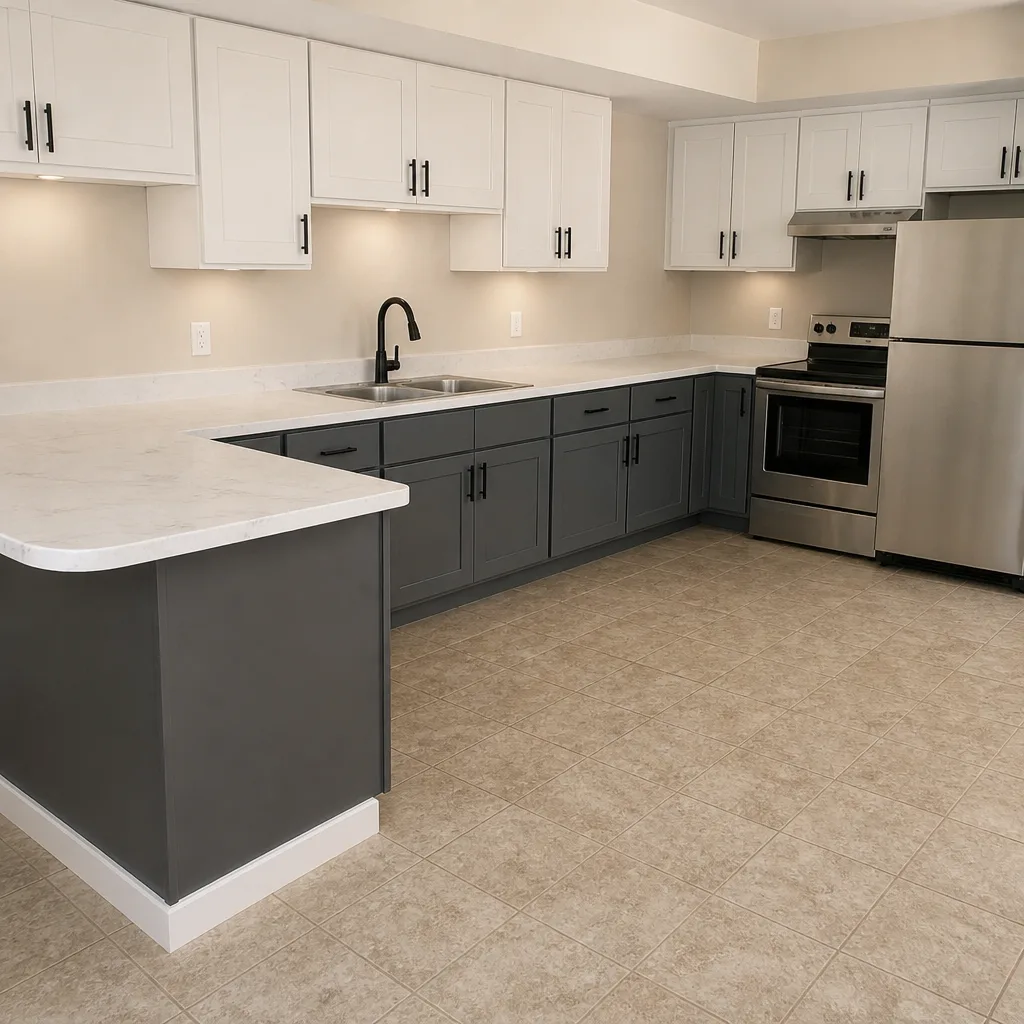
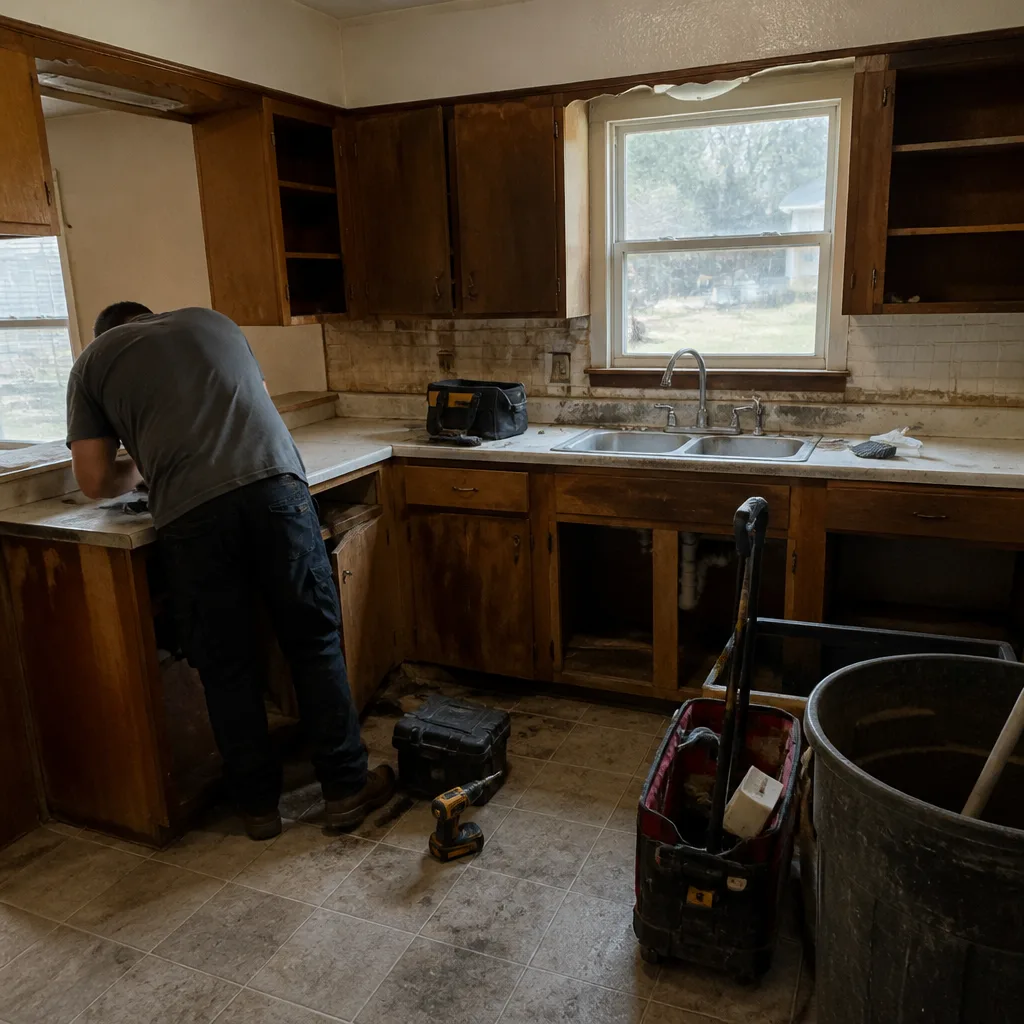
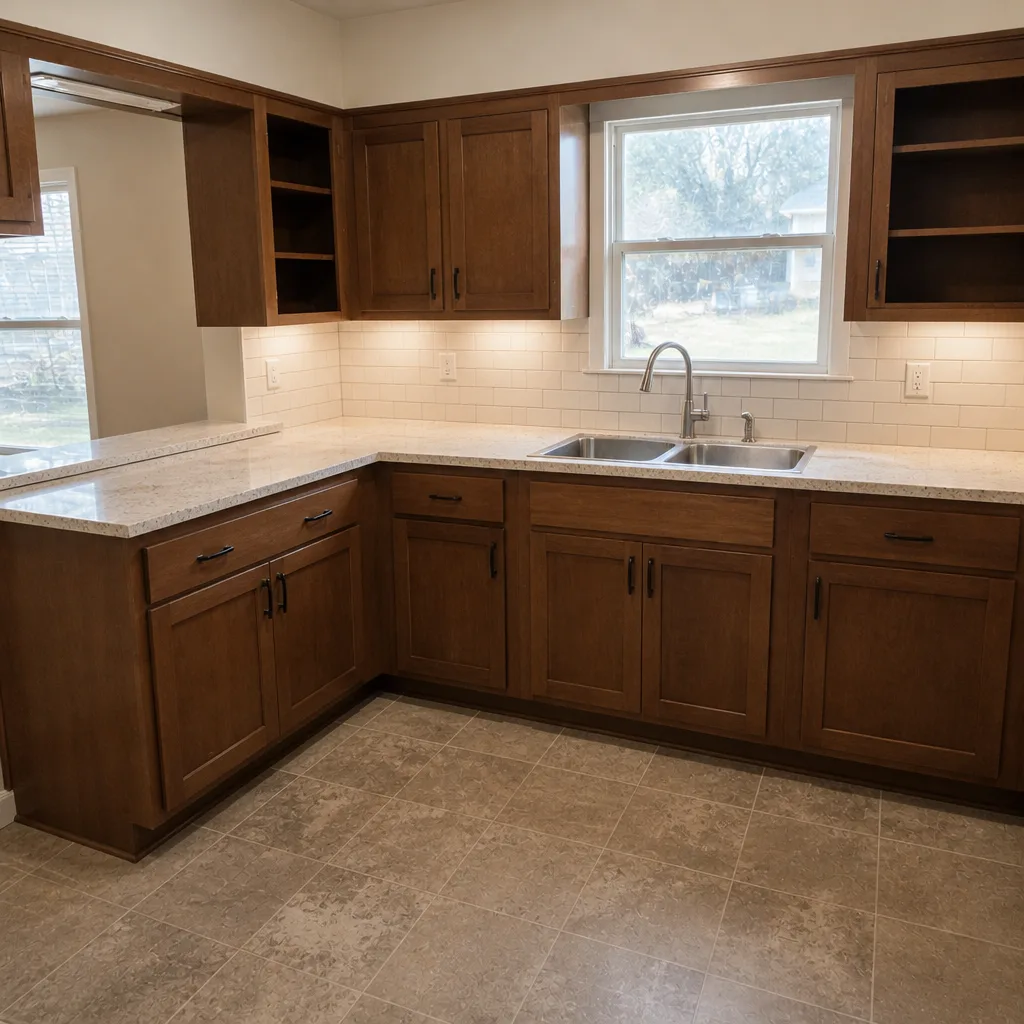
See the difference
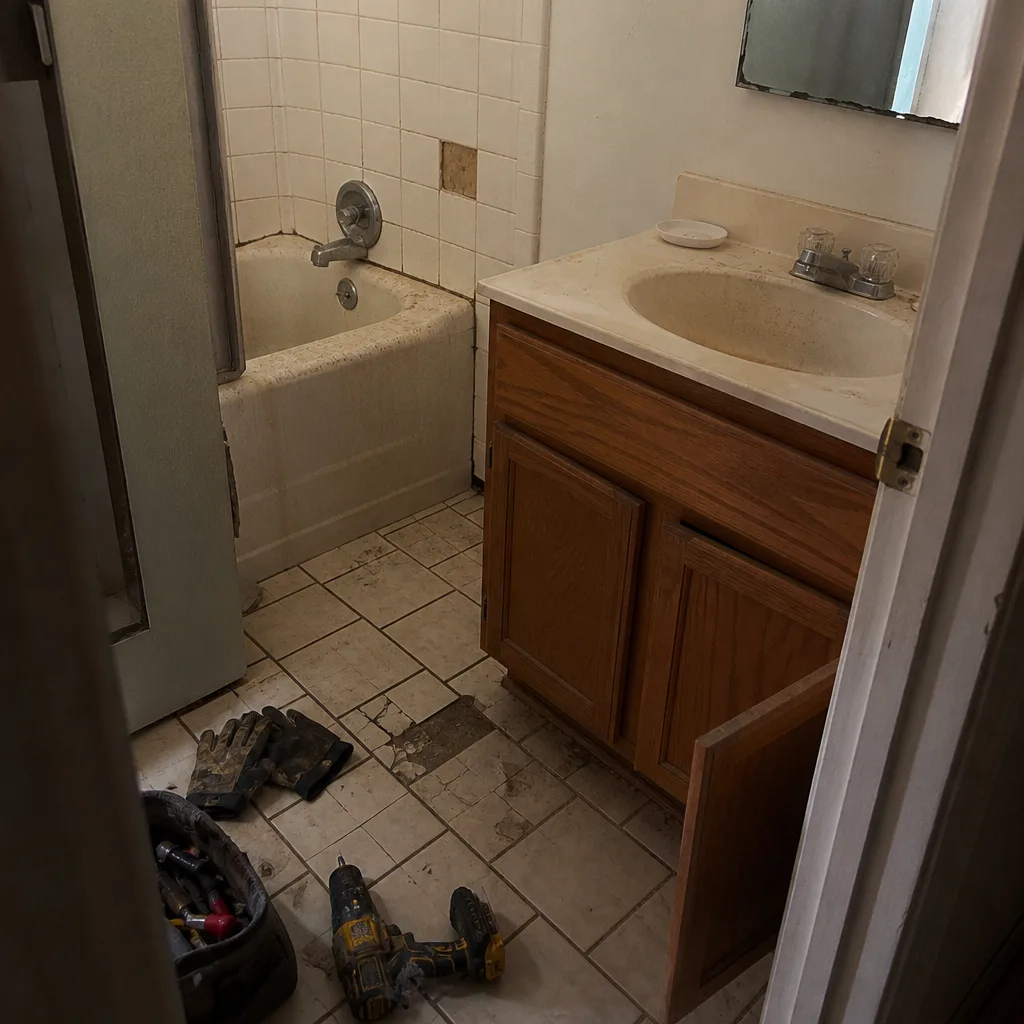 Before
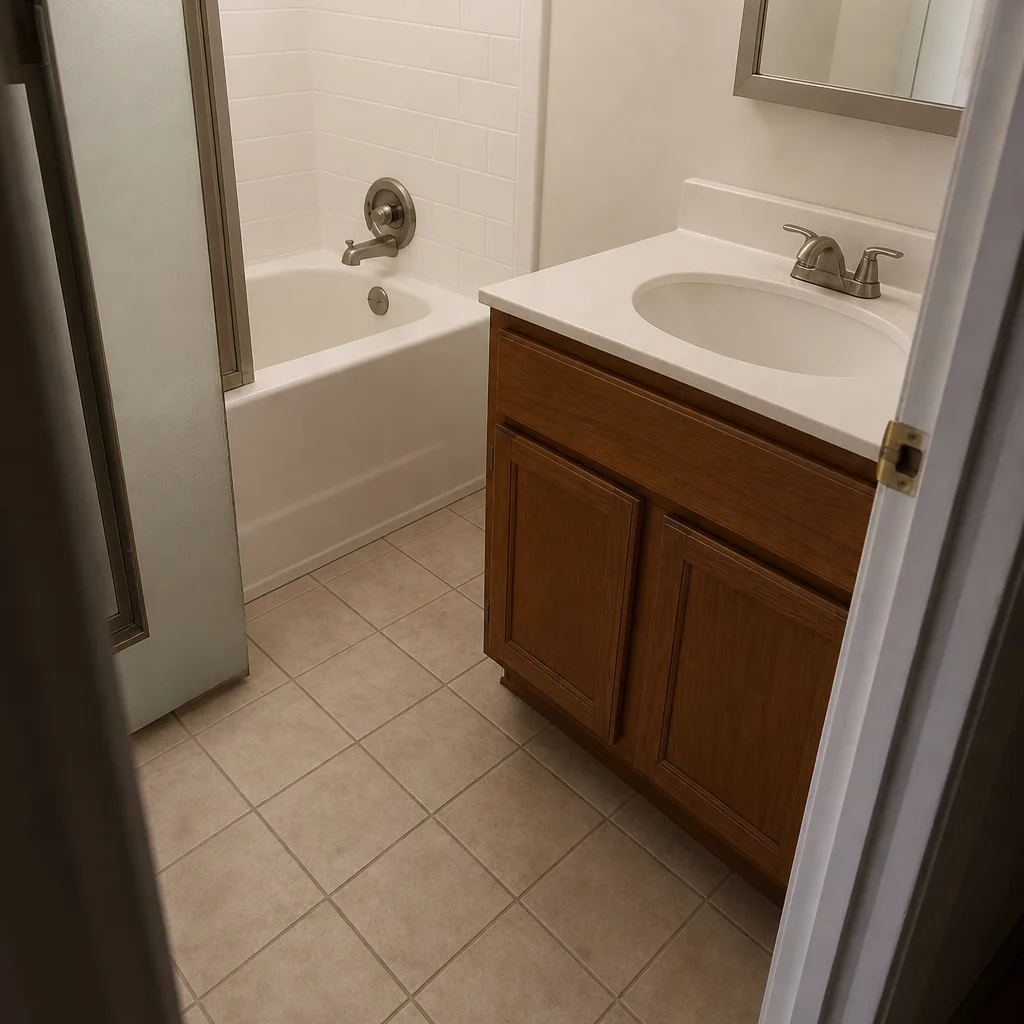 After
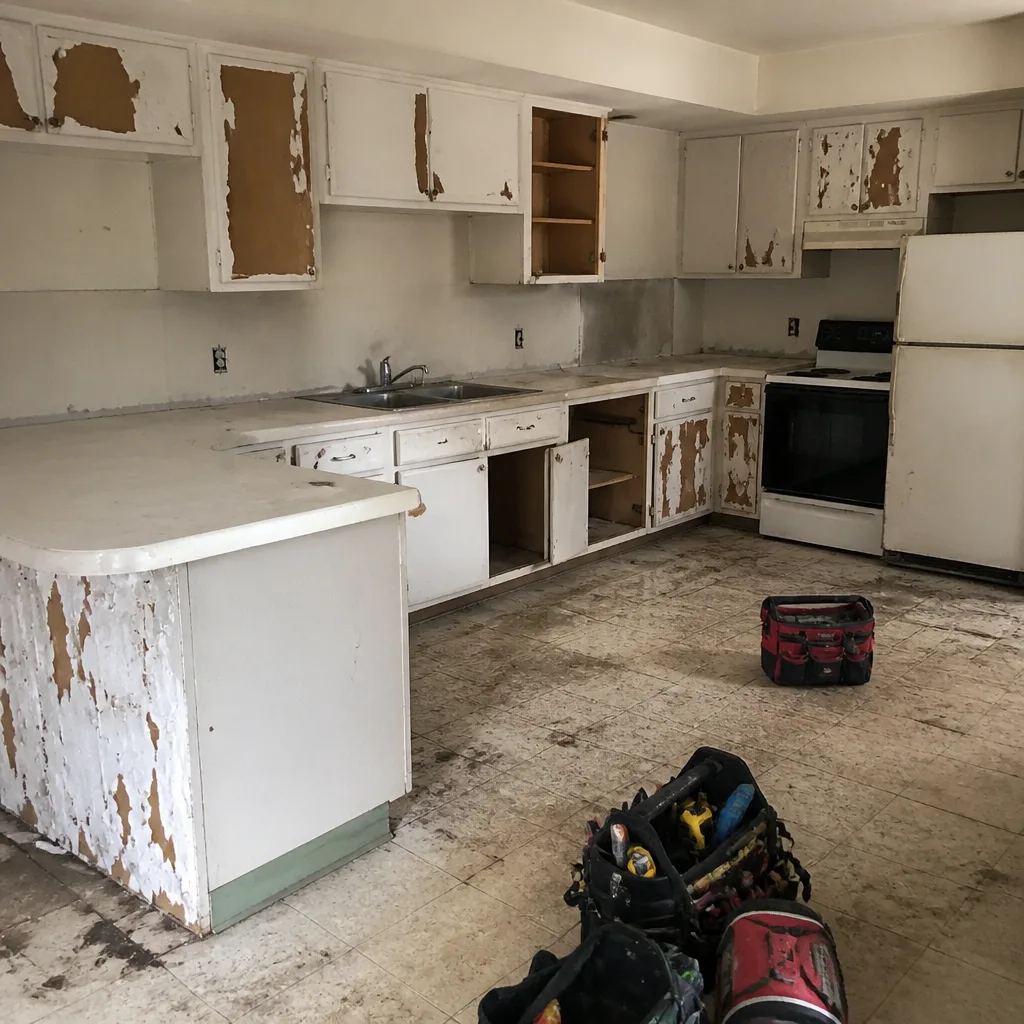 Before
 After
 Before
 After
Common Mistakes to Avoid
- Paying a large deposit plus a big early draw. Together these can put most of the price in the GC’s hands before the work catches up. Tie every draw to completed, inspected milestones instead.
- Signing a one-page bid. A bid is a price; a contract is a payment schedule, a change-order process, a completion standard, and a warranty. If it’s not in the contract, it doesn’t exist.
- Skipping lien waivers. Paying in full and holding no waivers from the GC and key subs is how a paid homeowner in Denton ends up with a mechanics lien on her property.
- Accepting verbal change orders. “We’ll work it out at the end” is how a $12,000 kitchen becomes $19,000. Demand a written, signed change order before the work happens.
- Documenting defects by memory. No dated photos, no paper trail, no third-party inspection means no claim. Build the file as the problem appears, not after.
- Letting final payment go before the punch list closes. That’s the leverage. Hold it until the walk-through is done and the site is clean.
- Hiring on price alone without checking subs. A GC with unpaid subs and no statutory waivers is a risk to your property regardless of how low the bid looks.
When to Call a Professional
Some mid-project problems are worth a phone call to the current contractor. Others need a clean second opinion. Call a professional when work is failing code, when a defect involves structure, electrical, gas, or roofing at height, or when a contractor has gone silent while holding your money. Don’t try to fix load-bearing or moisture-path problems yourself; a bad patch hides a bigger issue. And if you’re starting a remodel and want the contract and the price right from day one instead of troubleshooting a mess six weeks in, that’s the call to make early. Bradford Remodeling Co Denton offers free estimates in Denton – call (844) 651-3175 to schedule yours.
Frequently Asked Questions
A mid-range kitchen remodel in Denton typically runs roughly $22,000 to $45,000, and a high-end remodel with custom KraftMaid or Wellborn cabinetry and Cambria or Caesarstone surfaces can clear $75,000. The number depends on layout changes, cabinet grade, and how much plumbing and electrical rough-in moves. Call (844) 651-3175 for a written, line-item price before any work starts – estimates are free.
It shouldn’t, if the scope is written and change orders are documented. A price moves mid-project for one of two reasons: work that wasn’t in the original scope, or a contractor repricing at the door. We hand over a written price before work begins and require a signed change order before any extra work, so the number doesn’t drift. Call (844) 651-3175 if you want that commitment in writing.
Yes. Permits for structural, electrical, plumbing, and mechanical work are pulled and inspections are passed as part of the job, and the inspection results are what trigger your draw schedule. A GC who asks you to pull your own permits is handing you liability he should carry. Call (844) 651-3175 with your project details and we’ll walk you through what needs permitting.
In Texas it means the work is complete enough to be used for its purpose with only a minor punch list remaining, and it’s not the same as “the crew left.” Make sure your contract defines it, attaches the punch list, and holds final payment until the list is signed off. That single definition protects you more than almost anything else in the document.
First, stop releasing draws and gather your file: the contract, the payment schedule, dated photos, and any unpaid-sub or supplier notices. Then send a written demand stating the problem and a deadline to cure it. If the contractor is unreachable and holding your money, a construction attorney can advise on next steps and lien protection. Call (844) 651-3175 for a free estimate if you need a clean start on the remaining work.
A kitchen in Denton usually runs 6 to 10 weeks, and a whole-home remodel commonly runs 4 to 8 months, depending on scope, permits, and material lead times. Order confirmations for special-order cabinets, windows, or stone tell you more about the real timeline than any verbal promise. Call (844) 651-3175 for a written schedule tied to your specific scope.
The Bottom Line

The problems that derail a remodel mid-project are almost never about skill on the job. They’re about gaps in the paperwork: a payment schedule that pays ahead of the work, no change-order process, a fuzzy definition of substantial completion, missing lien waivers, and no written warranty. Get those five things right and you remove the conditions for the worst disputes before a single tool comes out. If you’re planning a kitchen or whole-home remodel in Denton and want the price and the guarantee in writing from the start, that’s exactly how we work. For a bathroom specifically, our Bathroom Remodeling in Denton page walks through the scope; for kitchens, see our Kitchen Remodeling in Denton page. Bradford Remodeling Co Denton offers free estimates – call (844) 651-3175 to schedule yours.
Related Guides
Planning ahead? Two companion guides worth reading before you sign anything: Bradford Remodeling Co Denton home for how we operate, and General Contractor in Denton for the contract and scope basics this piece builds on.
Written by the team at Bradford Remodeling Co Denton.